
La Granja Labrada: Sara Gascón's equestrian refuge in Galicia, where nature and a passion for horses combine for a unique experience.
History and Origin of the Project
- What is the story behind the farm and the equestrian center? How did it all begin?
The project in its current location started in 2019, with the purchase of an old farm located in a Galician village in the middle of nature.
10 hectares of land and a huge stone house to restore, 3 horses, 15 chickens, 3 dogs, 2 brave women and a lot of enthusiasm.
For several years we had been combining our professional activity with the organization of equestrian courses and activities and in 2019 we decided to take the leap and turn our passion into a life project that today has a completely renovated unique space, 20 wonderful horses that are part of our family and an incomparable environment where we can enjoy ourselves without haste, escape from routine and reconnect.
The renovation project, which was greatly delayed as a result of the pandemic, was a real challenge. The difficulties inherent in a project of this magnitude were compounded by the uncertainties of the global outlook, and I won't deny that there were days when we doubted everything...
Today, looking back, I feel fortunate and grateful for every decision that has led us to be able to share this unknown piece of paradise with our guests, located in one of the most beautiful and wild areas of Galicia that can only be fully experienced on the back of one of our wonderful horses.
Activities and Programs Offered
- What kind of activities do you offer for those interested in horses and horse riding and what do you take into account when designing the activities and/or routes?
We offer vacation and training packages that include accommodation in a fully restored traditional village house, local seasonal food and horse riding routes in a unique natural environment.
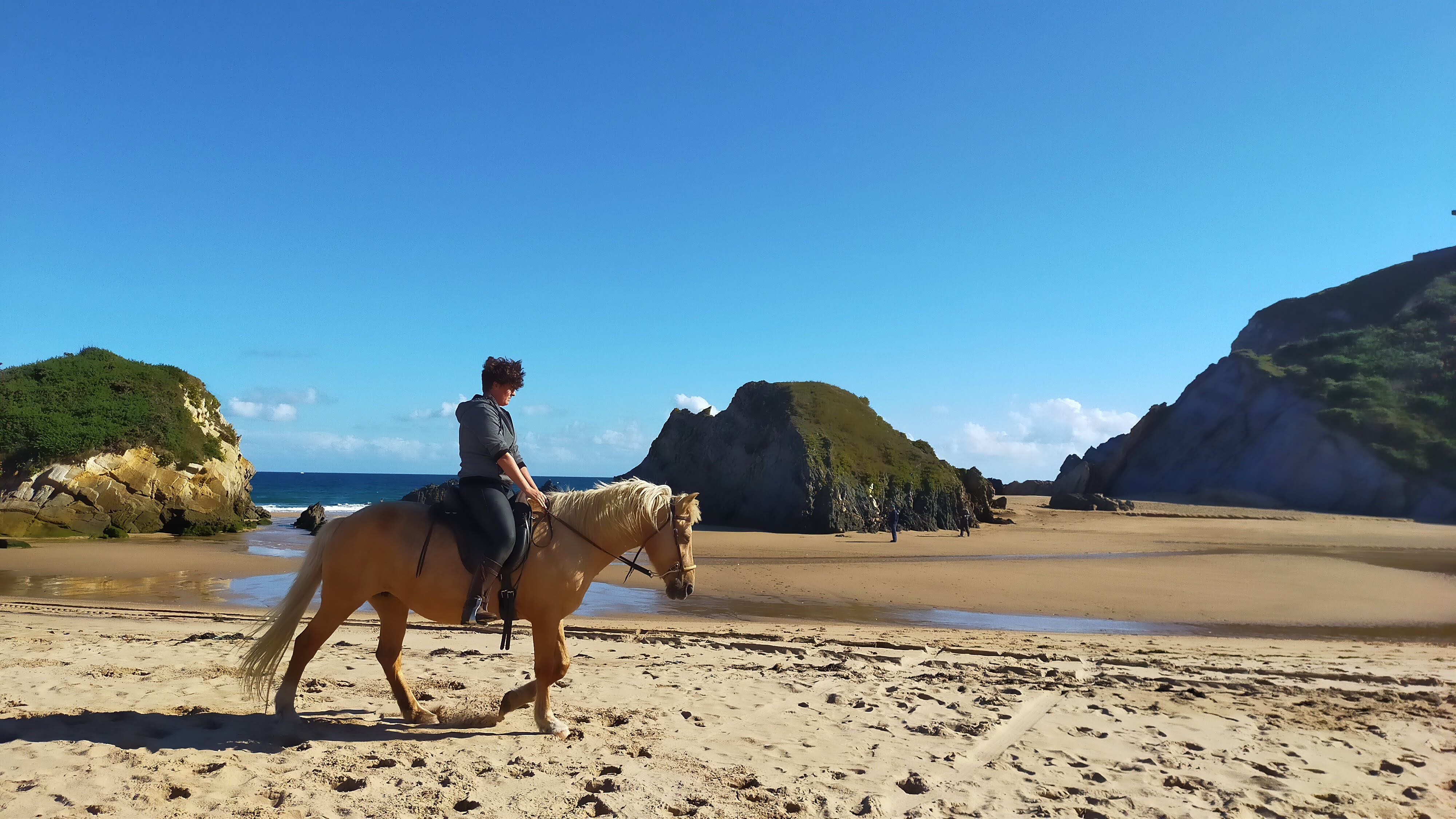
The vacation packages include wonderful 3-hour to full-day routes to explore the region, while the training packages combine groundwork and riding lessons with trips to the countryside.
It is also possible to contract the services separately and come to enjoy a specific route or stay with us in this wonderful environment.
For us it is important to improve the world of the horse, that is why during the year we offer numerous courses with different professionals, always seeking to work from respect and understanding to improve communication and the relationship with the horse. Last September we brought Eugenia Fuentes, a compatriot of yours who is a total genius.
- What levels of experience and riding are necessary to participate in your activities and do you offer specific programs for each level?
We have programs for all levels, from people who have never ridden and want to get started in the world of horses and equestrian travel to more intense experiences for riders who enjoy good gallops and many hours in the saddle.
We take special care in forming the groups to make sure that the levels are even so that everyone can enjoy an experience suited to their level and expectations.
Facilities and Accommodation
- What facilities do you have for horses and guests staying at the center?
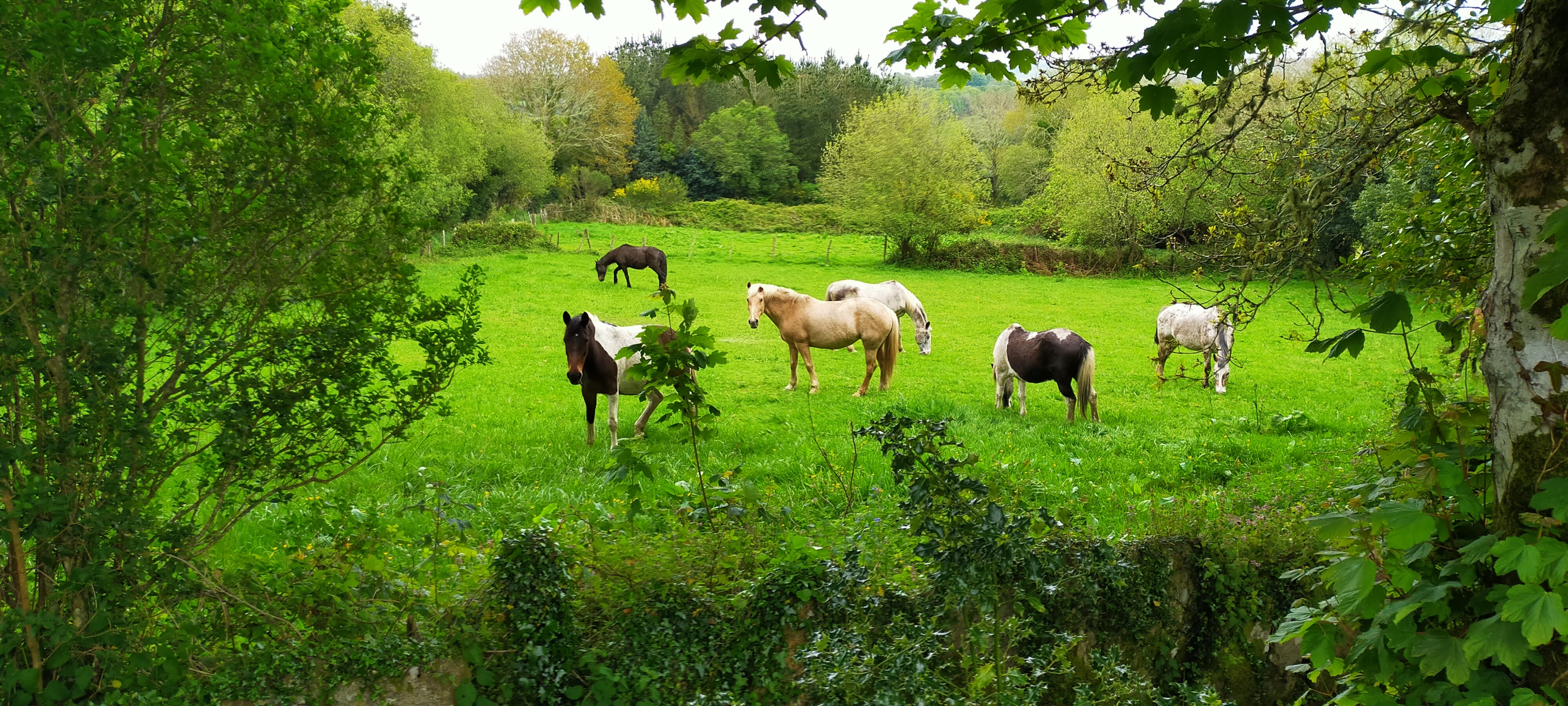
Our horses live in semi-freedom in a 10-hectare Paddock Paradise that surrounds the equestrian facilities.
They have open shelters that they can access as they wish, areas of forest, pasture, numerous water points and wide open spaces where they live in a herd, leading as natural a life as possible.
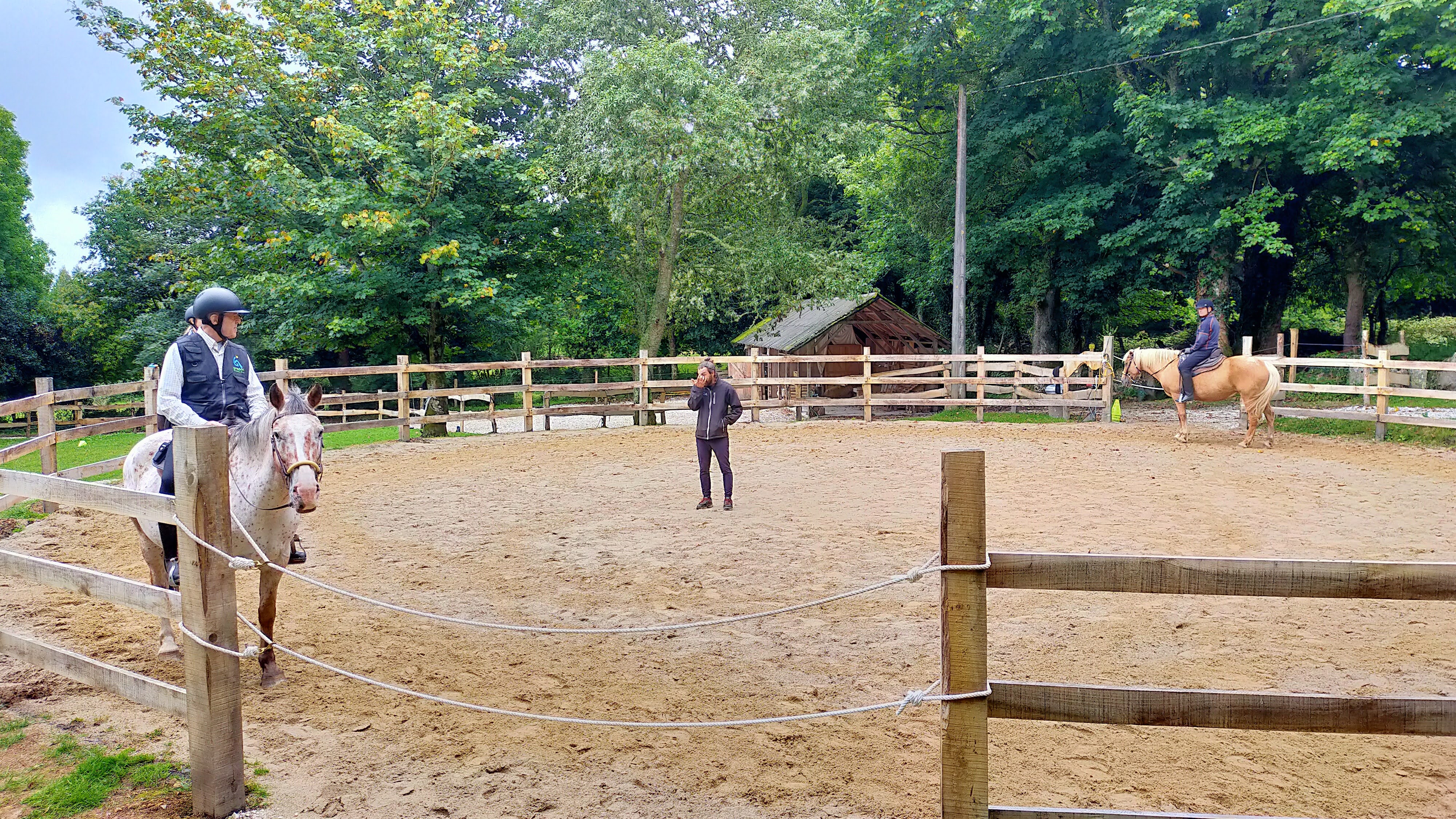
The equestrian area where the activities take place has an 18-meter round riding arena, a 30x20 meter indoor arena, a natural obstacle course with steps, small jumps and a natural lake. In the same space there is the tack room, the preparation area, our canteen / common room and a parking lot.
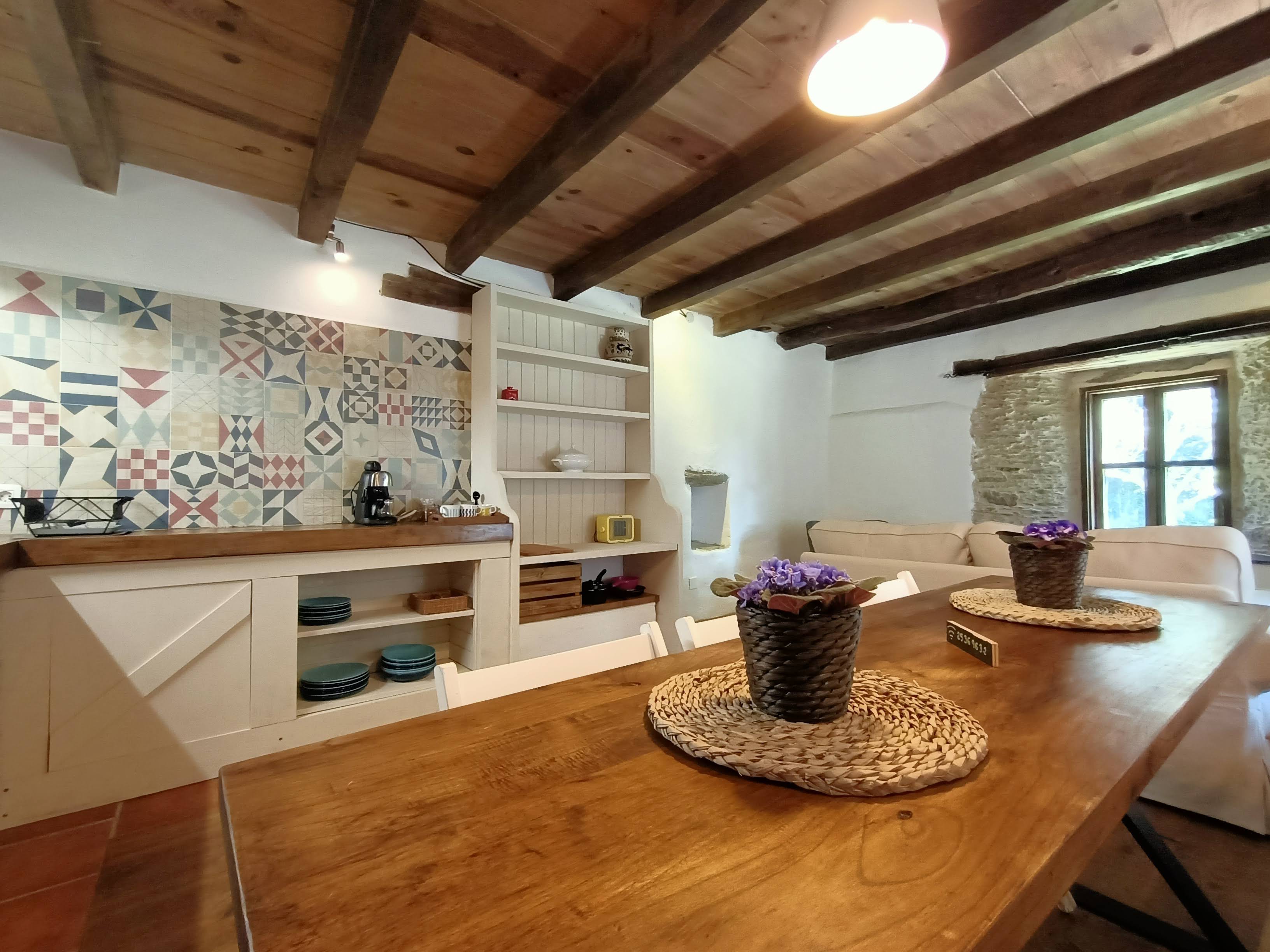
In the accommodation area (just 100m from the equestrian area and the horse living area) we have a traditional Galician village house built in stone and wood that we have lovingly restored to provide it with all the comforts while maintaining the essence of traditional construction.
Next to the accommodation there are two more parking areas for the convenience of the guests.
- What type of accommodation do you offer for guests? Are there different options?
We have two options:
The rooms, which have their own bathroom, shared garden and access to all common areas, are the preferred option for guests who want to enjoy breakfast and dinner service and don't want to complicate cooking on vacation.
The apartment has its own kitchen, private garden and access to all common areas. It is the favorite option for groups who want to organize themselves on their own, cook at their own pace or enjoy a barbecue in the garden.
Food and Additional Services
- What type of food and services are included during the stay?
We offer half-board (breakfast + dinner) and full-board (breakfast + lunch + dinner) packages. It is also possible to stay without meals and enjoy the local cuisine.
All our menus include local seasonal products, simple, tasty recipes prepared with care to give a taste of the best of our gastronomy.
Depending on the package, classes or routes are included, as well as personal protective equipment for the activity.
All our guests have access to the common areas (equestrian area, canteen, car parks, gardens) where they can relax in a familiar and peaceful environment.
- What is the minimum and maximum age to participate in your activities?
We have vacation packages for riders aged 11 and over, the maximum age is determined by each person's own ability. If you are fit enough to get on a horse and ride, there is a place for you!
Guests who do not participate in the activities included in the package are always welcome to take part in an independent activity or simply enjoy an afternoon in the hammock or a walk to get to know the region while their companions ride.
- Do you have special programs for families or groups?
Yes, we have packages aimed at groups of 4 to 16 people, ideal for families and groups of friends.
- What places in the world and in Spain do you generally visit?
Internationally, Germany, France, Switzerland, USA. Nationally, we have quite a few people from other areas of Galicia and many clients from Madrid, Barcelona, Andalusia and Valencia.
- What is the typical duration of the horse riding holidays you offer?
Most packages include 4 or 5 nights as a base and can be customized to add extra nights.
On the farm we occasionally hold painting and craft workshops, live music sessions or yoga classes to liven up our guests' stay (subject to seasonality)
In the area you can practice numerous outdoor activities such as kayaking, surfing, paddle surfing, biking, hiking... There are also numerous gastronomic and popular festivals, especially between the months of May and September.
Philosophy of Horse Riding and Horse Care
- Do you offer riding training or lessons during the stay?
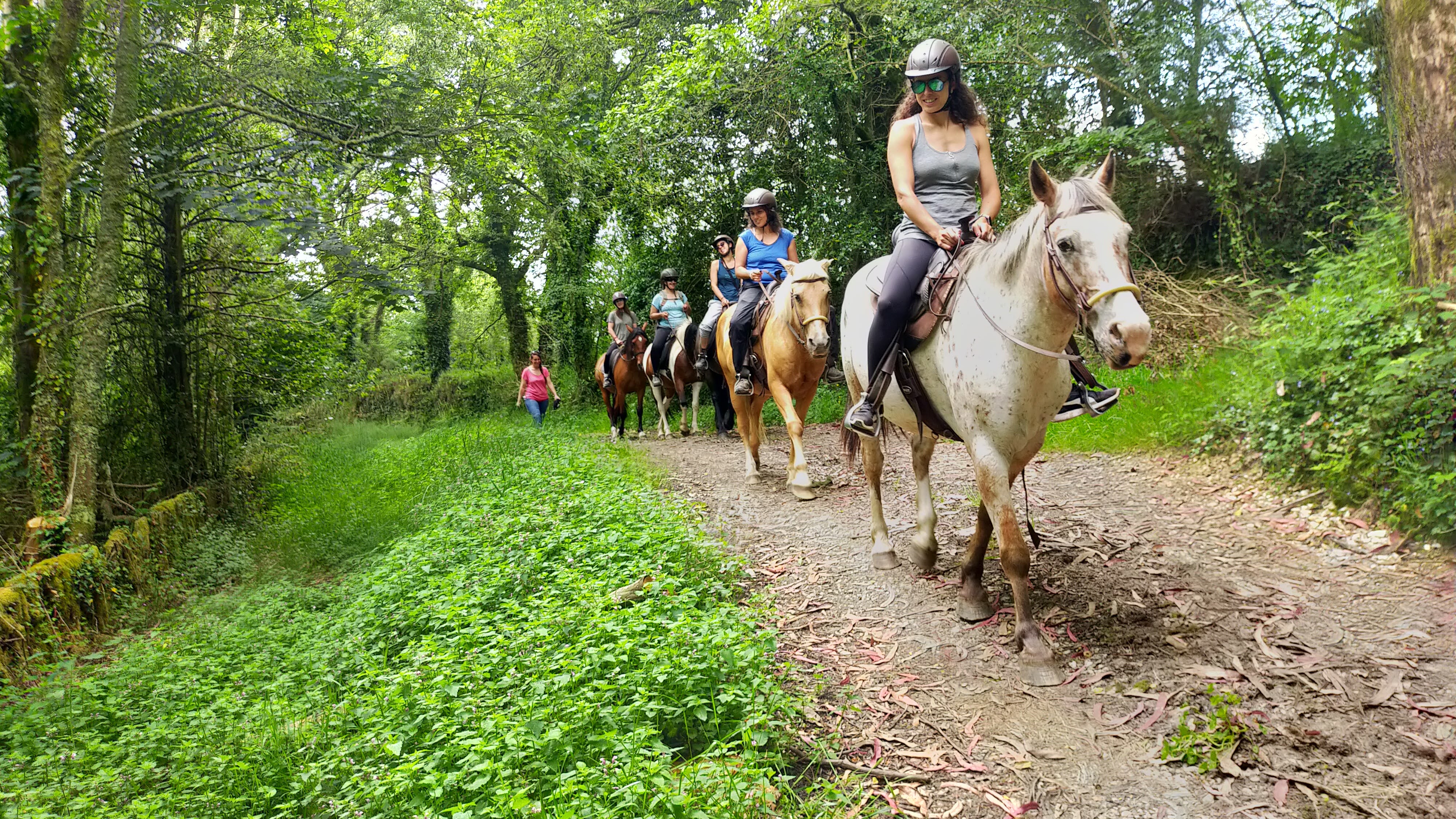
Yes, all our packages start with a short introductory class to allow the rider to get used to the saddle, the horse and the type of bridles we use.
In addition to this, it is possible to add groundwork or riding lessons to any vacation package and we also have specific packages focused only on training.
- Do you have a horse care and training program for those interested in working with horses?
The Natural Horsemanship Camp is ideal for this. It includes an intensive program with theoretical and practical classes combined with participation in the tasks of handling and caring for horses.
This program offers the basics of ethology, semi-freedom management, barefoot horse management, training and rational horsemanship.
- Do you breed your own horses? And/or what are the breeds with which you carry out the activities? Do you do the breaking in and training?
We have a mixed herd in terms of origin and breed.
Some of our horses were bought from outside and trained or re-educated here.
Many of our horses were rescued from difficult situations and rehabilitated to become part of the center's team.
Although we are not involved in breeding, one of our mares gave us a surprise a year ago and now the farm team has a very friendly little filly who enjoys greeting everyone.
As for breeds, we have some crossbred Pura Raza Gallega horses (a small local breed with a lot of character), we have Spanish horses, Apaloosas, some Breton crossbreds and a couple of New Forest Ponies that came to us from the UK and are distant cousins of the Pura Raza Gallega.
- What is the center's main focus in terms of riding philosophy and horse care?
We practice a form of riding and care that is respectful of the nature of the animal and seeks to satisfy its needs as a species.
All our horses live in semi-freedom, barefoot, they feed mainly on grass and fodder and live in a herd in a stimulating space that allows them to live as horses.
In training we seek to practice healthy horsemanship, we use quality equipment (saddles appropriate for each horse, bitless bridles), we work with non-violent methods and we make sure we don't ask our horses to do something they are not prepared to do.
The result is a harmonious relationship, where effort and work take place, but never at the expense of the animal's well-being. Our horses are calm and reliable but alert and expressive and are the heart of our project.
Safety and Protective Measures
- What safety measures do you have in place to ensure the safety of guests and horses?
The horses' living space is protected by a wooden perimeter fence and electric shepherd to ensure that the animals remain safe in their living space.
The semi-freedom management and training of our horses makes them calm and reliable animals that do not show aggressive behavior or bad habits.
Guests are provided with personal protective equipment for all activities and are given appropriate handling guidelines to enable them to interact with the horses safely.
Vision for Equestrian Tourism
- What do you think motivates people who come to the center to do any of the proposed activities?
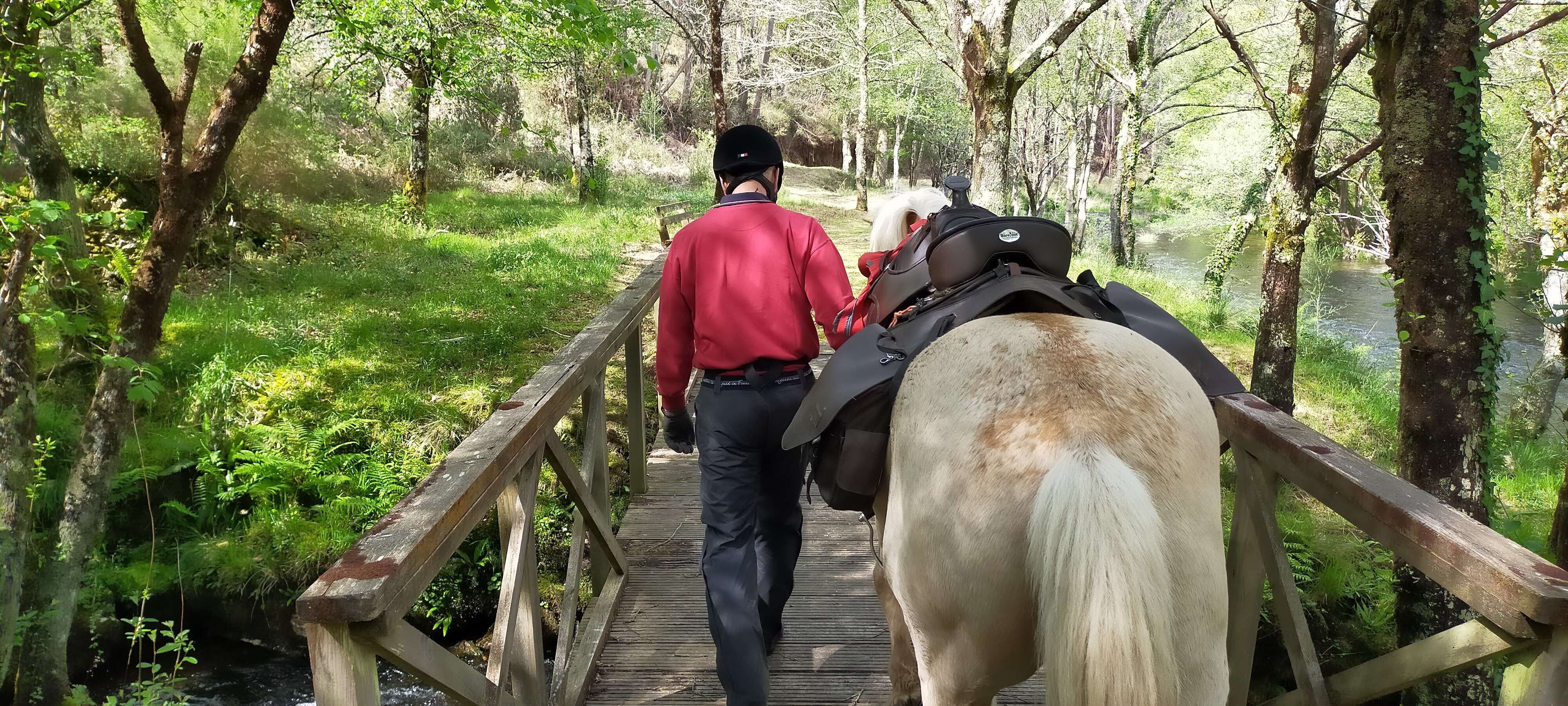
The enormous scenic appeal of the area is undoubtedly a factor, we live in the middle of paradise surrounded by forests, meadows, cliffs, paradisiacal beaches and semi-wild rivers.
In addition, the summer climate is ideal for equestrian tourism as it is not as hot as in the rest of Spain, you can enjoy long days on horseback without the animal or the rider melting in the attempt.
Finally, I think our networks convey a close and hospitable image of the project. We are very friendly! And the people who come enjoy themselves and recommend us highly.
- Have you traveled around Spain or other parts of the world on horseback? How do you see the development of equestrian tourism today, its future in general and in Spain and Galicia in particular?
Not as much as I would like, but yes.
In general I think the sector shares many challenges with the rest of the horse world. It is necessary to examine our conscience and work with respect, collaborating with the horse and not abusing its good nature.
Unfortunately, there are still centers with thin, poorly muscled horses that spend most of the year in a box until the high season arrives... In general, I think it is important to be aware that the horse has basic needs that we must satisfy before we can work together, and on the other hand we must restore respect at work and avoid violent practices that often come from fear or ignorance.
In the specific part of the sector, I believe that there are more and more operators worldwide who work very well, paying attention to detail, offering an authentic experience and seeking to show the best of each culture.
The challenges at that level have more to do with the accessibility of the spaces, the logistics of certain types of routes or the difficulty of finding staff who meet the necessary profile for a good equestrian guide/host.
In Spain and Galicia, we are perhaps still lagging behind other countries due to the lack of a solid local equestrian tourism culture. There are some very good operators but, in general, domestic tourists are still discovering this type of offer, which is mainly aimed at foreign visitors. The natural, ethnographic and gastronomic heritage that surrounds us makes Spain (especially the northern strip) an ideal environment for equestrian tourism, which still has enormous potential for development.
- Do you know Argentina or would you like to get to know it?
I haven't had the pleasure, but it is one of the key equestrian destinations on my list of “places to go without fail” and I am sure the day will come soon. It's hard to think about horses and not have La Pampa or Patagonia come to mind...
There are many things that call me to that trip: the opportunity to work with Eugenia Fuentes who, as I mentioned before, is a genius and a person of reference for me, the desire to learn about the equestrian tradition of one of the places with the greatest horse culture in the world, the gaucho derby and of course... the asados!
- Are you familiar with the Peruvian Paso horse breed? Have you ever ridden one?
I know very little about them and I haven't had the pleasure of riding or working with one.
Closing:
La Granja Labrada is much more than an equestrian center; it is a place of connection with nature and horses, driven by the passion and respect that Sara Gascón and her team have poured into every detail. We thank Sara for sharing her inspiring story and vision, which undoubtedly makes this corner of Galicia a unique destination for lovers of equestrian tourism.
Comments (0)
No comments yet.
You might also like
Interview with María José Pérez Asensio: Her experience in the Rider’s Association of Catalonia
Interview with Juan Manuel Álvarez Díaz, President of the FEJAE
Interview with FITE President, Frédéric Bouix
The skills that equestrian guides need to have
The Blue Wolf Totem Charity Ride in Mongolia


Comments
Leave your comment