
Equine biomechanics: The gaits of the horse
The study of equine locomotion deals with the movement, physics and style of the horse. Horses have evolved over the centuries in their movement in search of speed, athletic prowess and comfort.
In this second article on equine biomechanics, we are going to take a closer look at the different gaits of the horse.
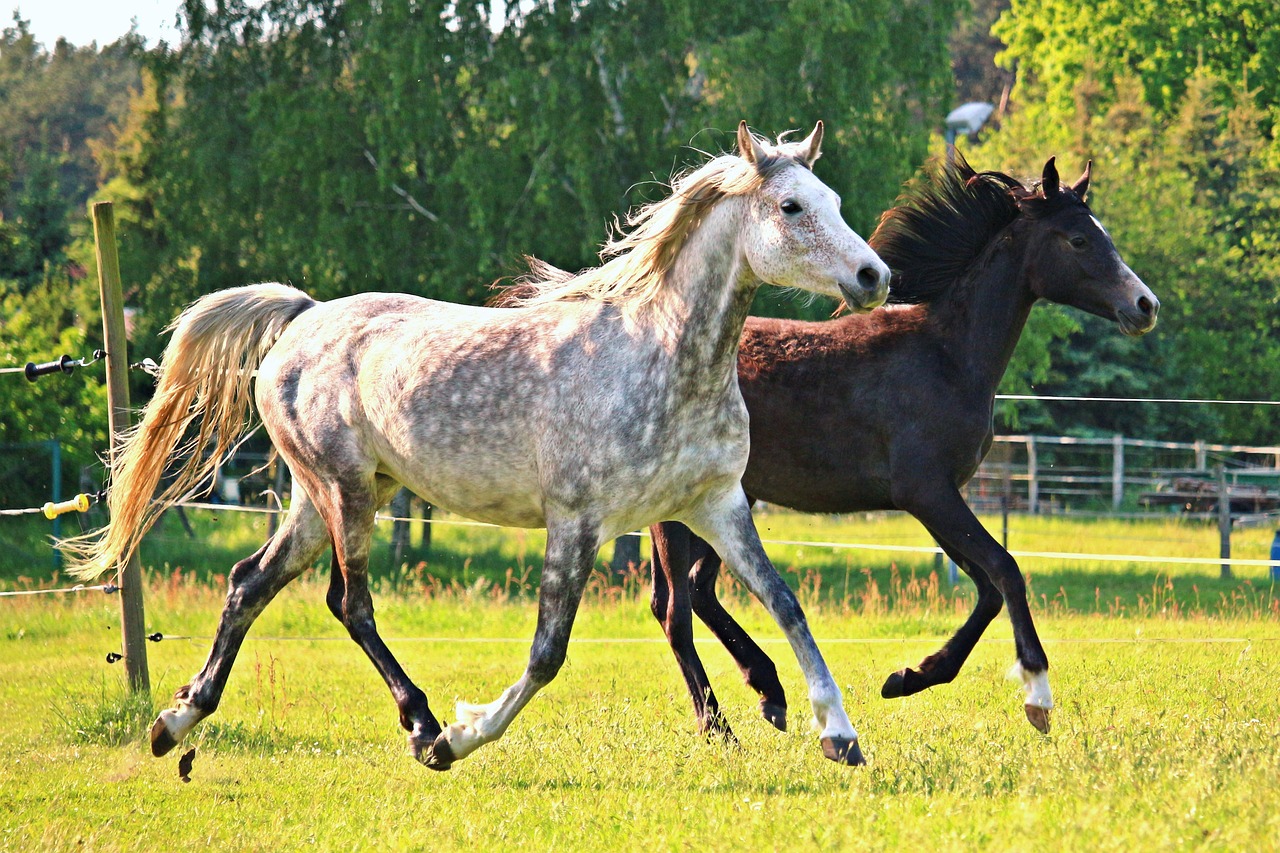
The gaits of the horse
We refer to the movement of the front and hind limbs of a horse as a gait. These are movements of a certain complexity, highly coordinated, rhythmic and automatic and of a length linked to the length of the body.
There are different ways of classifying the different gaits of a horse.
There are considered to be three natural gaits: walk, trot and canter.
Then there are other gaits that are more specific to each breed or derived from the natural gaits. For example, Peruvian Paso horses perform the so-called “paso llano”, which frees the rider from uncomfortable vibrations during the ride.
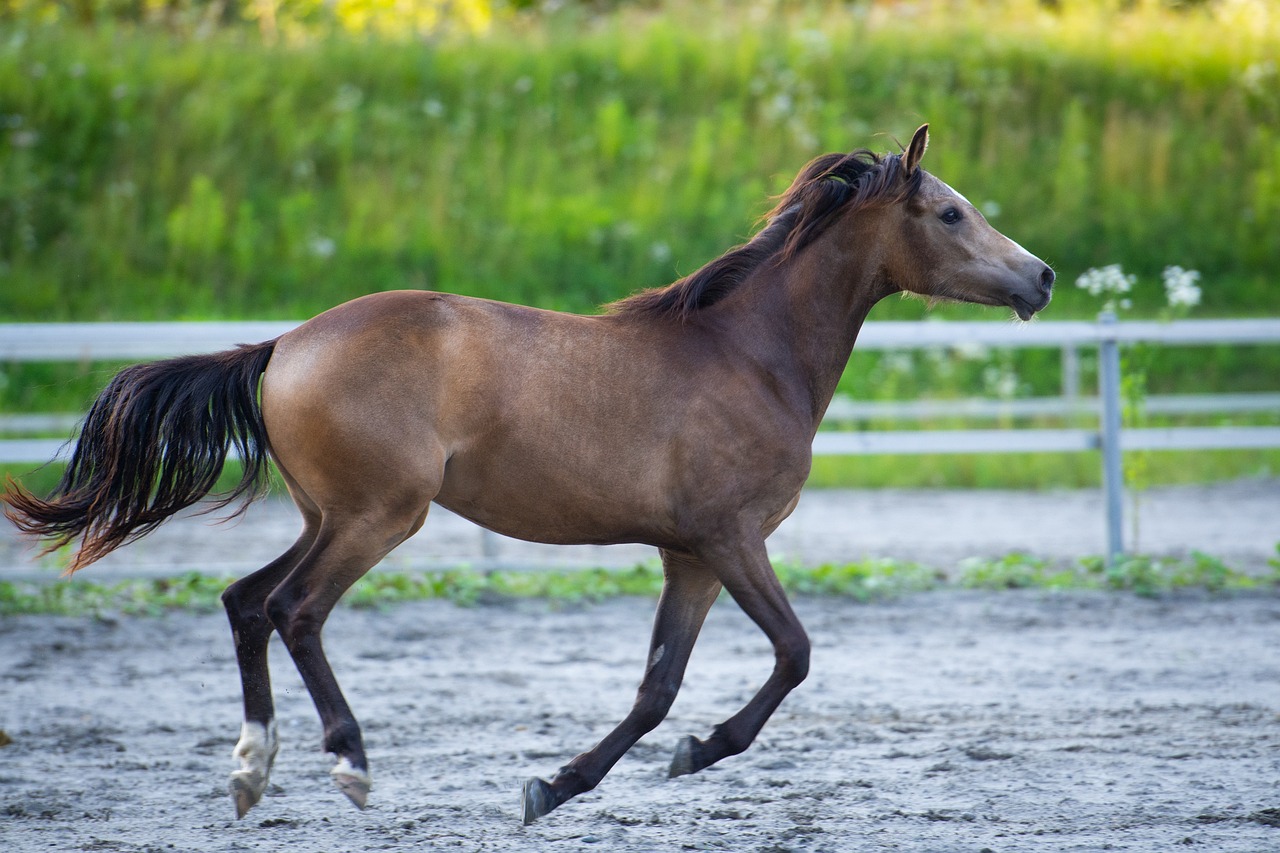
The first characteristic that distinguishes one gait from another is the existence or not of the suspension phase during movement.
Suspension is the period of time in which all four limbs are simultaneously in the air, that is to say in the swing or rocking phase.
Remember that the swing phase is the interval of time when the limb is not in contact with the ground.
While when walking there is always a limb touching the ground, when trotting and cantering there are moments when contact with the ground is lost.
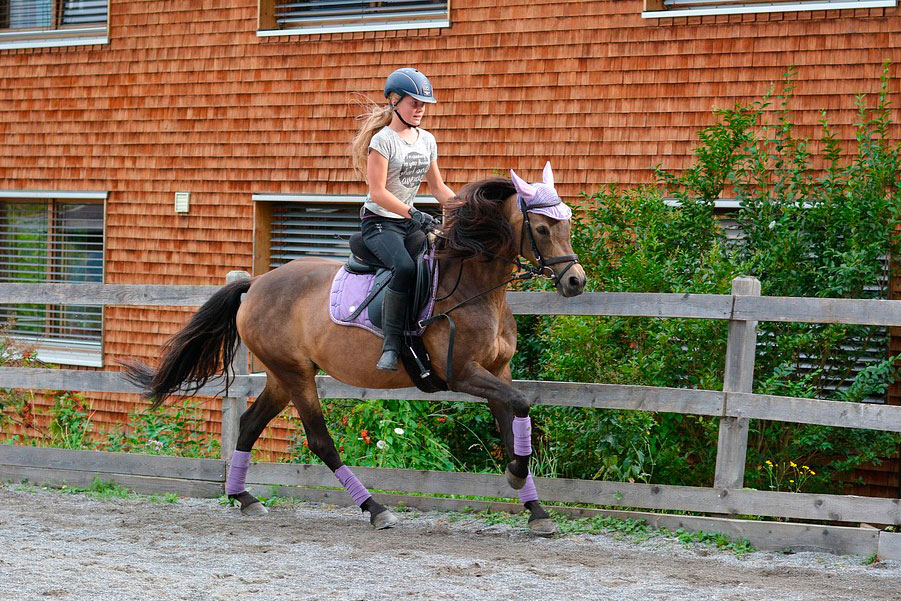
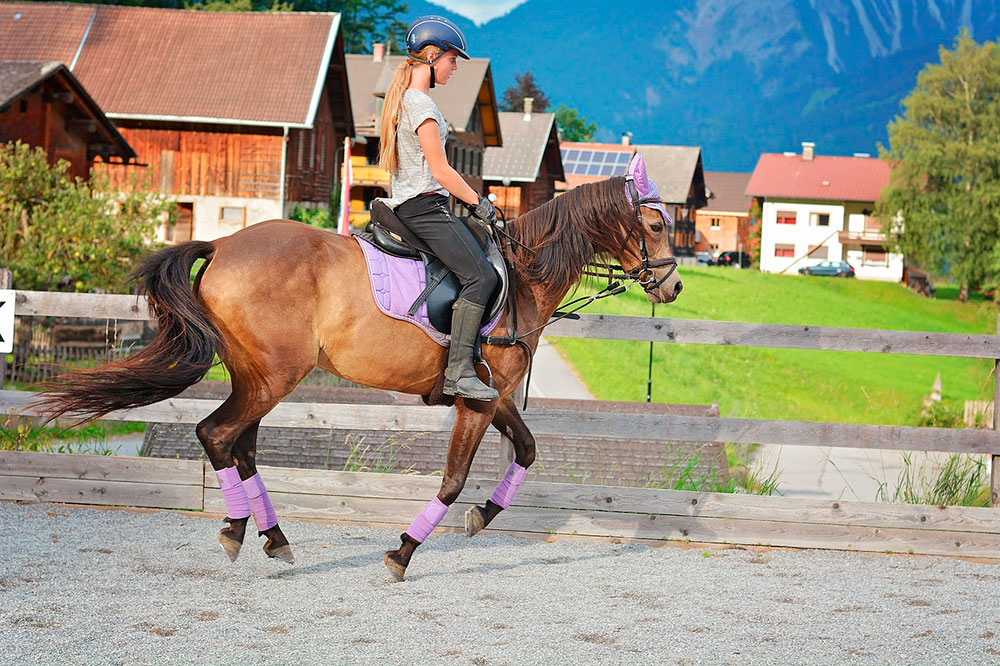 Moves can be classified according to symmetry.
The walk and the trot are symmetrical gaits because the left and right footsteps are separated by the same number of beats.
On the other hand, the half-gallop and the gallop are asymmetrical gaits, as the right and left limbs move differently.
However, the most popular way of classifying gaits is by the number of beats, that is, the number of steps or beats on the ground that are felt in each stride.
The walk has 4 beats, the trot 2 and the canter 3.
We must bear in mind that, in the natural movement of the horse, there are transitions from one gait to another. The change from walk to trot, from trot to canter, and from canter to walk must be as precise and smooth as possible to avoid unbalancing the horse.
Next, we are going to take an in-depth look at the horse's three natural gaits.
Walk
The walk is a natural, symmetrical, four-beat gait with a transverse or cross-like movement.
The sequence of steps, starting with the left front leg, is as follows:
Lift the left hind leg (LH)
Rest LH and lift the left front leg (LF)
Rest on the rear left leg and continue with the right posterior leg
Rest on the right posterior leg and finish by raising the right front leg
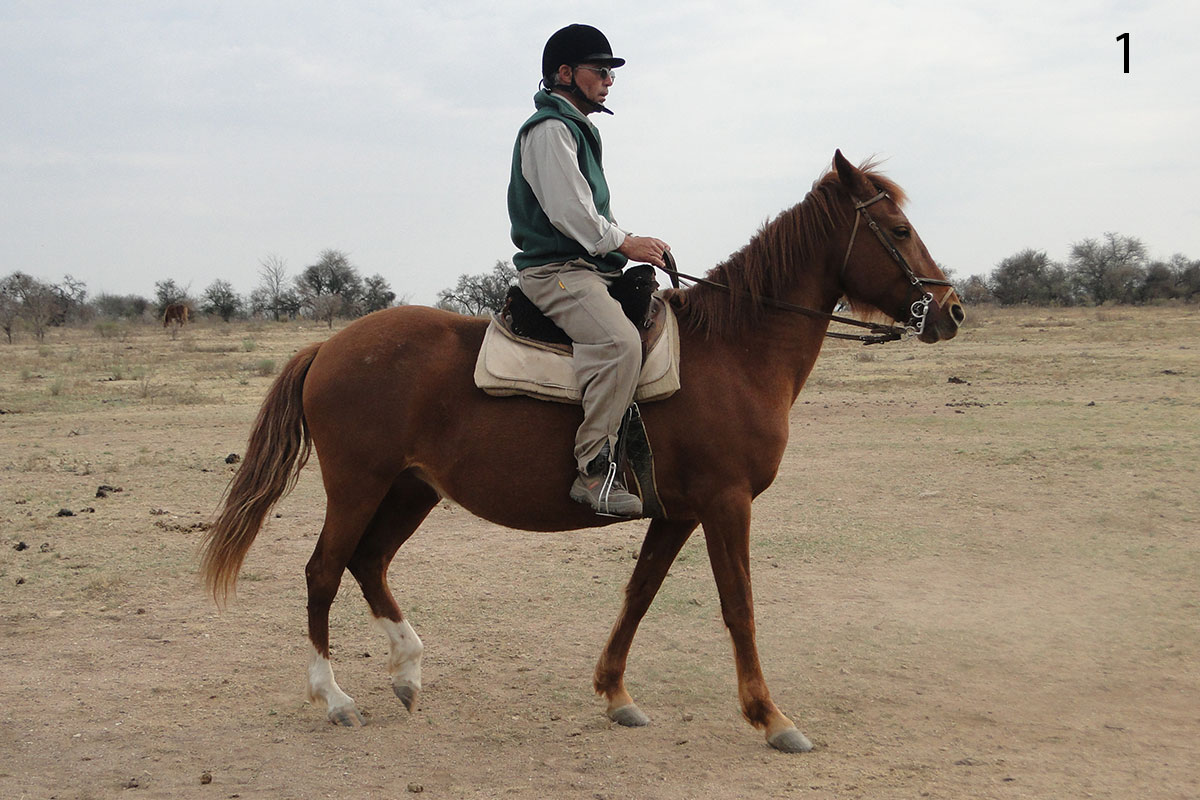
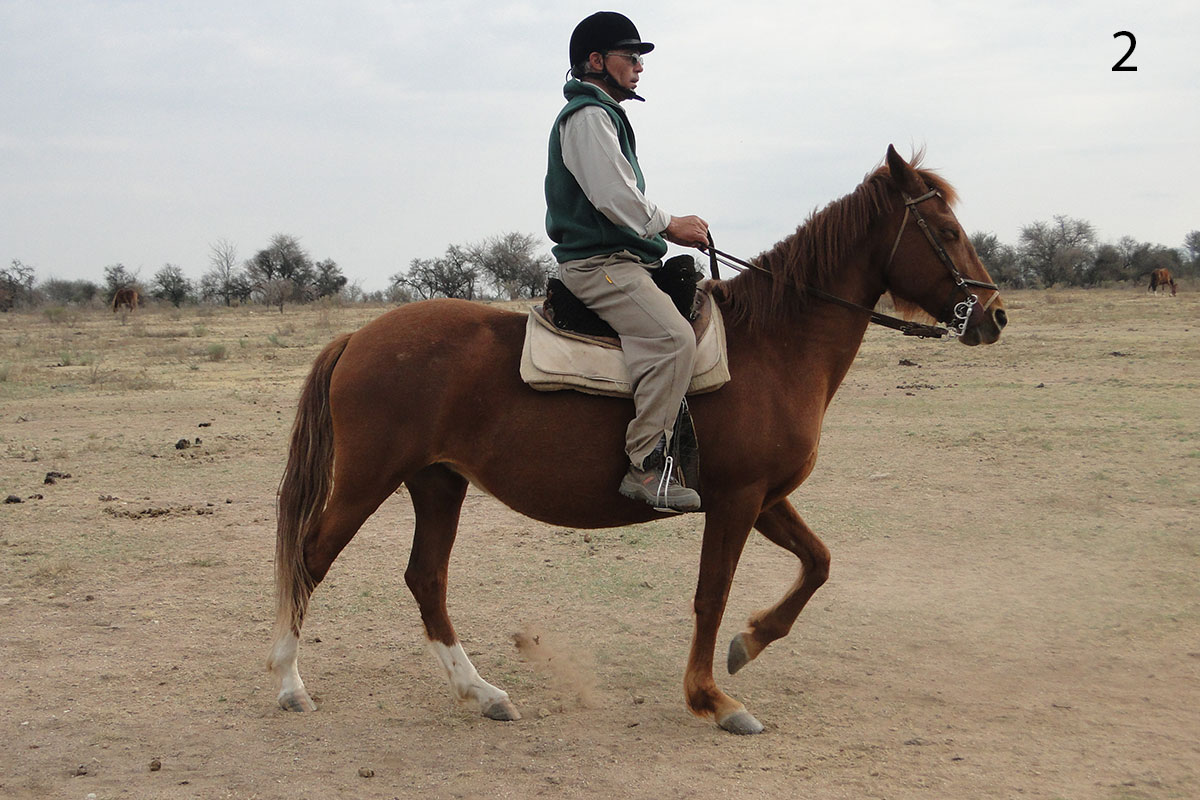
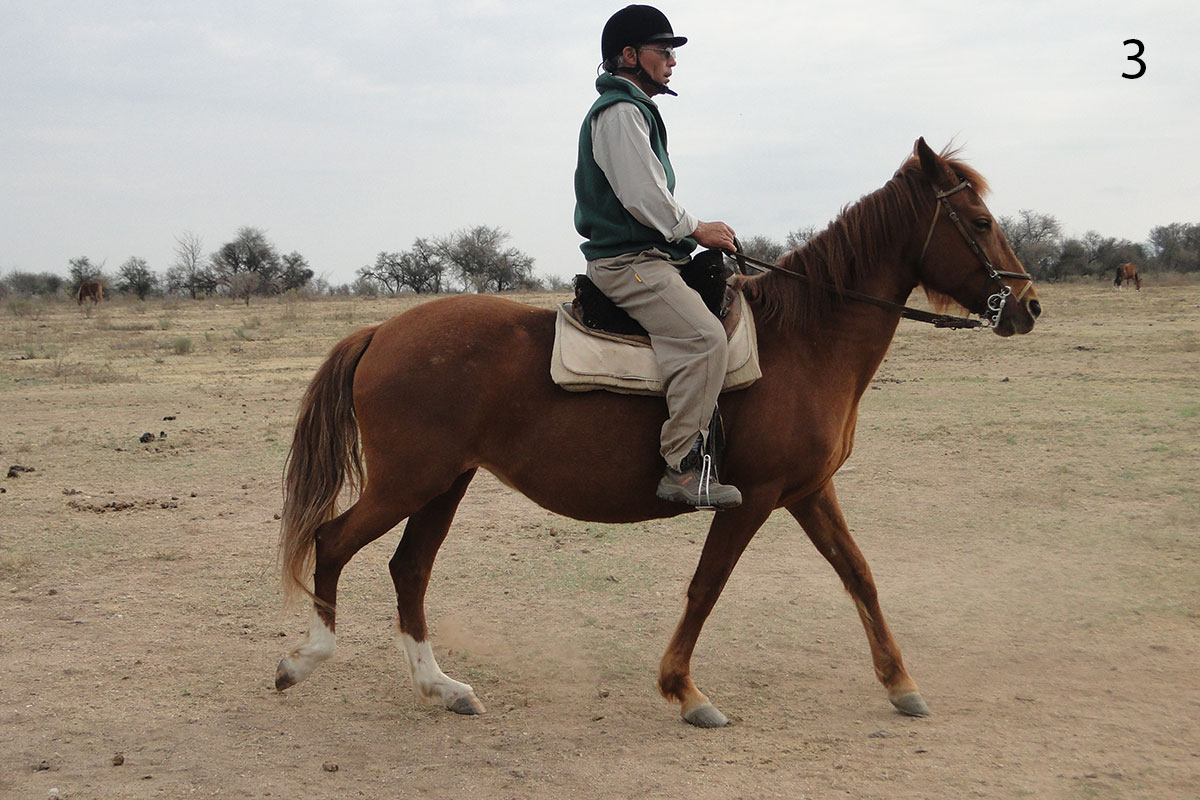
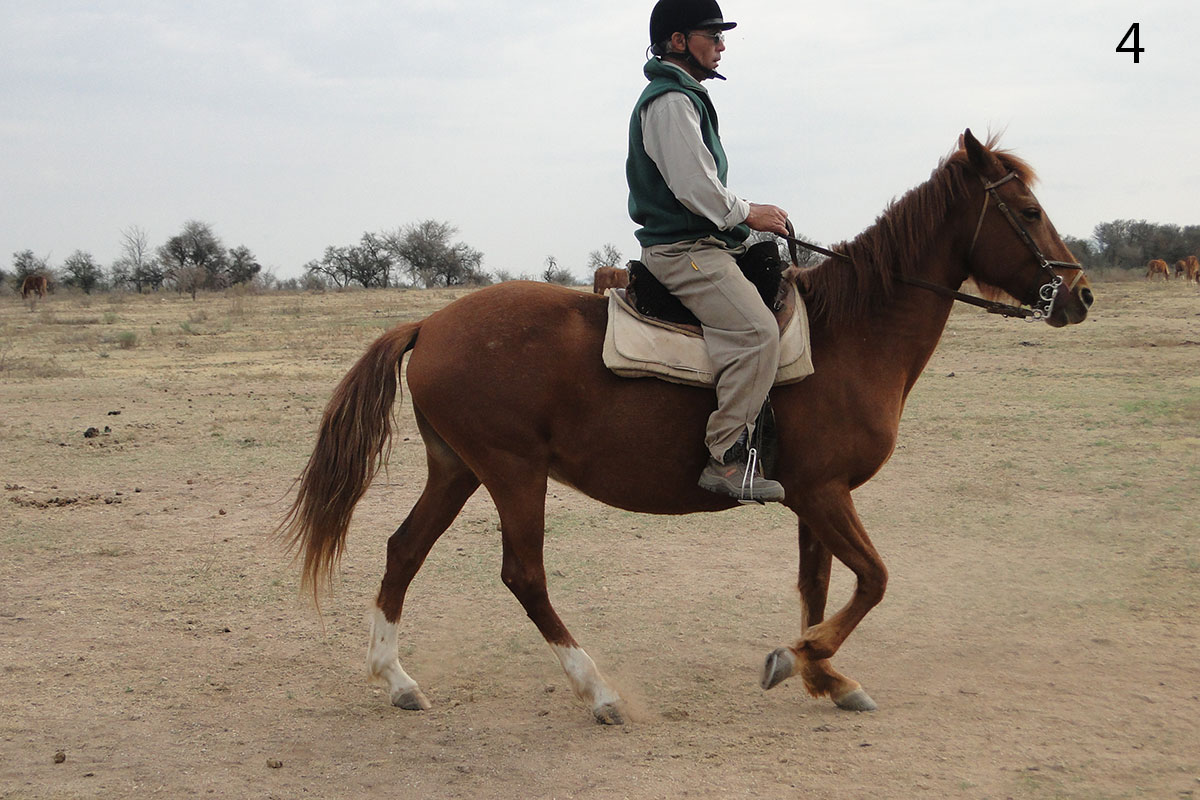
That is to say that before raising the next limb, the one that is already raised is supported, in a sequential way, always one limb at a time. That is why it is said to be a 4-beat air, as there are 4 supporting beats, one for each limb.
Each limb in this gait touches the ground about 50 to 60 times per minute and is accompanied by a movement of the neck that stretches and contracts in synchrony with the step.
This neck movement must be synchronized with the reins, so that the rider must make sure that the neck movement does not interfere, but always feeling the contact with the horse's mouth.
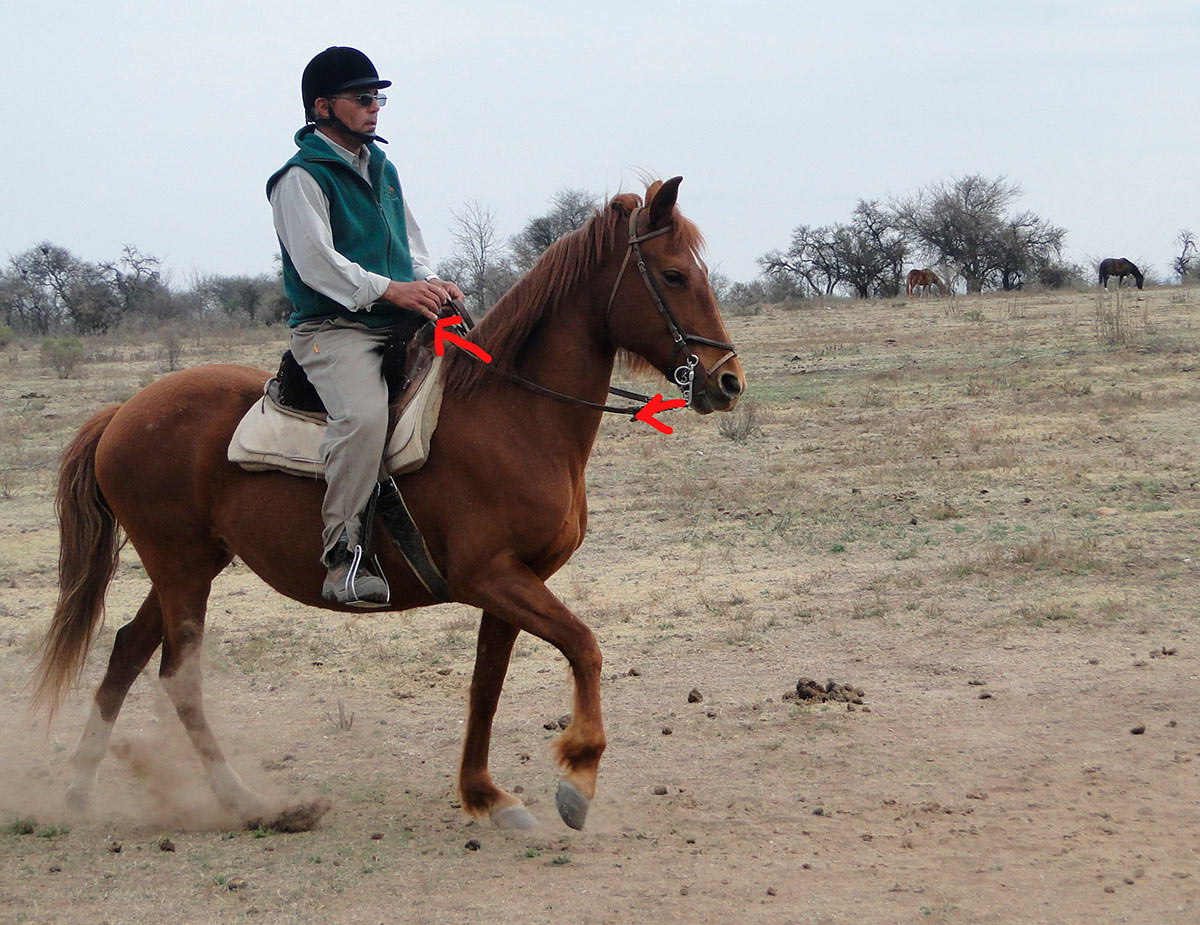
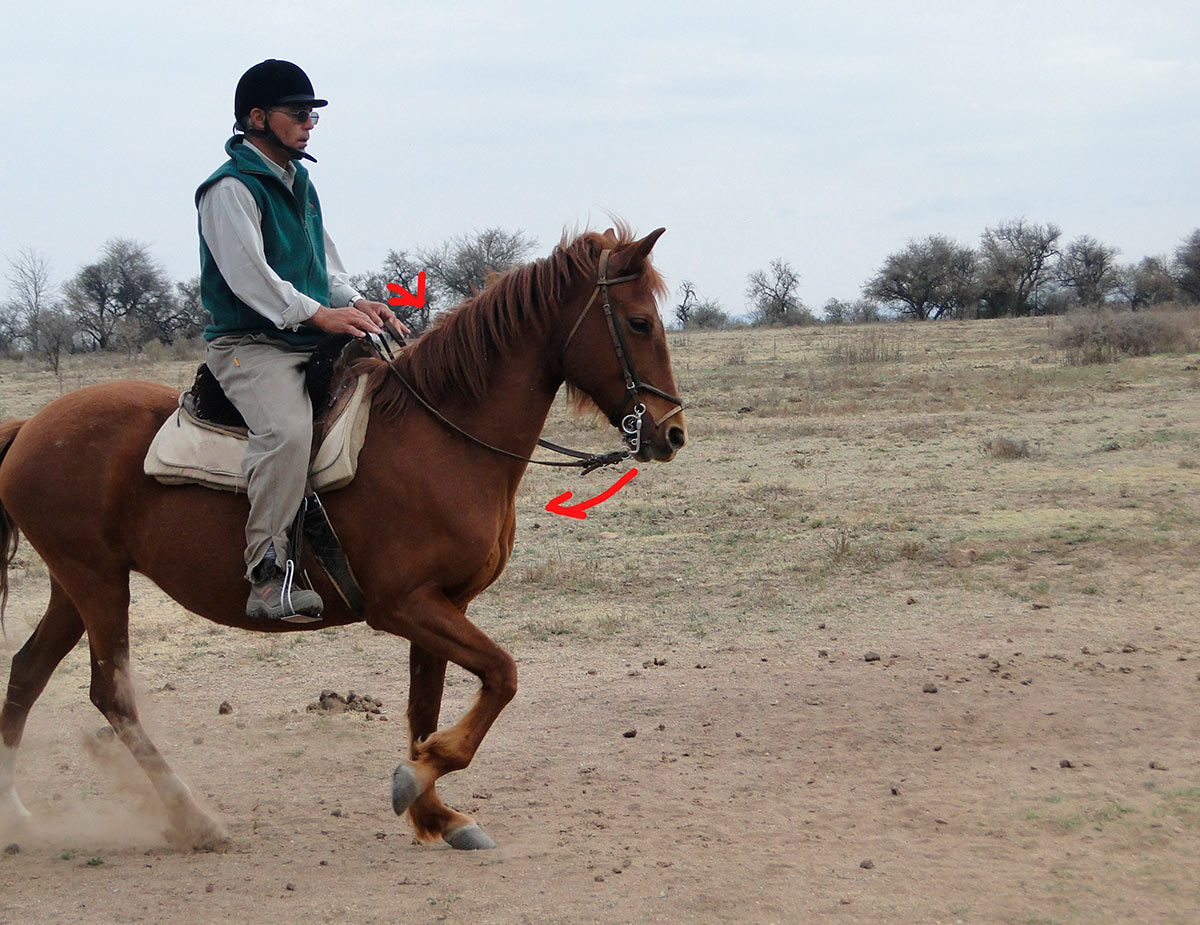
Maintaining contact means that the tension on the rein does not motivate a response from the horse to escape it. If that pressure were too high, it would no longer be contact, because to avoid it, instead of balancing the neck, the horse would shake its head, stick out its tongue or try to slow down.
By confusing the pressure of the bit with the signal to slow down, the horse would react with a series of responses to escape the pressure, losing the impulsion of the hind limbs and flexibility. In sports such as Dressage this can lead to disqualification.
In Dressage, the horse is usually asked to force this gait, so that the footprint of the hind legs exceeds that of the front legs.
This option is very interesting but it can only be done if the horse shows a very relaxed back and always in the competition arena. If we do it in a horse ride in the countryside, there is a quite different alteration of the flexion of the joints, let's say more demanding than the natural movement of the horse in freedom.
The safest way to preserve these joints is when the footprint of the hind legs only covers the footprint of the front legs.
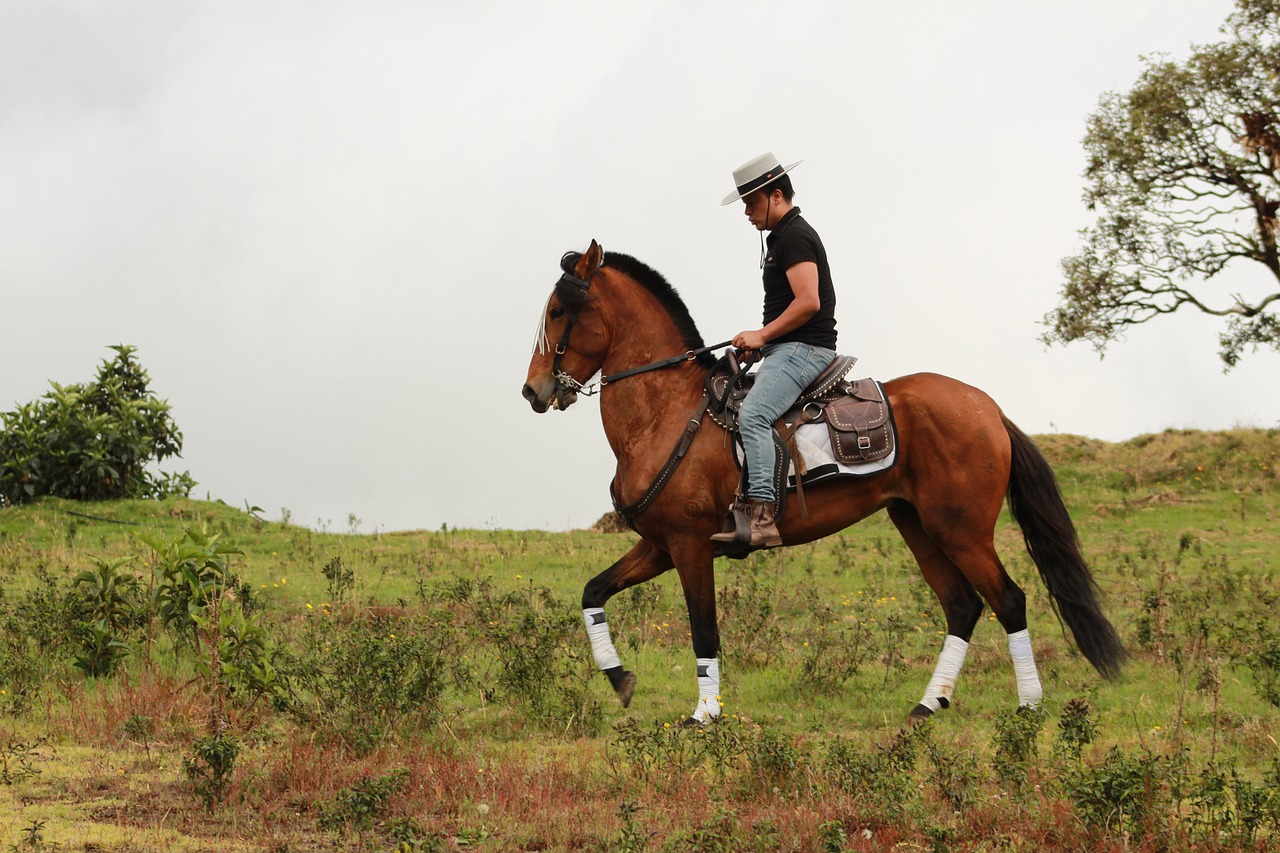
Some horses with a special bone structure, such as the Peruvian Paso Horse, will be able to pass through the footprint without straining the joints.
Trot gait
The trot is a natural symmetrical and diagonal two-beat gait.
This is produced because the horse moves two pairs of limbs, front and rear, simultaneously and in a crossed or diagonal manner.
- Time of support produced by hind left (HL) + front right (FR)
Between the first and second time of support there is a period of suspension, that is to say, the horse is in the air.
The standard speed of this air is between 70 and 80 supports or beats per minute and during the movement the horse's neck does not extend or shorten.
The normal speed of a horse at a trot can be around 15 kilometers per hour, although trotters can develop up to 45 kilometers per hour in a race.
However, the minimum speed is zero (no forward motion) in the case of a horse doing a piaffe (trot in place).
Half Gallop
The half gallop is a three-beat gait. It is faster than the trot and resembles the gallop to some extent, although it is significantly slower.
This gait alternates a foreleg or hind leg with a diagonal of two legs, front and rear.
There is a period of suspension after the third beat.
Starting with the right leg as a guide, the sequence would be as follows:
- Support time of Left Hindquarter (LH)
- Support of Right Hindquarter (RH) + Left Forequarter (LF)
- Finish with Right Forequarter (RF)
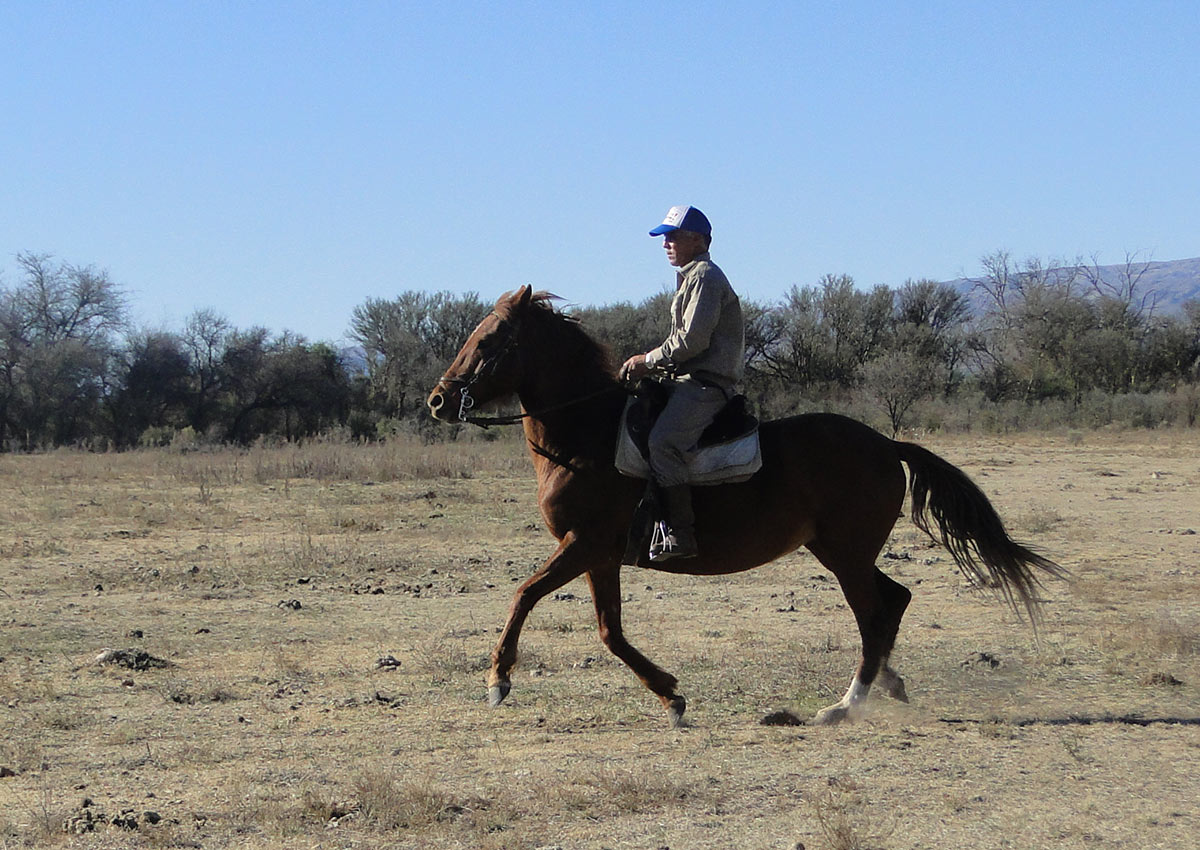
This means that the canter is a non-symmetrical movement because in the three beats a main hind limb is involved, followed by a diagonal composed of a hind and a front limb, ending with the main front limb, opposite the main hind limb, followed by a period of suspension.
The speed of the limbs, both individually and diagonally, can reach values of 110 supports per minute.
When free-running horses turn at a canter, or even at a gallop, they prefer to use the limb on the inside of the turn as the leading foreleg. If they do it the other way round, with the limb on the outside of the turn as the leading one, it becomes more difficult.
Air of the Gallop
When the horse is required to increase speed from the canter, there comes a point where, in order to go faster, it enters the air of the Gallop.
We could say that it is a derivative of the canter with greater speed. It has 4 beats because it discontinues the support of the diagonal since one limb supports itself before the other, generating the fourth beat.
The length of the stride increases linearly with the speed of the air. The same does not happen with the increase in the frequency of the gallop, which is non-linear.
The sequence of limb support in the gallop is generally transversal:
- Support of the right hind limb (RH)
- Sequential support of the left hind limb (LH)
- Support of the third limb (LF)
- Followed by the front leg that guides the canter (FL)
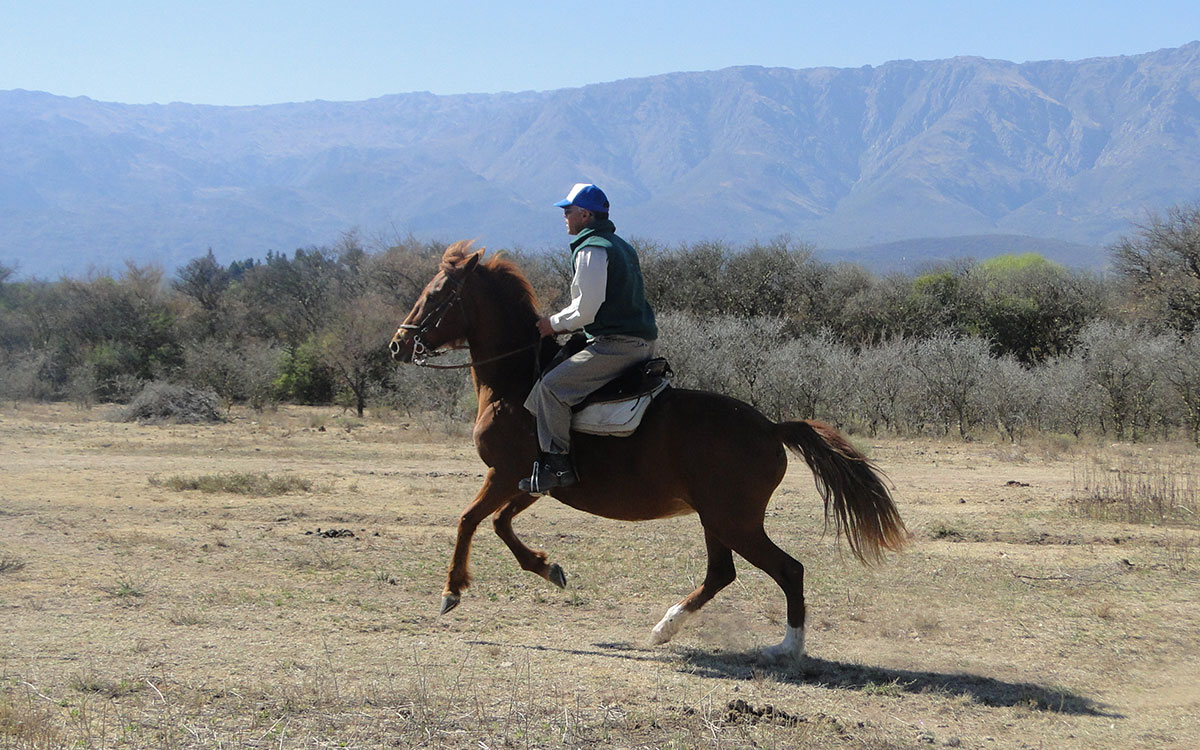
During the canter, the horse's neck moves up and down in a rocking motion.
A horse is said to be cantering “en ferme” when, in order to turn right, it gallops on its left leg, i.e. it carries its right leg in front.
A horse is said to be cantering “en trot” when, in order to turn right, it gallops on its right leg, i.e. it carries its left leg in front.
The gallop is the horse's fastest gait, with an average of 40 to 48 kilometers per hour. A well-conditioned horse can maintain this pace for quite some time (30/40 minutes). However, racehorses can reach speeds of around 66 kilometers per hour.
Other gaits
As we mentioned at the beginning of this article, in addition to the three basic gaits, there are other more specific gaits.
There are breeds of horses with other types of gaits, such as ambling, typical of the Colombian Paso Fino horse, the Tennessee Walking horse, the Icelandic horse, etc.
Ambling gait of Paso horses
This gait is specific to certain breeds of horse.
It is a 2-beat gait, but instead of moving the front and hind legs diagonally, it moves the front and hind pairs of legs on the same side.
In other words, the horse raises both limbs on the same side while resting the limbs on the other side.
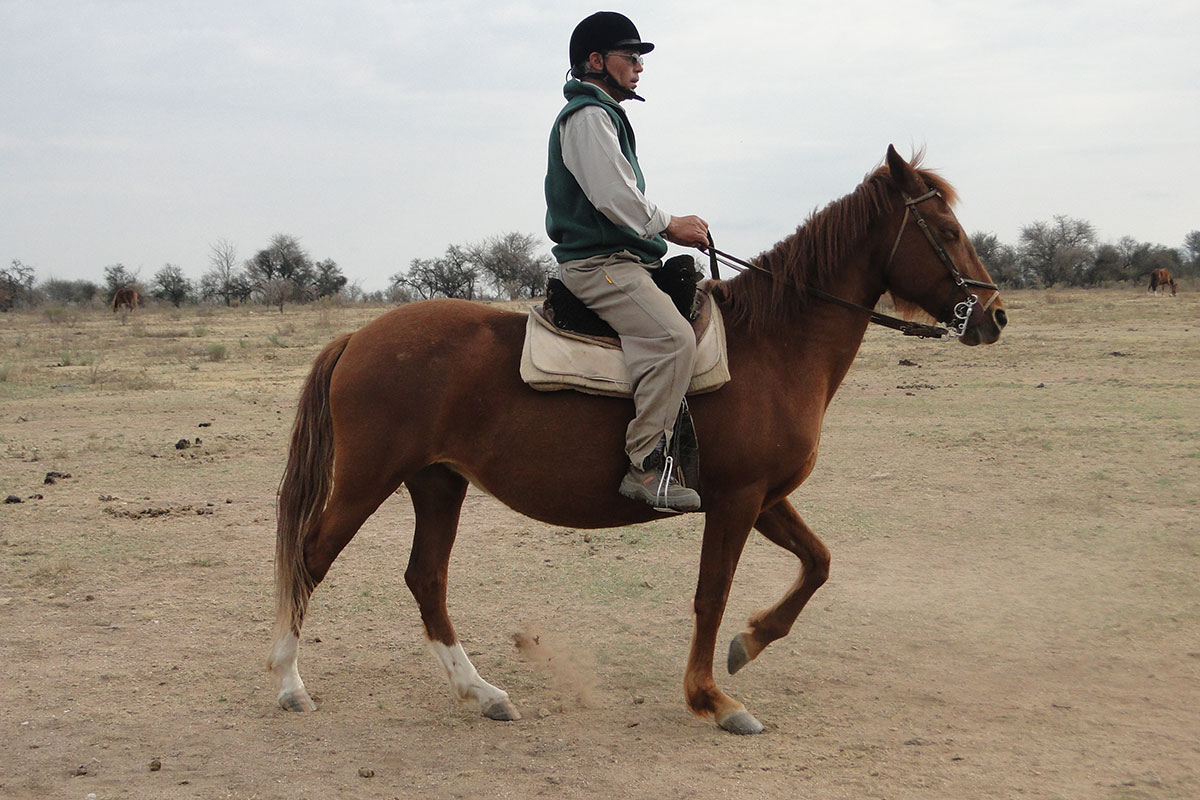
The amble is the essential gait of the Peruvian Paso horse.
This allows it to move at a walking pace, marking 4 beats and reaching 14 km/hour without leaving this broken ambling pace, so that in the transition it goes directly from walking to galloping, without going through trotting.
Icelandic horse gaits
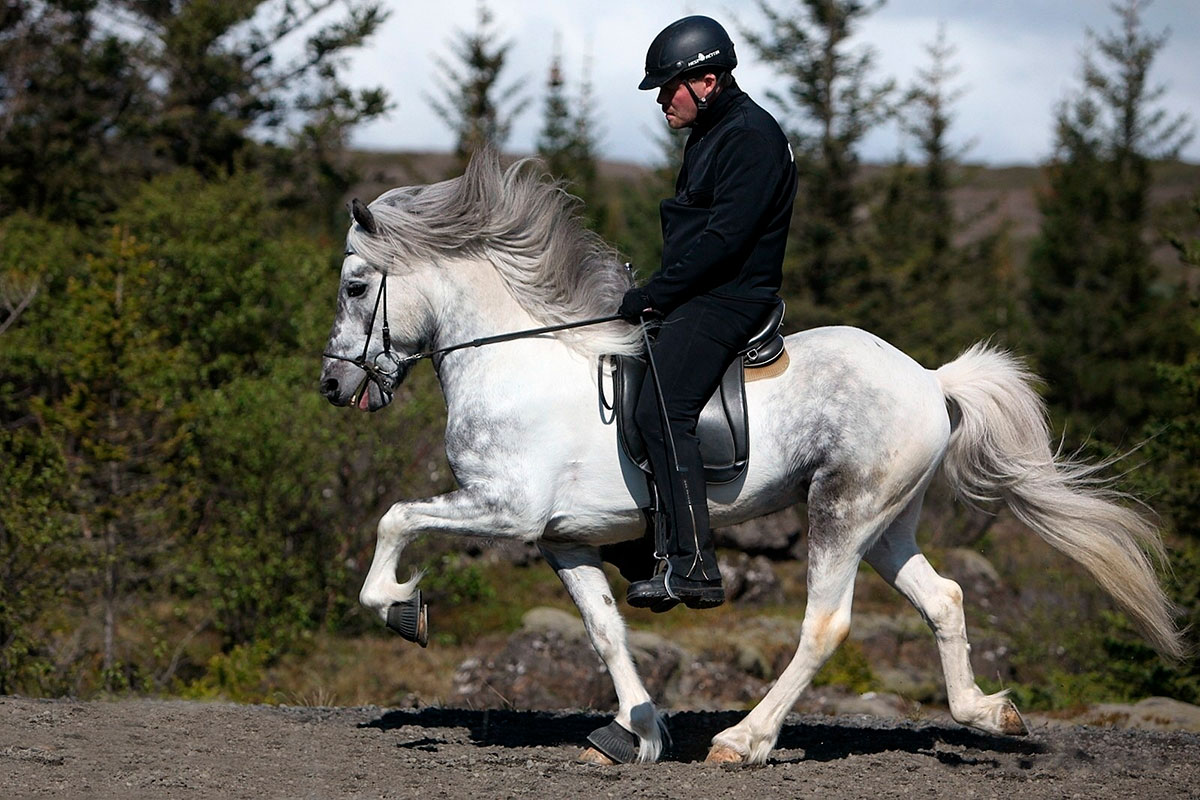
The Icelandic horse is the only breed that has 5 gaits. In addition to the basic walk, trot and canter, they have two other gaits or paces.
The Tölt is a 4-beat gait, capable of reaching 25 km/h.
And then there is the gait that Icelanders call “the fifth gear”. The Skeid or Flugskeið, is a very fast movement where the horse moves both legs from one side at the same time.
Paso Fino gaits
The classic Fino gait is a lateral 4-beat gait. The horse is very calm and takes very short, quick steps while advancing very slowly.
The Short Step is the Paso Fino horse's second gait. Although it is similar to the Classic Fino gait, the steps cover the ground a little more.
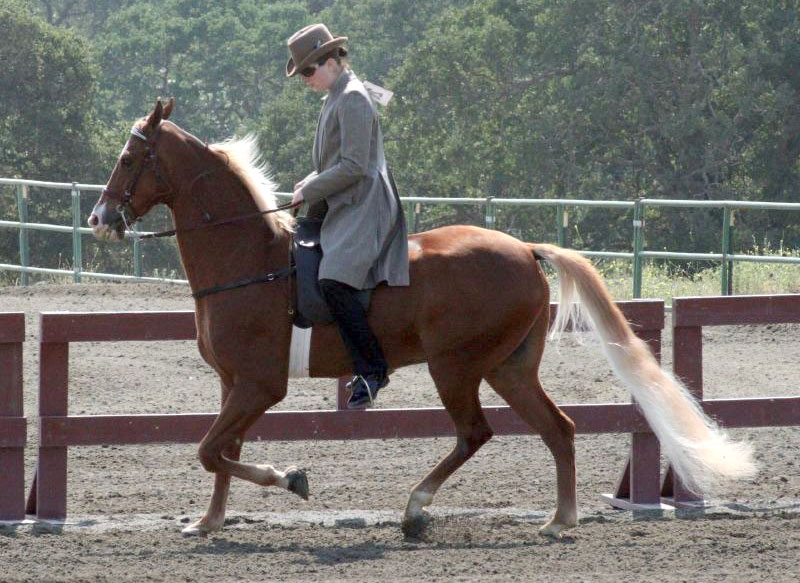
This horse from Tennessee, in the southern United States, is known for its peculiar “walking running” 4-beat gait. Each step is accompanied by synchronized and rhythmic movements, providing absolute comfort to the rider.
Final conclusions
The unique beauty and elegance of the horse's gait is distinguished by the different ways in which it links its steps. These gaits should be known by the rider, as well as knowing how to distinguish those special gaits of some horse breeds.
In this article we wanted to show the fundamental aspects of the three natural gaits, and some characteristics of some breeds.
For more information on horse biomechanics, remember that you can consult the article on the basics of horse locomotion.
Comments (0)
No comments yet.
You might also like
Paul Coudenys and Entre Orejas: Unique Horseback Riding Experiences in South America
Why Do Horses Rear Up? Causes and Solutions
Separation Anxiety in Horses
The Evolution of the Horse: Interview with Dr. Marcos Imberti
The Reflection of Human Emotions in Horses: Allies in Assisted Therapy and Equine Therapy

Comments
Leave your comment