
WHAT TO DO WITH YOUR HORSE IN WINTER
A practical guide to keeping it healthy and fit
During the winter season, it's important to pay attention to certain issues to ensure your horse stays healthy and well-cared for.
To achieve this, you should:
- Take care of the coat and grooming
- Regulate feeding
- Check body condition
- Maintain an exercise program
The matter of coat and grooming
In response to low winter temperatures, horses protect themselves through coat growth, making grooming and cleaning more challenging.
Following the practical tips I'll give you below, these grooming tasks will be easier to carry out and can be done in less time.
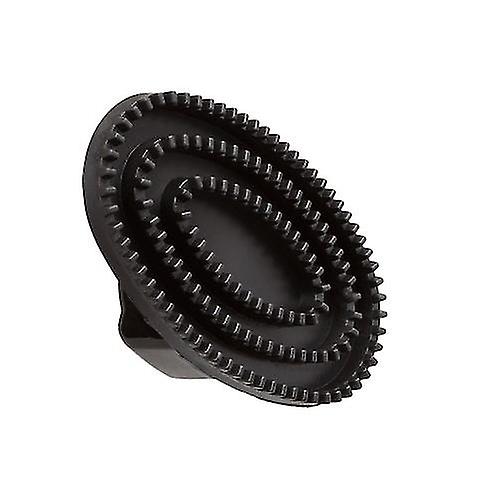
Your friend the curry comb
Indeed, it's the best friend for winter (and for the rest of the year too).
With a normal bristle brush, you have no chance of removing accumulated mud and dirt mixed with a thick coat of hair.
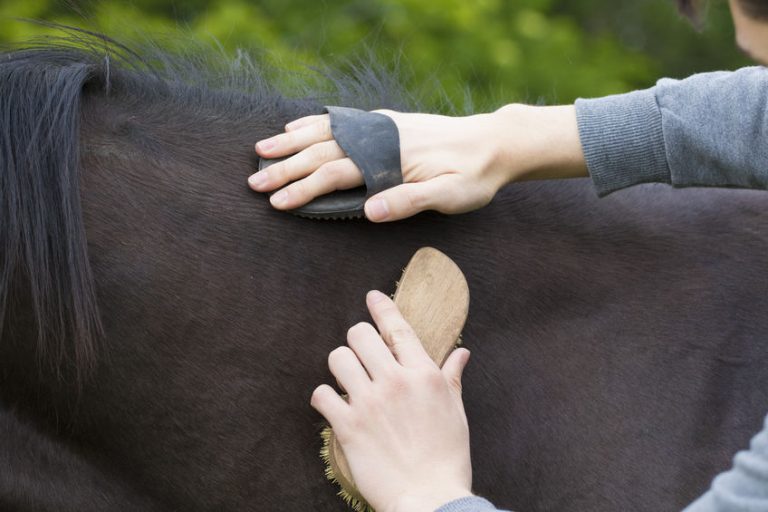
Therefore, the first thing you should do is pass the curry brush in circles all over the horse's body, including its limbs.
This way, you'll break up the knots of accumulated dirt intermingled with the horse's long hair.
Once you achieve this, you can then use a regular bristle brush to get rid of all that dirt that surfaced with the curry comb.
Remove saddle marks
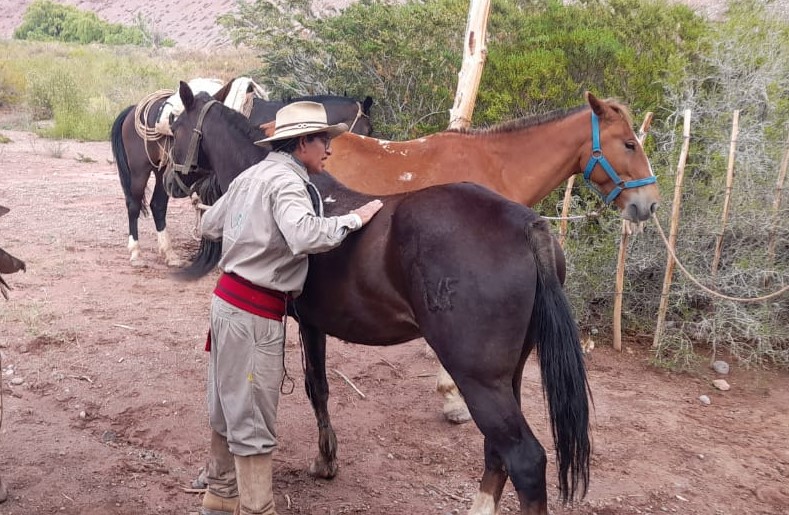
Even in winter, when your horse exercises or works, it sweats and the saddle leaves marks on its back.
Therefore, whenever you use your horse, you should give it a shower.
When the weather is too cold to wet it, you can resort to this practical resource: In a bottle, preferably with a sprayer, place isopropyl alcohol, that is, the ethyl alcohol you get at the pharmacy, and spray this on the dry sweat marks from the saddle.
After moistening the marks with this preparation, proceed to rub and clean the marked area.
When it dries, the saddle marks will have disappeared. It's also possible to mix the isopropyl with rosehip oil to make the mixture more lustrous or luxurious.
Keep its coat tidy
In the animal world, everything happens for a practical reason, and the horse is no exception.
Their coat becomes fluffy in winter, and this obeys their own evolution as a resource to face low temperatures.
The winter coat regulates your horse's temperature in the most extreme cold, maintaining the heat generated by digestion.
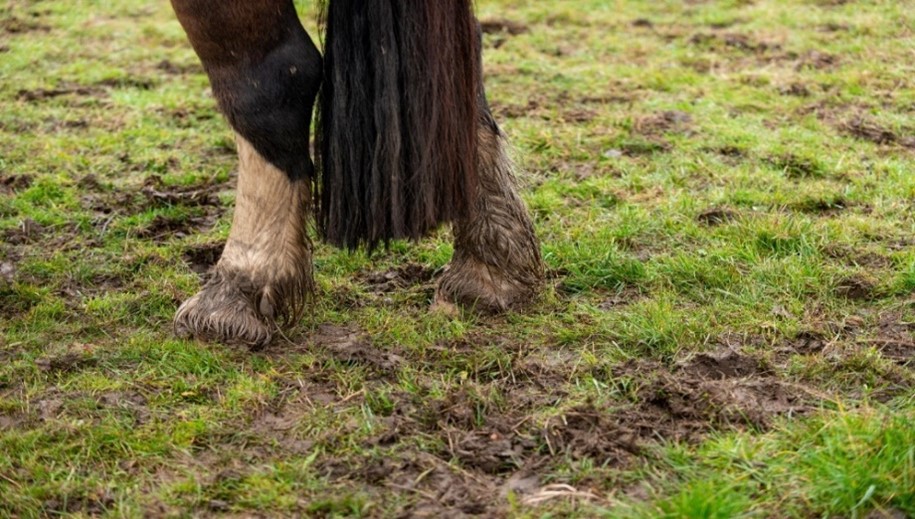
Although you shouldn't remove this protective layer, you can cut the hair in the pastern area to prevent it from tangling or matting.
The cleaner and shinier, the better
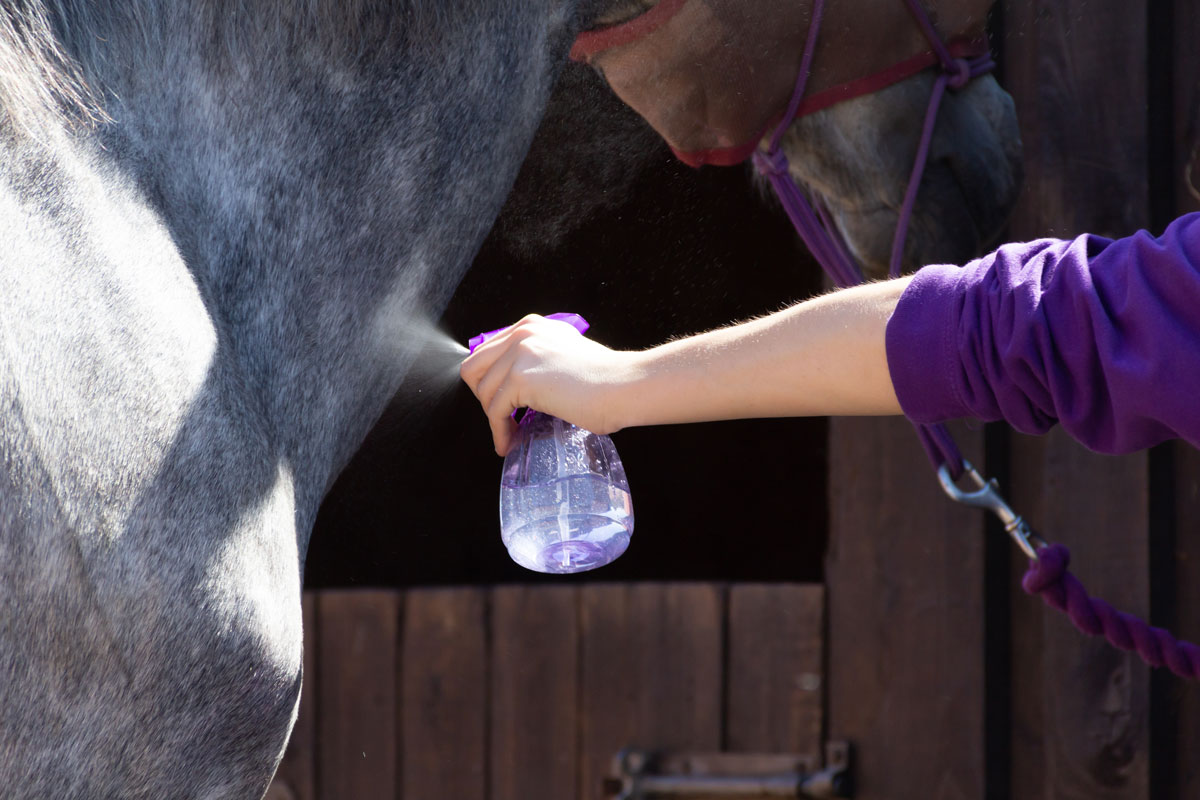
To prevent dirt and mud from accumulating in your horse's hair, it's a good idea to routinely spray it with a grooming product containing silicone.
This will leave the hair slippery, making dirt slide off quickly instead of sticking to the hair.
But beware! Avoid spraying the area where you place the saddle to prevent instability.
The bag trick
The horse's tail hairs tend to get very dirty, especially in winter.
If, for some reason, you can't wash them with shampoo or condition them for a long period, then I advise you to braid the tail and tie it inside a protective bag.
You can also apply some grooming spray, which in addition to helping prevent dirt from accumulating, will prevent the hair from tangling when removing the bag protecting the tail.
The matter of feeding
Your horse's care routine won't change substantially in winter regarding medications, hoof care, and routine veterinary checks. However, I'll share with you some special recommendations about feeding and other winter topics to keep your horse healthy and reduce the chances of colic.
For starters, you must attend to their basic needs: your horse must have sufficient water, forage, and supplements if necessary, in addition to maintaining exercise practice. Also, you'll learn to apply the Henneke body condition scale, which will allow you to monitor your horse's condition to take immediate action in case of weight loss.
But let's start with the basics:
Water intake
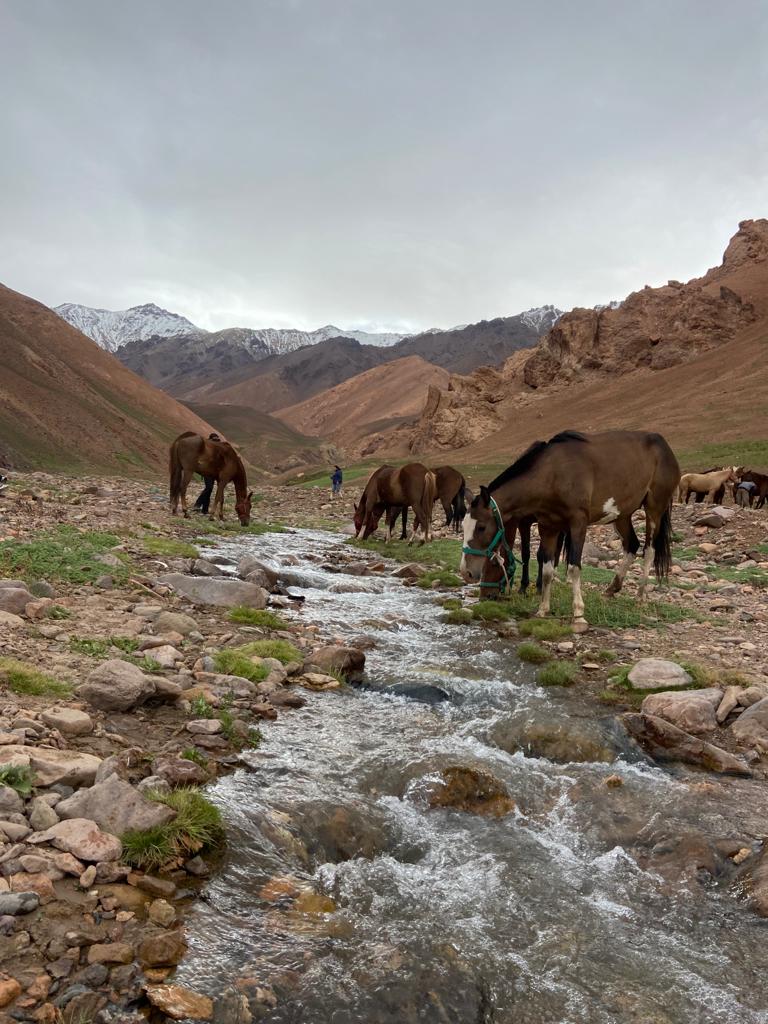
It's essential that your horse has an abundant intake of clean water. Why? Well, if it doesn't have enough water, it won't be able to digest its food properly, and this can lead to increased probability of colic. As you probably know, colic comes from an intestinal obstruction that, if not properly treated, is usually fatal.
Now, what is the amount of water your horse should drink?
In winter, forage and grain have less moisture content (10 to 15%), compared to fresh summer forage, which can have up to 80% moisture.
For this reason, in the cold season, a sufficient amount of water should be in the order of 52 to 55 liters daily.
In winter, it's common to find that the water in the drinkers has frozen. To control freezing, you can help yourself with a water heater or a hot water tank. Also, it's recommended to use rubber buckets instead of plastic, especially when removing frozen water without breaking them.
Water temperature can either encourage your horse to drink or cause rejection, so it's important to control it to maintain hydration. Ideally, the water in their drinker should be between 7 and 15 degrees Celsius. And beyond offering ideal conditions, you must observe that the horse drinks. If you notice it needs more stimulus, you can add warm water to wet the food, hay cubes, and grain making a mash.
In case you suspect your horse might be dehydrated, these are some symptoms you can check:
- Dry gums and teeth
- Slow intestinal transit
- Dry and hard fecal matter
To perform the gum test, just press your thumb on the horse's gum until it turns white, when this happens, release the pressure and time how long it takes to return to its pink color.
If it takes more than 2 seconds for this to happen, it's a sign of dehydration.
Let's talk about forage
As I was telling you, horses have evolved to withstand cold without any protection other than their own coat, as they warm themselves through digestion, in the hindgut, of the hay or grass they consume.
So, the best way to warm your horse in winter is to provide good forage. Furthermore, it's the best way to protect against colic and ulcers associated with incorrect grain feeding.
For this reason, it's important that any dental work on your horse is done before winter. This way, it will make the most of the benefit it can get from forage.
Nutritional supplements, yes or no?
Surely at some point, commercial brochures or advertising have tempted you to add nutritional supplements to your horse's diet.
We know that horses tend to lose weight quickly if not fed properly, especially in winter, and supplements can be very useful, as long as they are correctly administered.
But if you doubt the nutritional quality of the forage your horse consumes, you should first send a sample for analysis to know if it's meeting all nutritional needs.
A good hay should provide adequate proteins, fibers, and, when digested, will produce the heat your horse needs in winter, but in case the analysis indicates the lack of some nutrient, the veterinarian can recommend the supplements your horse needs.
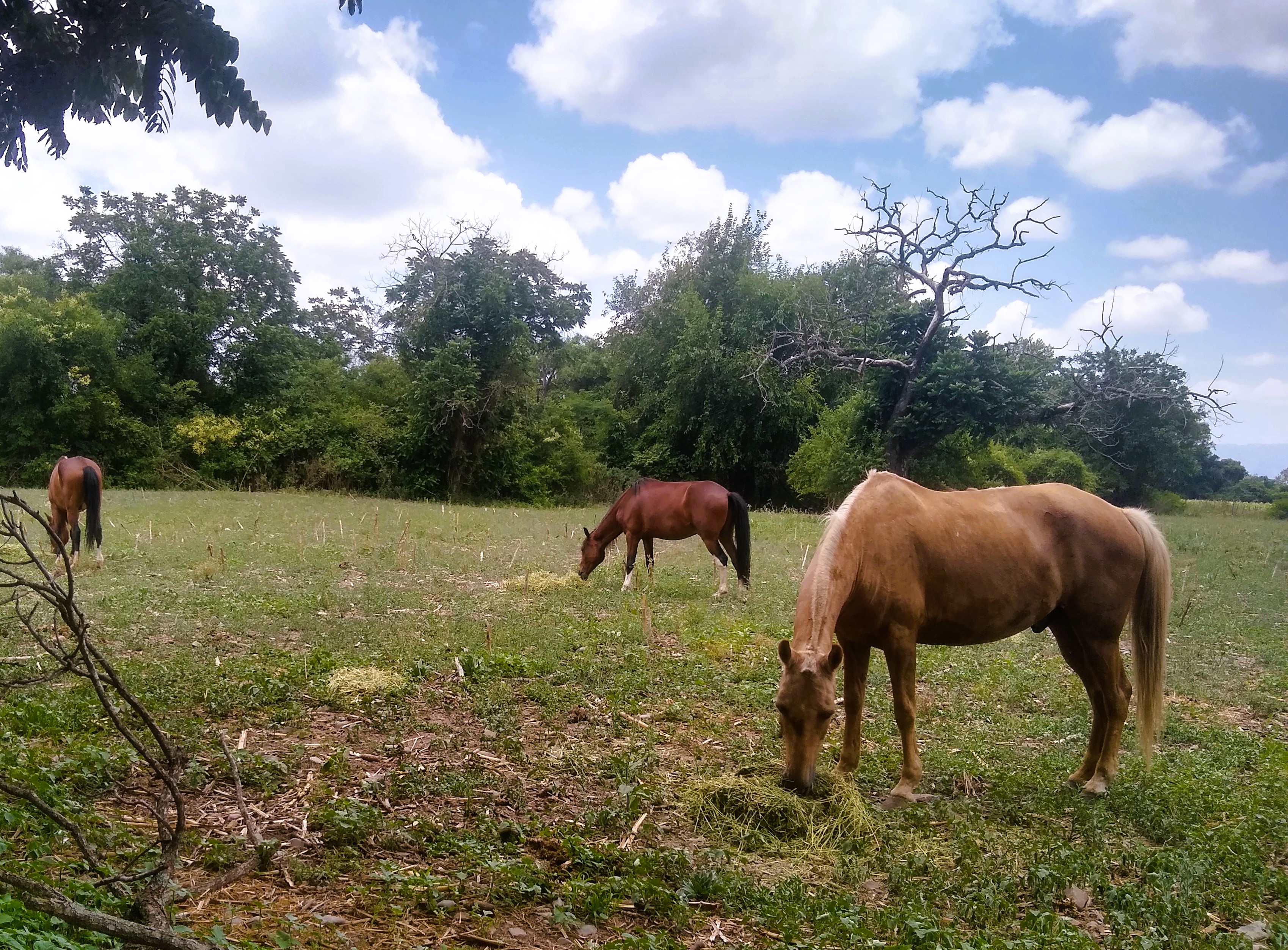
But make sure that the container or net you use to give the forage has minimal openings.
This way you stimulate the horse to eat smaller portions throughout the day, which is how the horse would feed in nature.
When it's very cold, the poorly fed horse starts burning any accumulated body fat.
If the intake or ration continues to be inadequate, it begins to burn proteins from its muscle mass.
If the horse still loses weight despite giving it sufficient ration, then increase the ration, but with hay that contains the highest possible amount of protein, as this is what gives heat when digesting.
Important: Grains provide little heat and fat provides calories but doesn't give heat.
Also, make sure to have a good amount of salt available, both in the stable and in outdoor corrals, because this food is essential for the horse throughout the year.
Finally, if the horse continues losing weight after applying all this that we have explained, consult the veterinarian.
It's important to be very attentive to the horse's weight loss in winter, so knowing the indicators that define its body condition is very important.
How to determine your horse's body condition
We will use for this determination the scoring system developed by Henneke in 1979, valid for use by anyone and for any horse breed.
This scale establishes a score for each state or condition of the horse.
To use this scoring system, you must examine the following points:
- Neck
- Withers
- Shoulders
- Ribs
- Back
- Tail
Based on the characteristics of each of these areas of your horse's body, you can place it within this scale.
| Number | Condition | Description |
|---|---|---|
| 1 | Emaciated | Ribs, tailhead, coxal and ischiatic tuberosity very prominent, bony structures, withers, shoulder, neck too notable, tissues feel without fat. |
| 2 | Very thin | Base of vertebrae and transverse and lumbar processes feel rounded, ribs, tailhead, coxal and ischiatic tuberosity prominent, withers, shoulders very distinguishable. |
| 3 | Thin | Fat between vertebrae protrusions; transverse processes cannot be felt, has fat coverage over ribs; ischiatic tuberosity not distinguishable; withers, shoulders and neck accentuated. |
| 4 | Moderately thin | Ribs faintly distinguishable, tailhead prominent. Coxal tuberosity not distinguishable, withers, shoulder and neck not emaciated. |
| 5 | Moderate | Back flattened, ribs not distinguishable but can be felt, fat can be noticed around tail mainly, withers appear rounded, shoulder and neck are uniformly fused. |
| 6 | Moderately fat | Fat over ribs, soft fat around tailhead; fat deposit mainly on sides of withers, behind shoulders and along neck. |
| 7 | Fat | May have folds in back; ribs can be felt individually but notice fat accumulation between them, fat around tailhead; fat deposits found along withers, shoulders and neck. |
| 8 | Obese | Wrinkles under back, difficulty feeling ribs, very soft fat around tailhead, area around withers filled with fat, also behind shoulder; notable thickening of neck, fat deposited along inner thigh. |
| 9 | Very obese | Wrinkles under back, fat patches appear over ribs, prominence around tailhead, along withers, behind back, and along neck, fat along inner thighs that may continuously rub, flanks filled with fat. |
In general, and except for some specific need or veterinary requirement, scores of 5 and 6 are ideal.
A quick definition of body condition indicates that you should keep your horse at a point where you can feel the divisions between its ribs but cannot see them.
The matter of exercise
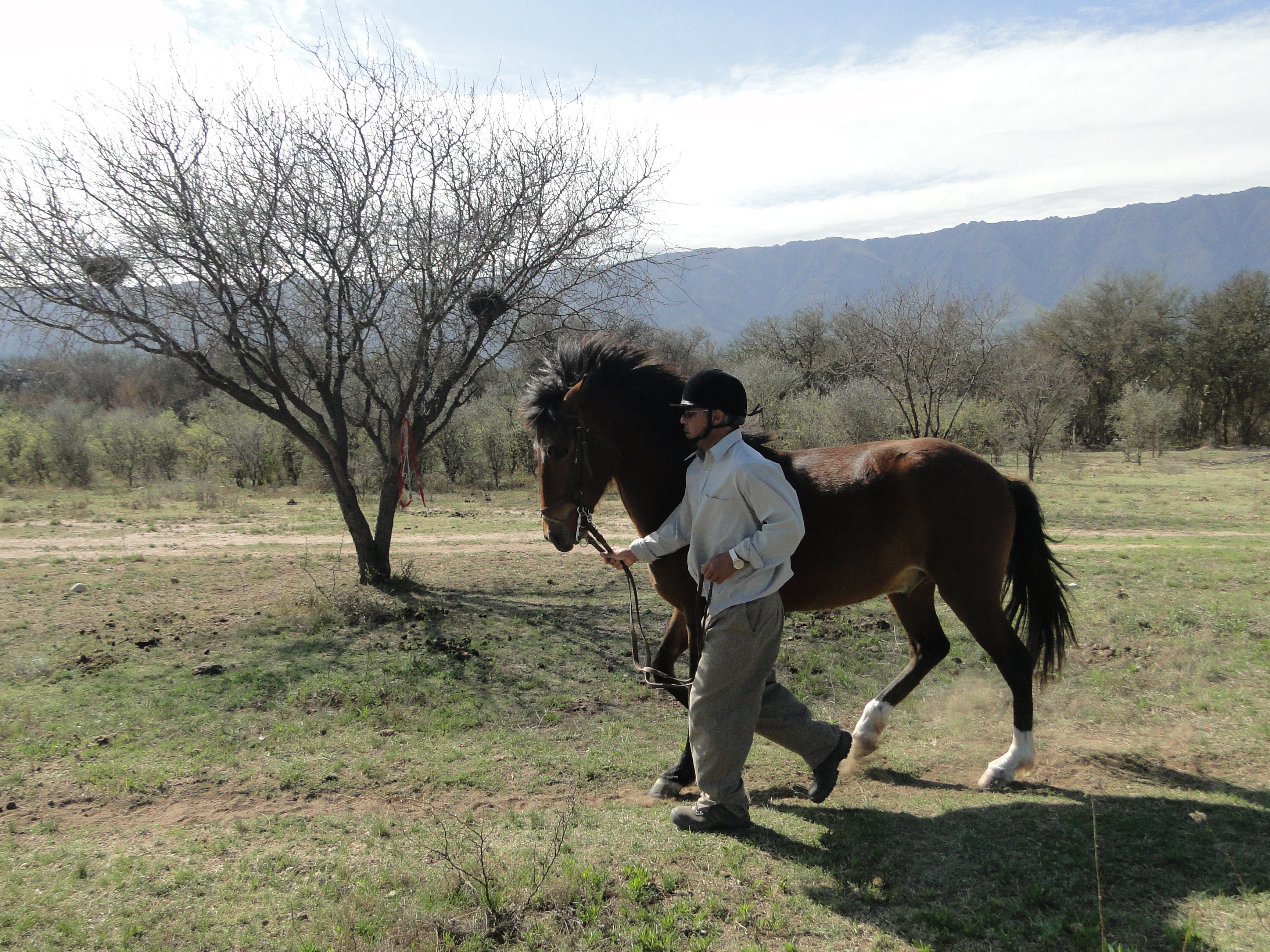
Finally, but not least important, in winter it's essential that you make your horse work.
The reason for this is that exercise in winter helps reduce the risk of colic.
If you raise your horse(s) in an open field, which is the ideal way, there's no problem, you just need to provide a shelter place and it will move freely.
But if your horse lives in a stable, it's very important that it moves, even if just walking it by hand or riding it.
If in your area the ground freezes, making it dangerous for the horse to slip, or if there's snow on the ground, you can use horse hoof boots that allow better grip and make it possible to maintain activity.
In summary
A horse that receives adequate nutrients, water, and exercise will endure the cold season without major problems.
But you should still be attentive to its behavior, paying special attention to shivers.
If your horse is healthy and well-fed, don't use blankets in winter, as they prevent the natural development of its hair coat.
But, if your horse is shaking it's because it's very cold, and this shouldn't happen.
In these cases, take it to a shelter to protect it from rain, snow, or wind, cover it with a blanket, and call a veterinarian soon.
In the case of very old or sick horses with digestive difficulties to recover weight, the use of a blanket is also recommended.
But, if you use it, take the precaution of removing it every morning to groom the horse and brush the blanket before putting it back on.
And always remember that it's best to increase forage so the horse can warm itself without needing the blanket.
With these tips, your horse can have a good winter and be healthy and in good condition for the arrival of more pleasant temperatures.
Comments (0)
No comments yet.
You might also like
Paul Coudenys and Entre Orejas: Unique Horseback Riding Experiences in South America
Why Do Horses Rear Up? Causes and Solutions
Separation Anxiety in Horses
The Evolution of the Horse: Interview with Dr. Marcos Imberti
The Reflection of Human Emotions in Horses: Allies in Assisted Therapy and Equine Therapy


Comments
Leave your comment