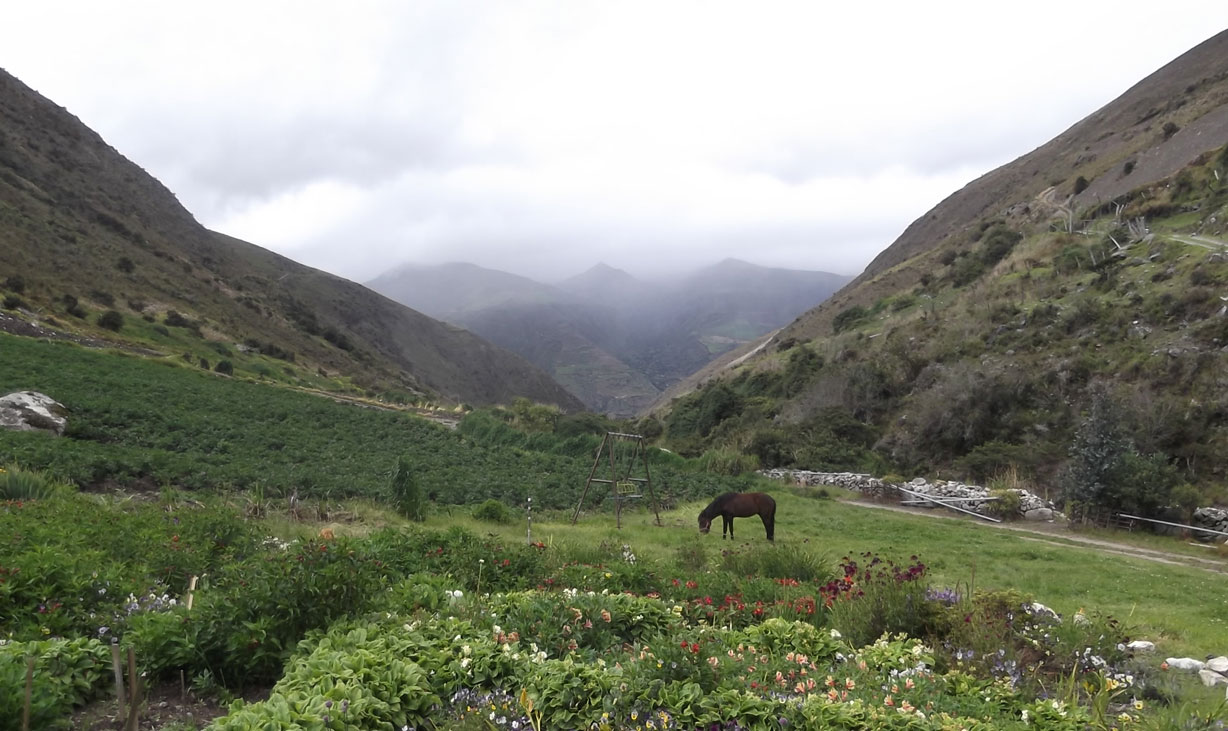
Horseback Holidays in Venezuela - Equestrian Tourism and Natural Adven
Horseback Riding Holidays in Venezuela
Argentina is a country with an equestrian tradition.
Exploring it on horseback is an experience you’ll never forget.
Download the Ebook: Discover Argentina on Horseback
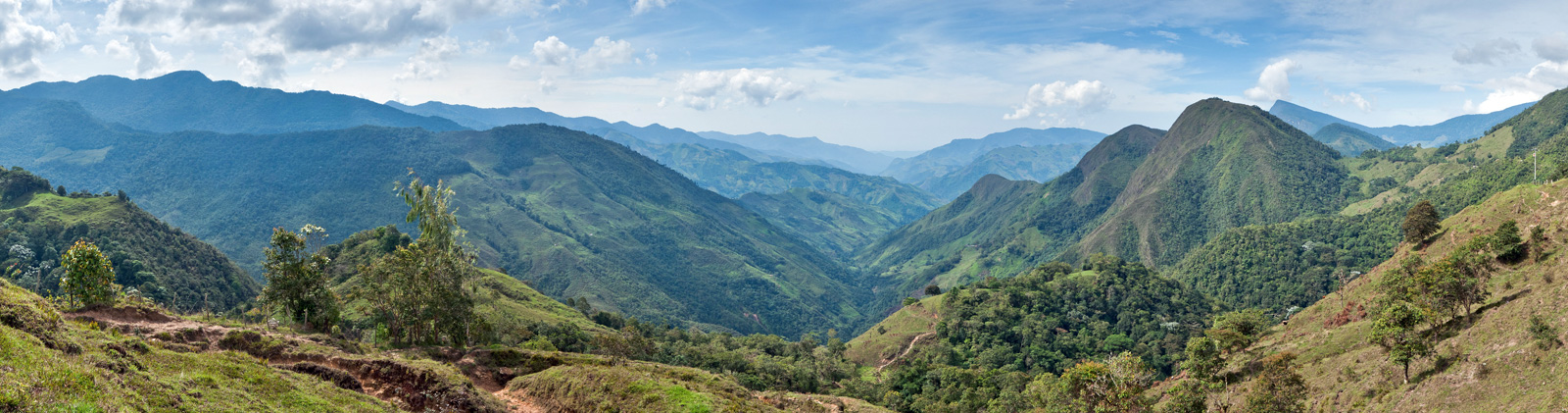
Venezuela boasts a diverse geography that makes it an attractive tourist destination, with Caribbean beaches, Andean mountains, vast savannas, and Amazon rainforest—making it an ideal country for a horseback riding holiday.
Venezuela: “Land of Grace”
When Christopher Columbus arrived on the American continent, he was amazed by the powerful Orinoco River and the deep, green jungles. He named this place the "Land of Grace."
The Bolivarian Republic of Venezuela is a country in the north of South America. It borders the Caribbean Sea to the north, Colombia to the west, Brazil to the south, and Guyana to the east.
Most of the population is concentrated in the northern highlands or coastal regions, while a minority lives in the vast area south of the Orinoco River.
Its capital, Caracas, is the financial and commercial center of Venezuela; the city of La Guaira, located 30 km from Caracas, serves as its maritime gateway.
Maracaibo, the country's second largest city, sits on the edge of the lake of the same name and is a major center of the oil industry.
Geography of Venezuela
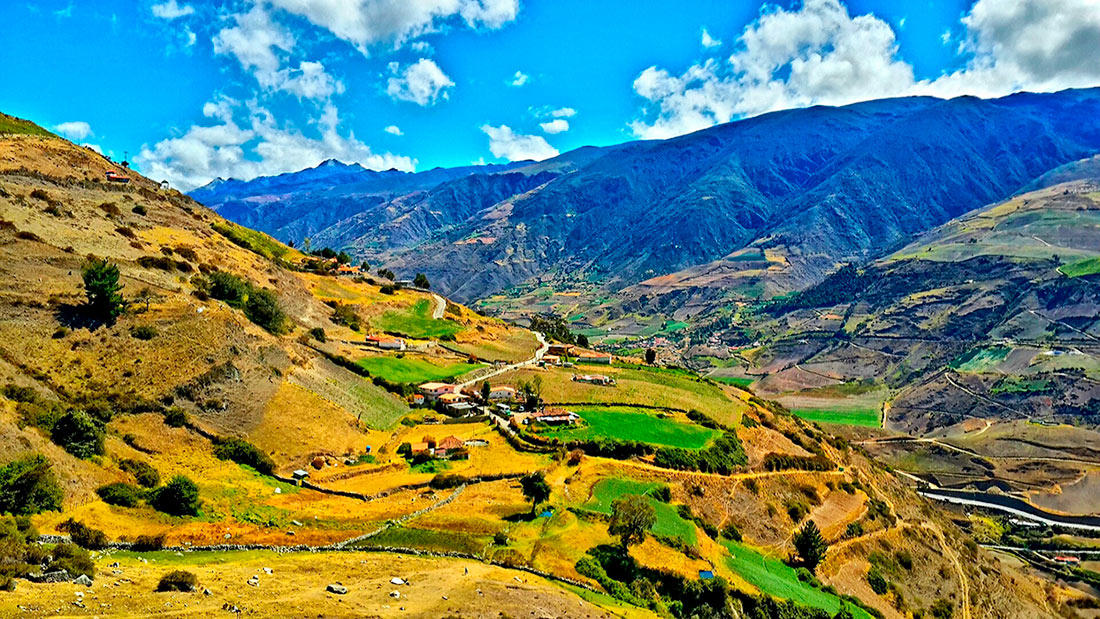
Venezuela features large rivers, plains, jungles, and mountains with Andean characteristics.
As a result of various studies, different geographic divisions have been defined, recognizing up to 9 distinct natural regions: South of the Orinoco, Llanos, Central Cordillera, Deltaic System, Eastern Cordillera, Andes, Coriano System, Lake Maracaibo, and the Islands.
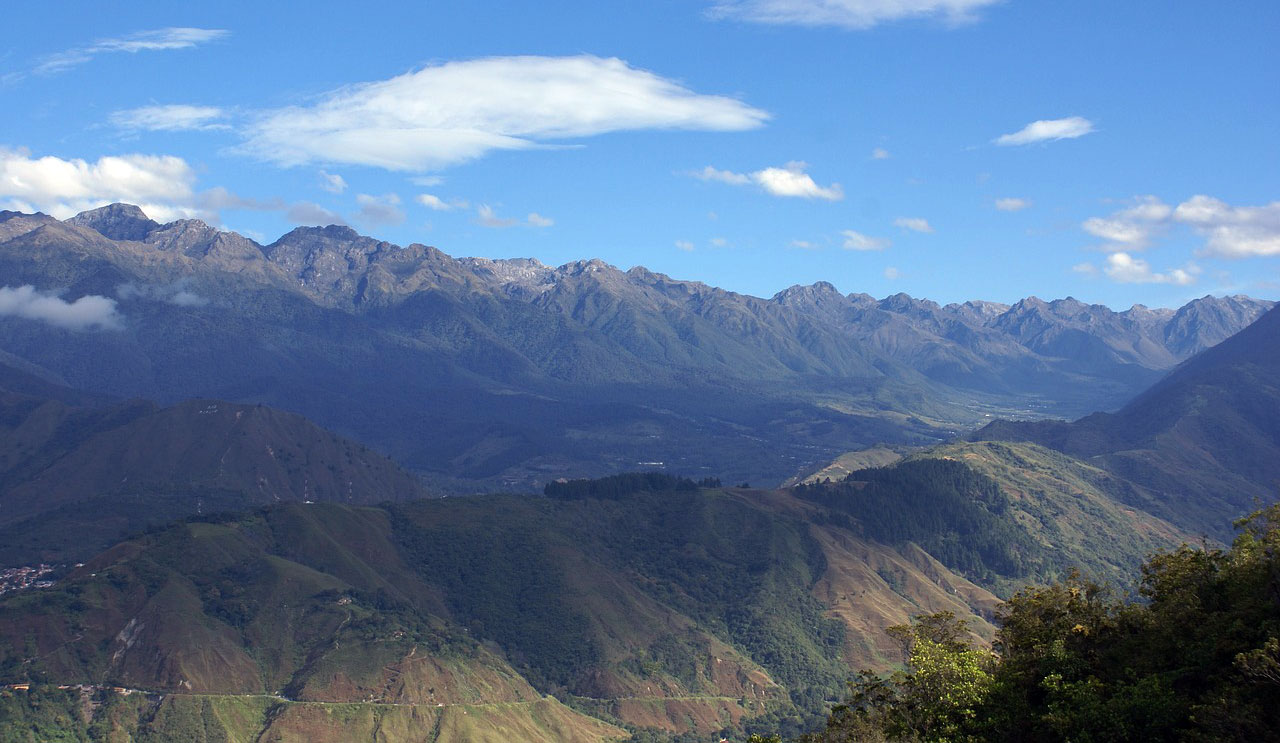
Andes Mountains
The Venezuelan landscape can be divided into these 4 geographic regions:
- Venezuelan Highlands: Located in the northwest and north, they are an extension of the Western Cordillera of the Northern Andes. Here lies the country's highest point, Pico Bolívar (5,007 m) in the Mérida Cordillera.
- Maracaibo Depression: Extends in the northwest of Venezuela, with hills and low plateaus including the Serranía de Perijá and Lake Maracaibo, which is connected to the Gulf of Venezuela.
- The Llanos: A region of alluvial plains in the north-central area; it is sparsely populated. The coastal part of the Llanos extends to the Atlantic Ocean and is irrigated by the Orinoco River, the country's main waterway.
- Guiana Shield: Reaches heights of over 2,700 m, extends in the southeast and south; includes the Parima and Pacaraima mountain ranges, which form part of the border with Brazil.
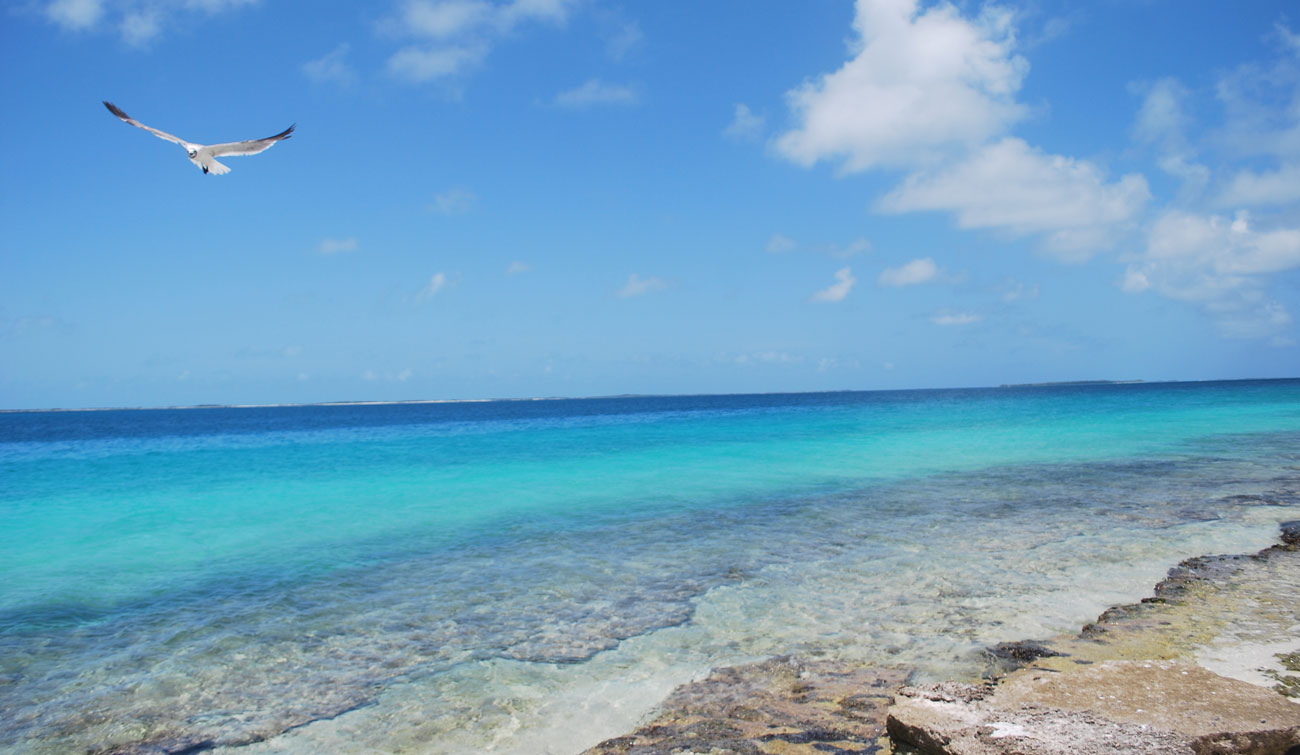
The Venezuelan coast is approximately 3,726 km long, stretching along the Caribbean Sea and the Atlantic Ocean. About 1,700 km are sandy beaches and 311 km are islands.
Among the roughly 70 Caribbean islands belonging to Venezuela, Margarita Island is the largest and most important.
The Los Roques Archipelago National Park is another must-see destination. With more than 50 cays and islets, its landscape features white sand beaches and rocky cliffs on land, while at sea, beautiful coral formations abound with marine life.
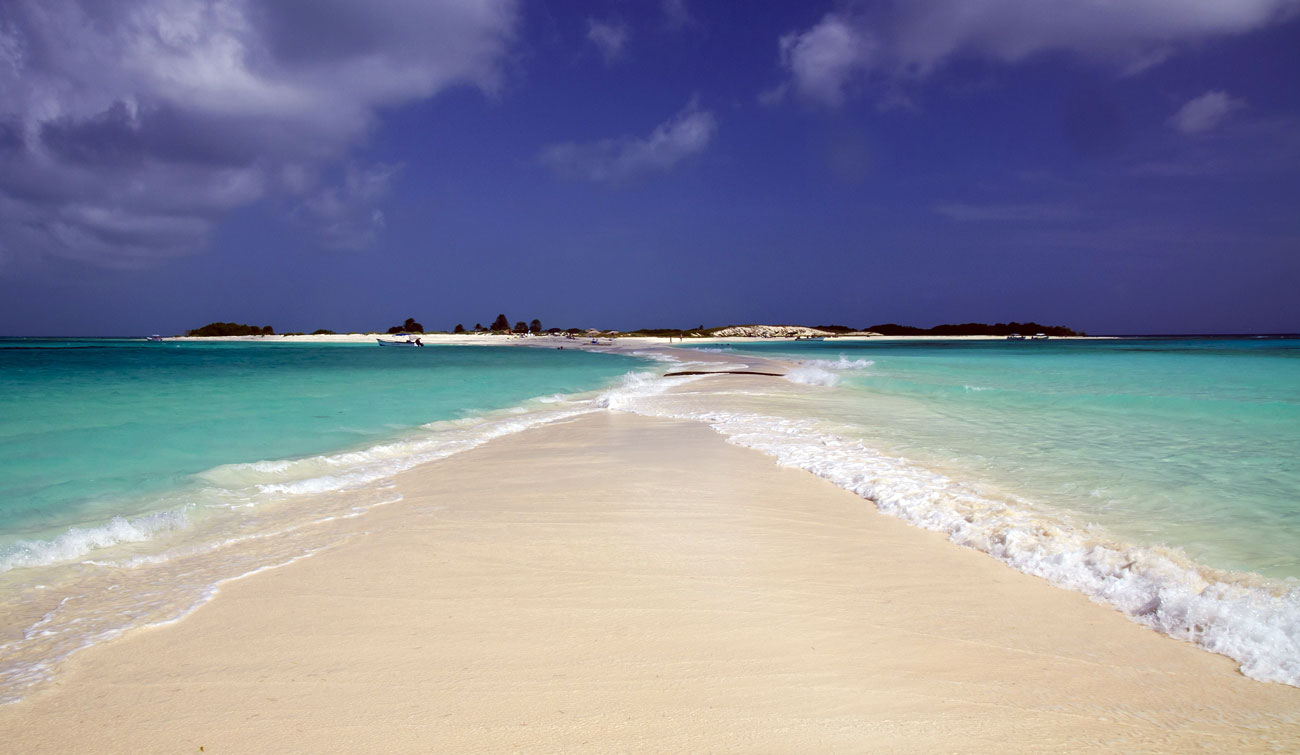
In general, Venezuela's climate depends mainly on altitude. It is tropical in the Llanos and along the coast, and temperate due to altitude in the mountainous regions.
Fauna and Flora
Venezuela's varied climate allows for great diversity in flora and fauna, many of which are endemic.
It is one of the countries with the greatest variety of bird species, such as macaws, toucans, turpials (the national bird), flamingos, herons, and parrots. Reptiles are numerous, including the Orinoco caiman and five other species of turtles and snakes.
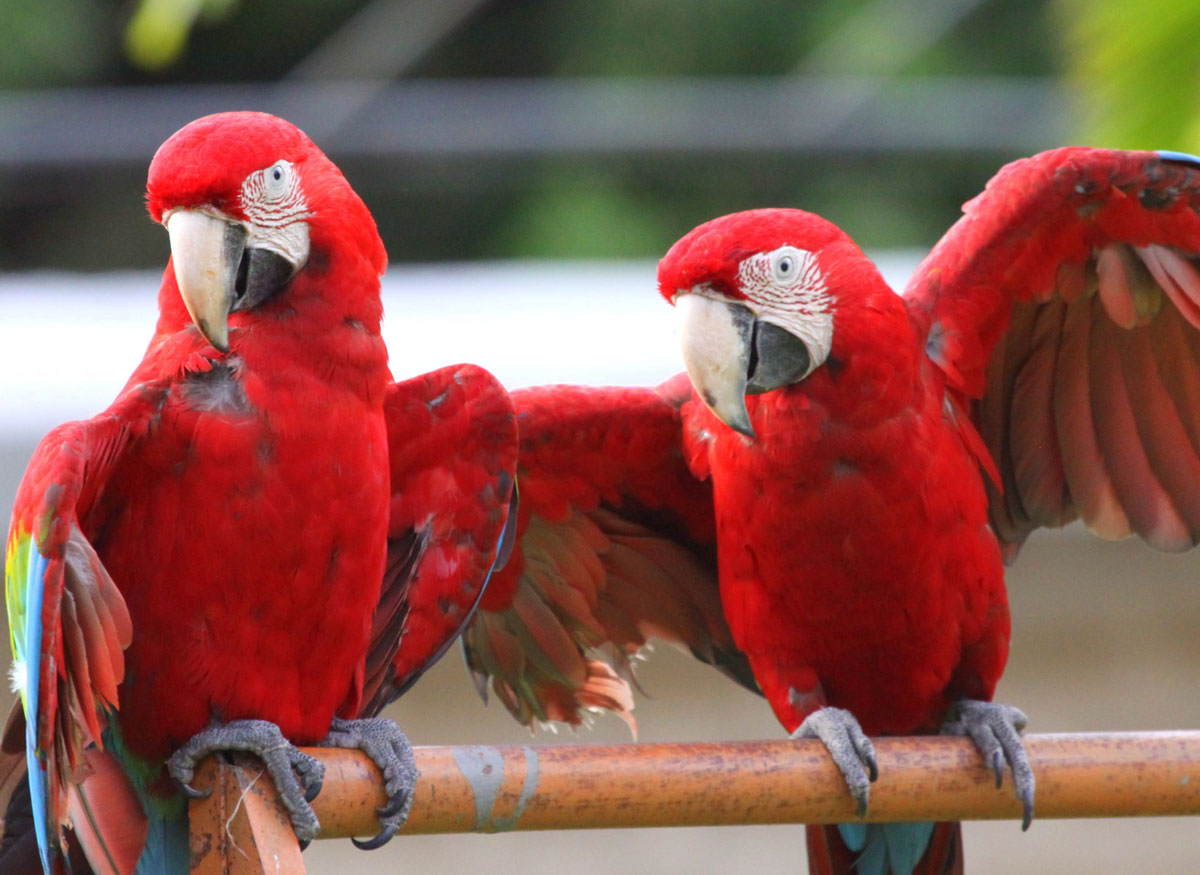
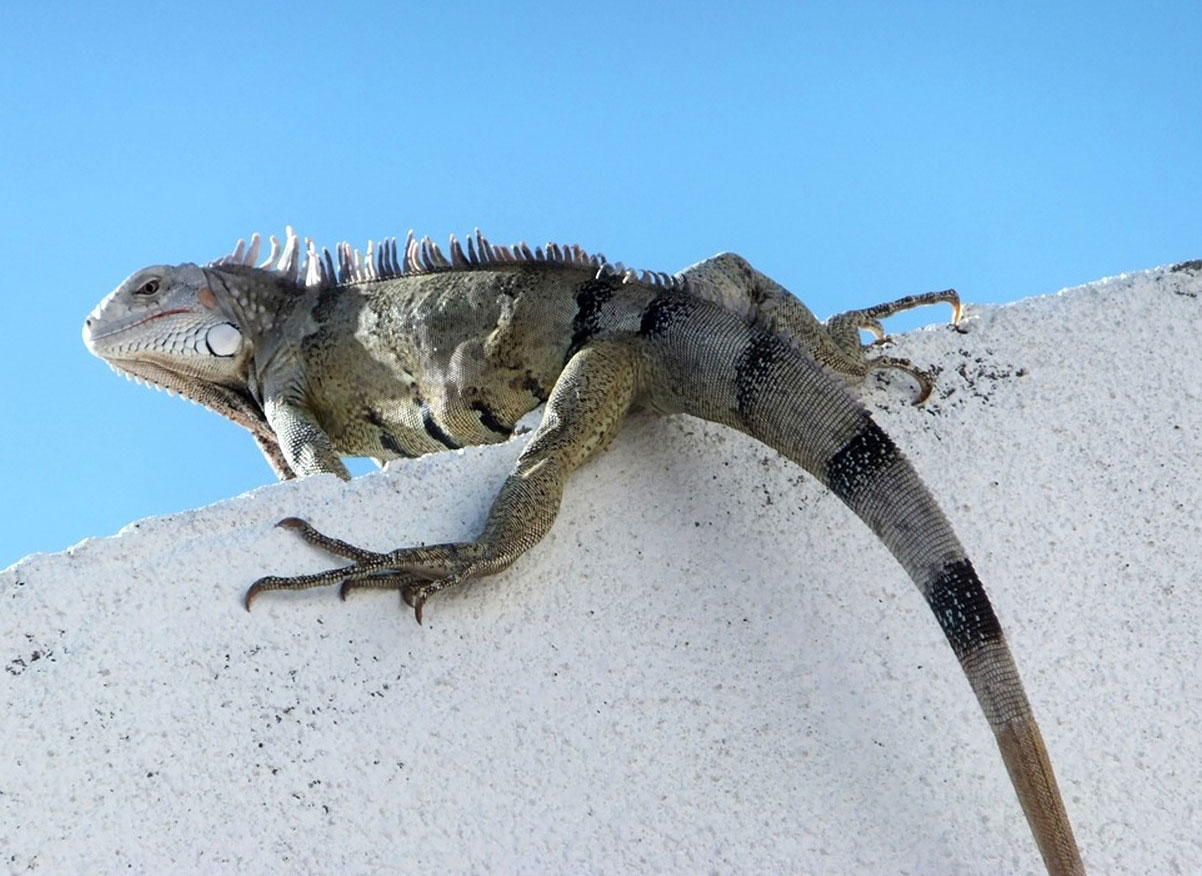
Venezuela's vegetation is made up of at least 30,000 plant species, with 4 defined biotypes: grasslands, forests, original vegetation, and shrublands.
Up to 1,632 types of orchids have been identified, including the Cattleya Mossiae, Venezuela's national flower.
Equestrian Tourism in Venezuela
Venezuela is known for its great variety of landscapes and natural monuments.
Thanks to its splendid and vast plains, snow-capped mountains, jungle, and thousands of kilometers of sandy coasts, riders have many destinations to enjoy horseback riding routes.
Crossing the Andes from the tropical jungle to the high peaks of the Sierra Nevada on horseback is, without a doubt, a fantastic way to discover the secrets of this mountain range.
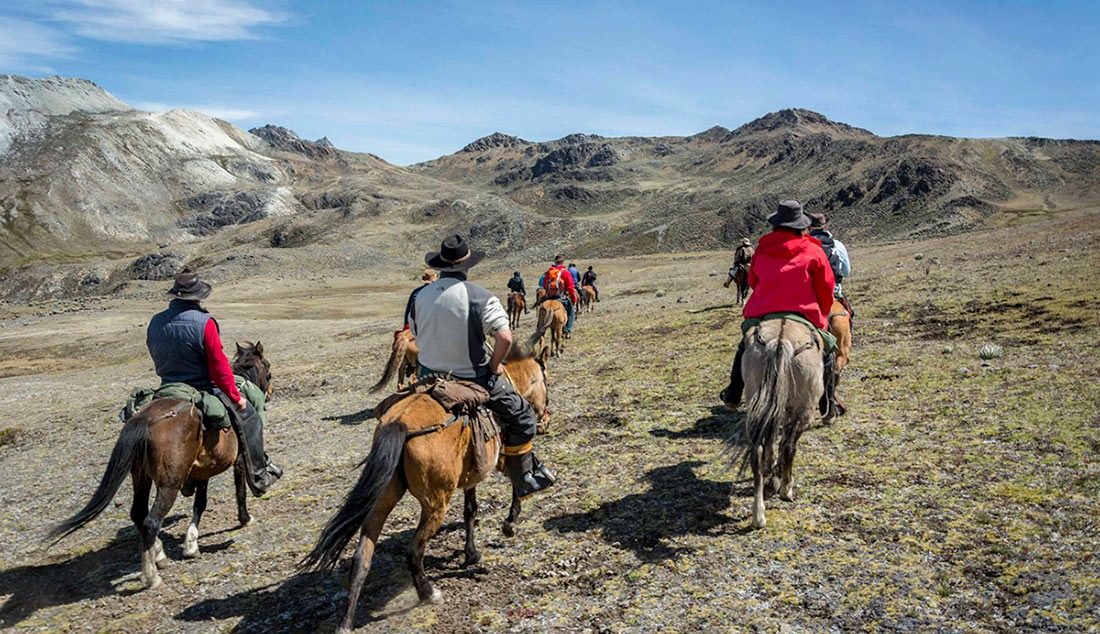
Venezuela encompasses everything from tropical jungle to desolate landscapes and dizzying ridges.
As you travel its equestrian routes, you will experience the same odyssey as the Spanish conquistadors 500 years ago. All the mountain passes, landscapes, flora, and fauna have remained unchanged.
The Importance of Choosing the Right Provider
While Venezuela's geography invites you to enjoy a horseback riding holiday, it is not the safest country and certain precautions must be taken.
Ampascachi suggests two providers in the Andes region, Entre Orejas and Arassari Trek, for your equestrian routes.
Entre Orejas
Founded by Paul Coudenys, this equestrian tourism provider organizes horseback riding holidays and equestrian expeditions in various Latin American countries.
After traveling half the world on horseback and working in several areas of the equestrian world, Paul Coudenys settled in Brazil in 2010, where he founded the company “Entre Orejas.”
After developing horseback riding routes in Brazil, he decided to expand and offer equestrian routes in countries such as Chile, Colombia, Mexico, and Venezuela.
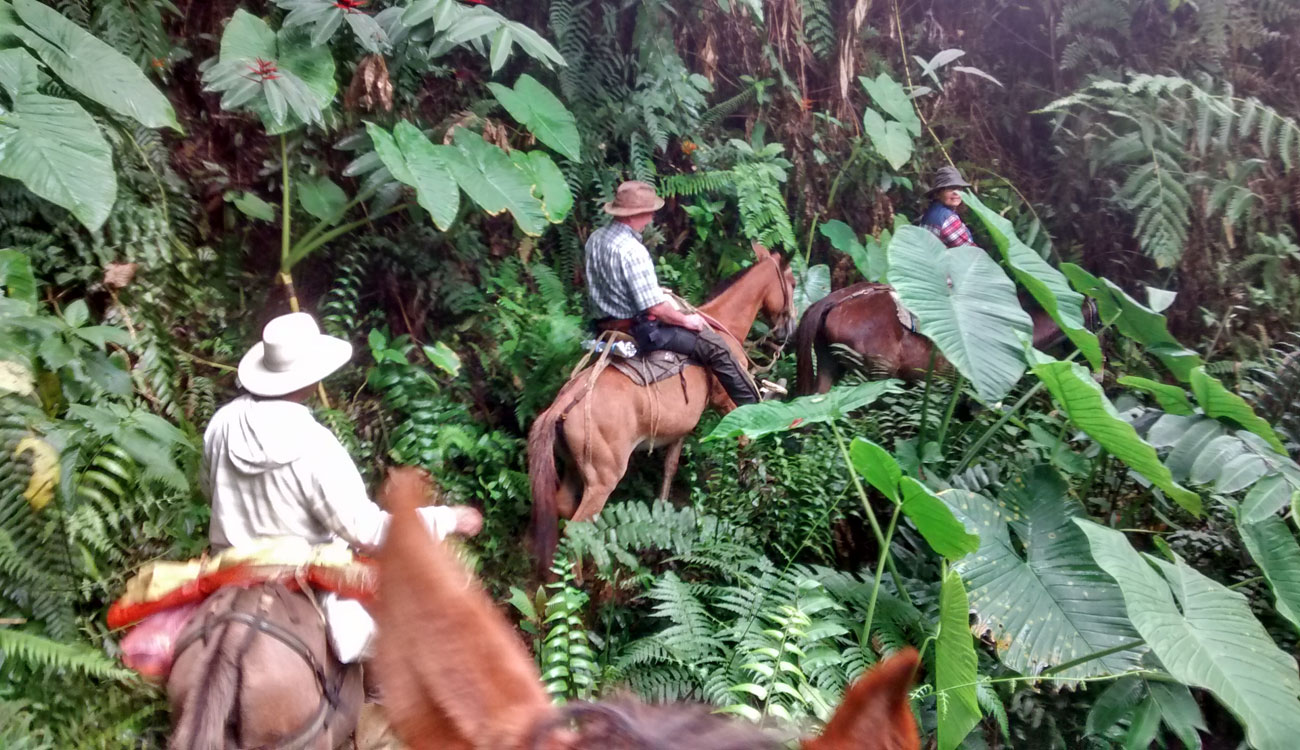
Their equestrian routes in Venezuela
Currently, they only offer one route in Venezuela, the Jungle to Andes Expedition.
An 11-day horseback adventure crossing the Andes from the tropical jungle to the high peaks of the Sierra Nevada.
Route features:
- Duration: 11 days (10 nights and 7 days on horseback).
- Guides: Professional muleteers with great knowledge of the terrain.
- Riding level: This program is suitable for all levels of riders.
- Group size: Minimum of 8 riders and a maximum of 10 riders.
- Minimum age: The minimum age for this route is 16 years, but only if accompanied by an adult.
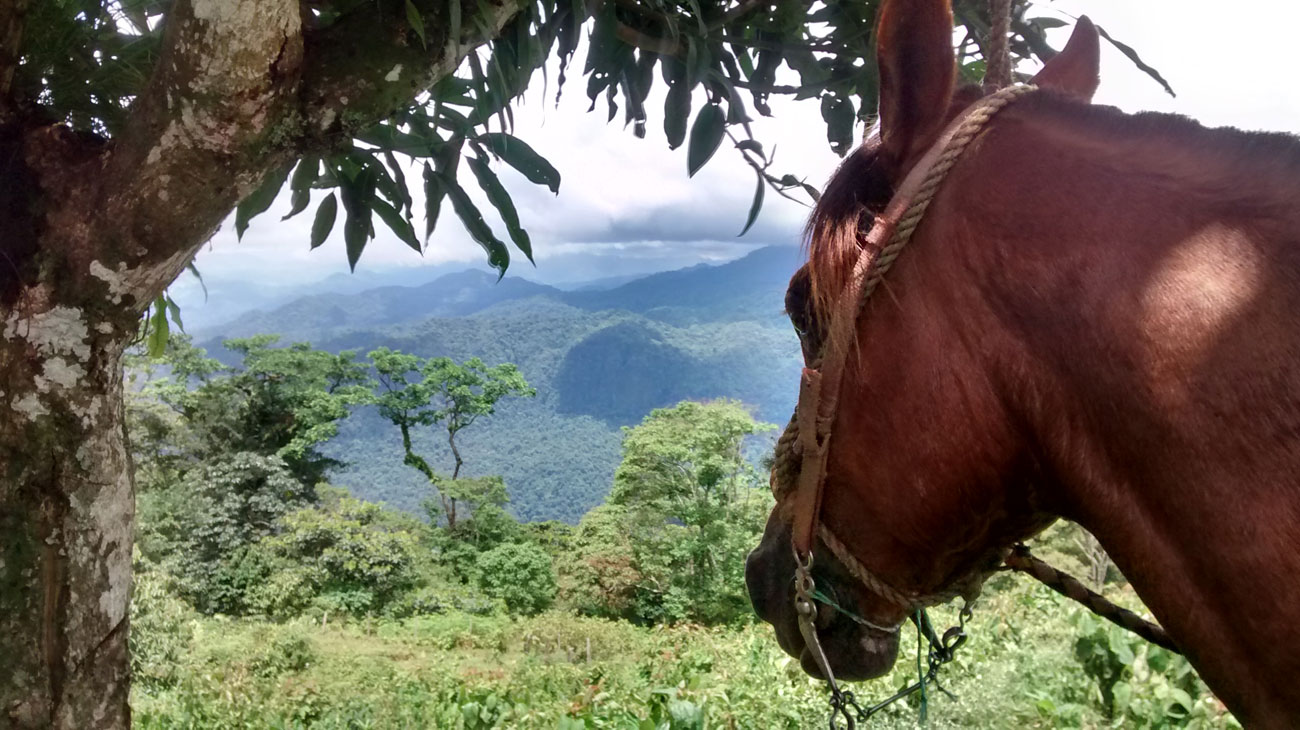
On this route, you will ride their Venezuelan crossbred ponies. These are small, agile horses, very suitable for climbing these trails.
Do not expect long gallops on this journey—the terrain is too extreme—but the beauty and intensity of the trek will more than make up for the slower pace.
This is ecotourism at its best. Local farming families benefit economically from your visit, and in return, you get 11 days of intense adventure.
You can find more information about this program at: www.entreorejas.org.
Arassari Trek
Located in the Mérida mountains, you can enjoy views of the Sierra Nevada and the Humboldt Glacier. They offer all kinds of outdoor activities, from nature observation excursions to river descents, and of course, horseback riding routes.
Sylvie and Jacky will be your hosts for your horseback riding holiday at Arassari Trek. They are horse breeders and take care of the saddles and horseshoes.
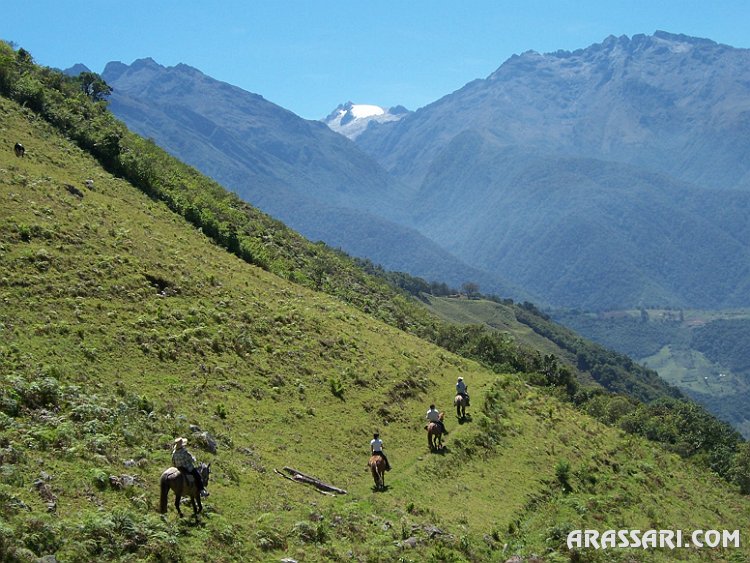
Their equestrian routes
They organize one-day horseback rides, with itineraries of several hours depending on the route and the rider's level. These excursions depart from the ranch and include a picnic. The shortest, for beginners or those with little time, lasts about three hours.
They also offer 3 multi-day horseback routes:
- El Rodeo: A 3-day trip crossing the cloud forest of Raíz de Agua (3,000m) and the Rodeo cave (3,600m).
- Los Aranguren: A 5-day trip passing through El Rodeo and reaching the Los Aranguren valley, returning via the Antoñito pass (4,100m).
- Gavidia: A 6-day trip that completes the circuit, offering different landscapes and reaching 4,000m in altitude.
See details of all their routes on their website: www.arassari.com.