
Horse Breeds for Riding - Guide to Types and Characteristics
Horse Breeds for Riding
Do you know how many horse breeds are used today for riding? Discover the richness of a species selected by humans over centuries.
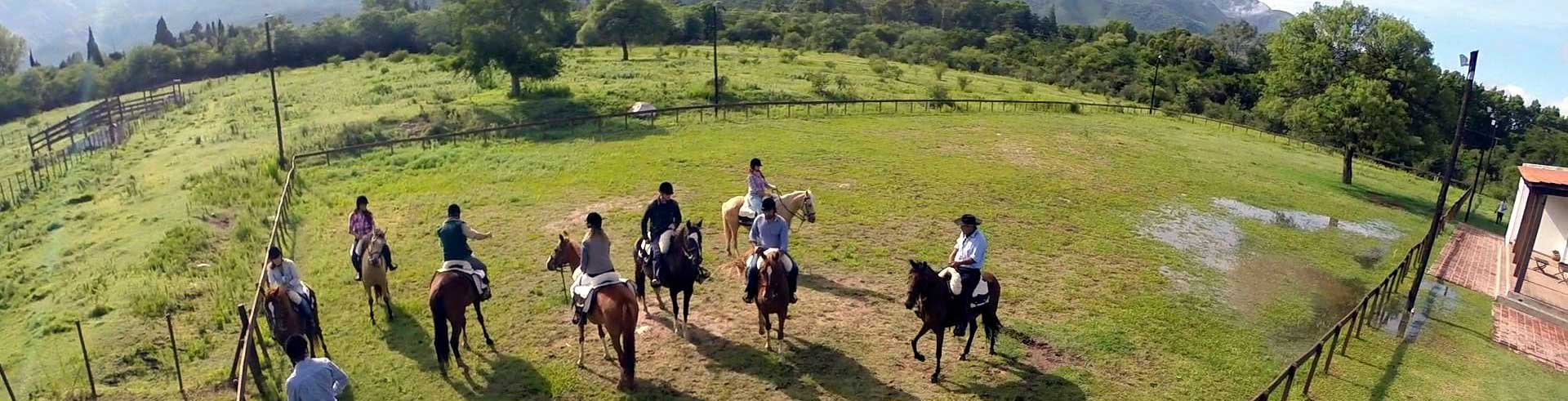
The Domestication of the Horse for Riding
At first, humans domesticated the horse for food purposes. However, they soon realized that this animal could be useful in carrying out their tasks. Thus, they began to use it both in agriculture, pulling the plow, and for traveling long distances, as a means of transportation.
They also used it as their ally in wars. For example, in Europe and Asia many great empires were established thanks to horses allowing them to reach the farthest parts of their territories.
This did not happen in America where the Inca, Aztec, and Maya empires always covered small territories because they did not have horses. They traveled on foot.
As a result of these activities, much more valuable than using their meat as food, a strong relationship between humans and horses began to form, which has lasted to this day.
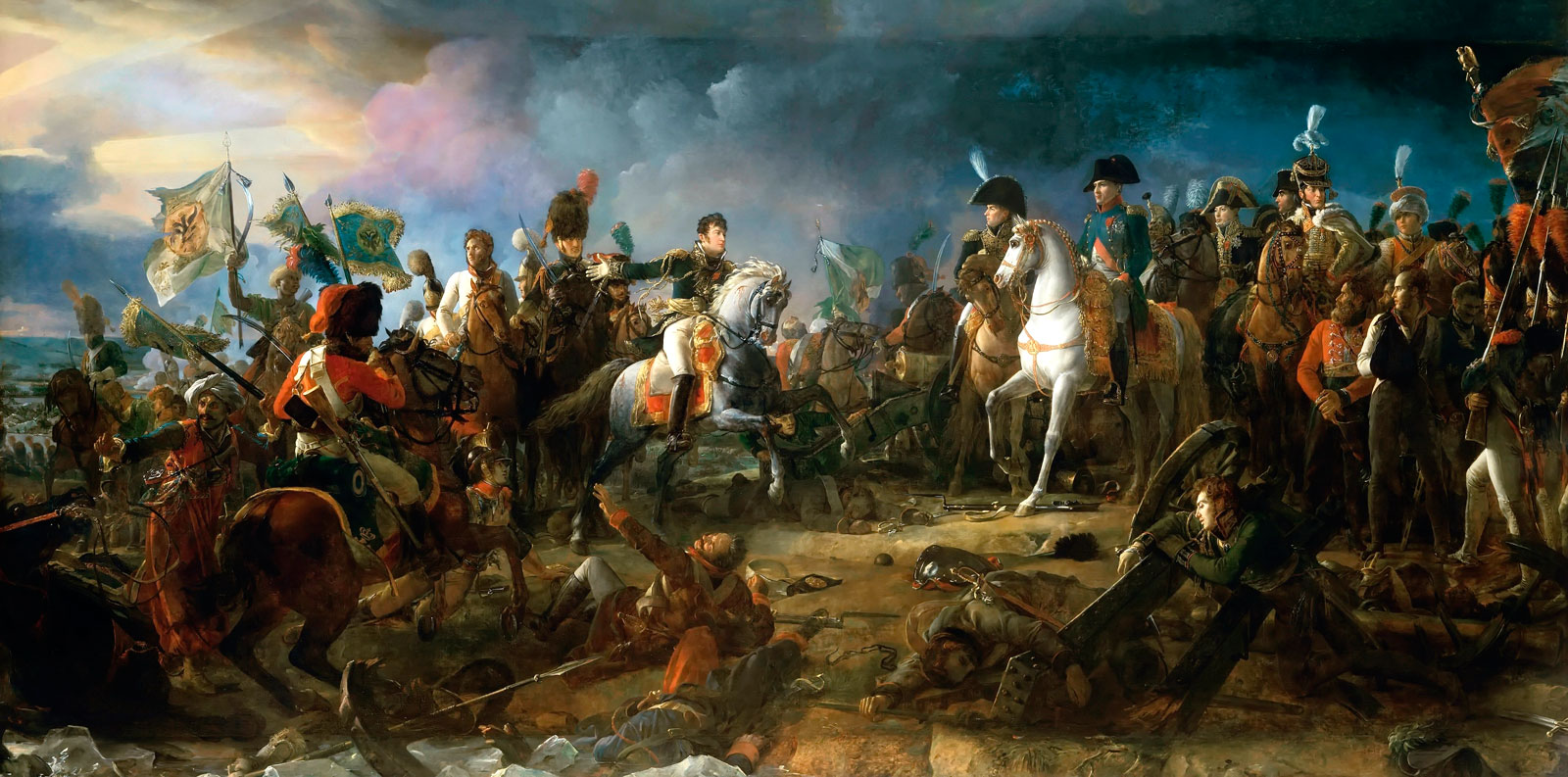
Napoleonic Battles - Austerlitz
Gradually, breeds were shaped and selected by humans to fulfill one of these two objectives: Heavy draft and load and Means of transportation.
These breeds were not only generated based on artificial and utilitarian selection but also developed around different forms of training and taming.
Differences Between Hotblood and Coldblood Horses
All horses, both riding and draft horses, are warm-blooded mammals.
However, to differentiate based on their functions and characteristics, in equestrian jargon, the colloquial expressions “hotblood horses” or “coldblood horses” began to be used.
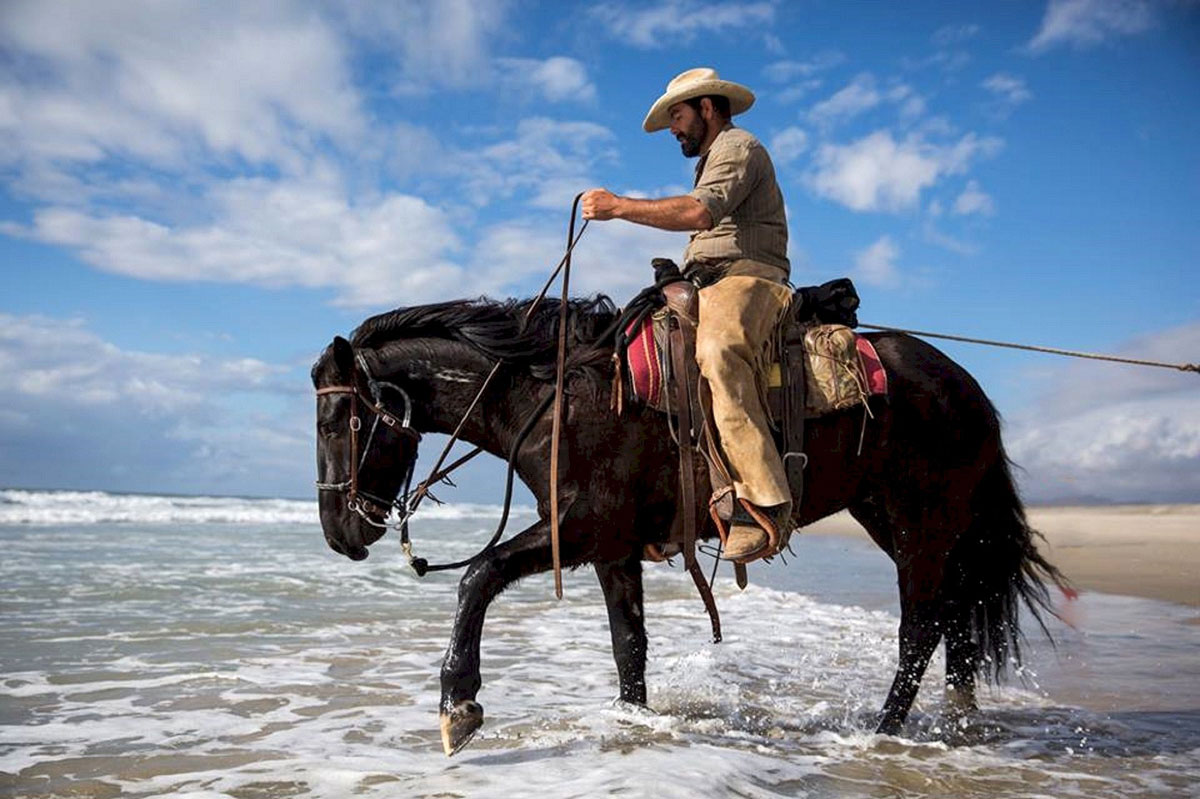
Horses intended for riding were called hotblood horses, representing the more spirited, alert, and fast horses.
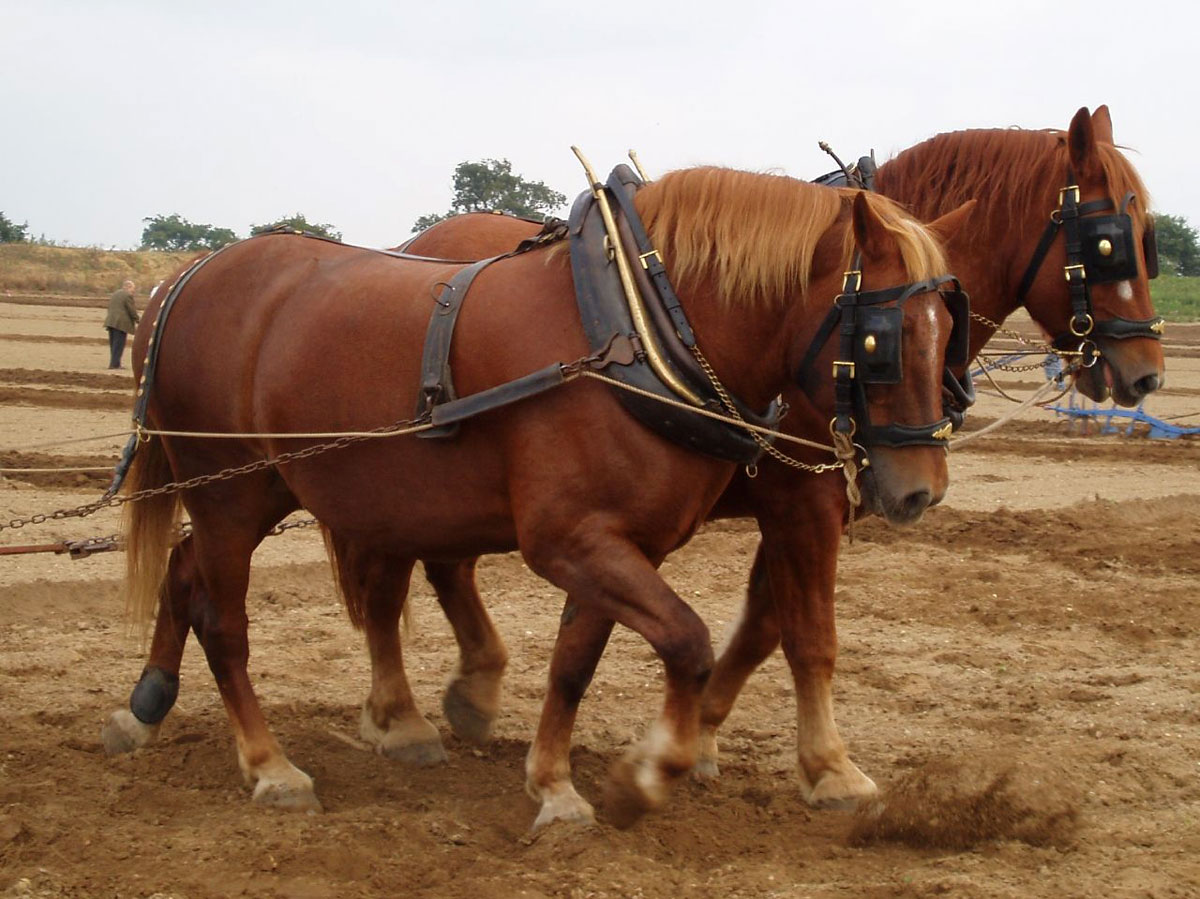
Meanwhile, horses intended for draft and load, which were large, muscular, strong, and slower, were called coldblood horses.
Qualities a Riding Horse Should Have
The concept of a good riding horse has changed a lot over time and its use.
In the 13th century, a good riding horse was defined as one with flat shoulders and movement. It was considered a defect if it had a too advanced chest and front limbs turned backward.
F. Minot recommended that riding horses be resistant, strong, energetic, and have solid limbs. They should also have a smooth, light, and agile trot in their various gaits and movements.
At the beginning of the 20th century, when the horse began to be replaced by motor power, the riding horse started to be bred and selected based on sport and leisure activities.
At this time, functional qualities for equestrian sports were prioritized, such as greater lightness and agility, streamlined musculature, and stronger ligaments. This way, they could better withstand the rigors of sports practice.
On the other hand, horses intended for recreational activities sought great endurance for long rides. A docile and controllable character was also promoted, free from nervous reactions or behavioral disturbances. Animals that offered a pleasant ride to the rider.
The Riding Horse
The riding horse is one that, due to its characteristics, is suitable and appropriate to be ridden by a rider.
Thoroughbred English and Arabian horses were the most selected and adapted for riding. As well as many horses resulting from their crossing with strong and heavy native mares.
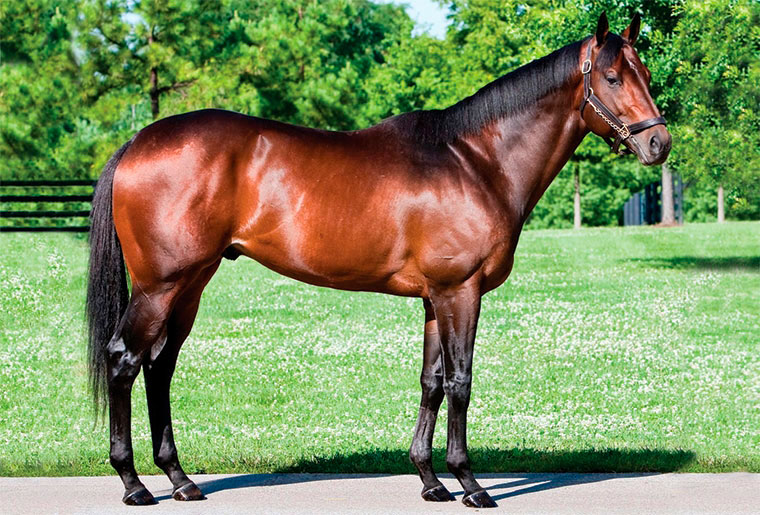
Thoroughbred English Horse
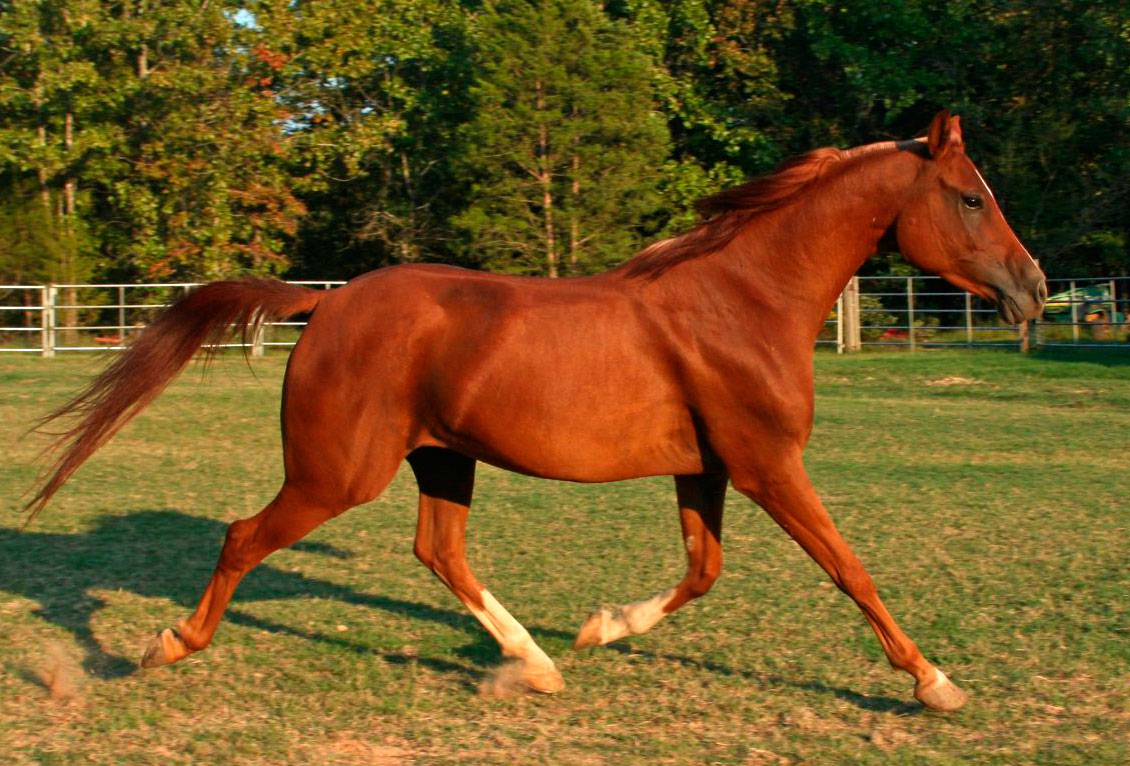
Arabian Horse
Currently, there are also riding breeds from various countries, such as the Icelandic horse, considered a coldblood. This would distance it quite a bit from the European riding horse standards. However, it is highly valued for riding.
In this group of native breeds are our beloved Peruvian Paso horses, which gather the best conditions for riding thanks to their great smoothness of gait.
The Most Popular Horse Breeds for Riding
Currently, there are more than 160 riding horse breeds, not including ponies.
Below we present the most popular ones, both for sport and leisure activities.
Founding Breeds
Although there are more pure breeds, the two most popular are undoubtedly the Thoroughbred English and the Arabian Horse.
To this day, they remain pure and contribute to the improvement of other breeds. They are also used as riding horses both in sport and in trail rides or equestrian routes.
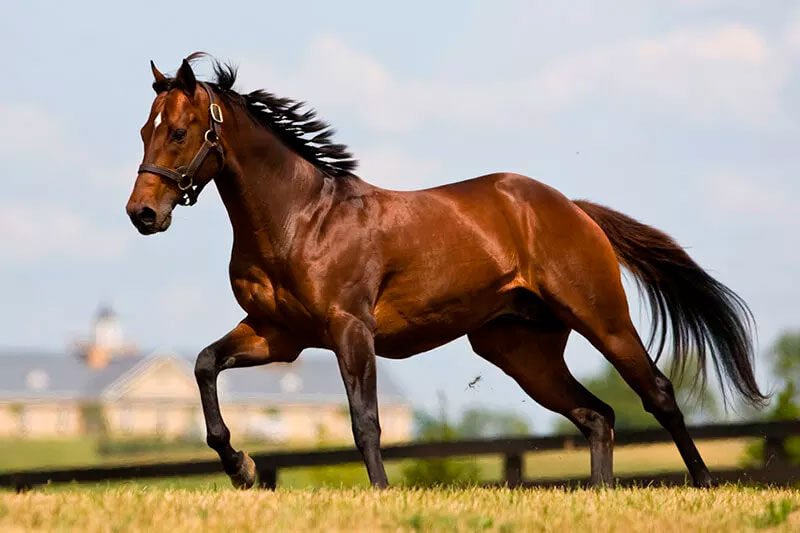
THE THOROUGHBRED ENGLISH
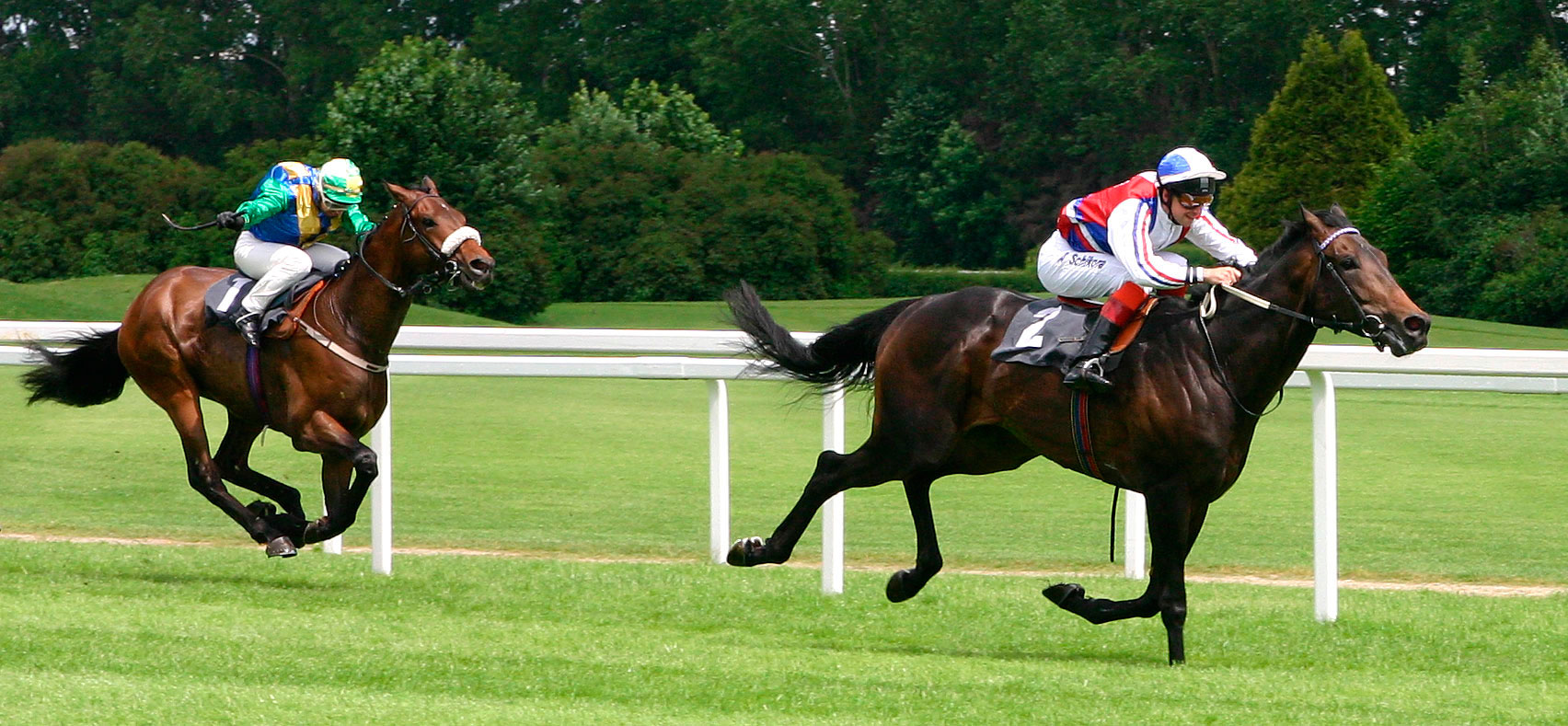
The Thoroughbred English was selected for its speed and has dominated racing since its inception, surpassing the Andalusian Horse, the lightest along with the Berber since Roman times.
There are different opinions about its origin, but it can be said that it descends from a small group of stallions imported from North Africa and the Middle East to England in the early 17th century.
Information about the mares is scarce, although it seems that many of them share a common origin with the stallions.
For a century, the population remained very restricted, as races were limited to the court.
From the 18th century, races became popular and by 1791 the Stud Book was proposed, which in its 5th edition (1891) listed the oldest known mares (80 animals) considered founders of the current population.
The most important founding stallions were:
- Darley Arabian, born in Syria and considered the first regular and known ancestor of racehorses, leading the Stud Book.
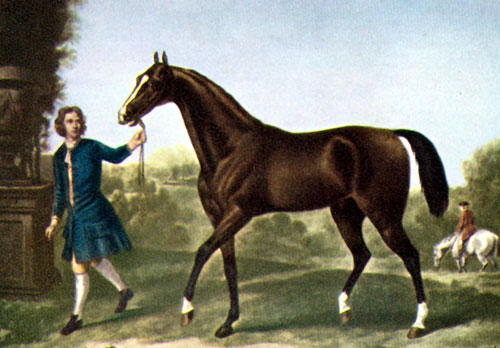
- Godolphin Arabian, of Berber origin, was a horse with a conical head, fine limbs, and narrow hooves.
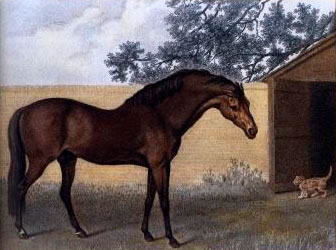
- Byerley Turk, brought from Serbia.
- Curwen Bay of Berber origin.
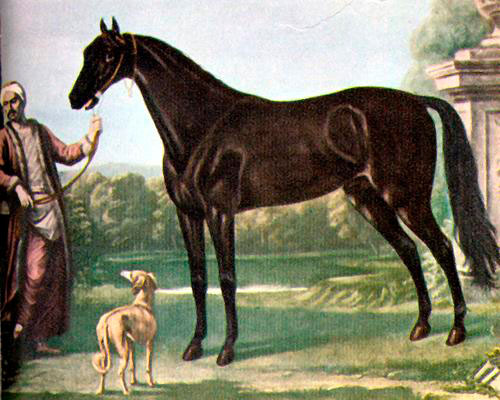
These four stallions contribute one-third of the genes of the current Thoroughbred population.
The breed is bred worldwide, with a very specialized breeding and management regime, and its selection is extremely demanding.
There is no proper standard for the Thoroughbred English, as special attention is paid to the purity and quality of its origins, as well as its performance in races.
Its multiple origins give it morphological heterogeneity, particularly in size; some specimens resemble Arabians in size, stature, and delicacy of tissues, while others have the appearance of half-bloods.
It could initially be defined as eumetric, orthoid, and longilinear, but it is a breed with great fluctuations, so specimens appear that are hypermetric, subconvex, and even ultra-longilinear.
Therefore, a horse is called Thoroughbred English when it is registered in the Thoroughbred English Stud Book.
Characteristics of the Thoroughbred English Horse
- Generally, they have a longilinear body, a height at the withers between 1.60 and 1.65 m, and a weight ranging from 400 to 500 kg.
- The head is medium, elongated, lean, with little subcutaneous fat and fine skin. Straight profile, broad and straight forehead, medium to long and separated ears, straight nostrils, open nostrils, and square muzzle with a marked jaw.
- Long, straight, pyramidal neck, narrow and shallowly attached to the head and trunk, forming an angle of about 45º.
- Very prominent, long, and narrow withers. Long dorsal-lumbar line slightly elevated towards the croup.
- High croup, with variable inclination depending on purpose, with a high and tight tail set, and low hips.
- Deep chest, slightly arched and very deep rib cage allowing great respiratory capacity. Tucked-up belly.
- Long limbs with open angles. Thin, dry, and powerful limbs with well-marked tendons.
- Long and inclined back, oblique arm, long forearm, short cannon, and long pasterns. Small hooves generally of poor constitution.
- The most common coat color is chestnut, followed by sorrel and gray. Other coat colors together do not exceed 1%.
Although mainly used in racing, they also serve for riding in the countryside if properly trained and tamed.
THE ARABIAN HORSE
The origin of this horse is quite mysterious. There are some legends, and it is known to be one of the oldest breeds.
Archaeological evidence from 4,500 years ago shows horses similar to the current Arabian in the Middle Eastern deserts that spread worldwide due to trade and wars.
Owned by the Bedouins, who considered them part of their family, they were selected to be docile.
This closeness to humans created a breed with good disposition and quick learning, but also spirited and alert to carry out war raids.
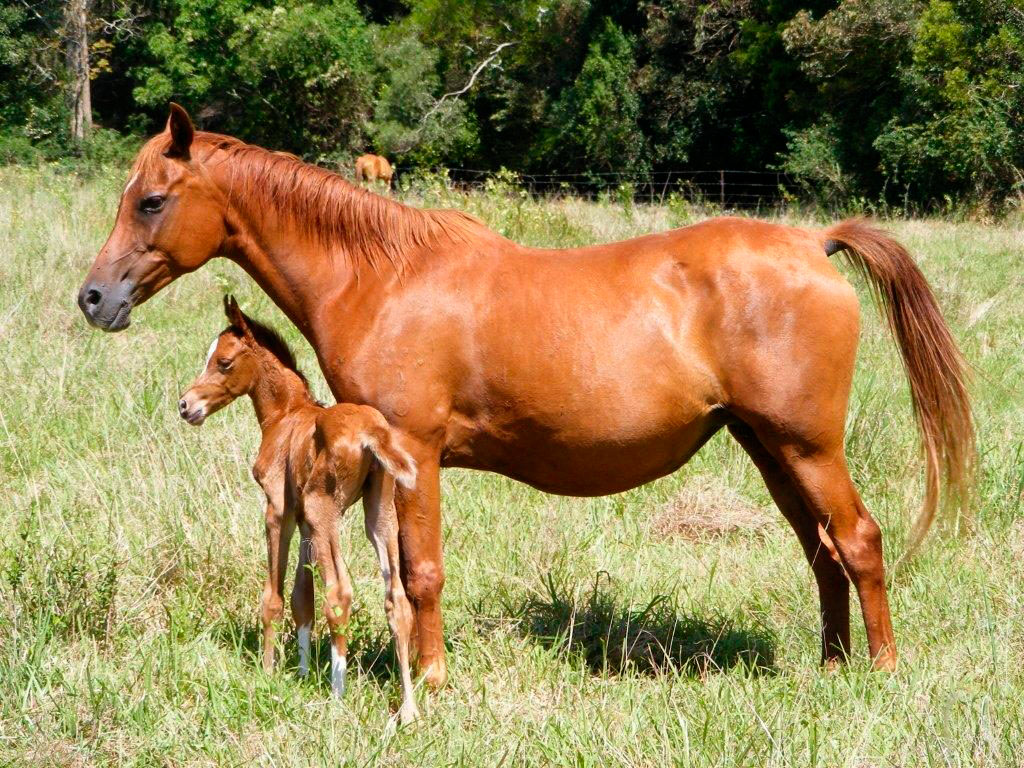
The Arabian horse is considered one of the top 10 breeds in the world and is used for various purposes, with endurance racing being one of the main ones.
There are 3 lines of Arabian horses depending on which quality predominates: speed, endurance, or refinement and beauty. However, they all share a common attribute: their good bone structure.
Characteristics of the Arabian Horse
- Good lineage Arabian horses have deep and well-angled hips, as well as well-sloped shoulders. Most have compact bodies with short backs.
- Some, but not all, have 5 lumbar vertebrae instead of the usual 6 and 17 pairs of ribs instead of 18. Because of this, an Arabian horse can carry a heavy rider easily, even if small.
- The breed standard height is 1.43 to 1.53 m at the withers. Although this height is close to that of a pony, the Arabian is considered a horse beyond stature due to its physical conformation. Some crosses have raised it to a height of 1.52 to 1.62 m.
- It is considered a hotblood horse for its speed, agility, spirit, and streamlined musculature. It also has great sensitivity allowing it to learn very quickly.
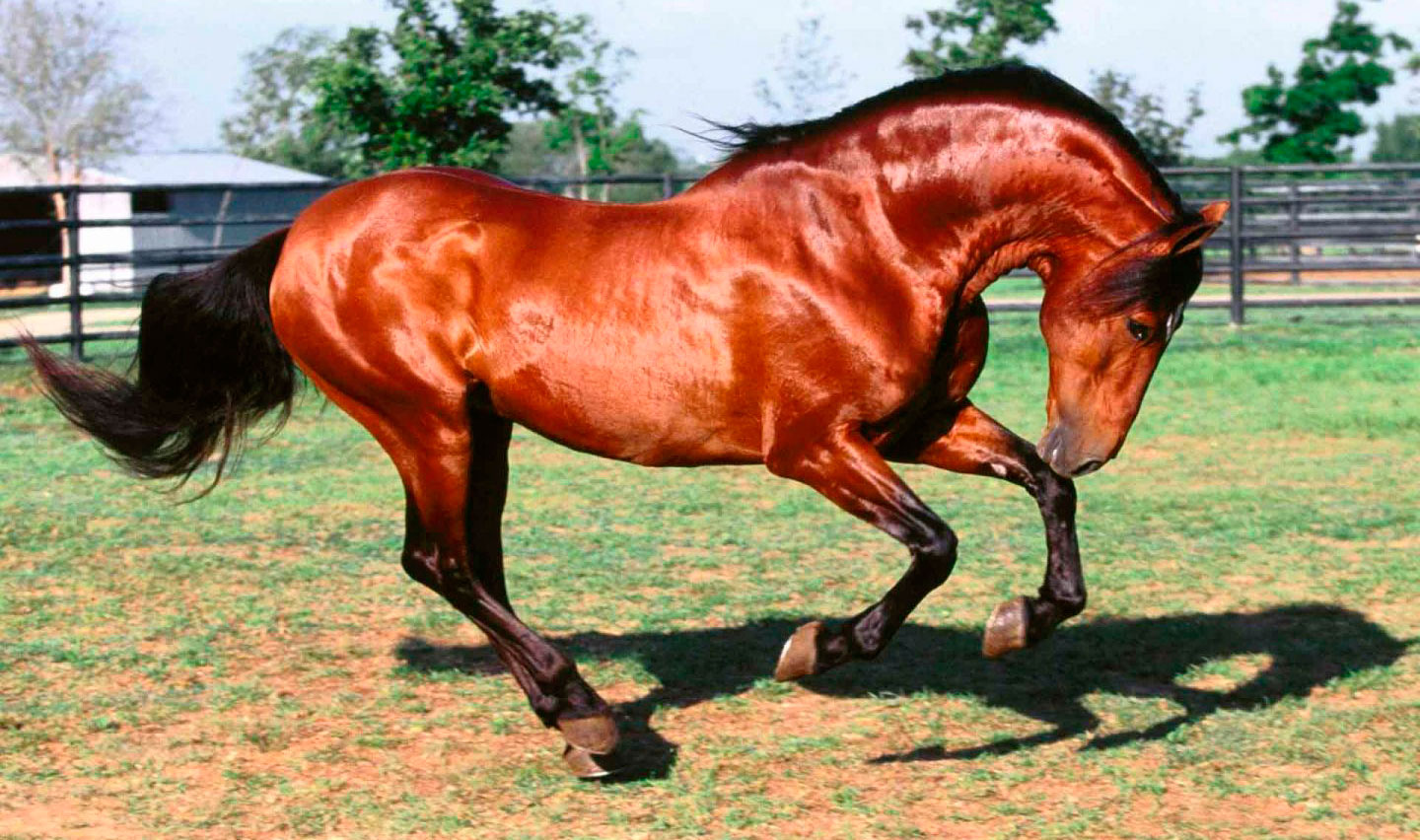
Due to its spirit and ductility, this beautiful horse is also successfully used in equestrian routes and trail rides, among other uses. It is undoubtedly one of the best horses in the world.
Special Breeds Linked to Trail Riding
Next, we will review gaited breeds, the best adapted for equestrian tourism due to the comfort and smoothness of their gait, combined with their endurance for long distances.
THE PERUVIAN PASO HORSE
This equine breed originates from Peru and was present throughout the territory of the Viceroyalty of Peru in what is now Northern Argentina.
This horse arrived with the Spanish conquest, which brought horses from the peninsula. It was a mix of the Iberian or Andalusian horse with the Berber horse from North Africa.
While the Andalusian horse carried other bloodlines, such as Friesian, giving it the Iberian horse appearance, the Berber influence gave it greater smoothness in its gaits and the ability to amble.
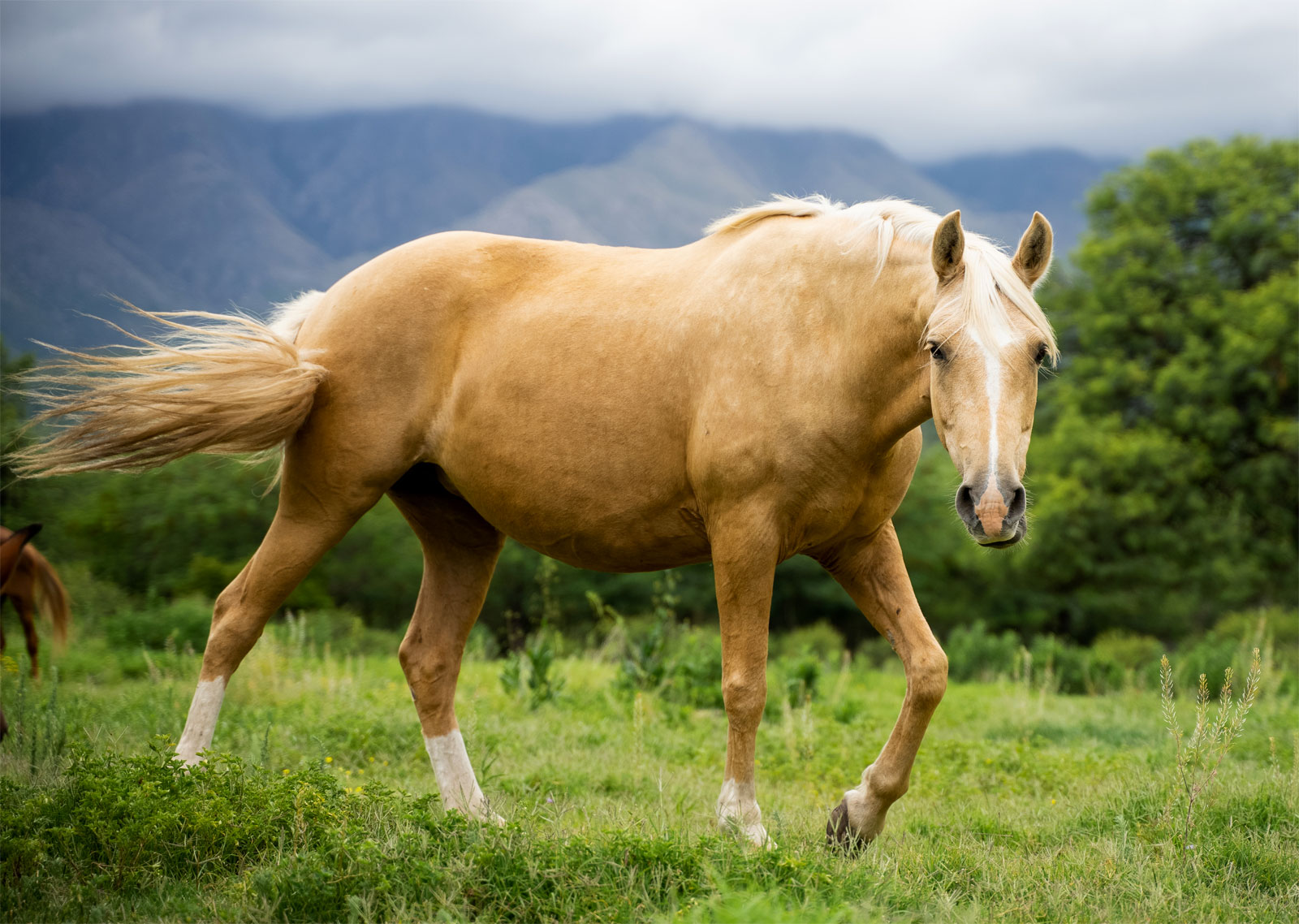
The Ambling Gait
The ambling gait is a two-beat gait thanks to the simultaneous movement of the limbs on the same side (front and hind).
It differs from the two-beat trot present in almost all horse breeds, characterized by diagonal limb movement (right hind with left front).
The two-beat ambling gait produces a horizontal undulating movement of the horse's center of gravity. In contrast, the two-beat trot produces a vertical undulating movement of the center of gravity, which is much harder for the rider.
In the case of the Peruvian Paso horse, due to selection over more than 400 years without new breed input to fix smoothness and endurance attributes, combined with natural terrain adaptation, the breed broke the ambling gait.
Instead, these horses developed what is known as the "paso llano" gait. They moved from the two-beat ambling gait, which is also uncomfortable, to a smooth four-beat isochronous gait.
It starts with the movement of the hind limb on one side a few seconds before lifting the front limb on the same side. Thus, the first beat of the movement ends with the support of the hind limb a few seconds before the support of the front limb on the same side.
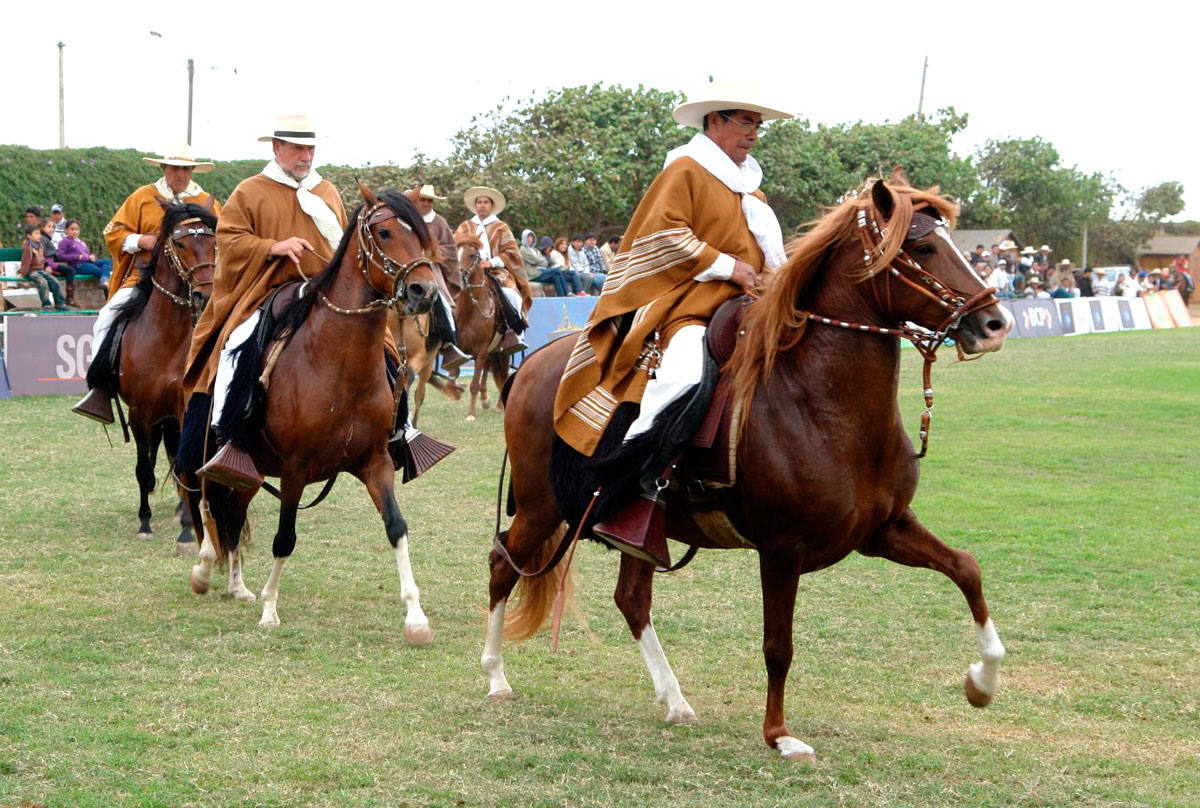
This causes three limbs to be on the ground in 4 of the 8 sequences that this gait has to complete the cycle.
Having three supports on the ground makes the movement of the horse's center of gravity almost imperceptible, which provides smoothness to the saddle.
All horse breeds move limb by limb with three supports when walking, similarly to the described gait, although they fail somewhat in synchrony. Because of this, any other breed with a paso gait is comfortable for the rider but moves at a speed of 6 km/h. If the rider tries to speed up, the horse will develop the two-beat trot gait, which is diagonal and can reach 15 or 16 km/h.
However, the Peruvian Paso horse reproduces this "paso llano" gait at speeds between 12 km/h and 18 km/h. Therefore, to increase speed, it does not resort to the two-beat trot gait.
Here you can see an animation of the paso llano and trot showing the 8 sequences of both gaits and the movement of the horse's back in each.
This way of walking with broken ambling or “Paso Llano” is a genetic trait. It is not "taught" to walk this way; it happens naturally when there is breed purity.
Of course, like any living being, it must be properly trained and tamed to perfect its gait. But all its morphology and bone angles are prepared for this.
Characteristics of the Peruvian Paso horse gait:
- The paso llano movement mechanics are responsible for the smoothness of the saddle.
- The breed has high energy or spirit.
- It presents special beauty and style when gathered.
- The elongation of its strides in the paso llano allows increasing speed without excessive energy expenditure.
All these characteristics make riding in nature on a Peruvian Paso horse a unique experience for the rider. You will only understand it after riding one.
Although there are other gaited breeds, none satisfy as much as the Peruvian Paso Horse. This makes it, in our opinion, the best horse for trail riding or equestrian tourism.
Characteristics of the Peruvian Paso horse:
- It has a rather low height, from 1.44 to 1.54 m at the withers.
- It has a compact, muscular, wide, and deep body.
- Its limbs are long and strong.
- It has a flat and wide head, with bright and very expressive eyes.
- Its neck is robust, muscular, and well attached.
- The predominant coat color is chestnut, but there are also sorrels, dark bays, and mixed coats that give roans or grays.
The Peruvian Paso Horse is the horse we offer at Ampascachi.
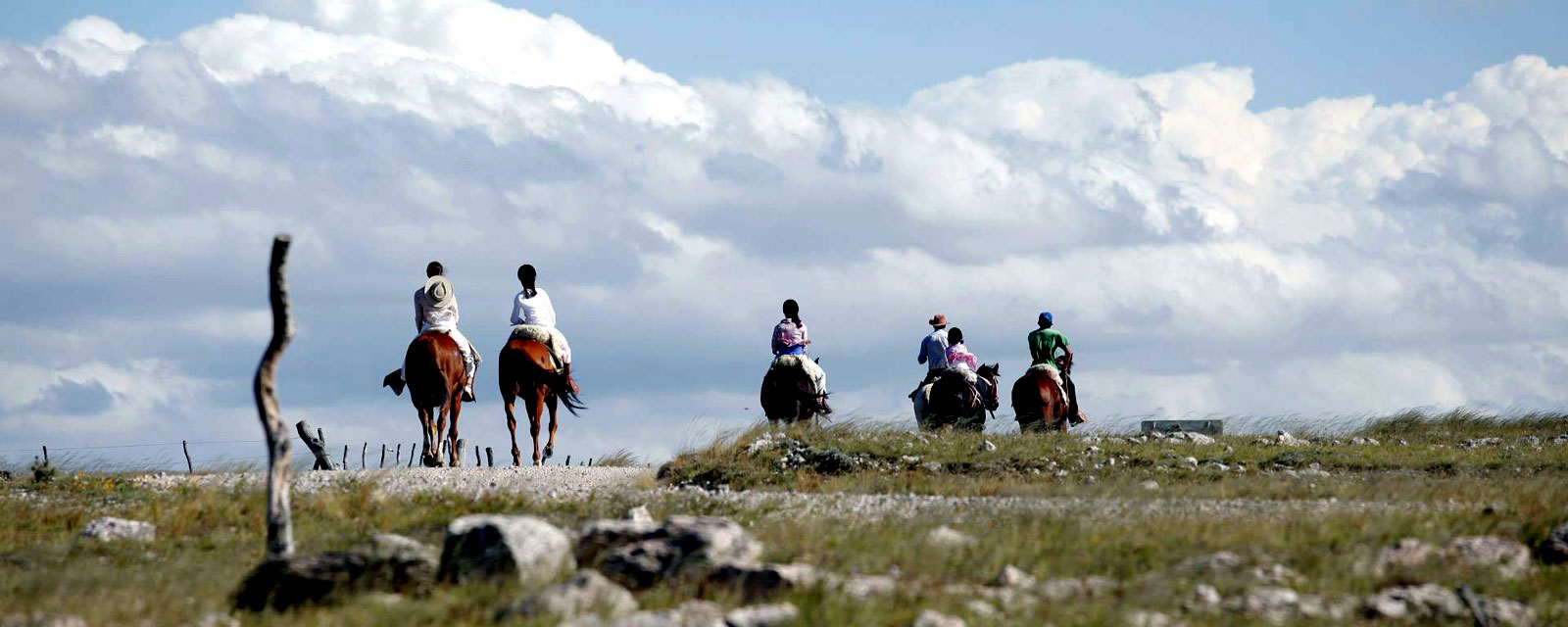
THE TENNESSEE WALKING HORSE
Also known as the Tennessee Walking Horse, this breed originated in the southern USA and is recognized as ideal for all kinds of work, including plowing.
The gait it is known for provides comfort to the saddle and, therefore, to the rider.
Its origin traces back to the Narragansett ambling horses from the USA and Canadian horses. Crossing these breeds, breeders sought a resistant animal that moved easily on mountainous terrain.
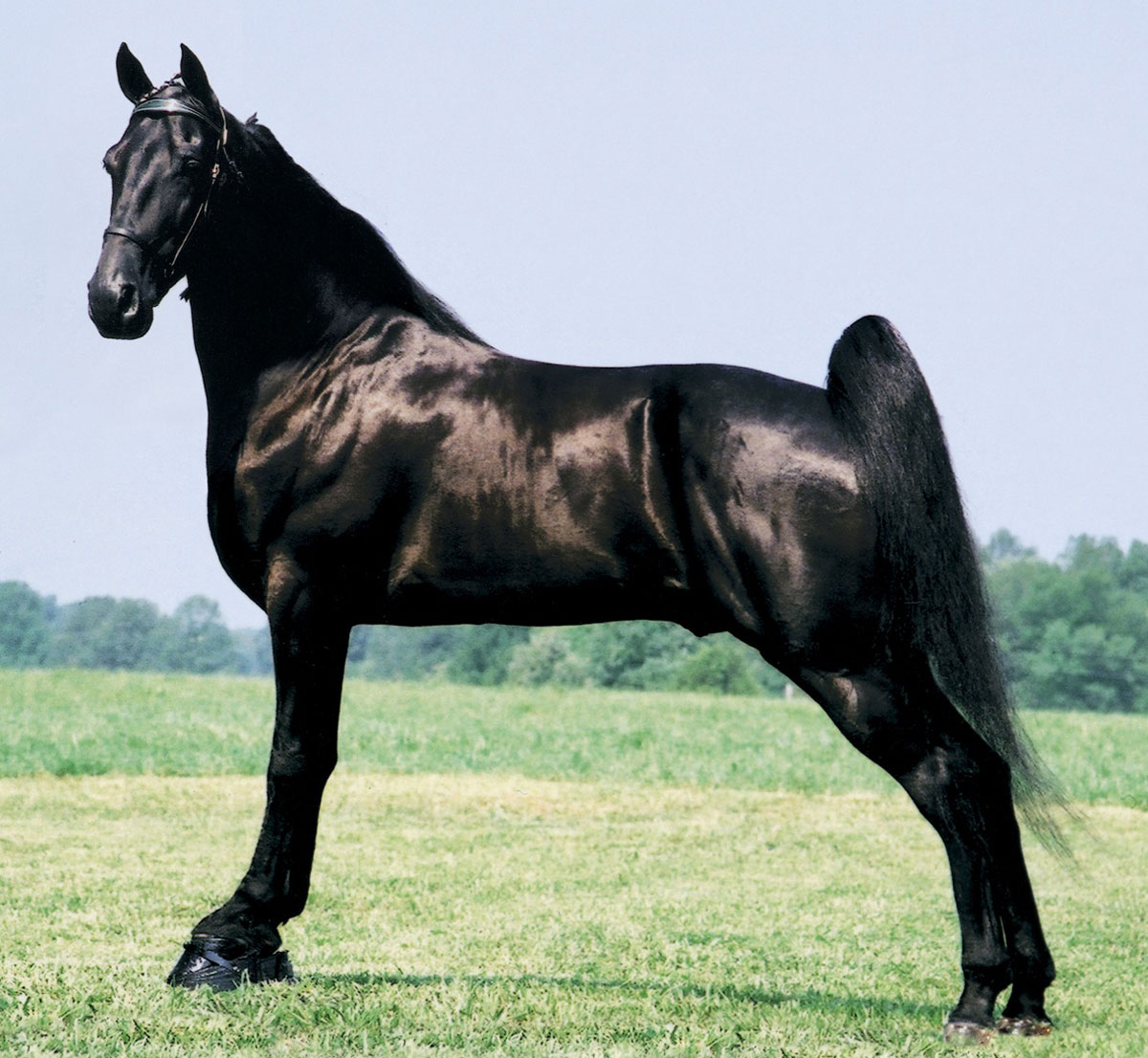
Later, a cross of ambling horses with national pacers was used, calling these foals Tennessee Pacer. They had good ambling but were still very compact and coarse.
From here, breeders began to seek more distinguished or refined horses, but equally resistant. They mixed the Tennessee Pacer with Thoroughbred, Standardbred, Morgan, and American Saddlebred horses.
By 1885, they had the horse that met the sought requirements and became the breed's foundation.
Characteristics of the Tennessee Walking Horse
- It is a medium-sized horse with a long neck and good back inclination.
- The head is large, with refined bones and small well-placed ears.
- It has an extended gait.
- Common colors are black, chestnut, and sorrel.
- Its height at the withers ranges from 1.50 to 1.60 m.
- It is a docile and gentle horse, with great work capacity and willingness.
- Its knees stay high in all gaits and it offers great comfort to the rider.
Tennessee Walking Horses perform three gaits: Flat Walk, Running Walk, and the Collected Canter. The Flat Walk and Running Walk are four-beat lateral rhythms, the second being faster and more extended than the first.
Peculiarities of these gaits include the hindquarters' movement, which seems to want to precede the front; the suspended and elevated action of the front legs; and a rhythmic head movement that swings following the rhythm of the steps.
It is a very good horse for trail riding or equestrian tourism.
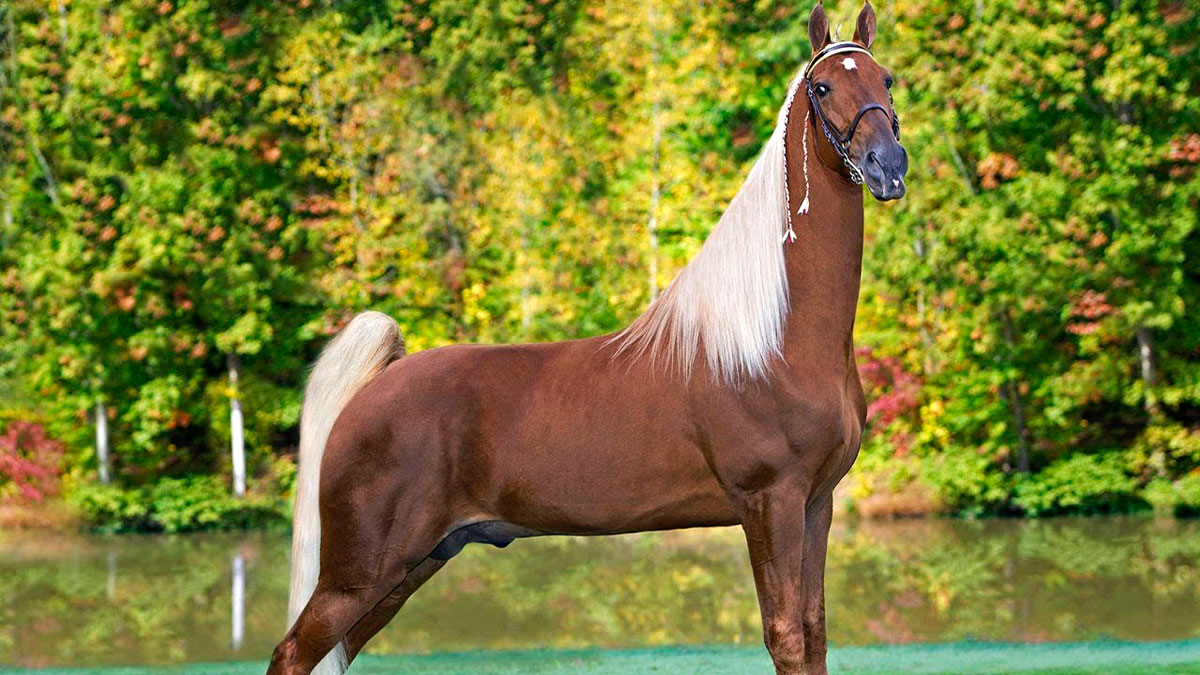
THE ICELANDIC HORSE
The Icelandic horse is the only native equine breed of Iceland, although it has spread to many parts of the world. Despite its pony-like appearance, it is considered a horse.
It is believed to descend from Scandinavian ponies between the 9th and 10th centuries. Its first references date back to the 12th century when it was an object of worship in Nordic culture. It adapted very well to the extreme conditions of the island where it is found.
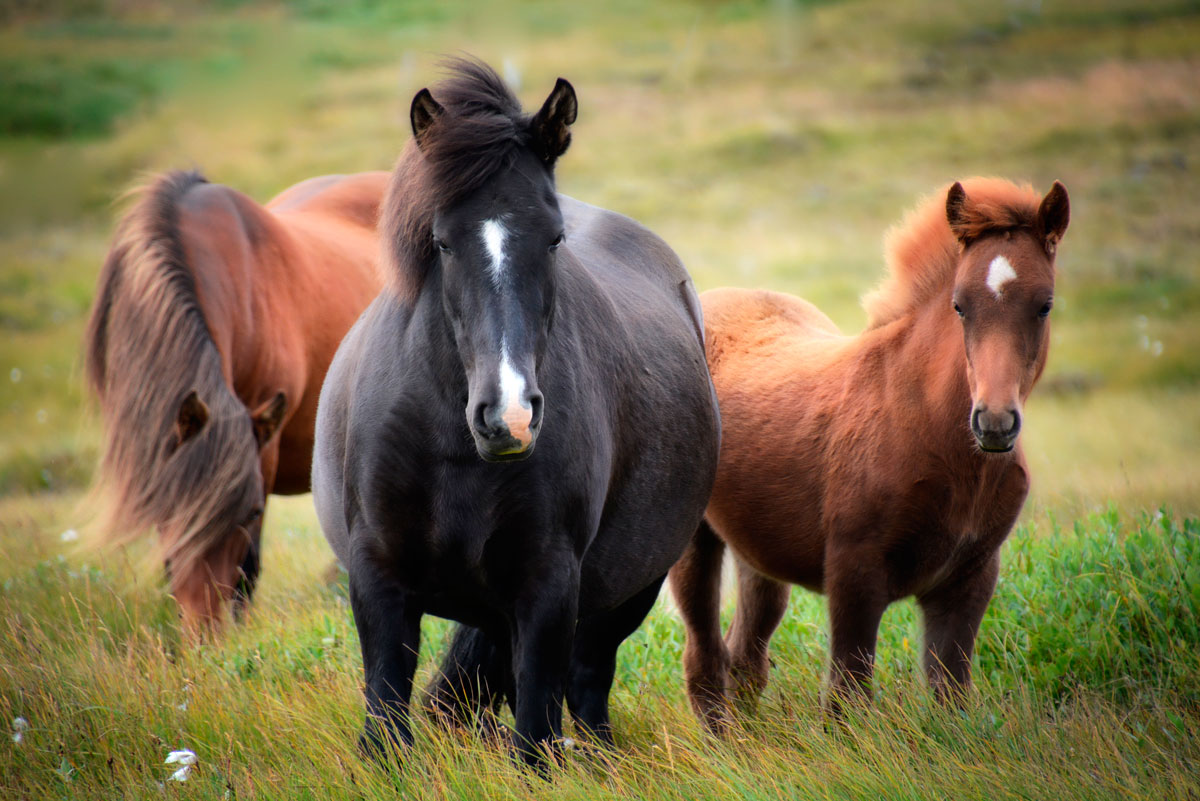
Characteristics of the Icelandic Horse
Despite being small (its height ranges from 1.25 to 1.45 m), it is very strong and resistant, and suffers few diseases. This is why the Icelandic government does not allow any horse to enter the country, thus avoiding diseases and preserving breed purity.
In fact, if any horse has to go abroad to compete or for any other reason, it cannot return to the country.
They are also very calm and brave, perfect for horseback routes in Iceland.
It has very unique abilities. Besides the walk, trot, and gallop, it has two other characteristic gaits: Tölt and Skeid.
- The Tölt is a variant of the trot in which the horse moves at high speed, moving lateral pairs and always keeping one limb on the ground, resulting in greater comfort for the rider.
- The Skeid or Flying Pace is a very fast gait in which speeds of up to 56 km/h can be reached. In this gait, the lateral pairs move in unison at high speed.
Currently, this horse has attracted much interest in various parts of Europe and the USA, places where mares and stallions have been taken for breeding.
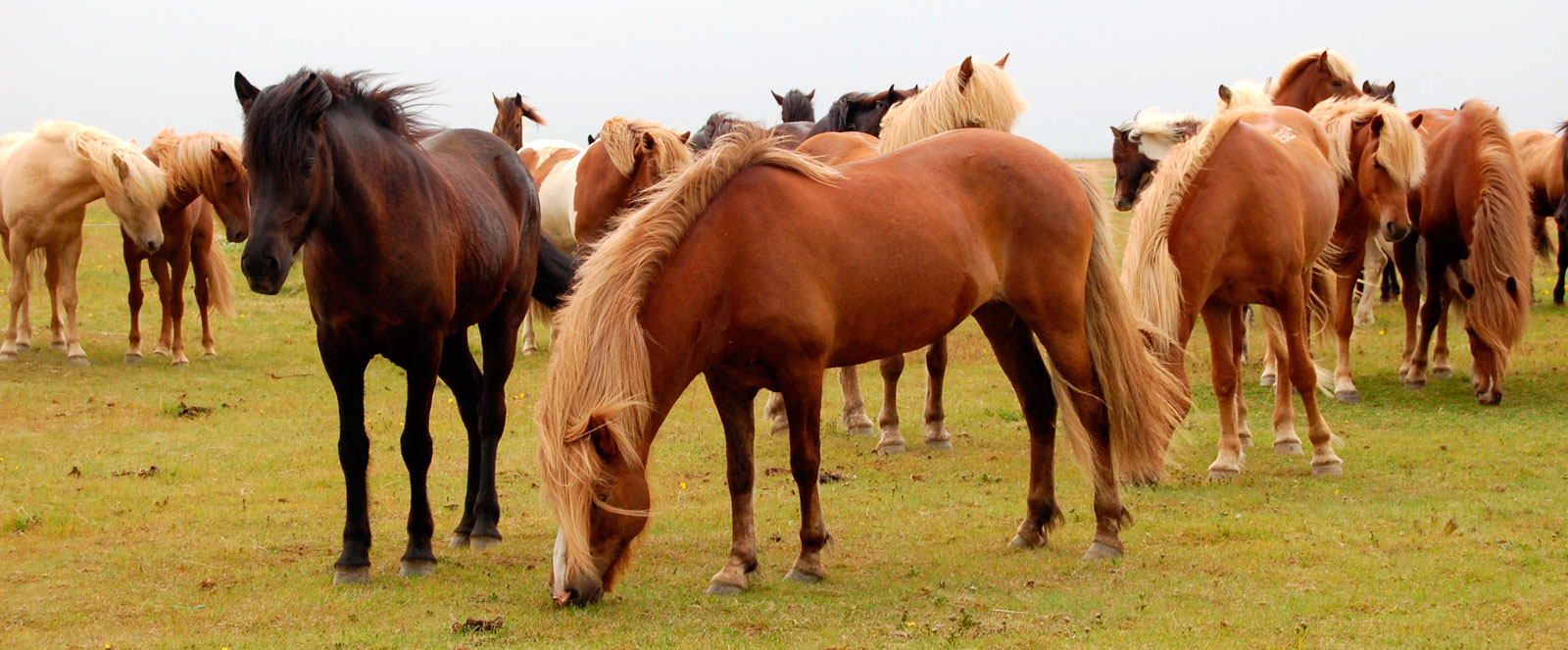
It is a very strong, resistant, and comfortable breed in its ambling gaits, which is very attractive for horseback routes and equestrian tourism.
Breeds Linked to Trail Riding
All breeds can be trained for open-air riding, although some have better conditions for trail riding due to their calm disposition, spirit, and physical agility.
What is the difference between a horse's temperament and spirit?
The word temperament is generally used to refer to horses that can only be ridden by experts because they are difficult to control. They tend to be very energetic and can scare an inexperienced rider.
But this characteristic is linked to altered and unpredictable behavior related to the training received. Therefore, a horse with bad behavior comes from mistreatment or improper taming.
Spirit, on the other hand, is the horse's predisposition to move forward, responding clearly to the rider's aids. It translates as "response with energy, agility, quick but calm reaction."
The horse moves decisively through narrow spaces, crosses watercourses, climbs or descends slippery or uneven terrain, etc. Similarly, this quality is related to the way and technique with which it has been trained, as well as the breed it belongs to.
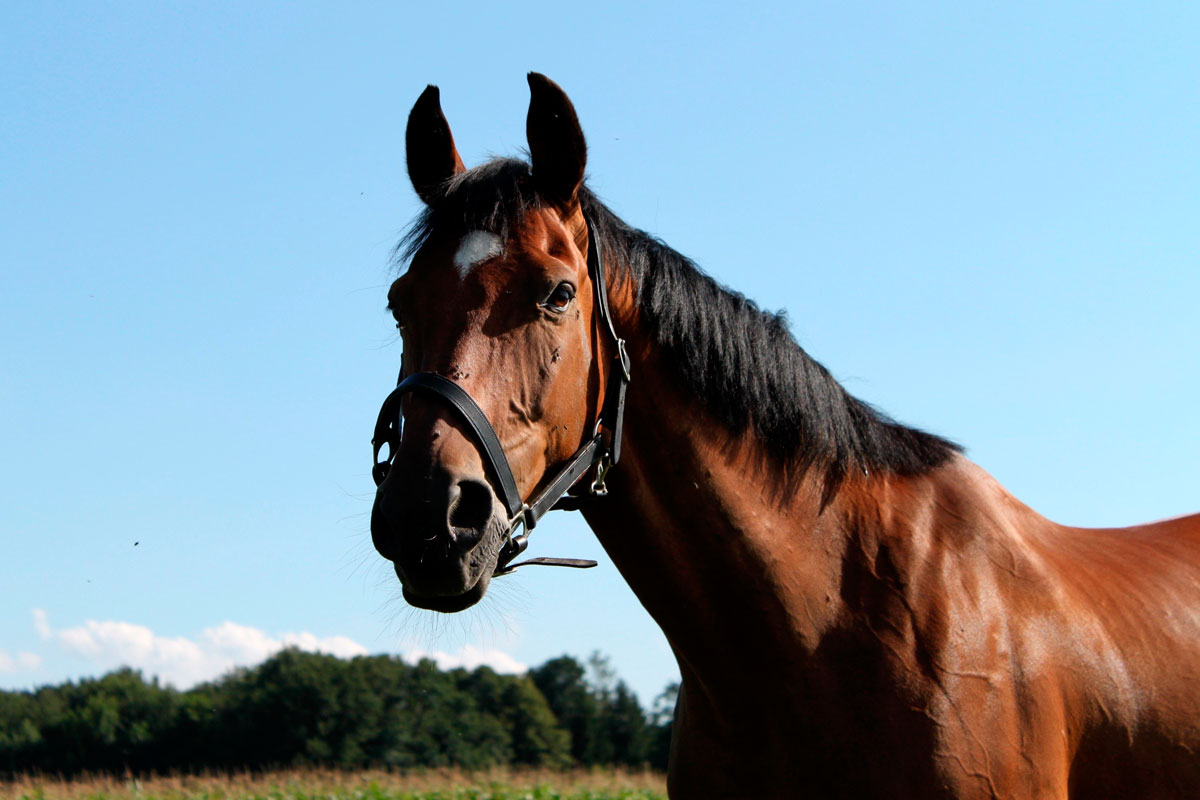
In summary: "A spirited horse, well tamed and trained, responds with energy. But at the same time, it is fully controllable by any rider."
In contrast, when talking about temperament, it refers to hotblood horse breeds that are:
- Very alert, sensitive to any strange presence
- Agile and strongly but streamlined muscled
- Fast and resistant
In contrast, horses belonging to coldblood breeds are:
- Large and heavy animals, with very bulky musculature
- Used for heavy work and respond slowly
- Show less alert and calm behavior
From crossing both breeds come the so-called "warmblood breeds".
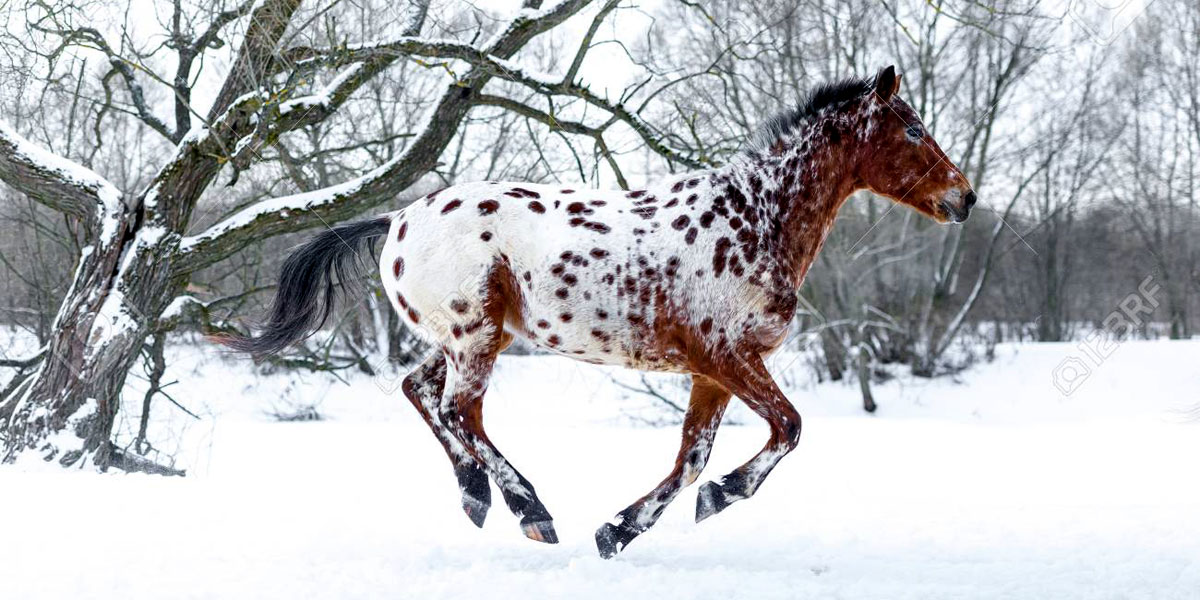
THE APPALOOSA
These horses were bred by the Nez Perce Indians in northwest Oregon and Idaho.
Unlike other tribes, these Indians bred only with the best stallions and mares to achieve the breed with the colors that today characterize the Appaloosa.
These animals were valued for their ability to move safely on rocky slopes, as well as for their endurance and strength. They have a strong and compact body, hard hooves. They seem bred to walk on all kinds of terrain.
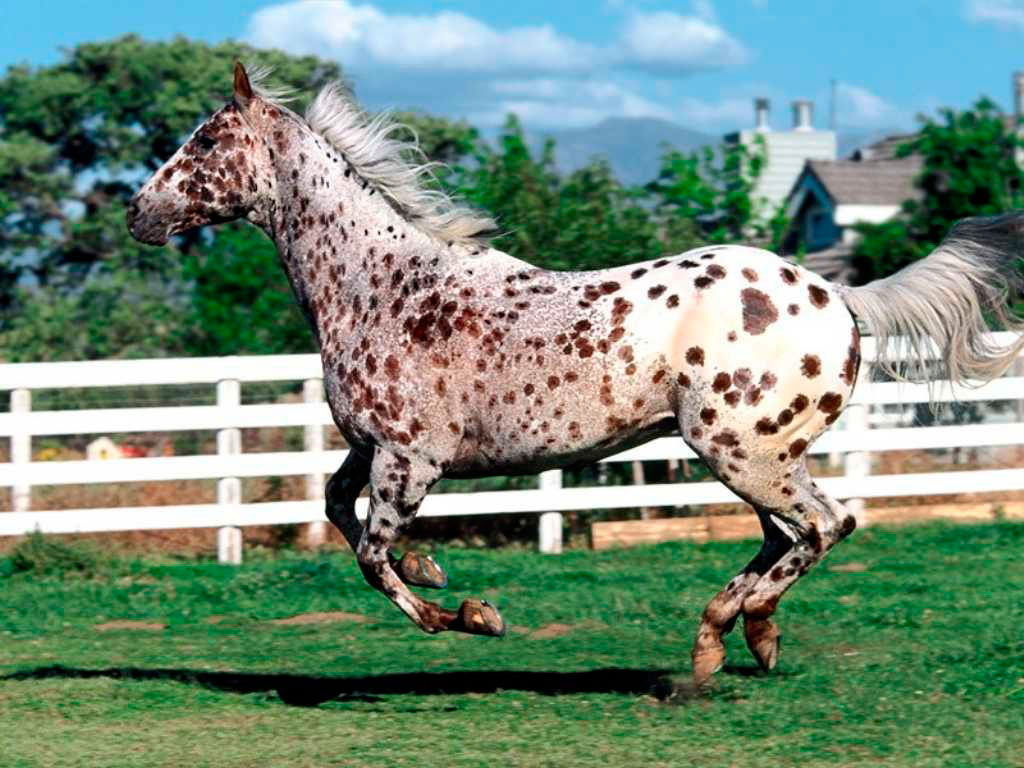
They have a calm character and good spirit, and can carry their rider to very distant places without problems.
THE QUARTER HORSE
The Quarter Horse is the result of crosses made in the USA since colonial times.
Its function varied between field work, stagecoach transport, and even short races on weekends.
It began to acquire definitive breed characteristics on the most important ranches in Texas such as King Ranch, Four Sixes, Waggoner Ranch, etc.
It was on these ranches that its defined breed was forged from Thoroughbred, Morgan, and American Saddlebred.
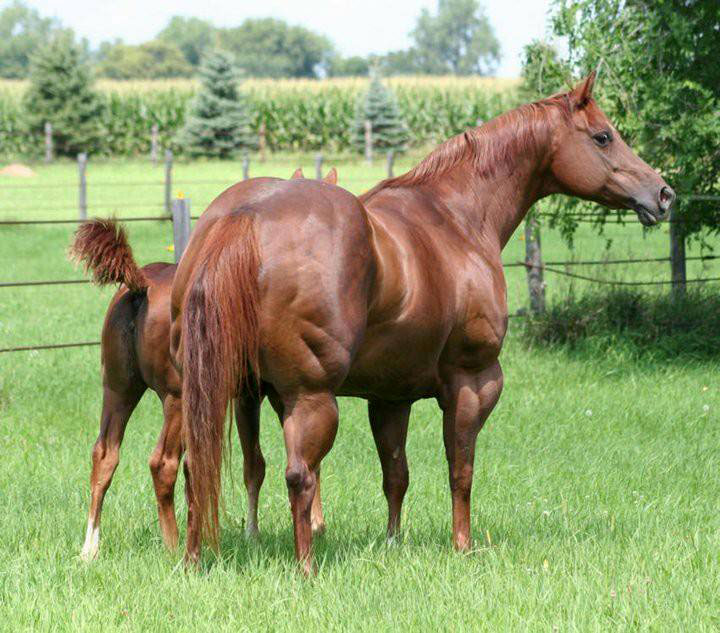
The ultimate goal was to obtain a cowboy horse, still essential in the automobile era for managing and guiding herds.
This mix gave it a quick start, skill for turns and stops, and powerful hindquarters. Qualities necessary for working with cattle, as well as aptitude for short races.
In 1940, a group of breeders, ranchers, and others related to horses in the southwestern United States founded the American Quarter Horse Association (AQHA) to preserve the genealogy of their cowboy horses of the "Quarter Horse" type.
Characteristics of the Quarter Horse
- The current Quarter Horse is a medium-sized horse, between 1.43 and 1.60 m at the withers.
- It has extraordinary muscle mass, with broad chest and good thorax.
- Its speed and ductility are based on its surprising musculature and the location of its center of gravity further forward than any horse, giving it strength and endurance.
- Its head is well proportioned and well attached to the neck, neither too fine nor too thick.
- It has a calm character and is easily tamed.
- It has a wide range of coat colors, the most popular being sorrel. Pinto, albino, or spotted like the Appaloosa are not accepted within the breed.
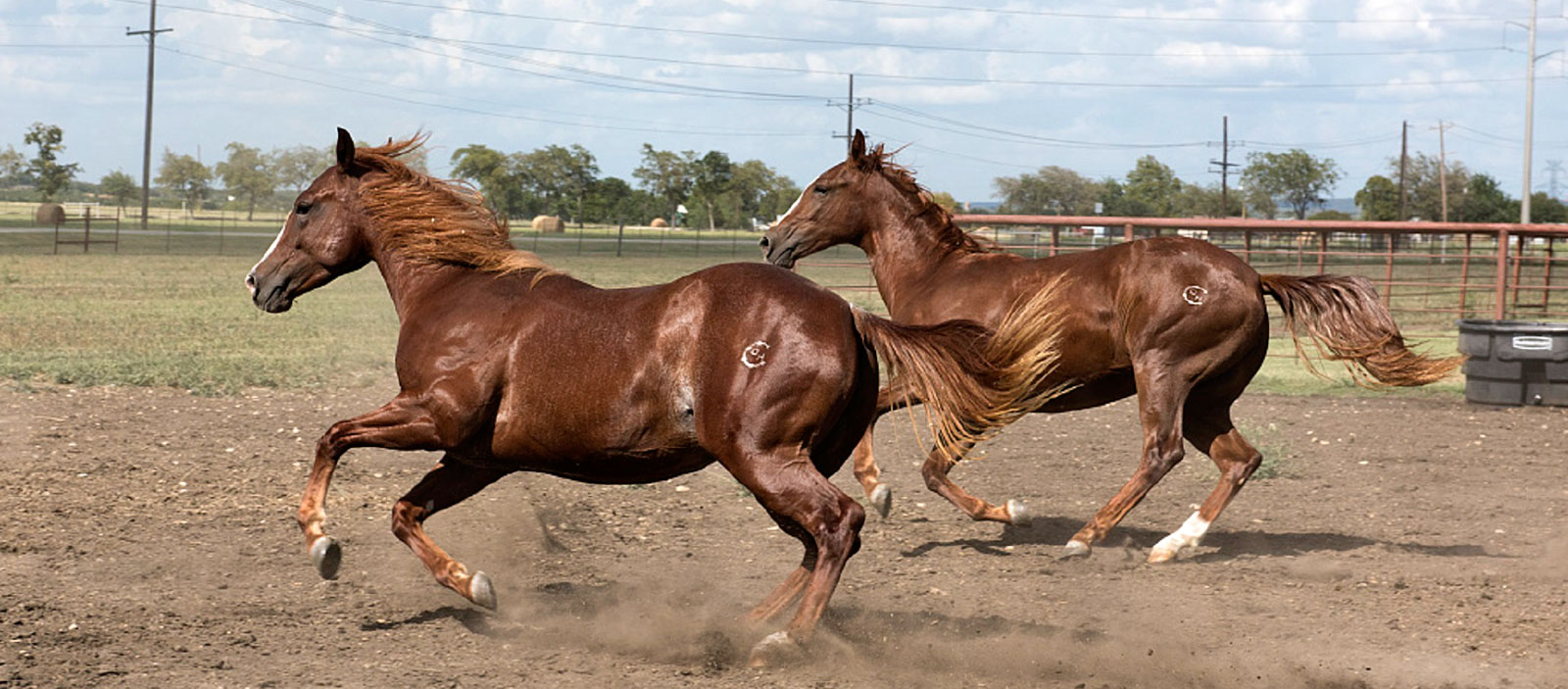
In American rodeo shows, the Quarter Horse holds the main place in cowboy competitions.
Breeds Linked to Equestrian Sport
DUTCH WARMBLOOD (KWPN)
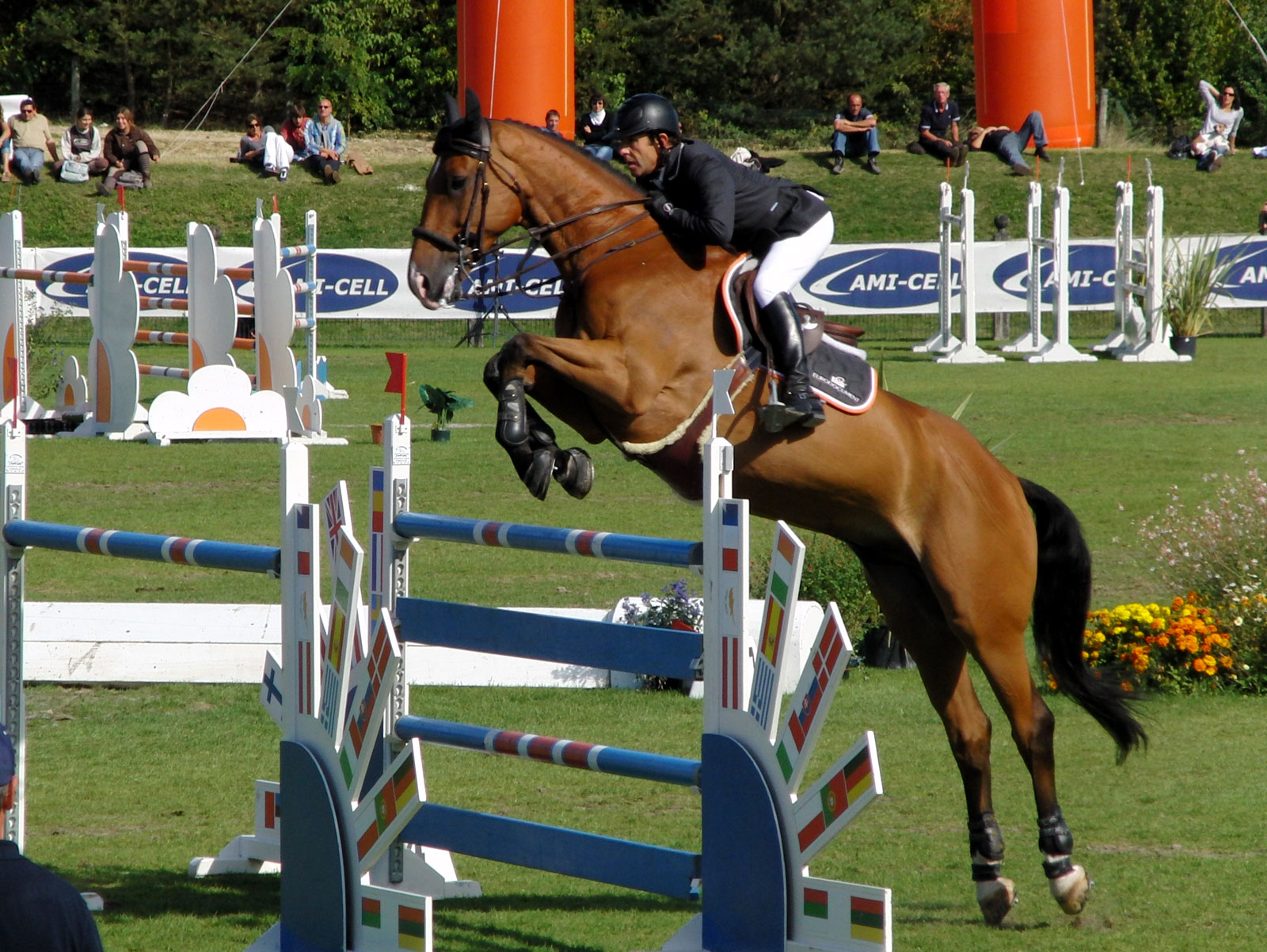
The name KWPN or Dutch Warmblood sport horse clearly indicates the purpose for which it was selected. This breed performs very well in dressage and jumping competitions.
The KWPN is the result of crosses of German, French, and English horses, as well as the introduction of other breeds. This mix, combined with the dedication and professionalism of Dutch breeders, resulted in a modern sport horse, with a calm character and high performance in competitions. Always ready to overcome challenges.
Characteristics of the Dutch Warmblood Horse
- Height ranges from 1.60 to 1.75 meters.
- Common colors are sorrel and brown, but there are also white and black ones.
- The head is elegant with a straight profile.
- The neck is long and arched.
- The shoulder is sloped and the chest is sunken with plenty of space for the heart.
- The front legs are strong and muscular, with well-set hips and solid joints.
- These physical qualities make this horse a strong animal.
HANOVERIAN (HANN)
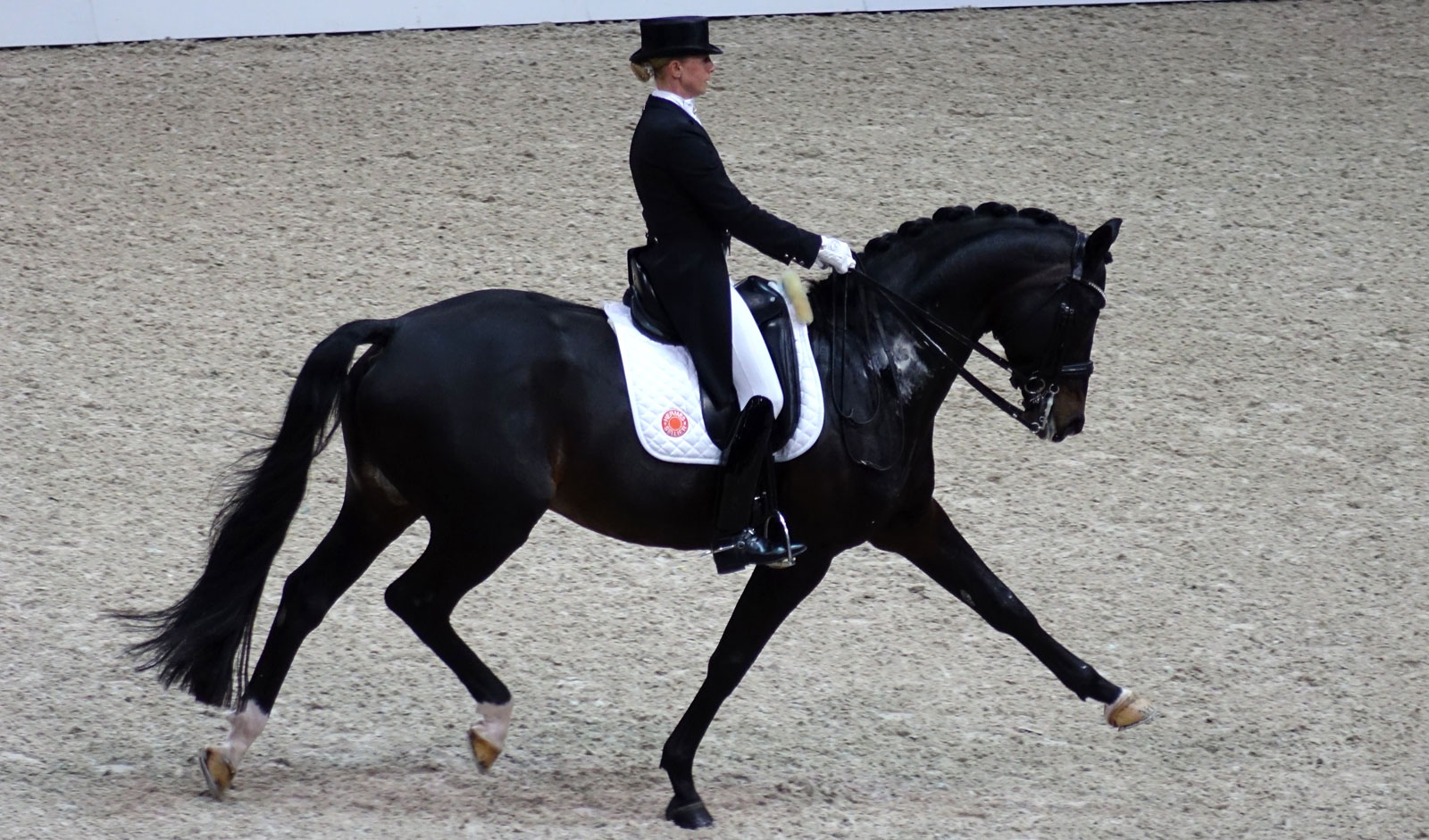
The Hanoverian horse originates from Germany and is currently one of the most popular breeds worldwide, especially for equestrian sports.
Among its ancestors are specimens of the Holsteiner, Thoroughbred English, and a first horse from the Hannover region.
From various crosses, a light and elegant gaited animal was obtained, used both for driving and riding. Also, its physical aptitudes allowed it to be used in the field.
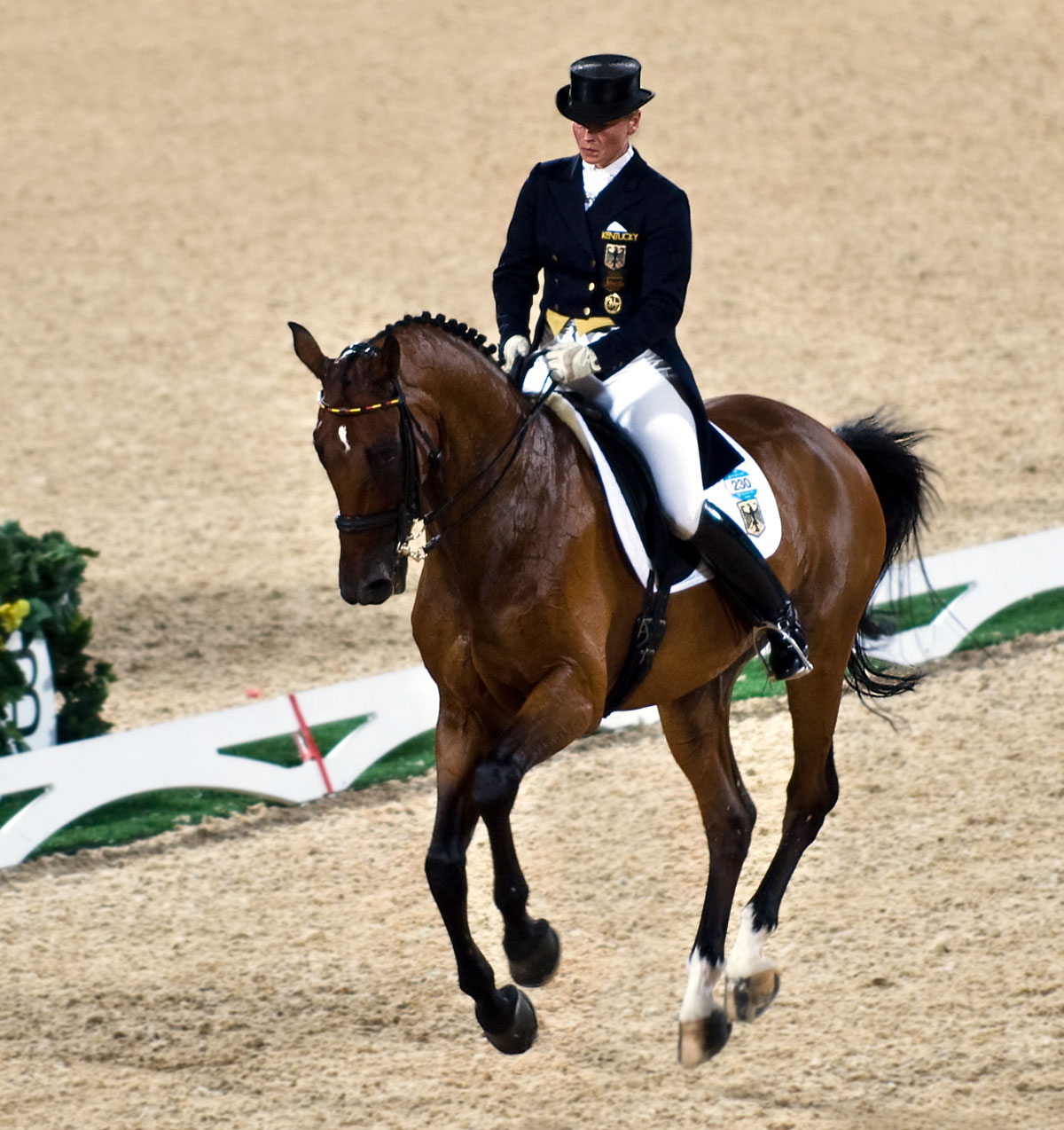
After both world wars, crosses with Trakehners were made, giving more lightness, power, and freedom to the Hanoverian's gaits.
Characteristics of the Hanoverian Horse
- Height between 1.60 and 1.70 m.
- The neck is rather long and thin but strong.
- The body is medium length, wide and strong, with a muscular and flat croup.
- High carriage and high tail set.
- Relatively short limbs giving it a very massive figure.
- The cannon bones are strong, with large and marked joints.
- Very resistant hooves.
- Varied coat colors, including sorrels, grays, and blacks.
- It is a horse with a pleasant and docile temperament.
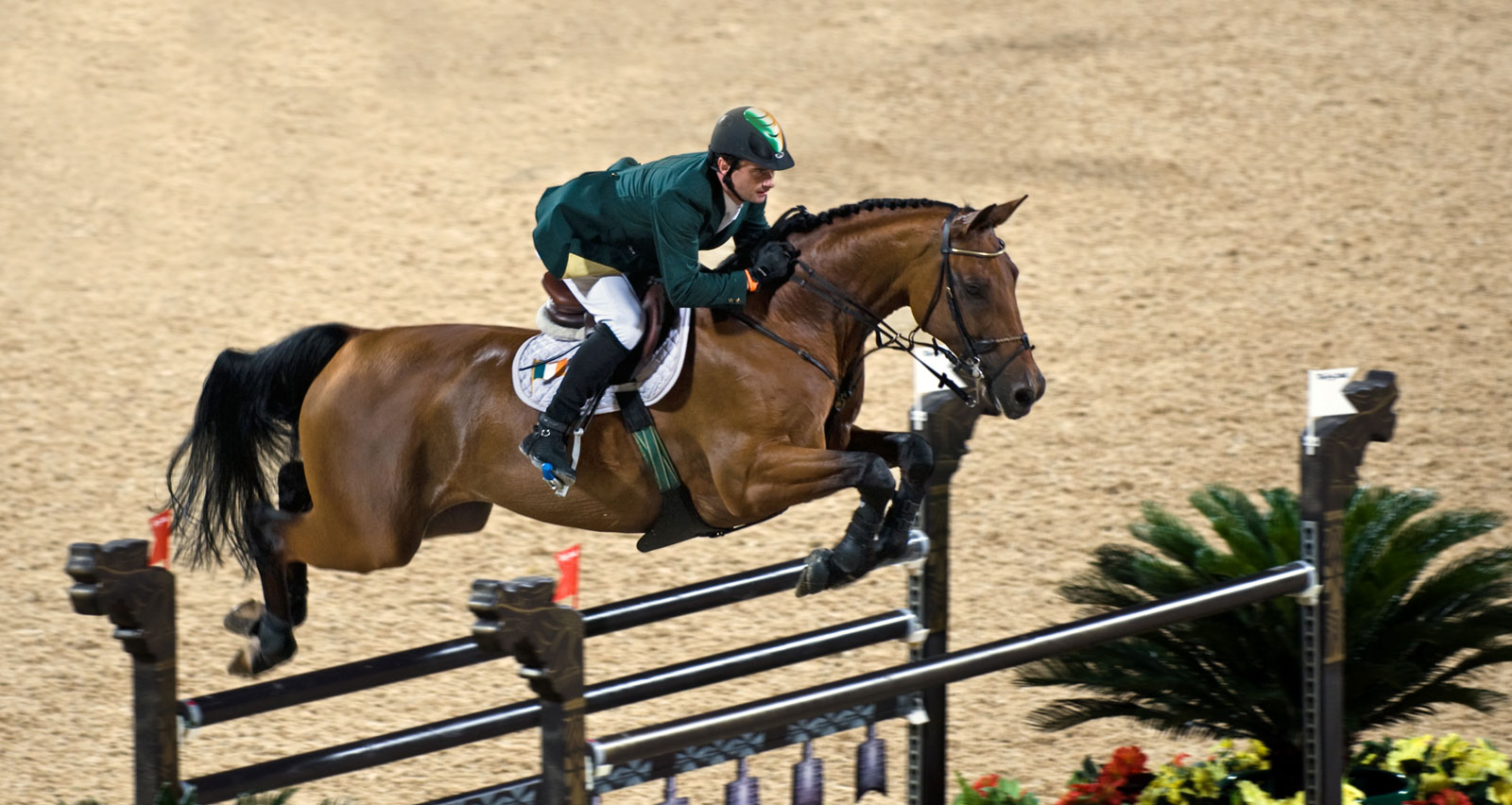
OLDENBURG (OLDBG)
This breed was developed in Germany during the 17th century with the goal of obtaining a horse for carriage draft.
Its main base was the Friesian horse. Over time, the breed was improved with blood from Neapolitan, Berber, Spanish, Hanoverian, and Thoroughbred English horses. This achieved greater refinement for more complete uses.
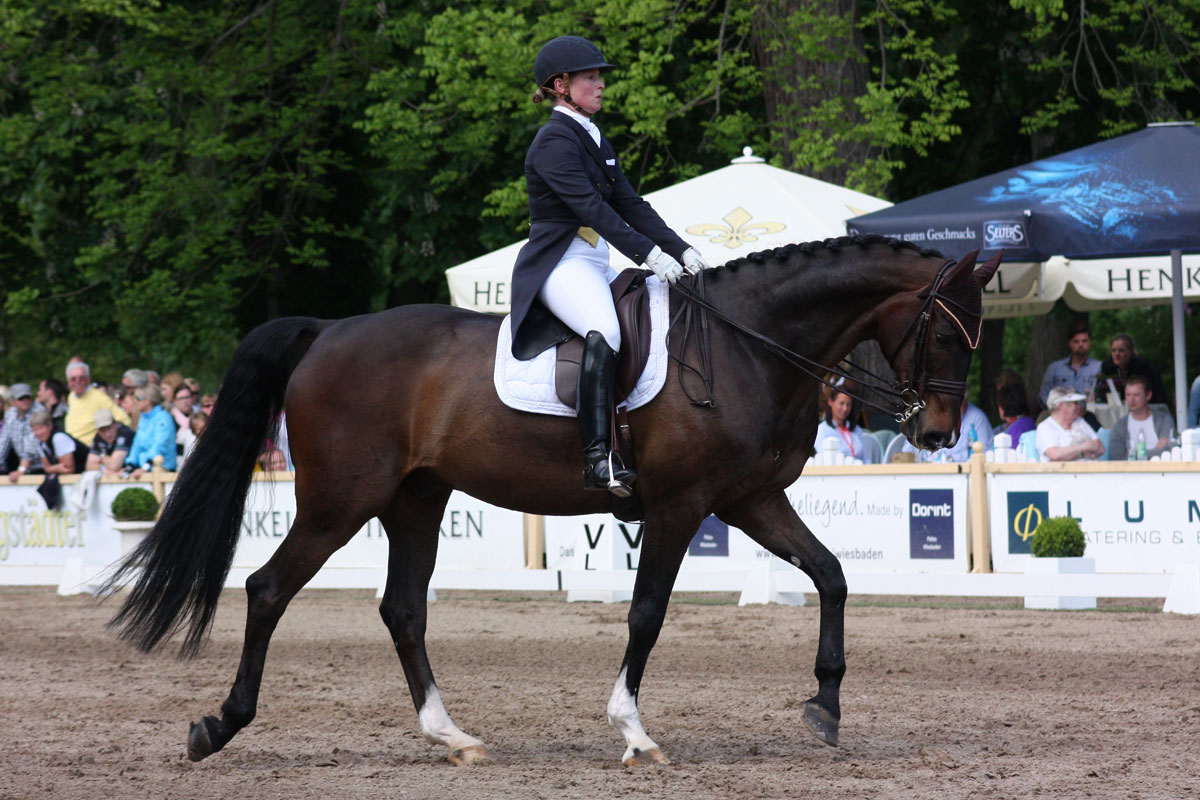
It is a large-bodied animal and currently widely used in show jumping, dressage, and even carriage driving competitions.
Characteristics of the Oldenburg Horse
- Height at the withers from 1.60 to 1.70 m.
- Main coat colors are black, brown, and dun.
- Very muscular chest and body.
- Strong hindquarters.
- Long and strong neck.
- Short legs and cannon bones.
- Calm temperament.
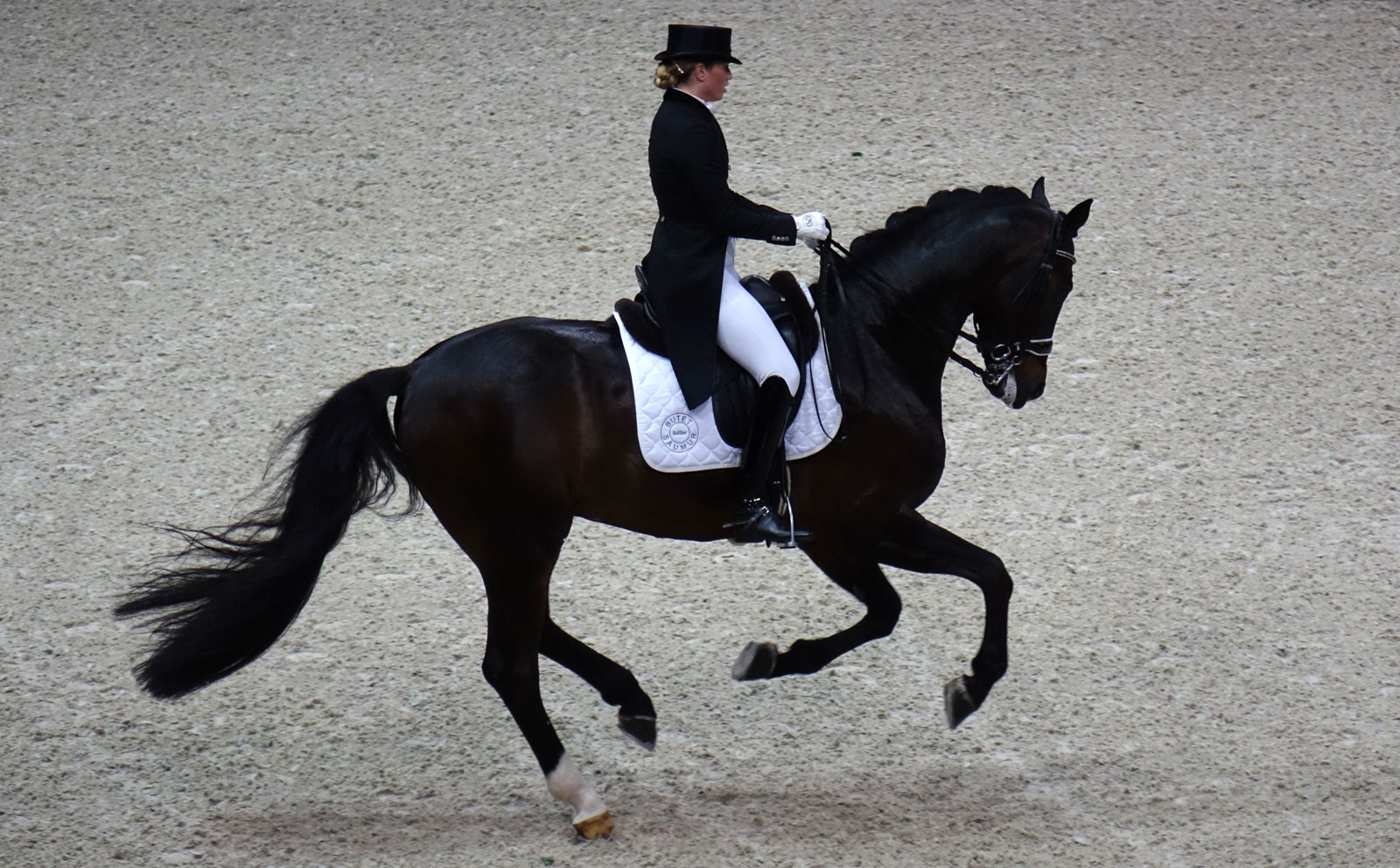
WESTPHALIAN (WESFT)
The Westphalian originates from the Rhineland region and is basically a product of three breeds: Thoroughbred English, Arabian, and Hanoverian.
In the 1970s, during the rise of equestrianism in Germany, this horse strongly entered the equestrian sports sector as a high-quality product.
Its reputation is based on its aptitudes and conformation, due to its ductility for jumping and dressage, as well as its great endurance. It is a great competitor in eventing and also works well as a trail riding horse.
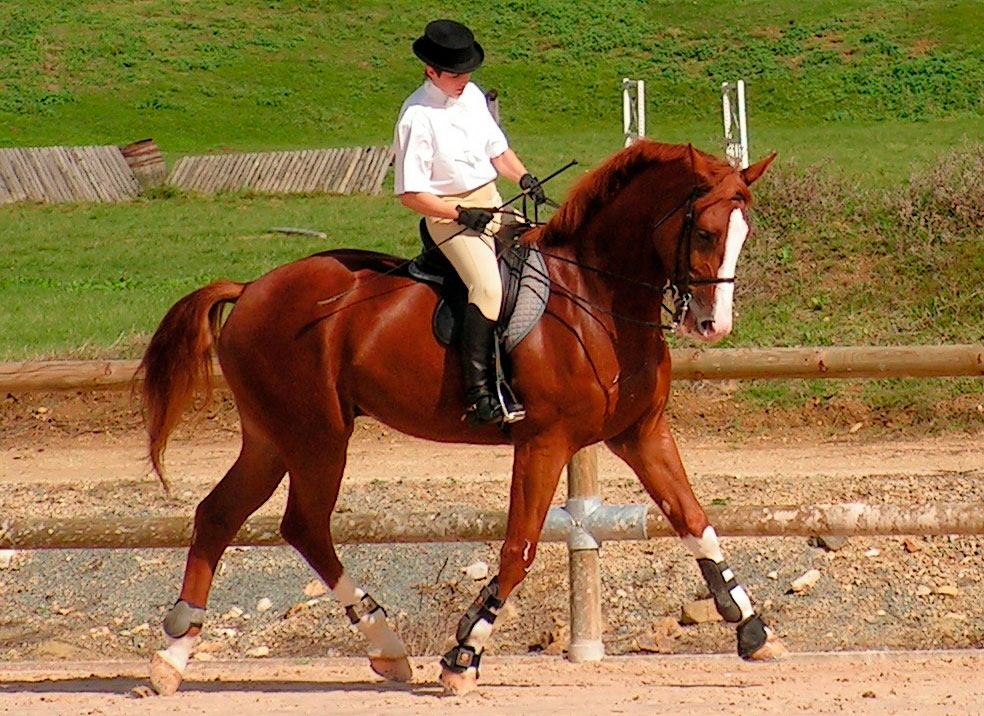
Characteristics of the Westphalian Horse
- Height is 1.55 to 1.68 m.
- Large head, long and straight forehead. Medium ears and large eyes.
- Muscular, athletic, and well-balanced, with elastic movements and a long stride.
- Long and well-attached neck, with good back inclination.
- Back and loin slightly longer than other warmblood horses.
- Slightly sloped croup with correct and muscular limbs ending in large hooves.
HOLSTEINER (HOLST)
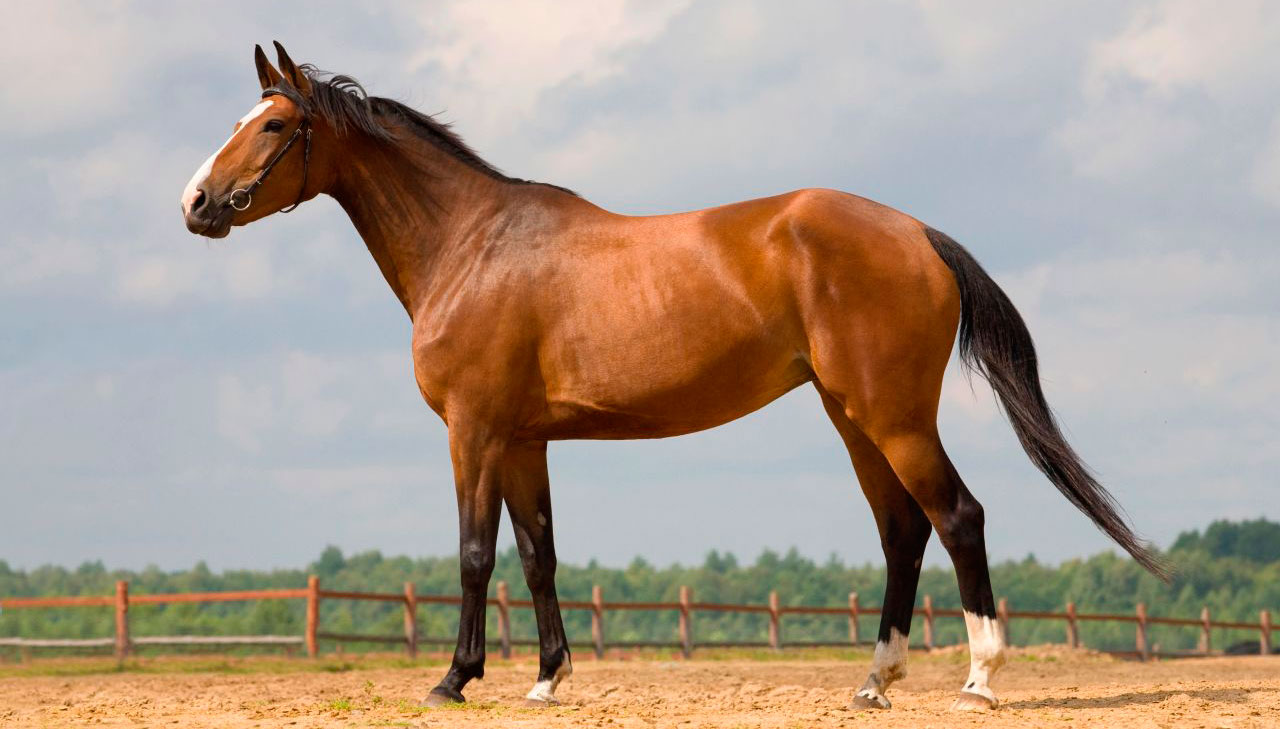
The Holsteiner is a warmblood riding horse breed of German origin.
Its beginnings date back to the 13th century in the province of Schleswig-Holstein. Some think it is the oldest warmblood breed. For centuries, these horses had multiple uses: riding, carriage driving, and agricultural work.
In reality, breeders crossed these horses with different breeds depending on the characteristics needed. But the most common crosses in the early centuries were with Spanish and Italian Thoroughbreds.
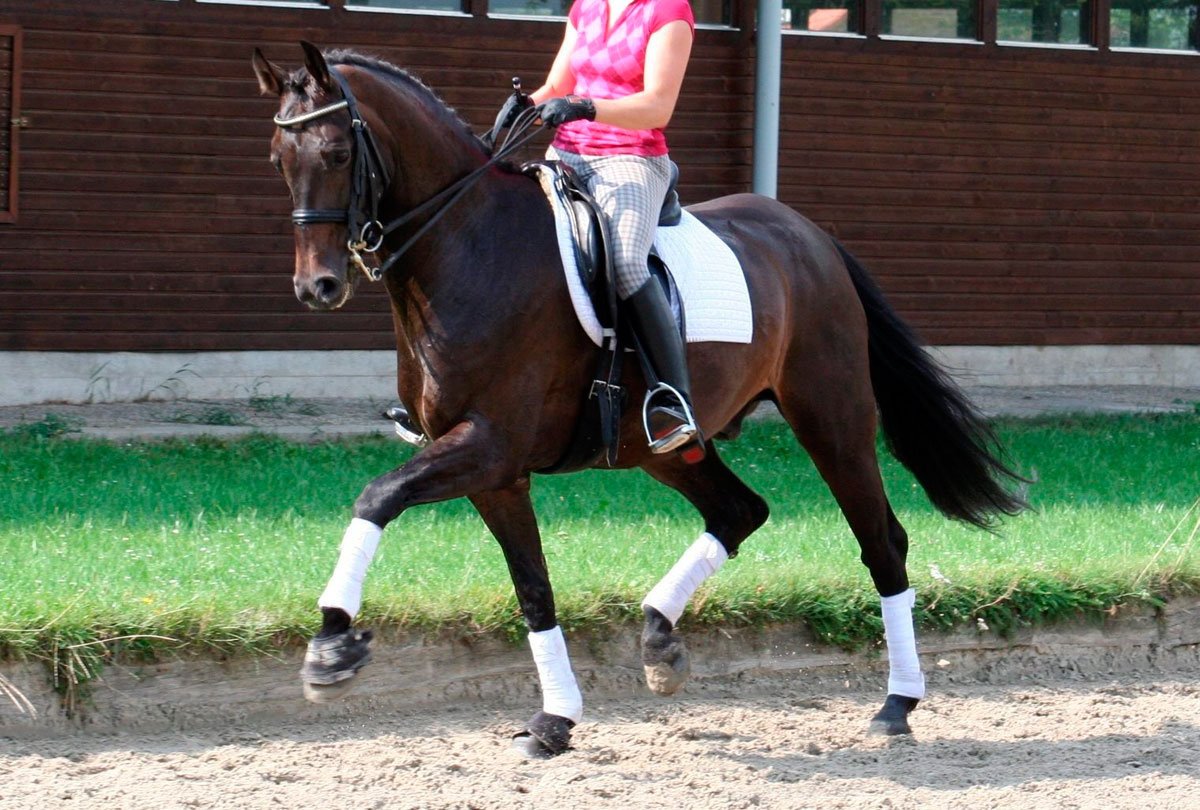
It was during the 20th century that a significant change was made in the horse's body conformation, significantly lightening it for almost exclusive sports use.
Thus, the foundations of the current breed began to be fixed from 1961. It is very oriented towards sport, especially jumping. Although they do not make up more than 6% of the specimens competing in this category, many are champions.
They also perform well in driving, dressage, and eventing.
Crosses with Arabian Thoroughbreds and the Trakehner breed have been decisive in achieving these good results.
Characteristics of the Holsteiner Horse
- Height at the withers from 1.60 to 1.73 m.
- Strong and well-connected neck.
- Wide and expanded chest.
- Wide stride with very good cadence.
- Most popular coat colors are black, chestnut, or dark chestnut, but there are also sorrels and grays.
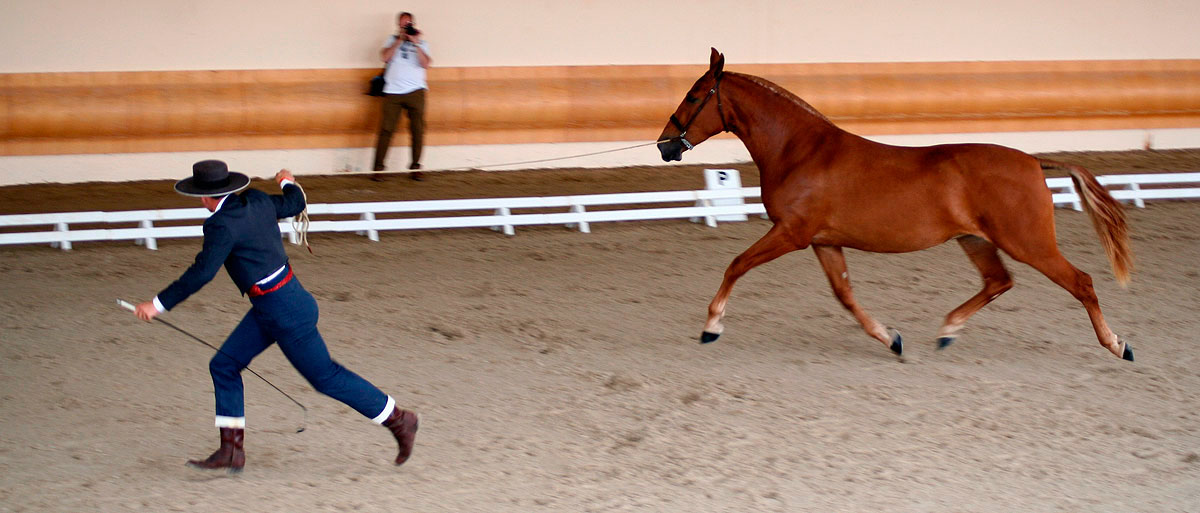
SPANISH PUREBRED (PRE)
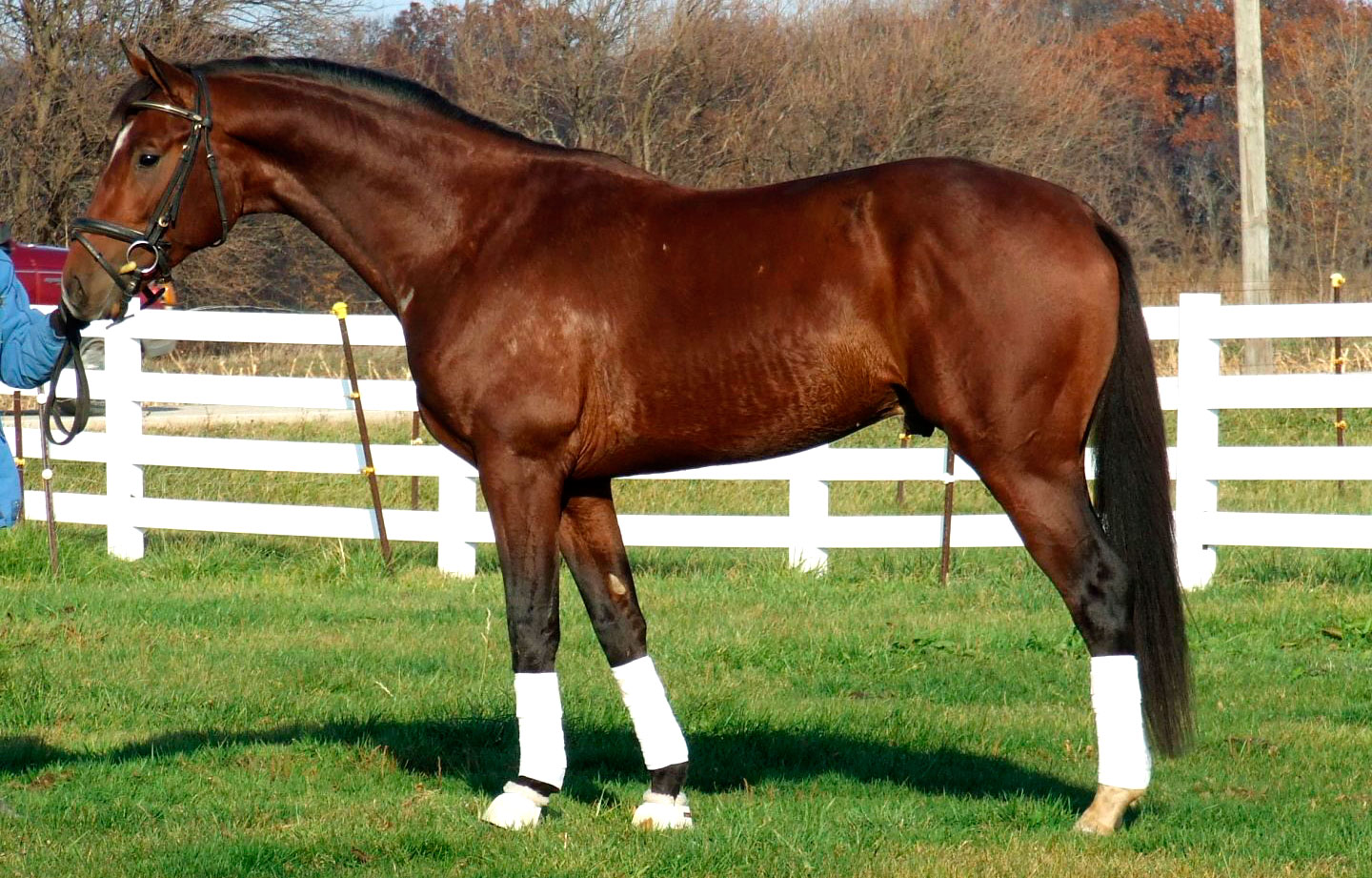
The Spanish Purebred horse, called so since 1912, is historically and internationally known as the Andalusian horse.
It is the result of breeding prior to Roman Empire times. There are equestrian records in what is now Spain and Roman authors such as Plutarch, Pliny, and Seneca spoke of a horse from Hispania.
They referred to a beautiful and proud animal, ideal for both war and games practiced at the time.
King Philip II ordered the creation and systematization of the horses of his kingdom through the establishment of the Royal Stables of Córdoba in the Andalusia region. Here he gathered the best stallions and mares from the provinces bordering the Guadalquivir, the most prolific in horse breeding.
Thus, the royal stud was born. Much later it became known as the national stud.
The first selection of stallions and mares was made with the best available locally, horses already known such as the Andalusian or Córdoba horse, corresponding to the horse referenced by Roman authors.
From them, without adding crosses with breeds brought from elsewhere, the breed was improved through proper selection.
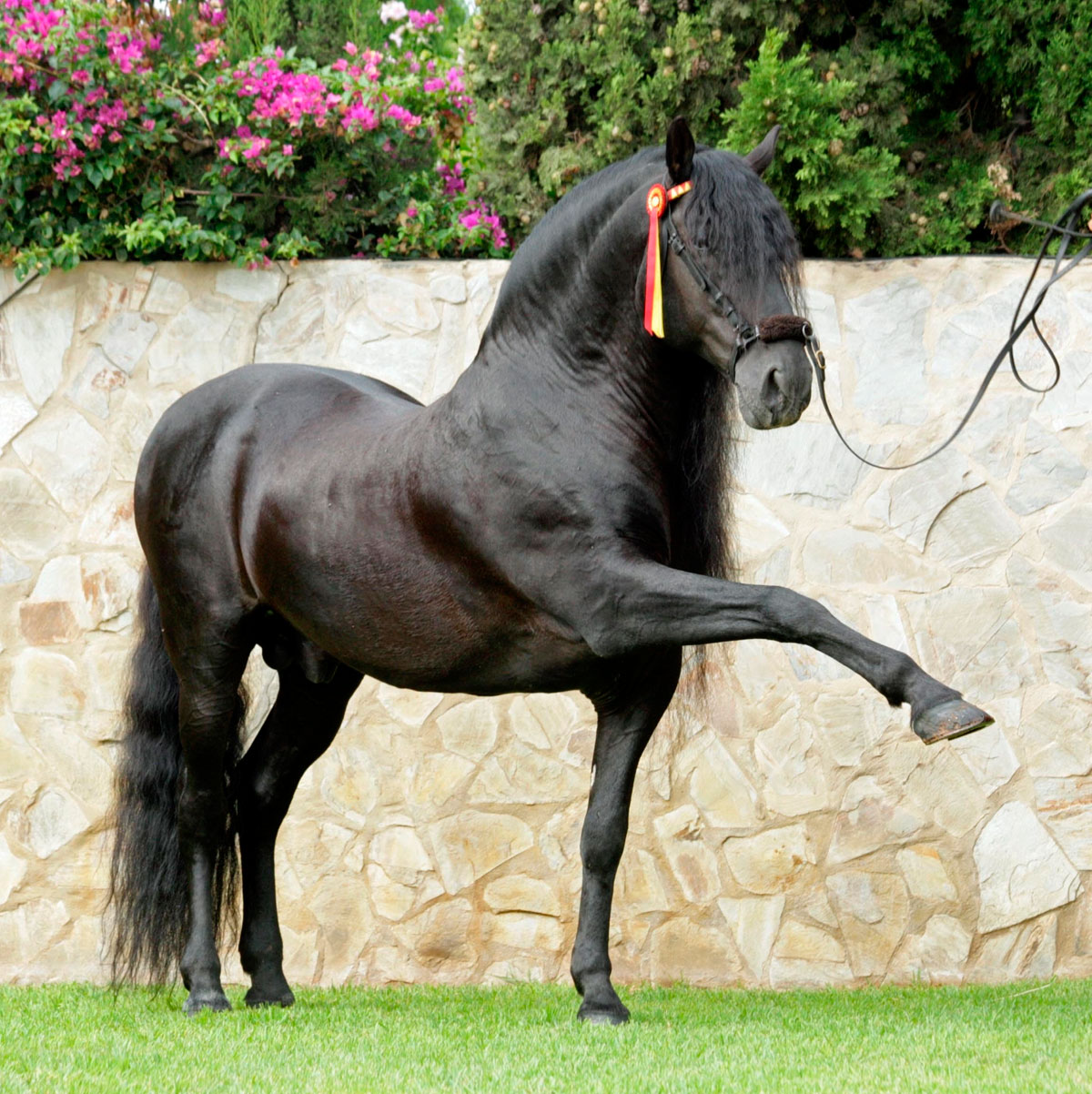
The Spanish Purebred is heir to that blood and systematic selection carried out at the Royal Stables of Córdoba. A horse that balances the beauty of Renaissance art and the excellence of the Golden Age.
It is one of the most valued horses for being so balanced, as it is suitable for everything.
Its beauty and spirit result from maintaining pure blood, without crosses, and improving genetic quality in each generation, and it has also greatly influenced the generation of several breeds in Central Europe and America.
Characteristics of the Spanish Purebred Horse
It has great versatility, a result of the harmony of its forms, spirit, and endurance. Thus, it offers extraordinary performance both in sport and dressage as well as for riding in the countryside.
- Height of approximately 1.55 to 1.62 m.
- Proportional head, medium length, and subconvex to straight profile. Medium ears and slightly domed forehead. Lively, triangular eyes with expressive gaze.
- Medium-sized and length neck, slightly arched and muscular, well attached to head and trunk, with abundant and silky mane.
- Proportional and robust trunk, with slightly wide and prominent withers, as well as a consistent and muscular back. The loin should be wide, short, muscular, slightly arched, and well connected to the back and croup.
- Medium length and width croup, rounded and slightly sloping. Low tail set.
- Front limbs with long, muscular, oblique, and elastic back. Strong and well-inclined arm. Medium-length forearm. Developed and lean knee.
- Hind limbs with muscular thigh, slightly arched and muscular buttock, and long leg.
- Hard and compact hooves.
- Agile, elevated, extended, harmonious, and cadenced movements. Special predisposition for collection and turns on the hindquarters.
- The PRE is a balanced and resistant horse. Energetic, with ease to adapt to various services and situations.
Conclusion
As you have seen, there are many horse breeds for riding, each with its particularities, history, and aptitudes. The choice of one or another will depend on the use you want to give it, your experience as a rider, and the type of routes or equestrian activities you wish to perform.
At Ampascachi, we bet on the Peruvian Paso Horse for our equestrian routes in Argentina, for its smoothness, endurance, and nobility. But any of the mentioned breeds can offer you an unforgettable experience if it suits your needs and expectations.
Would you like to know more about horses, equestrian routes, or horseback tourism? Keep exploring our site!