
Everything you should know about bits
Communication between rider and horse is essential for all types of equestrian activities, whether in sports or on horse riding trails.
During the training process, the horse is taught to react to certain signals from the rider, either by voice, with the legs or with the reins.

A “bit” is a metal (or other material) tool that is inserted into the horse's mouth.
Choosing a good bit is essential if our animal is to be relaxed when working and it will be much easier for us to communicate and ask our partner what we want in each exercise.
“An unsuitable bit can be the starting point for physical problems.”
Some of the symptoms that the horse may show if the bit is not correct are to become sullen, shake its head or bolt.
There are two basic aspects that we should take into account when selecting the bit:
- The anatomy of the horse's mouth.
- The level or stage of training it is at.
But that's not all, it is also important that the horse is relaxed and has no behavioral problems. The trainer or rider must make good use of this tool.

And what actions can we achieve thanks to good use of the bit and in what way?
For example, to make the horse stop, the rider applies pressure to the horse's mouth with the reins. When the horse stops, the rider releases the pressure and the horse will understand that it has done the right thing.
It is important to release the pressure when the horse carries out the required action, otherwise the horse will become confused and will not be able to link the gesture or pressure with the desired action.
At Ampascachi we use this method for training horses. We base our work on the concepts of Learning Theory and ethology.
Types of bridles
There are two main types of bridle, which in turn come in different varieties and forms:
- The snaffle, also called a bridle.
- The curb, which uses a lever system.
The snaffle is used in the preliminary stages of training, and later the curb bit is introduced, which will serve to refine and reinforce the aids in more advanced movements.
While the snaffle acts on two points, the tongue and the corner of the lips, the bit acts on four points: tongue, corner of the lips, jaw and palate.
The snaffle is a tool of direct action and the pressure exerted is directly proportional to the force with which the reins are pulled.
There are different types of bit, which we will look at later, but what I want to emphasize now is that they all have two basic elements, which are the rings where the reins are attached, and the mouthpiece, which is a fixed or hinged bar that is placed inside the horse's mouth.
Let's look at these illustrations of two examples of bits, the ring bit, and the stick bit:
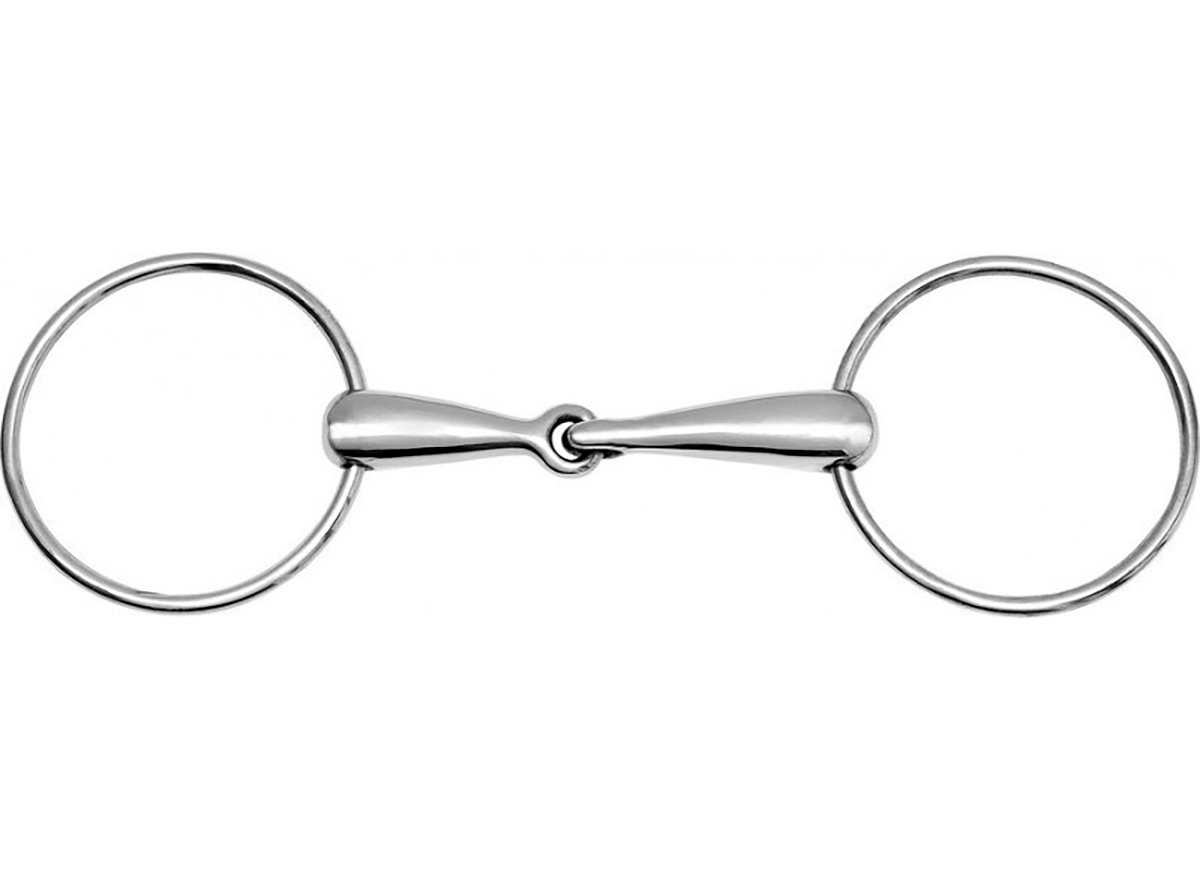
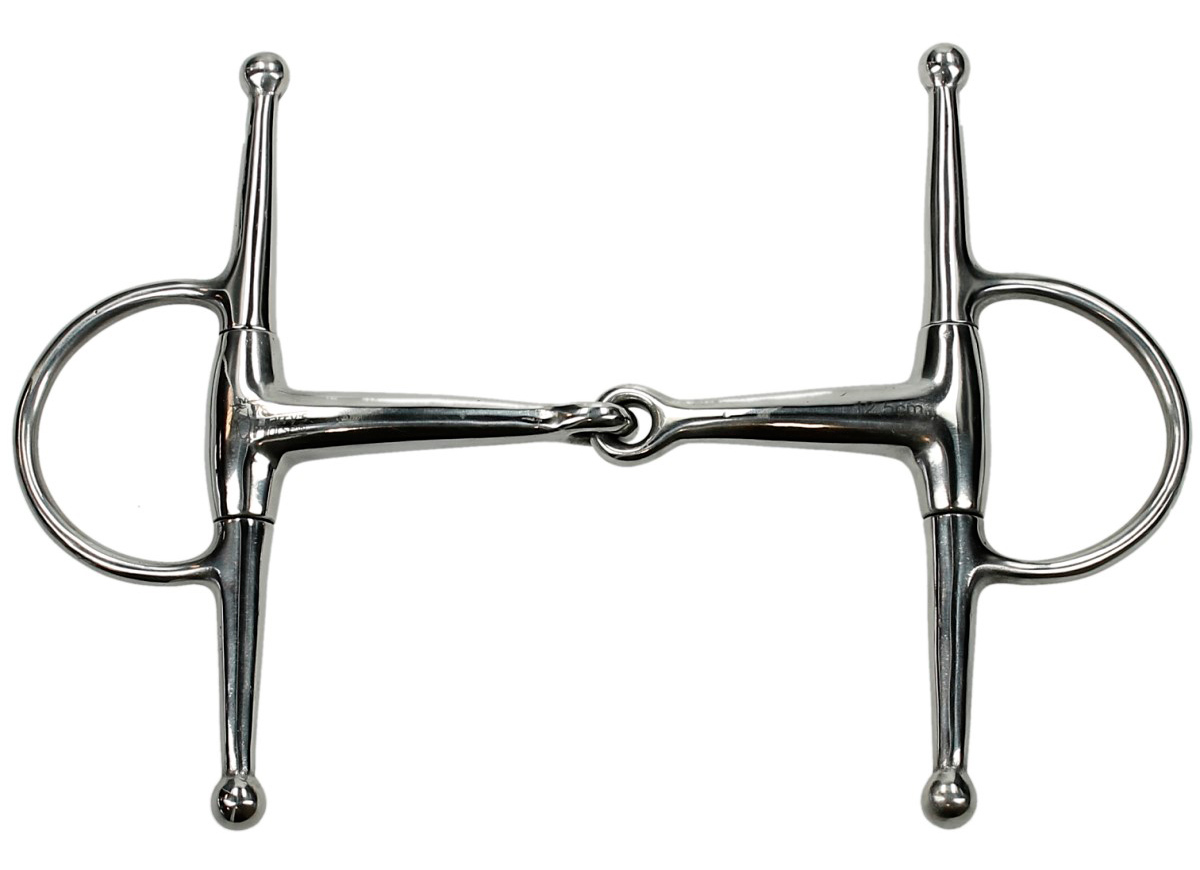
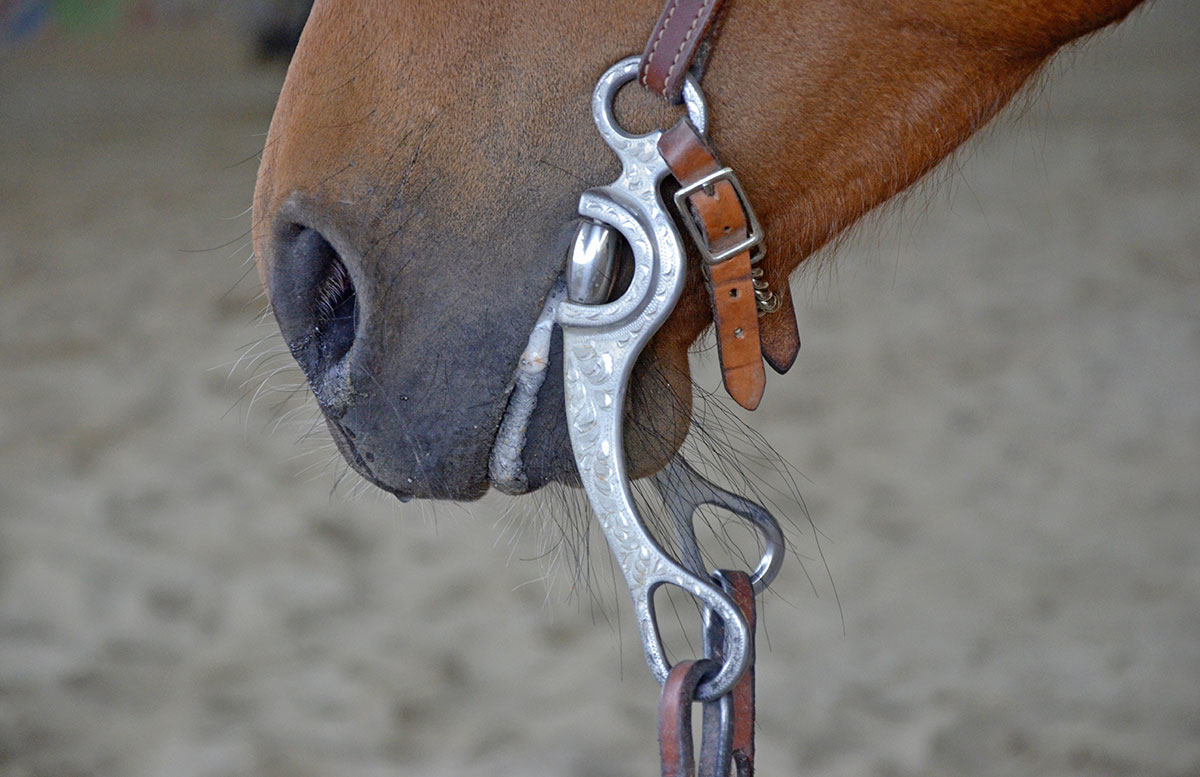
In contrast, the bit has two parts that the snaffle does not have, and they consist of the “legs” and the “handle”, which exert a lever action, multiplying the force that is applied when pulling on the reins.
Basically the difference between a snaffle and a bridle is that the latter has reins, which have a leverage effect, therefore the pressure exerted on the horse's mouth is greater.
Let's look at an image of two types of bit, the dressage bit and the Pelham bit:
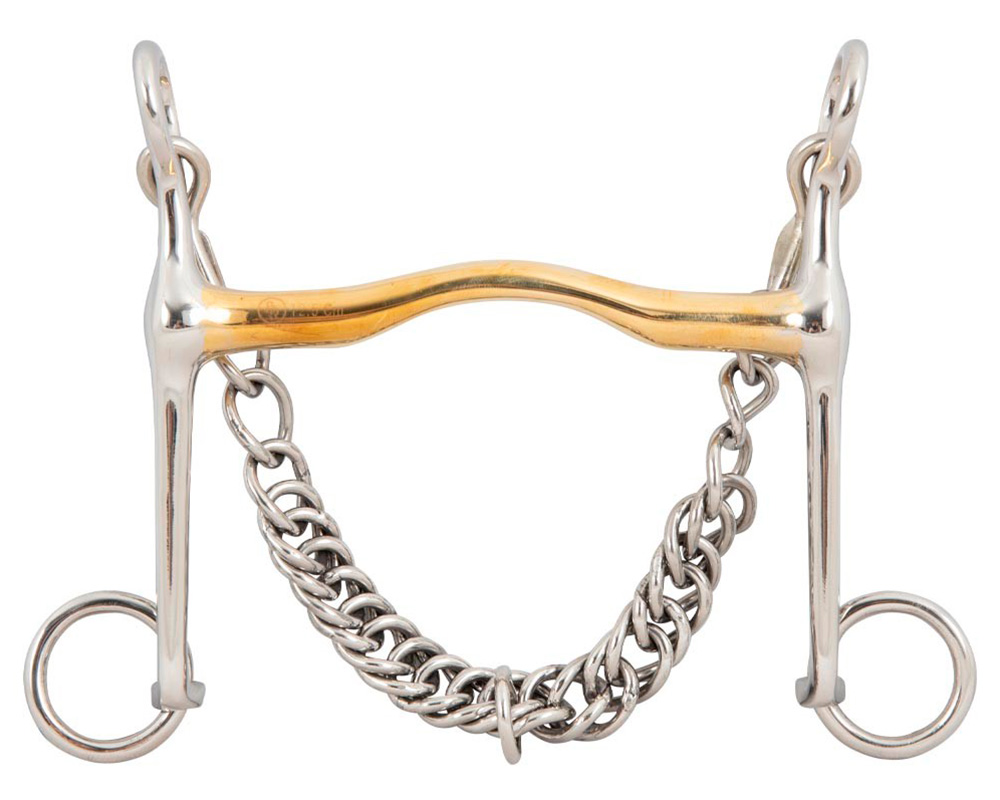
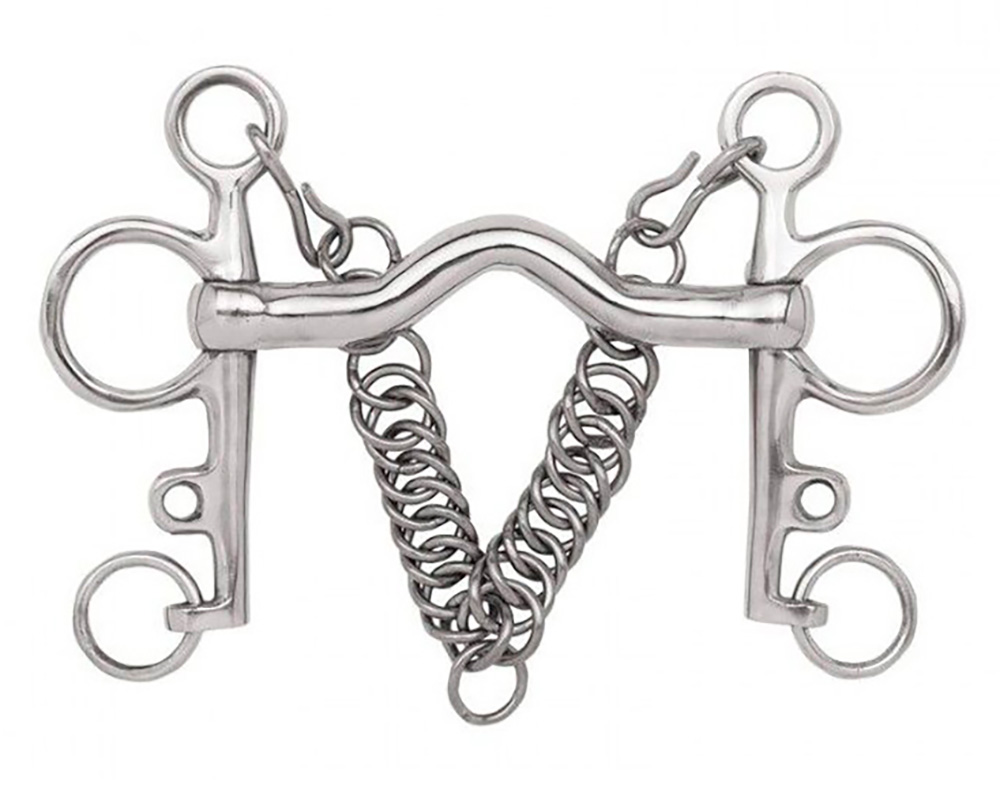
As you can see, the bit or curb bit is used with a curb chain. It acts on the bars (seat) of the mouth and the leverage is exerted through the legs of the bit and the curb chain, the bit has a harder action.
In reality, the Pelham bit can be considered a bit that combines the two types, the snaffle and the bit.
If we look at the images, we can see that the upper part is the handle, which is the ring where the bridle is attached, while the reins are attached to the ring at the bottom.
Other types of bit:
Apart from snaffles and curb bits, there are two other types of bit:
- Snaffle + Bit: a combination of both types of bit in the horse's mouth. It is often used to refine horses with a high level of dressage.
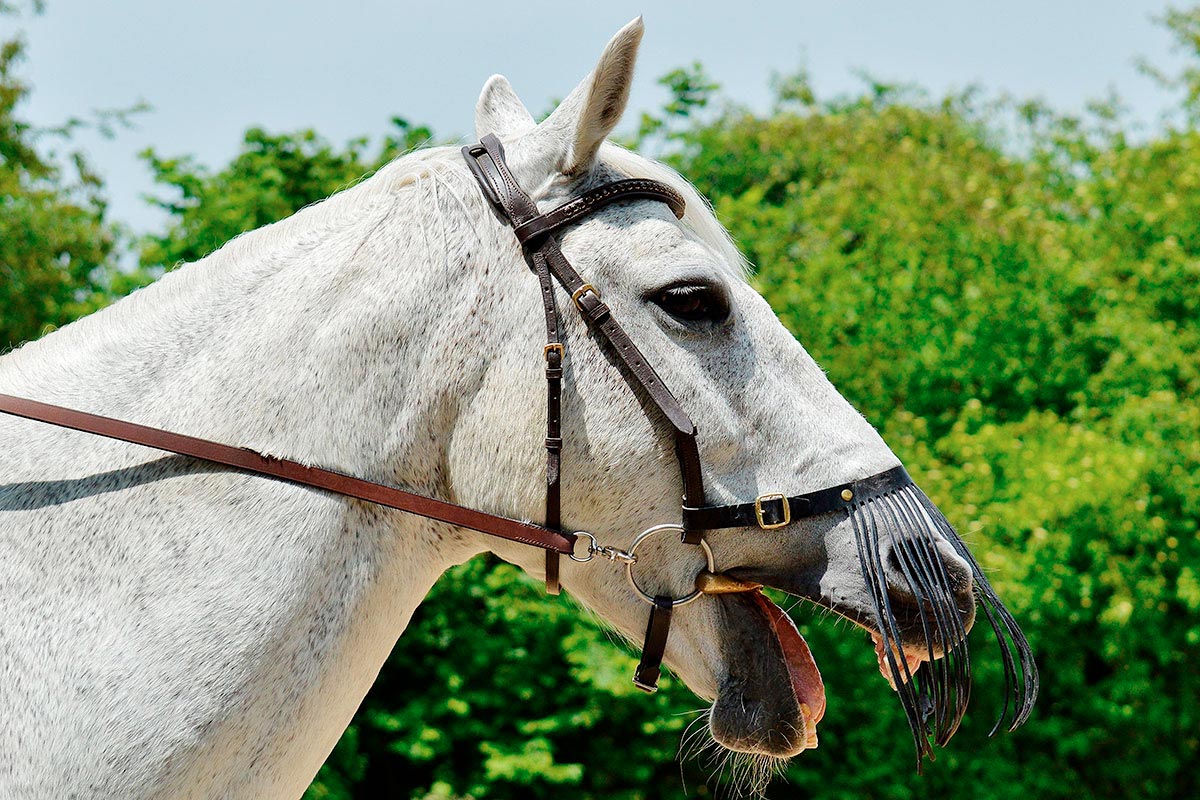
- Hackamore: this is a very particular bit as it has no metal in the horse's mouth. It consists of two long straps joined together by two straps, one on the nose and the other on the horse's chin. They are mainly used on horses that cannot tolerate metal in their mouths or on foals to prepare them to respond to the rider's commands prior to the bit.
How to put on the bit and the halter?
To put a snaffle or a bit in the horse's mouth, we first have to hold the horse with a lead rope to a ring or post. This way we prevent it from getting tangled up with the reins and halter if it gets scared and runs away.
- With the bit and bridle ready, we pass the reins over the horse's head.
- We hold the bridle with our right hand at the height of the browband and behind the horse's head we lift the whole thing up.
- With our left hand we hold the bit and insert it into the horse's mouth. If it does not open, we insert our thumb into the corner of the lips and when it has opened its mouth a little, we lift the whole assembly.
- Finally, we place the headpiece of the bridle over the horse's ears and check that all the pieces are adjusted just enough.
Characteristics of the bits
The size
For a correct fit, on each side of the mouth they should protrude 3 to 5 millimeters to avoid excess pressure in the corners and sides.
If it is too small, the bit will pinch the mouth. And if it is too big it can injure the horse's palate due to the extreme looseness in jointed bits.
The width varies according to the size of the horse's mouth.
When adjusting the cheek pieces, the ideal height is achieved by creating two subtle folds at the corners of the lips with the mouth closed and one fold when the horse opens its mouth.
To calculate the length of a bit, measure the useful area of the cannons, which is the part inside the horse's mouth.
- 100–105 mm: Shetland or small ponies
- 11–11.5 cm: ponies and horses less than 60 cm at the withers
- 12–12.5 cm: standard size or large-headed ponies
- 13–13.5 cm: large horses
- 14–14.5 cm: large-headed horses or snaffles
- 15–15.5 cm: extra large (very special cases)
The thickness of the mouthpiece
As we have mentioned before, the mouthpiece is the part that is inside the horse's mouth.
The thickness we should select will depend on the type of mouth each horse has, the type of discipline and the action of the rider's hand on the rein.
A thick mouthpiece acts more gently and a thin mouthpiece more harshly.
The thickness of the mouthpieces increases in 2mm increments:
- Thin: from 8 mm to 14 mm
- Medium: between 14mm and 18mm
- Thick: from 18mm to 24mm
Composition material
The material used to make the mouthpieces improves acceptance of the bit by promoting salivation and jaw movement, as well as offering a perfect fit for each horse's personality.
Bits can be made of different materials, each of which will have a different impact in the horse's mouth.
They can be classified as classic, combined or technical.
Classic materials include:
- Stainless steel: very durable and prevents rust. Cold metal, for hard or expert mouths. Guaranteed to last.
- Soft copper: these two materials oxidize a little, but in some horses it has a relaxing effect and they accept contact much better. It promotes chewing and salivation, making it ideal for sensitive and complicated mouths.
- Rubber: this is the classic solution for sensitive horses. This anti-slip material softens through salivation and chewing. It is totally contraindicated in horses that bite the bit.
- Special plastic material: as in the case of rubber, its contact will be more pleasant for horses. This material heats up and becomes softer inside the mouth. Ideal for horses with sensitive or complicated mouths.
- Blue steel: commonly called mild steel, it is a natural hypoallergenic blue alloy that, through the natural process of oxidation, encourages chewing and salivation for a correct acceptance of the bit. Ideal for sensitive horses with a tendency to allergic reactions.
- Happy mouth: a combination of rubber and a special plastic material that softens through salivation and chewing, giving off a very pleasant apple flavor. Ideal for horses with a sensitive or young mouth.
- Leather: a very pleasant material for horses, encouraging confidence to make contact, very soft in texture, ideal for young horses, horses with problems in contact, with a sensitive or complicated mouth.
Combined materials offer a combination of the benefits of each alloy. Commonly in mouthpieces with multiple joints or with wheels called “de-contraction”.
Finally, technical materials are the result of research carried out by world-renowned brands with their own alloys for a much more effective result. We highlight two of them, made by the Sprenger brand:
- Sensogan: also known as “German silver”, it is a material patented by the Sprenger brand made of steel, copper, magnesium and zinc that combines the hardness of a cold material with the sensitivity to preserve the health of the horse's mouth. It releases a little magnesium from its formulation, offering prevention of muscle tension and stress, favoring healthy contact and relaxation.
- Aurigan: a special copper-based alloy with nickel and silicon that combines the advantages of the natural oxidation process of pure copper with maximum resistance. A special bit for working horses with a bit and a snaffle.
The shape of the mouthpiece
The morphology and design of the mouthpiece will measure the level and location of the pressure on contact with the horse's mouth.
The mouthpiece can have a curvature in its central part that acts on the palate and allows some freedom for the tongue.
- Non-jointed: mouthpieces that are not split have no mobility inside the mouth. They provide confidence to lean on thanks to the stability they offer. They act on the corners and bars and sometimes on the tongue.
- Split mouthpiece: single central joint. Traditional bit generally soft that acts on the bars, tongue and palate. Not recommended for horses with a soft, flat or narrow palate as it could cause discomfort in that area.
- Split double barrel: two joints. Thanks to the high mobility of the mouthpiece, it offers a more precise effect than with just one joint, ideal for horses with a stiff neck and jaw. It exerts pressure on the tongue and bars.
- Barrel with multiple joints: mouthpiece with many joints, also called “ball bit”, common with wheels or hanging toys. Severe action on bars and tongue offering a “relaxing” effect for horses with stiffness and a hard mouth.
Bridles
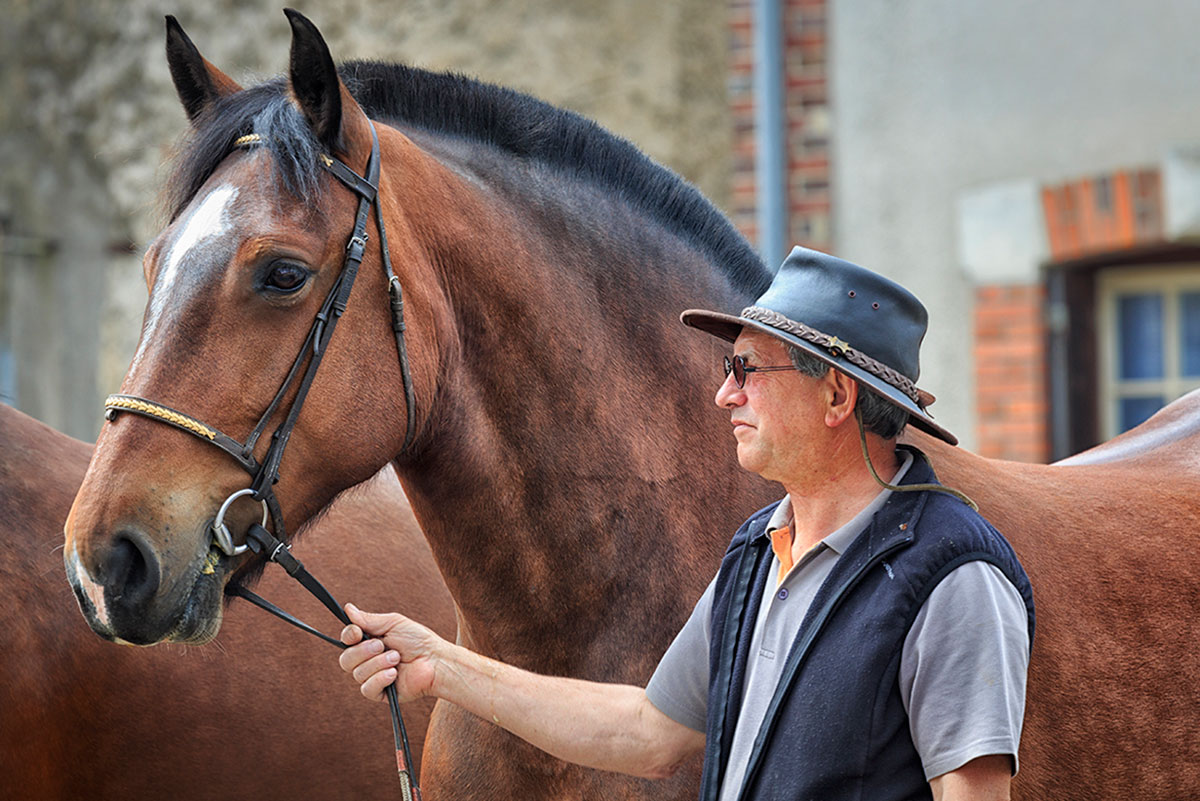
The bit is placed over the tongue in the area of the bars or bit seat, the part of the gums where there are no teeth. The noseband should be adjusted so that there is a single crease in the corner of the lips.
With the bit the horse can learn the “neck yield”, the “handstand” and all the exercises corresponding to basic dressage.
We should minimize discomfort to our horse when choosing the bit.
Finally, bear in mind that the wrong bit can damage the horse's mouth, but a hard and unkind hand can also affect the horse's mouth even if the bit is the softest and best fitted.
Types of snaffle
Always bearing in mind the characteristics we have defined above, such as thickness, size, material and type of joint, we will now list the different types of snaffle and their characteristics.
- This is the most common and simplest. With swivel rings, the size of which can be chosen according to the discipline and the desired leverage. Depending on the composition material, the thickness and the design of the barrel, the action on the horse's mouth varies. Recommended for all types of horse.
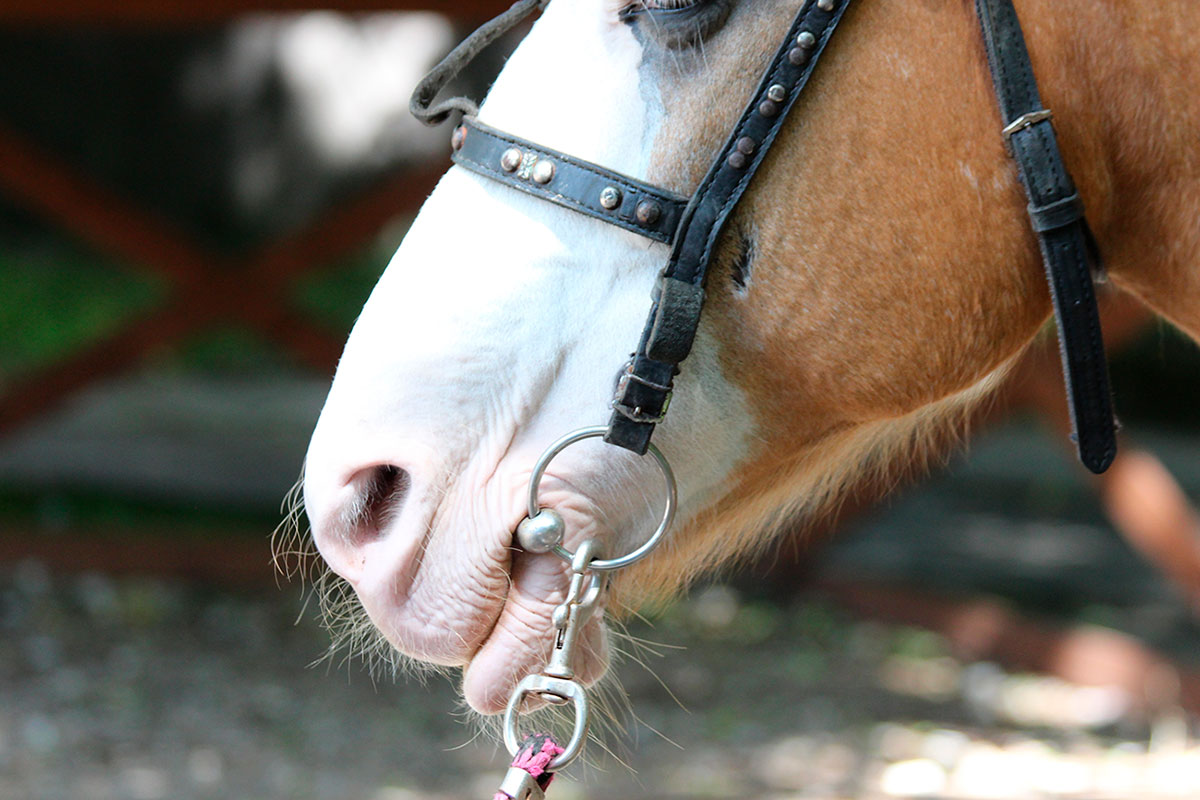
Olive bit: This is a more fixed and stable bit in the horse's mouth. With fixed rings that subtly increase the hardness of the action. Rounded ends that prevent pinching in the corners. It favors the flexibility of the neck in circular work that will increase or decrease the hardness depending on the cannon.
Fillet bit: Similar to the olive bit, with the difference that the rings include side bars that prevent the bit from sliding sideways in the horse's mouth. It is very useful at the beginning of training. Recommended for young horses with healthy mouths and for lunging.
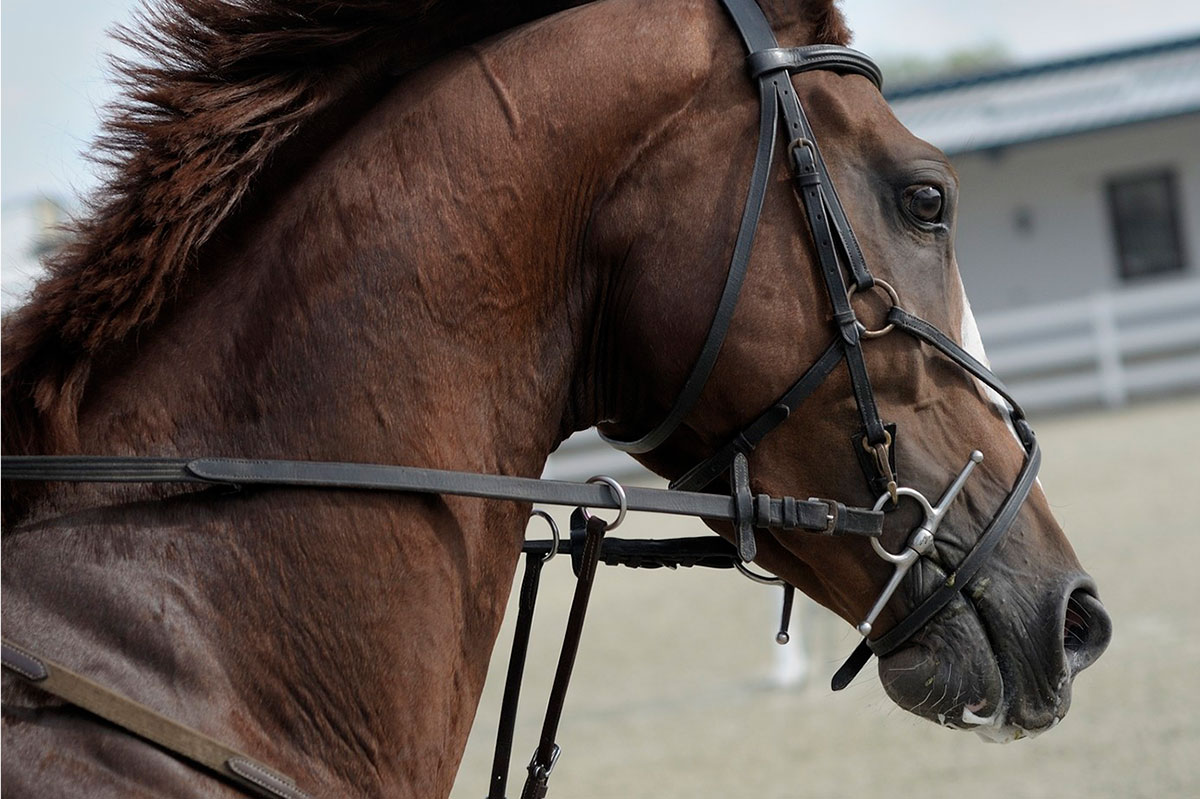
D or Verdun snaffle: A fairly simple bit generally with a thin cannons. The design of the rings helps the horse work on straightness in straight lines or turns, allowing better control of direction subtly in jumping exercises.
Baucher snaffle: Widely used in classical dressage. It has a ring with a small lever extension where the upright is placed in the upper ring and the reins in the lower ring allowing for greater action in the contact. This corrects bad habits in horses that hang on the contact or have a hard mouth and bad body position by releasing the weight from the shoulders.
Elevator snaffle: Snaffle with elevator attachment on the rings, the cheekpiece is placed at one end and the rein at the other. It is used with a double rein with action on the attachment and on the ring or by placing the rein on the elevator attachment. Suitable for horses that take on jumps very quickly and we want to correct them and make them obey the indications of the hand.
Suitable for horses that take jumps at high speed and we want to correct them and make them obey the indications of the hand.
Filete pessoa: Regular ring with two or three complementary rings to regulate the action of the lever. It is ideal for gradually accustoming a strong horse to being able to work with less harshness in the mouth in a progressive way.
Kimblewick bit: Similar to the Baucher, it has two gradual levels of leverage action combined with the action of the curb chain. Excellent for horses or ponies with a tendency to tense the jaw and offer hard contact allowing control in younger riders, usually used on ponies or horses that are sometimes a little stiff.
Swivel snaffle: Snaffle with very gentle leverage action, suitable for horses that require a little more action than a simple snaffle, with rings integrated into the regular ring to choose the degree of hardness. If the cheekpiece is placed on the upper integrated ring and the rein on the lower one, the maximum level of leverage that the snaffle can offer is achieved.
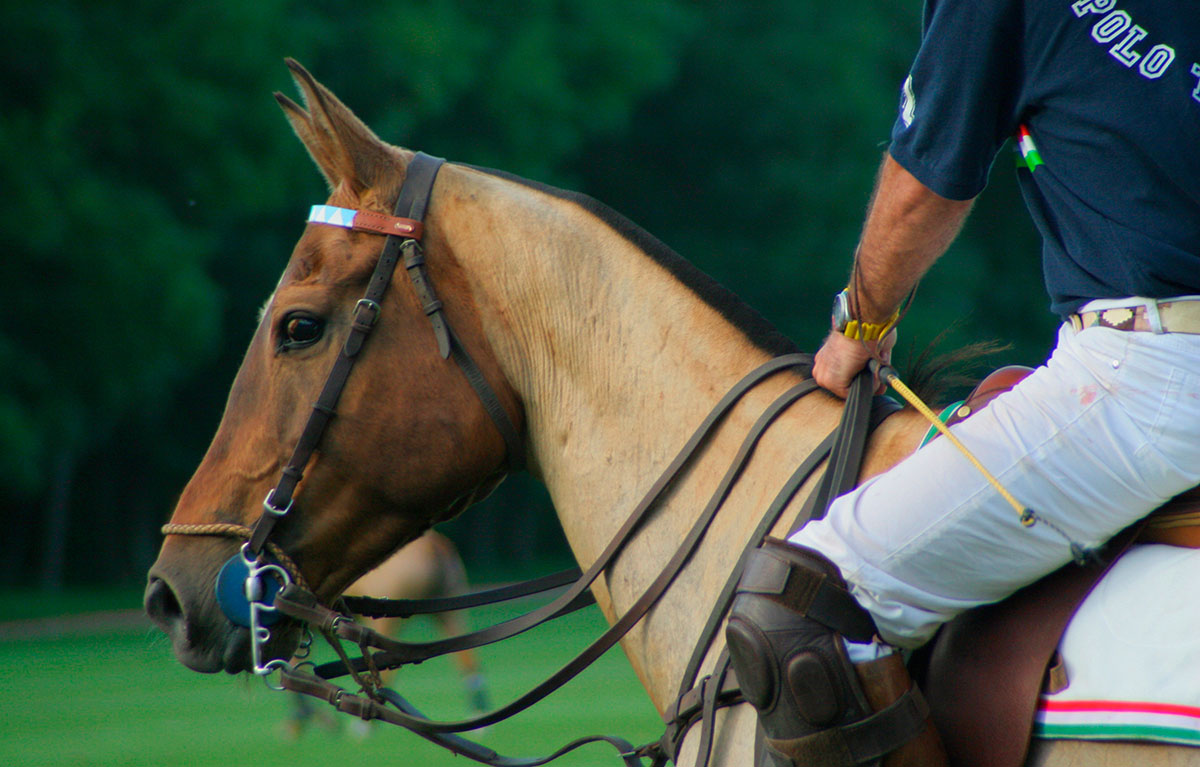
Bits
How to choose the right bit for your horse
Bits are metal devices that are inserted into the horse's mouth to guide and control it. Bits are extremely strong tools due to their leverage effect, so you have to be very careful not to hurt the horse's mouth.
The mouthpiece of the bit is placed on the horse's tongue and rests on the bars or bit of the horse's mouth which, as we said, is the part of the gums without teeth.
The points on which it acts on the horse are: the jaw, palate, tongue and the corner of the lips and on the bars of the mouth.
They are basically made up of two side pieces (legs or beds) joined by a central barrel which is the piece that goes into the horse's mouth. It has the following complementary pieces: hooks for the chain, chain and rings for the rein.
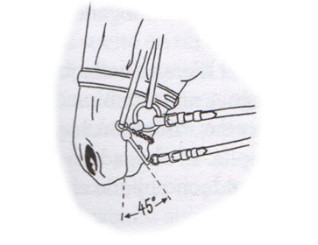
The correct adjustment of the chain is very important for the bit to work properly. When taking the rein, the lever should come into action when it is at a 45° angle in relation to the horse's mouth.
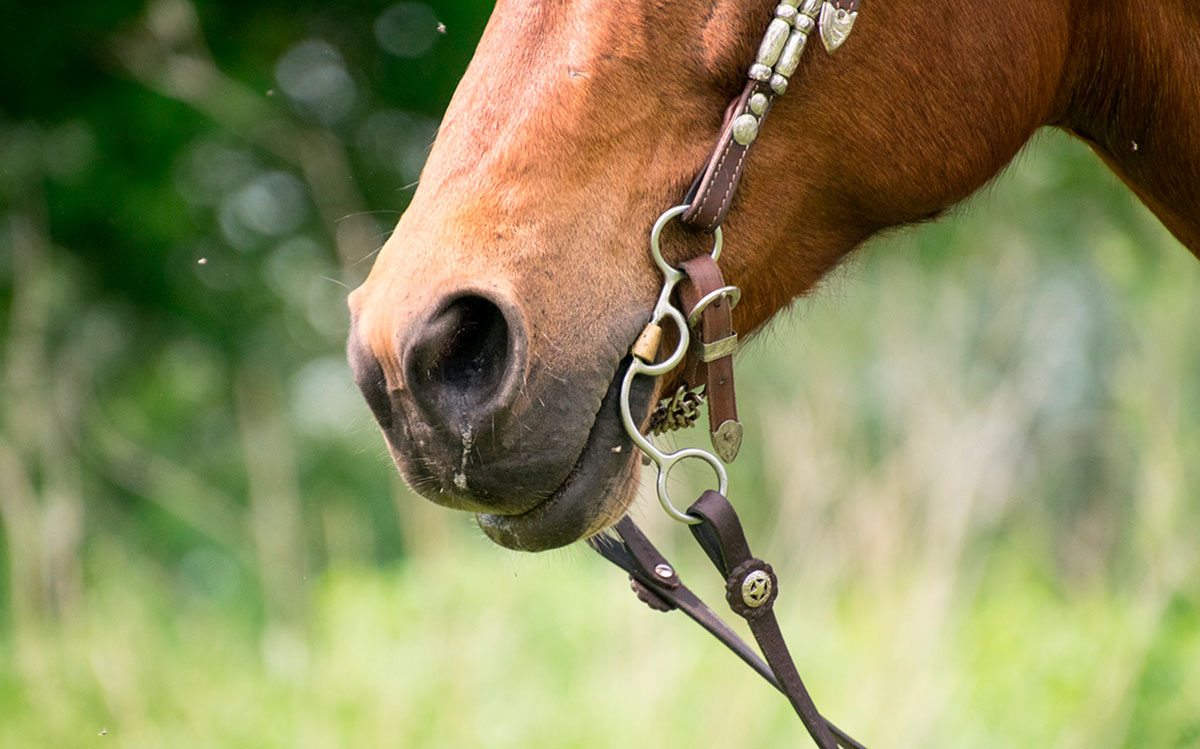
Most bits and bridles, regardless of their style or the discipline for which they are used, have the same parts. The cheek pieces and the bit ring, working together, cause the leverage effect, and the proportion between the two determines the force of the leverage.
When to start using the bit
Brakes or bits for horses are usually used from a very early stage of dressage.
First the horse must be taught to respect the bridle (working hackamore with three rings), then move on to the snaffle (preferably initially a curb bit) and, finally, introduce the bit to refine aids with an advanced horse.
Types of bits
Designs can vary according to the type of riding and the region where it is practised.
Bit manufacturers have included some details that differentiate them, trying to give, on the one hand, better functionality, and on the other, greater aesthetics to the piece.
- Dressage bit Used mainly in dressage and with some quite strong showjumping horses. It is a very precise piece for a level of work that requires an expert hand and exercises with very collected airs. There are three types of dressage bit:
- Classic bit
- Cowboy bit
- Western bit
In dressage it is used in combination with a snaffle, placing the two pieces in a double bridle. In the other two it is used individually.
- Pelham bit
This is a special bit that combines the actions of the snaffle and the bit in a single mouthpiece. The snaffle and the curb chain are joined by a small strap (converter) to which the rein is attached. It can be used with one rein, two reins or a bridle that distributes the pressure.
This bit is the one we use at Ampascachi, as it has a barrel with a very gentle curvature to allow the horse's tongue to pass through and it has almost no effect on the palate.
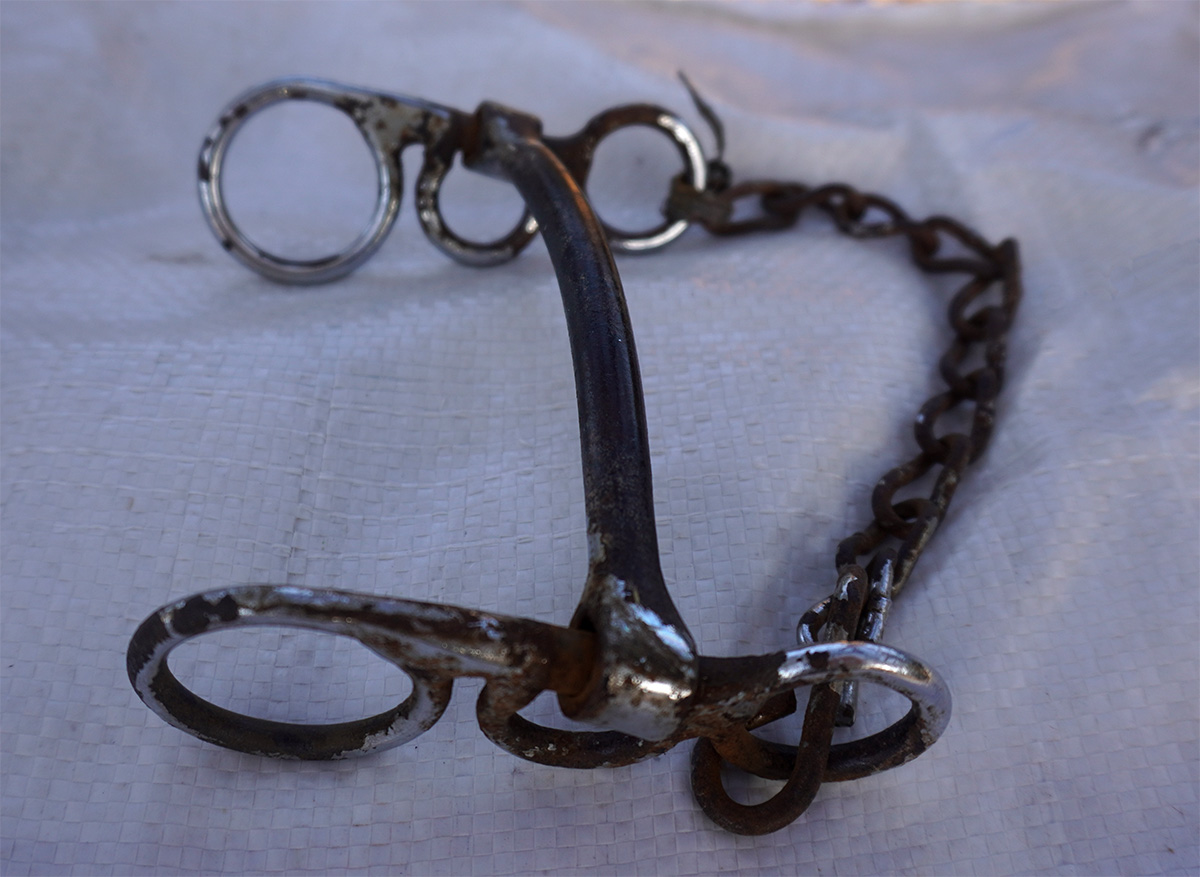
We use this type of mouthpiece both in the training stage for the hand and in mounted training. We use it in the final stage, when we teach the horse to stretch its stride in any of the gaits (walk, trot or canter).
In this last stage of dressage it has a more gentle use because its lever is short, so that with a small action with the reins the horse will slow down, stop or turn easily.
- Hackamore
As we mentioned at the beginning of this article, it is very particular since it does not have any metal parts. It is considered “A bit without a mouthpiece”.
It exerts the action on the horse's nose when it makes contact to indicate the will to slow down, some in a softer way and others with a more severe action depending on the length of the lever and the material of the noseband.
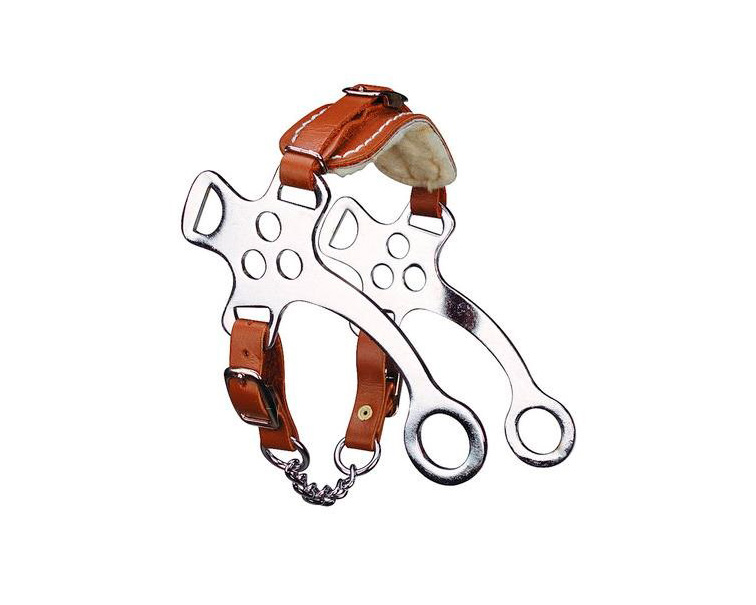
Muzzle.
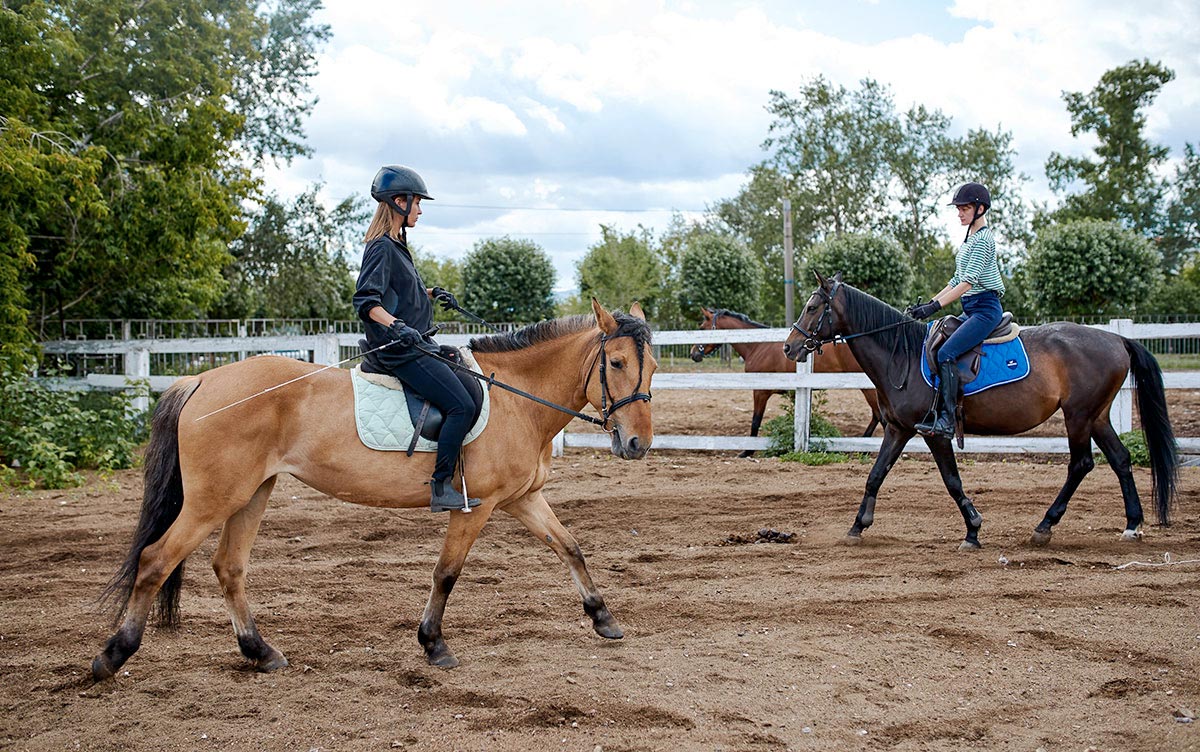
Suitable for gentle school horses, horses ridden by inexperienced hands, older horses and common in natural dressage. It is also approved for show jumping and sometimes seen in classical dressage without including competitions since it is not yet approved in that discipline.
Conclusion
I would like to end the article with a reflection from the Dutch master horseman Erik Herbermann:
“The best embouchure is a good seat, good hands and a deep understanding of the principles of horsemanship, which does not depend on fashions or human opinions, but on the nature of the horse.”
We must ensure that our horse acts relaxed and light in the mouth. And thanks to the principles of the science of horsemanship, together with a good seat in the horse's mouth, rider and horse will manage to understand each other in such a way that with slight pressure from the rider there will be total understanding.
That is why it is important to know each of the different bits, their characteristics and their use for each type of horse.
We hope that you have found this article useful and that we now have a clearer understanding of all these aspects.
Comments (0)
No comments yet.


Comments
Leave your comment