
Discover Extremadura on horseback with Jerebeque Trails
Spain is a country with different landscapes and climates, most of them very suitable for enjoying a horse riding holiday.
One of the most recommended areas is Extremadura and the Sierra de Gredos.
During your stay you can enjoy horse riding routes in natural areas and learn about the history of the country by visiting its historical monuments.
Cities such as Trujillo, Cáceres and Mérida have a great cultural and architectural legacy, with Roman monuments declared World Heritage Sites by UNESCO.
It is in this area that, since legendary times, transhumance has been practiced, which is the movement of livestock in search of better pastures when winter arrives, following defined paths.
Furthermore, Spain is a country with a great equestrian tradition where the Pura Raza Española (PRE) are bred, a breed of horses characterized by their beauty, elegance and spirit.
To learn more about the opportunities to enjoy equestrian tourism in this area of Spain, we interviewed Emilio and Mamen, the owners of Jerebeque Trails.
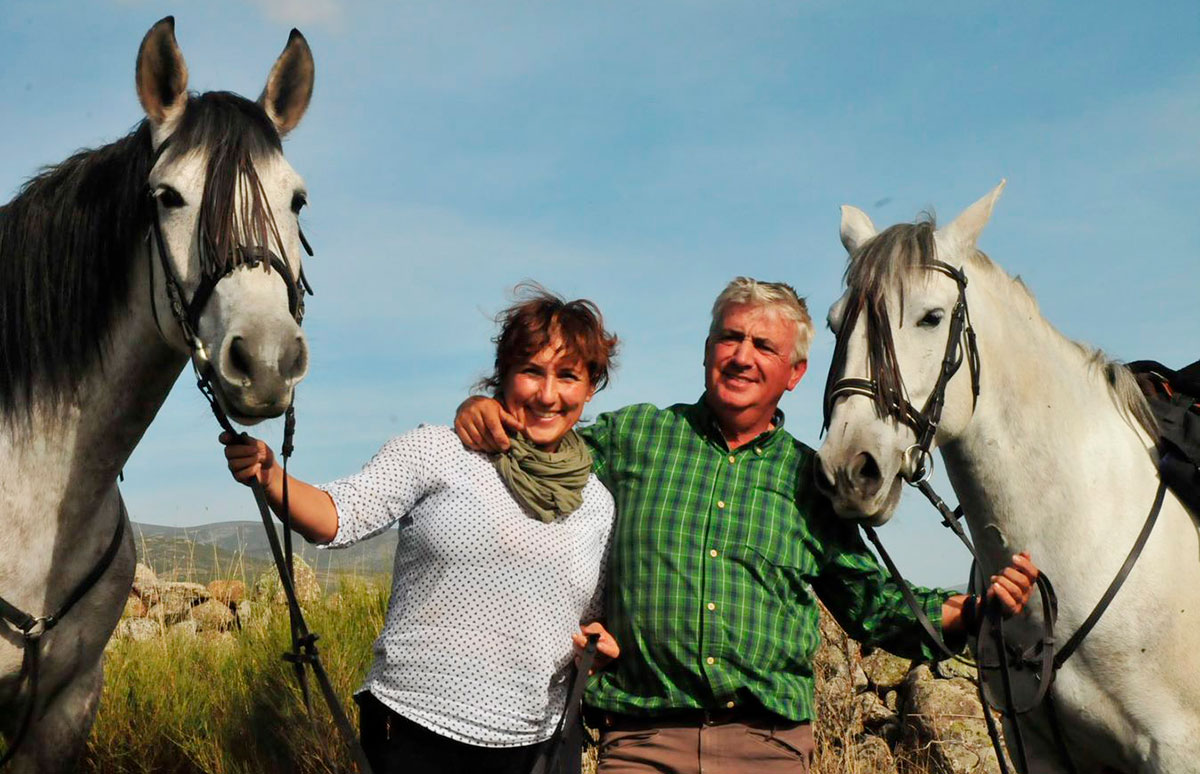
With them you can explore Extremadura and the Sierra de Gredos on horseback, learn about its monuments and history, and see up close how their horses are bred and trained.
Meet Emilio and Mamen, from Jerebeque Trails
Emilio, we know you come from a livestock farming family. Did your family already breed horses or were you the first to take an interest in breeding and training horses?
My family traditionally raised beef cattle.
In this area of Gredos, the native breed is the Avileña. In his day, my grandfather dedicated his life to the breeding and improvement of this meat breed, very rustic and adapted to the climate and harshness of the Sierra de Gredos.
The herd was always herded on horseback, so cattle farming without horses was inconceivable. Traditionally, the cows were moved from the summer pastures in the Sierra de Gredos to the pastures of Extremadura, where the herds spent the winters.
Every year, in the month of December, when the harshness of winter arrived in Gredos, the transhumance was carried out, descending to Extremadura along ancient cattle routes, on long journeys of hundreds of km. And in the month of June/July they would climb up to the cool summer pastures.
I grew up in this environment, horses were always my passion.
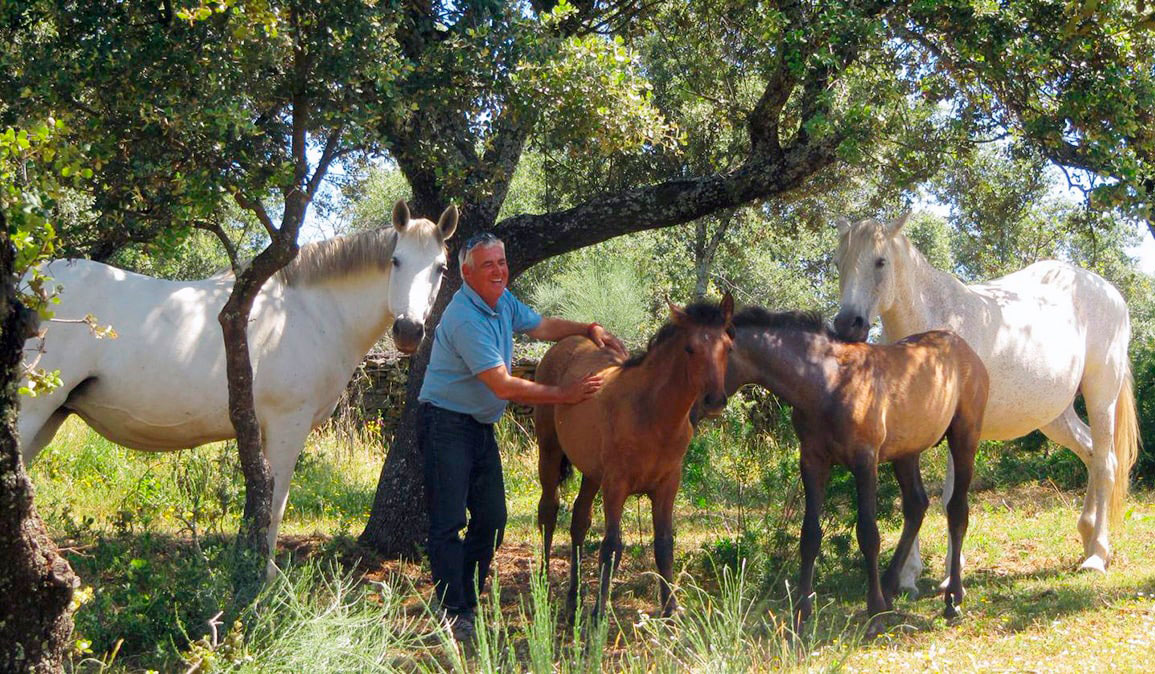
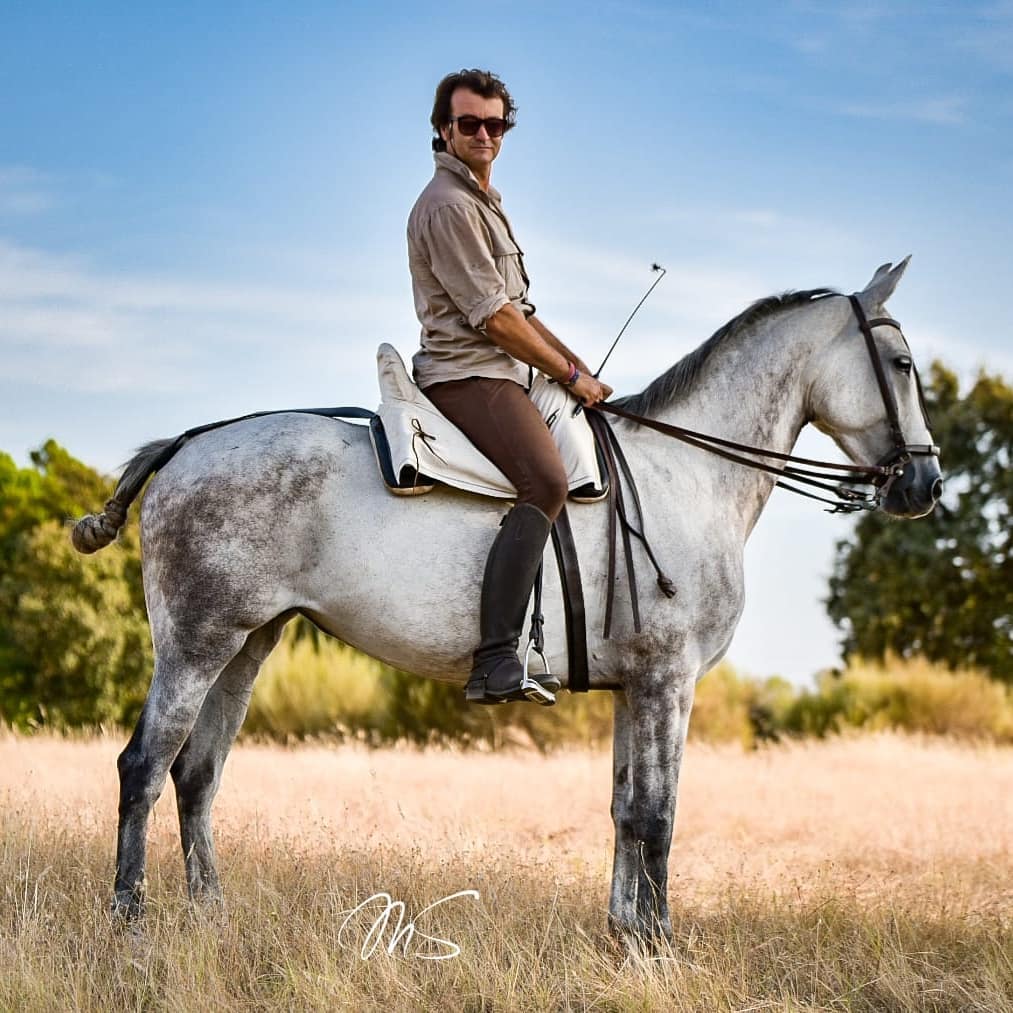
I have dedicated my life to breeding and training horses, especially Purebred Spanish Horses. I personally guide each route we offer with my own horses, my equine family.
What motivated you to create Jerebeque Trails and offer equestrian tourism in Extremadura?
The livestock tradition of our families means that we know this region very well, which is ideal for horse riding due to its extensive Dehesas, its good climate, its gastronomy and all this together with a rich historical and cultural heritage.
Emilio and Mamen, what are your roles in Jerebeque Trails?
We offer a totally personal service as we take care of all aspects of the business.
In relation to the horses:
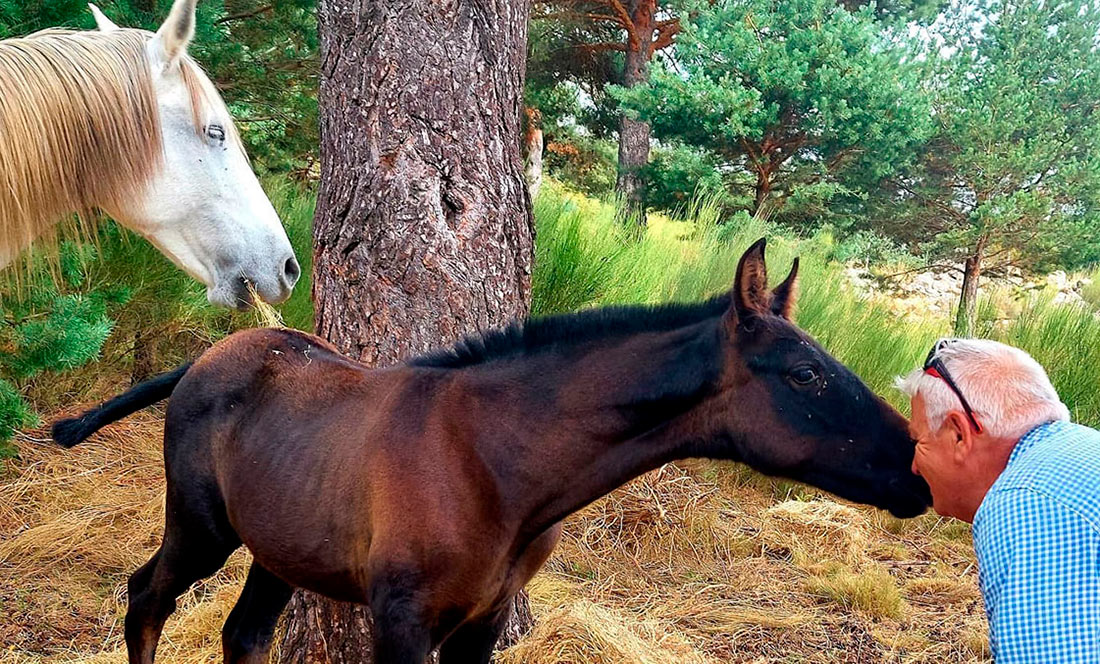
- Horse breeding: from our experience we know that we lose one horse/mare on average per year, so we breed 1 or 2 foals each year in order to maintain the herd at a suitable number for our business, about 30 horses.
- Maintenance and handling: we both take care of it. Emilio is in charge of dressage and training.
Regarding the horse riding routes:
- Emilio personally guides each horse riding route, he is a qualified equestrian guide with more than 30 years of experience.
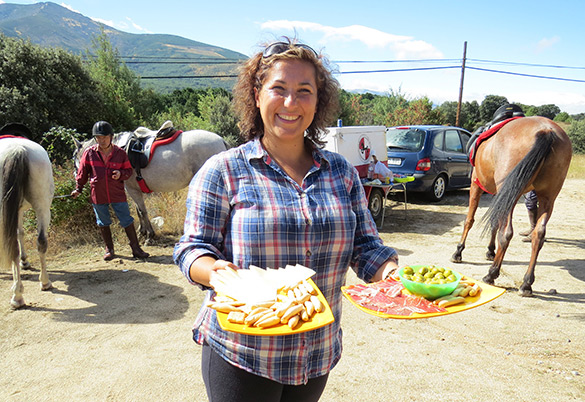
- Mamen takes care of the logistics of the groups, from picking them up at the airport, preparing the horses in the mornings, transferring luggage, preparing luxurious meals in the countryside.
We both make the overall experience something very personal. We were both born in the area and we know it very well.
What support staff do you have during your horse riding routes?
The staff at the accommodation where we spend the night, together with our help, prepare dinner and breakfast. To book your horse riding routes, can you do it directly with you or through equestrian tourism agencies? Both options are possible. We receive a higher percentage of specialized agencies (around 80%).
We currently work with practically all the agencies specialized in equestrian tourism in the world.
Which countries do the guests come from to enjoy your horse riding trips?
Mainly from Europe (United Kingdom, Holland, Belgium, Germany, Switzerland, Sweden, Finland, Denmark, France, Italy, etc.).
We also receive riders from other continents, Americans, Australians, Asians, etc.
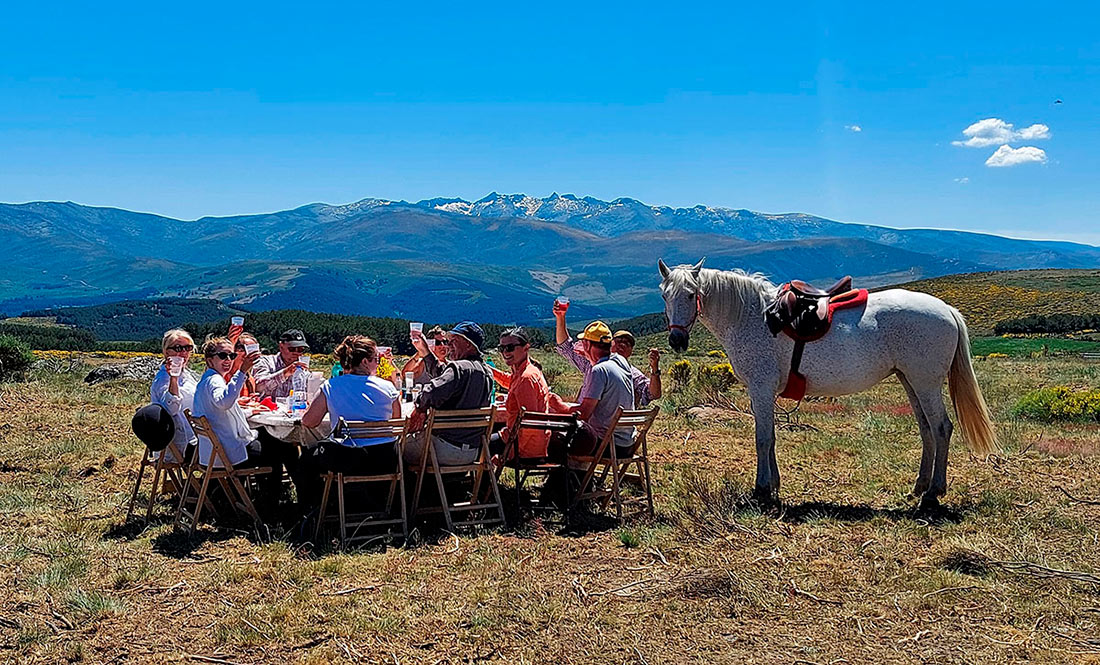
Horse riding trails with Jerebeque Trails
Tell us why we should book a horse riding trip with you and not with other equestrian providers.
We offer an authentic experience in rural areas that are not overcrowded.
Our horses, which are bred at home, are a delight to ride and to be with, sharing every moment. They are our family and that shows when you enjoy riding them.
They are very well-loved horses, they are in excellent condition and very well cared for. They live in freedom, as a herd, which makes them safe horses with a lot of personality. They are happy horses.
Surely the best horses in this sector in Spain.
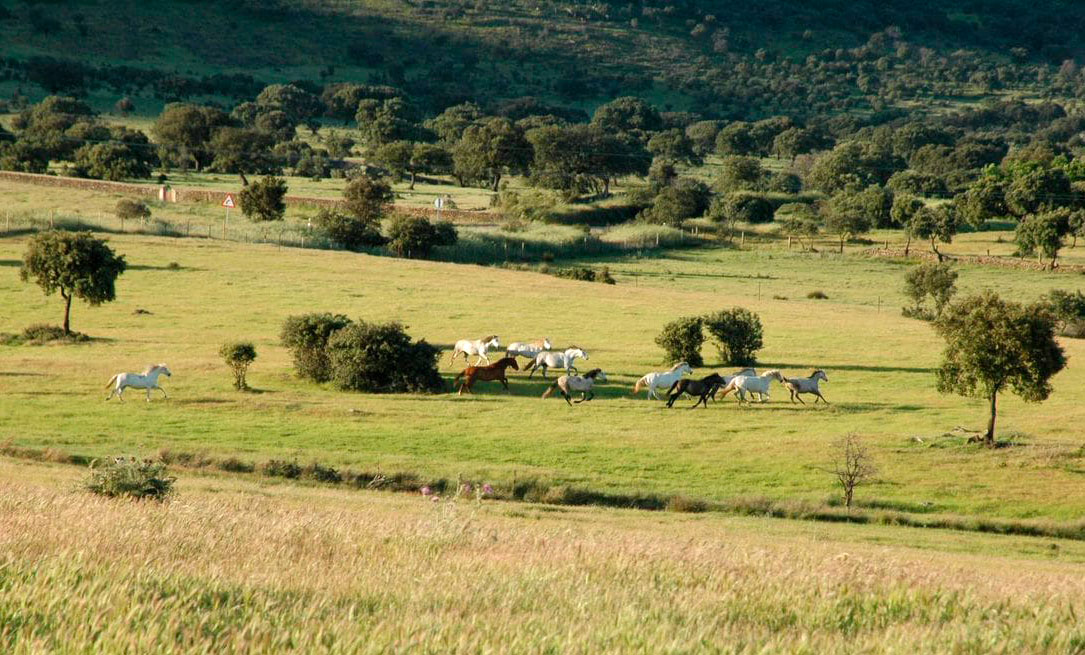
You offer routes in two different environments, in Extremadura and in the Sierra de Gredos. Can you describe the characteristics of each of these environments?
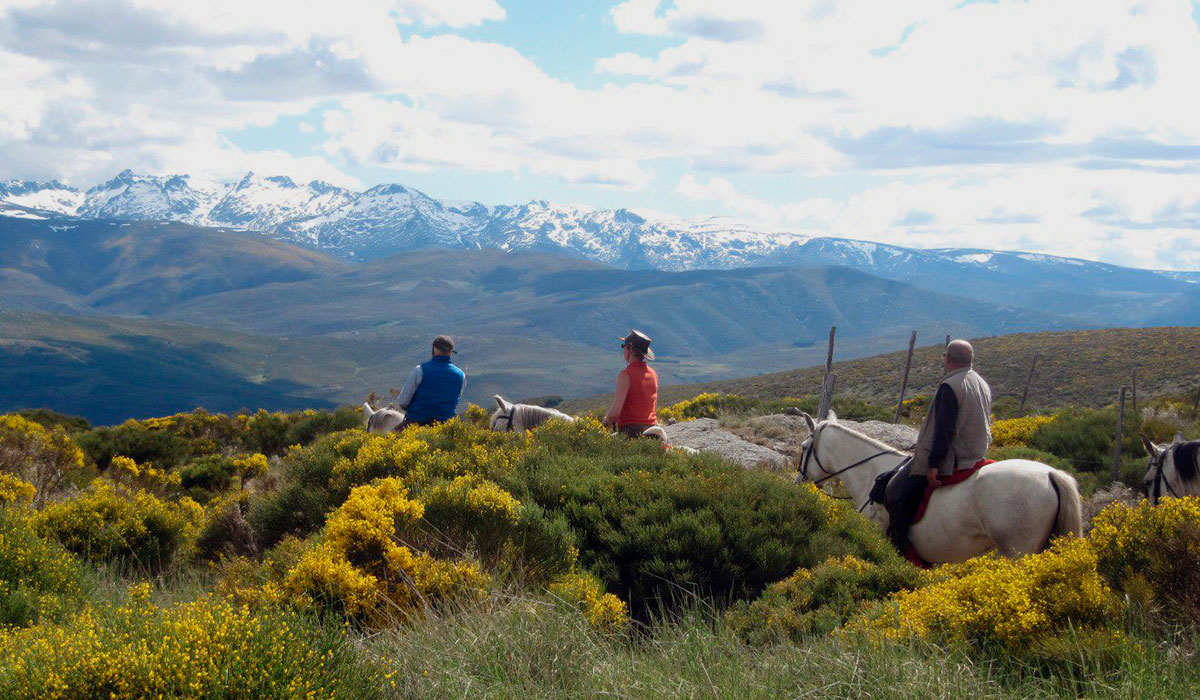
THE SIERRA DE GREDOS The Sierra de Gredos is a Natural Park, located in the south of the province of Ávila in the region of Castilla y León.
It is a spectacular natural creation of lagoons, gorges, cirques, crags, galayos and moraine deposits, a setting inhabited by the Hispanic goat. The highest peak is Almanzor, at 2,592 meters, the highest point in the entire Central System.
Gredos is a beautiful and spectacular mountain range that offers us one of the most interesting areas in all of Western Europe from a biological point of view.
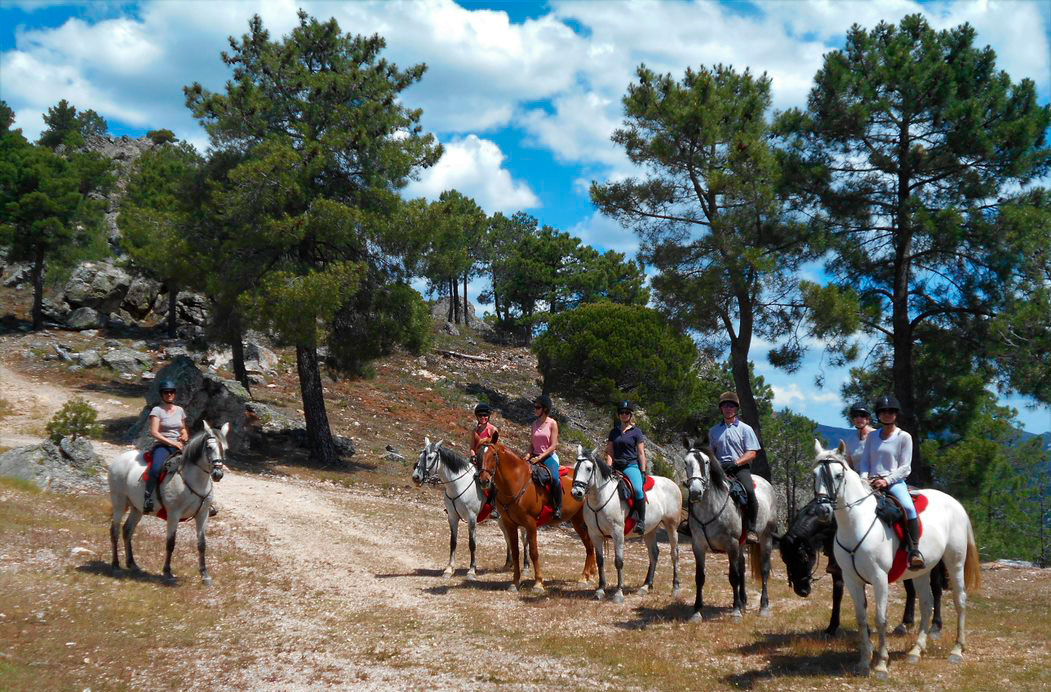
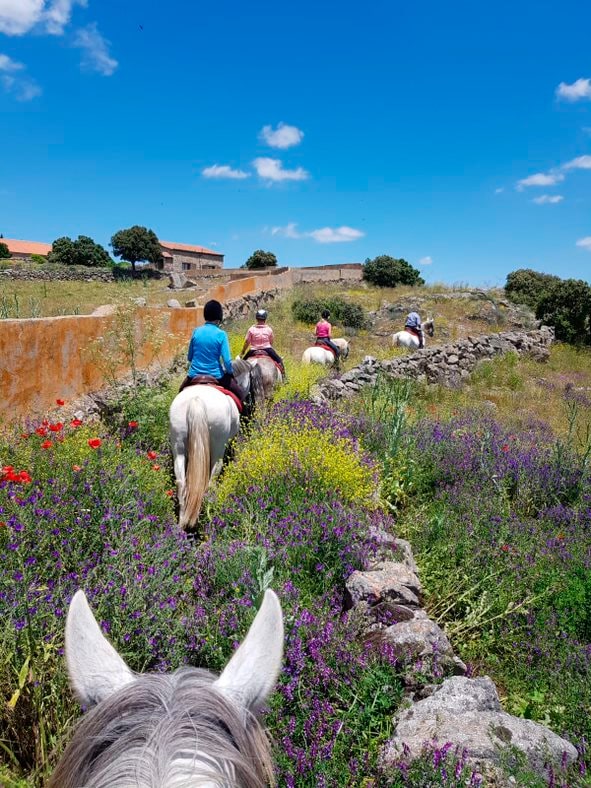
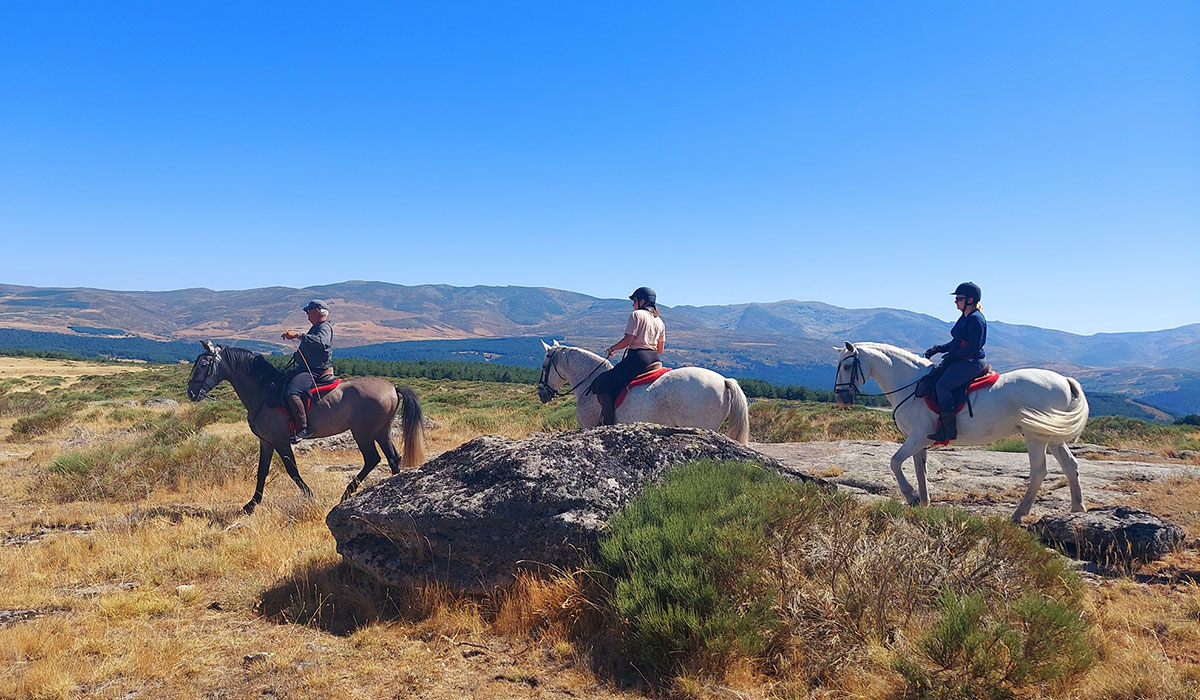
We begin the horseback routes in the alpine zone at an altitude of about 1,600 meters, with pine forests, alpine pastures, rivers and gorges with crystal clear waters. During the routes, as they are progressive, we will travel through various valleys with spectacular views.
*EXTREMADURA
In Extremadura we offer several itineraries.
One of them goes through the Monfragüe National Park. With the distinction of Biosphere Reserve, it is considered a true sanctuary for bird watching worldwide (black storks, Egyptian vultures, vultures, imperial eagles, etc.). With incomparable landscapes and vegetation, it is the largest expanse of Mediterranean forest in the world.
On the “Conquerors' Route” we travel through the Villuercas Geopark (UNESCO), inhabited since the Bronze Age and with an Appalachian geological formation.
As well as enjoying the scenery on your horseback routes, what historical and cultural places do you visit?
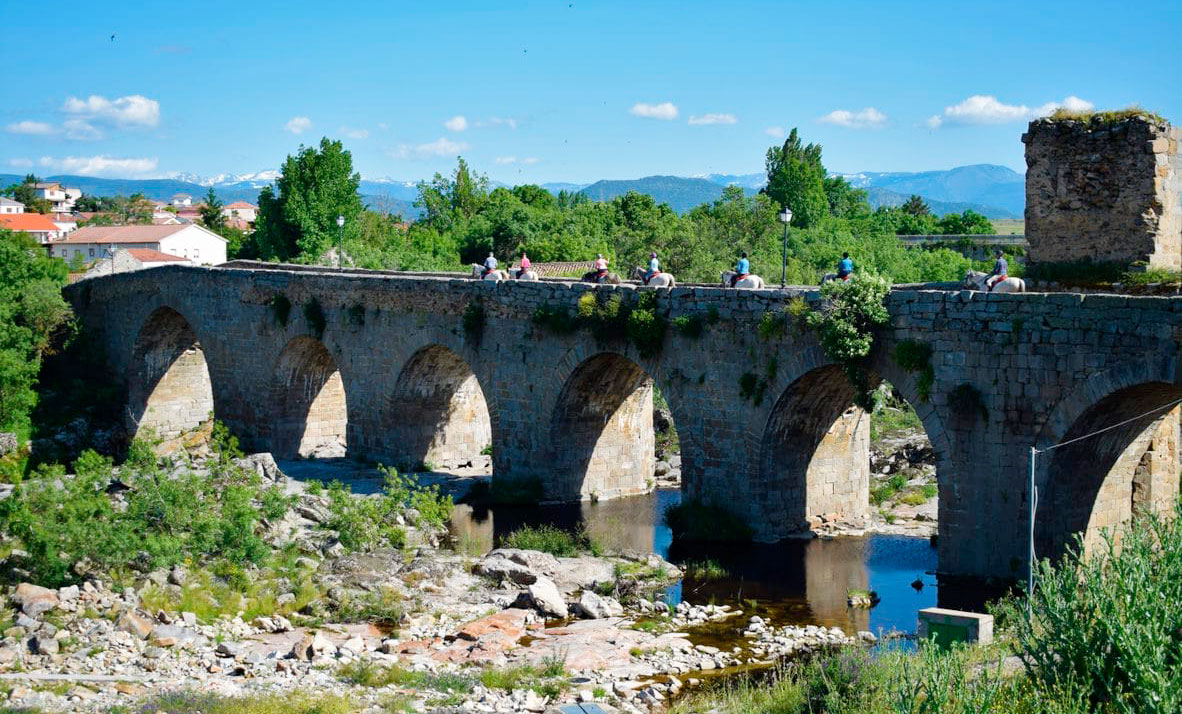
In the Sierra de Gredos, on the “Route of the Castles of Gredos”, the route passes by medieval castles and bridges from the 12th to the 14th centuries. We also visit churches from the 13th to the 16th centuries.
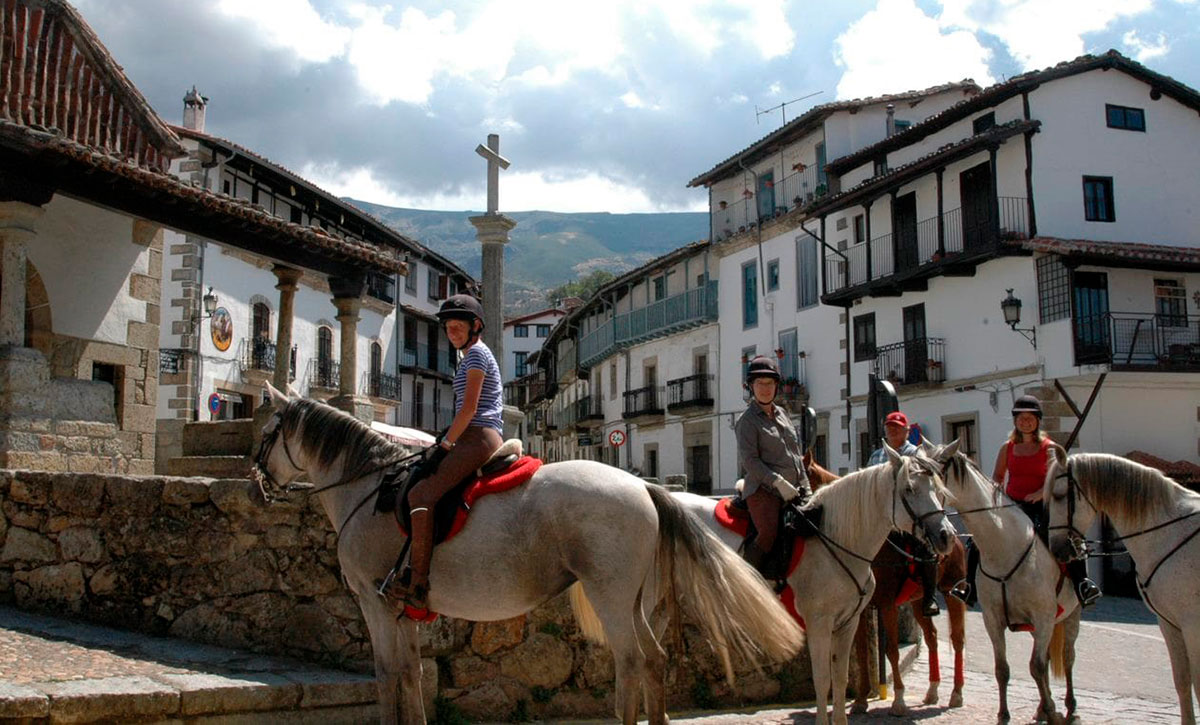
Our base in Extremadura is in the historic city of Trujillo. Trujillo has been through all the stages of history, from a Celtic city with the remains of anthropomorphic tombs, the Roman “Turgalium”, to a medieval city, passing through a city of Arab domination, with its 9th-century citadel at the top of the city.
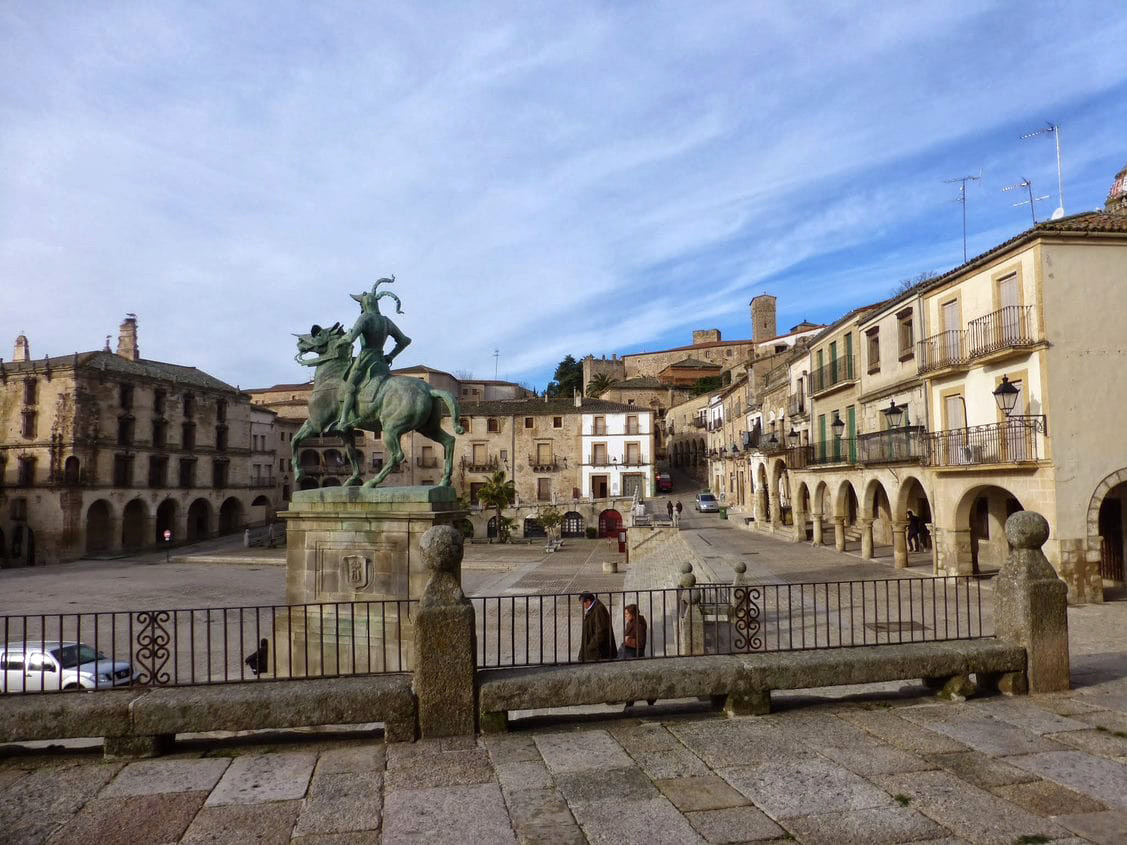
This city was the birthplace of, among others, Francisco Pizarro, conqueror of Peru, whose equestrian sculpture stands in the Plaza Mayor, and Francisco de Orellana, discoverer of the Amazon River.
Its historical importance, its location, its natural environment and its gastronomy have made Trujillo an important tourist center in Extremadura.
Its monuments include the castle, a former Arab fortress, the church of Santa María la Mayor (13th century) and the palaces of the Plaza Mayor, etc.
As a curiosity, followers of the series “Game of Thrones” will have heard of this city, as one of the most important episodes of the saga was filmed here: the final battle of season 7.
The “Route from Trujillo to Guadalupe” ends in the town of Guadalupe, known for its monastery, a UNESCO World Heritage Site.
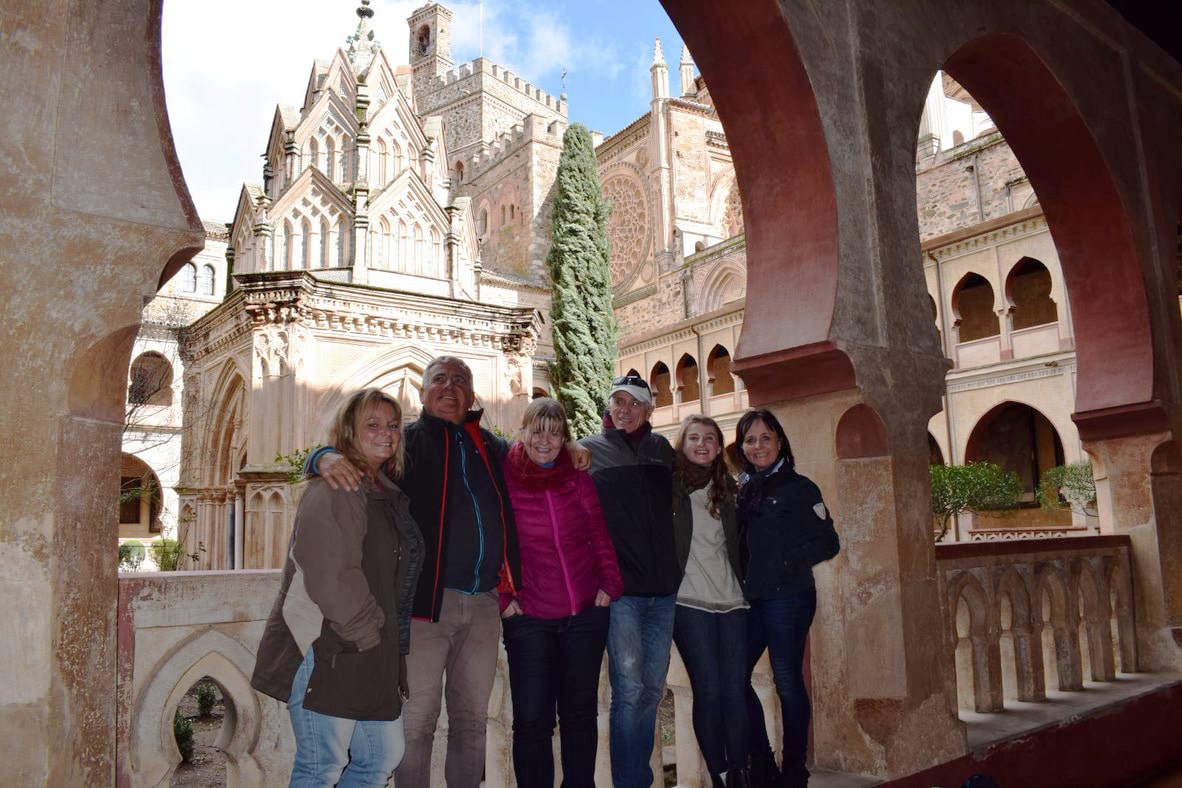
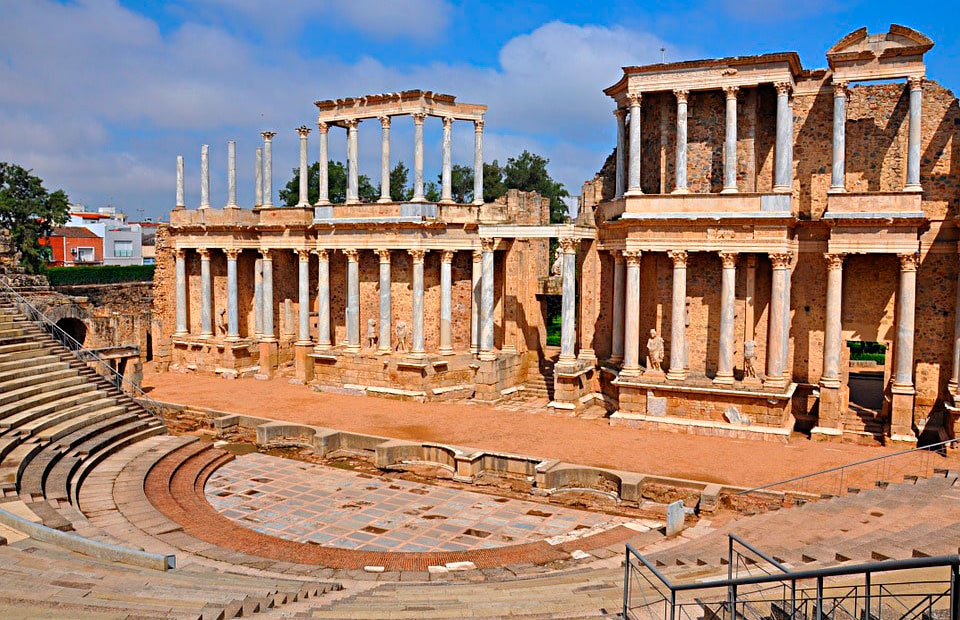
On the “Treasures of Extremadura Route” you can visit the city of Cáceres and the Roman theater and amphitheater of Mérida, both declared World Heritage Sites by UNESCO.
Apart from your 9 horse riding routes, do you organize other routes for special occasions?
We currently offer 9 itineraries:
- 4 in the Sierra de Gredos: 3 progressive and 1 stationary.
- 4 in Extremadura: 3 progressive and 1 stationary.
- The Transhumance Route: in its north and south direction.
In addition, we offer 3-day Christmas and New Year's Eve routes on horseback, as well as 3-day long weekends on horseback.
We continue to discover new itineraries for our clients.
The Transhumance Route
Transhumance is an ancestral activity in Extremadura that still endures. Emilio, can you briefly explain what it is and what the route is?
Transhumance is an ancestral tradition in this country that was regulated by law in 1273, during the reign of Alfonso X The Wise. It was organized around La Mesta, the most important livestock guild in medieval Europe.
In Spain, the Merino sheep, highly prized for their wool, were the basis of a very strong economy and were farmed for the production of cloth (partly in Spain and mainly in the Netherlands).
It was then, in the 13th century, that the routes used ancestrally by transhumant shepherds were named Cañadas Reales. The decree of Alfonso X sought to regulate, organize and protect certain roads which, due to their importance, use or location, deserved to be preserved.
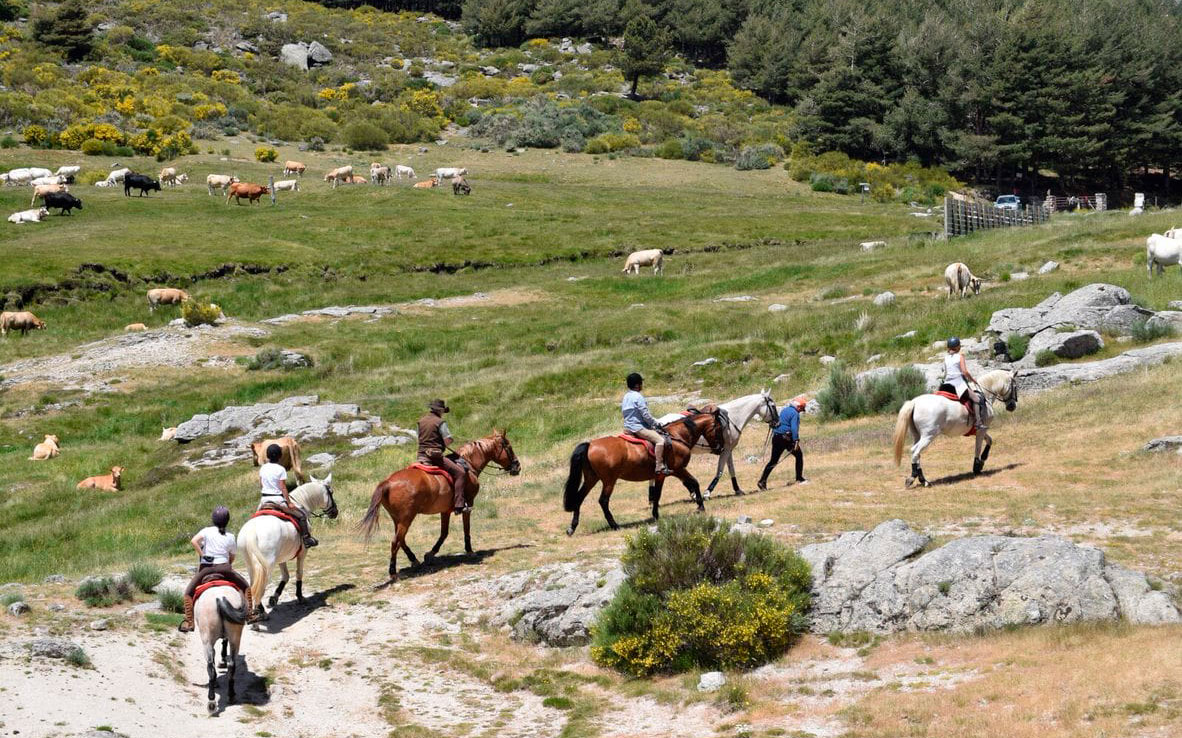
It is a network of cattle tracks that run through the country from north to south, with an average length of 700 km and a width of 75 meters.
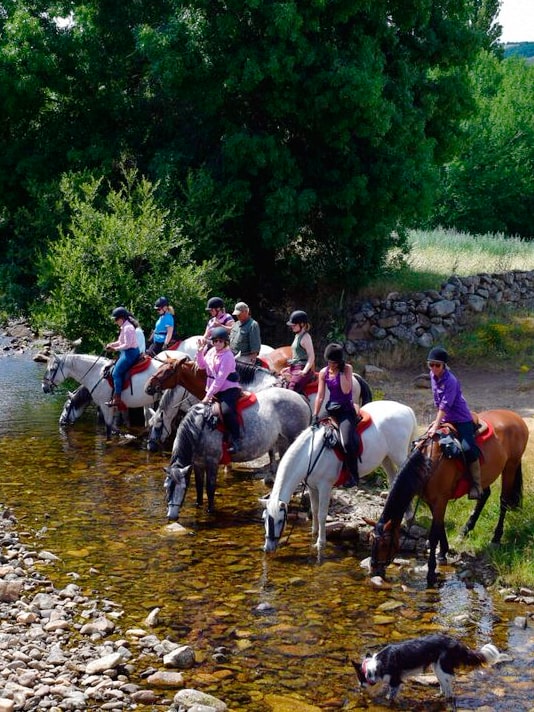
They still exist and we use them on our “Transhumance Route from Navarredonda de Gredos”, from our base in Gredos to Trujillo, our base in Extremadura (200 km).
To discover these ancient livestock routes you offer the program “Ruta de la Trashumancia” (Transhumance Route). Can you briefly detail where it runs, how many kilometers it covers and what time of year?
From Navarredonda to Trujillo, it passes through three different provinces: Ávila, Toledo and Cáceres.
It starts by descending the southern face of Gredos, along the royal cattle route of the Puerto del Pico, starting at an altitude of 1,600 m and ending the first day at 600 m.
The rest of the route crosses another mountain range via the Miravete Pass. Important rivers are crossed by medieval bridges, such as the Tagus by the Albalat Bridge and the Almonte by the Obispo Bridge in Jaraicejo.
Several castles are visited, with a night spent in a luxurious parador located in the castle of Opropesa.
There are two routes depending on the season:
- Southbound (from Gredos to Extremadura): in winter (this year 2022 the special edition is from February 26 to March 6) in 7 days on horseback.
- Northbound (from Extremadura to Gredos): in late May/early June.
Both routes cover a total of 200 km.
What breeds make up your herd of horses and what are their main characteristics?
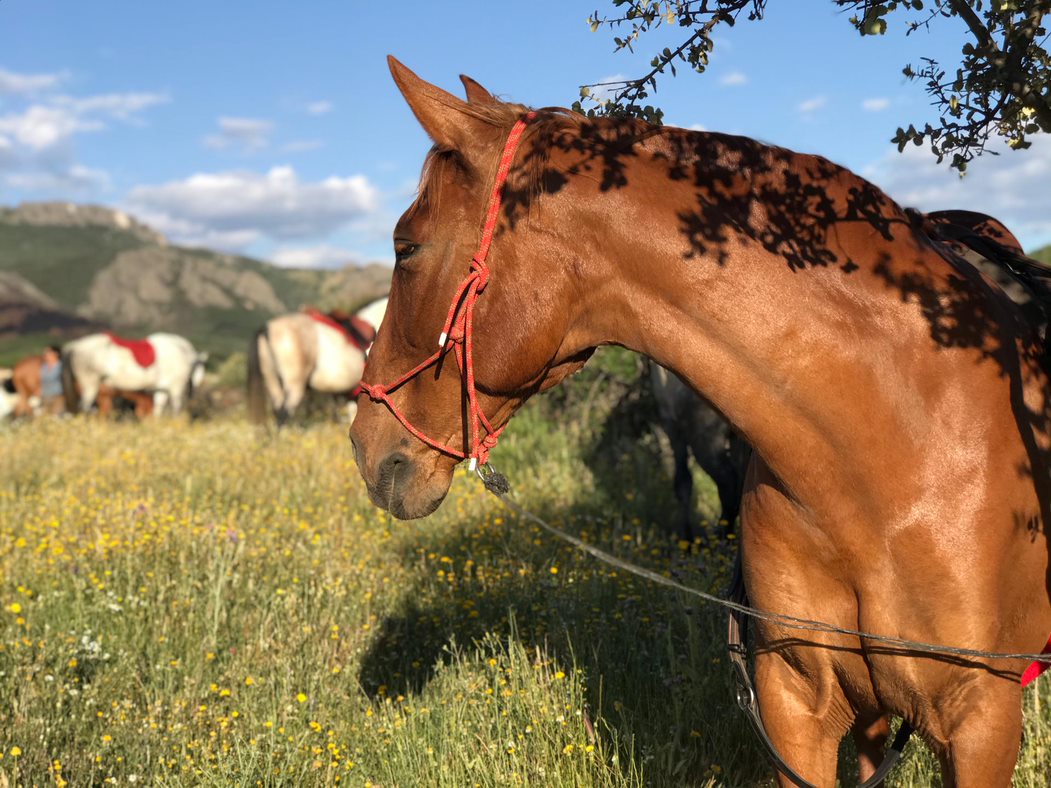
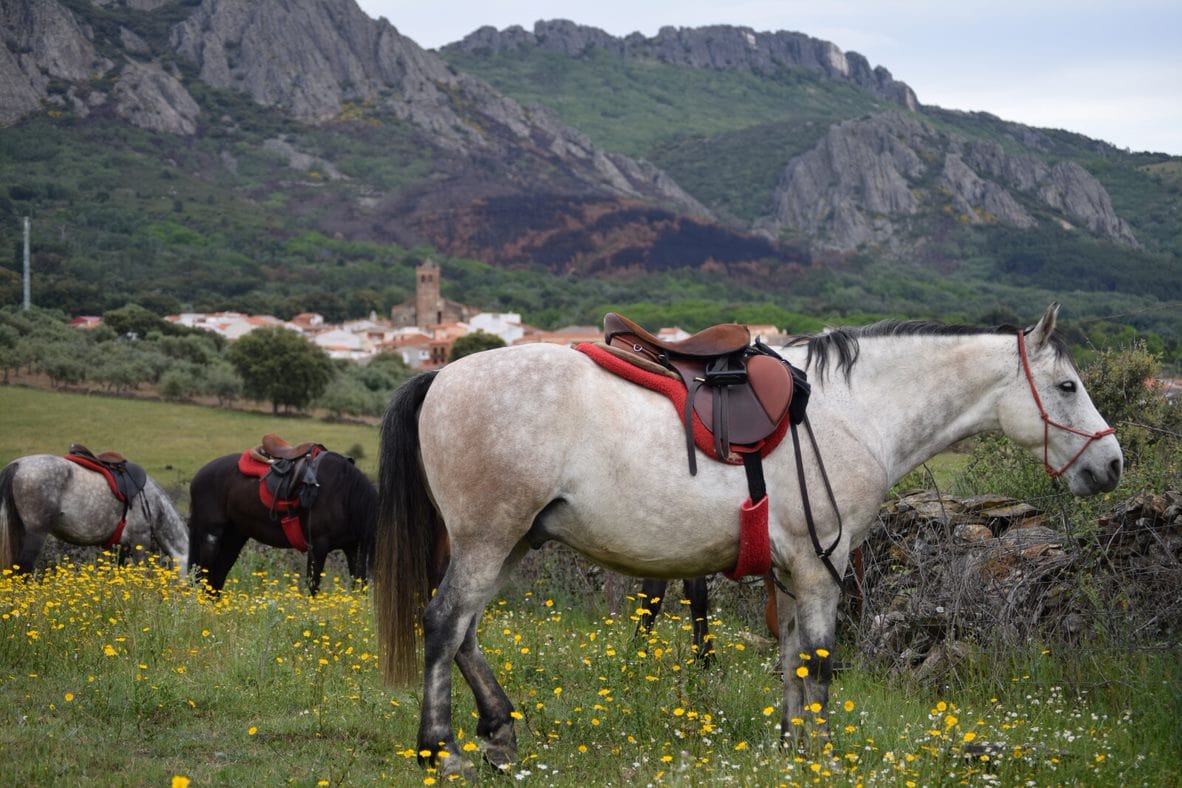
We mainly breed PRE (Pura Raza Española). The broodmares are PRE. We generally choose a PRE stallion and sometimes an Arabian stallion, obtaining purebred Hispano-Arabian specimens.
Thus, our herd of horses is 85% PRE and the rest Hispano-Arab, some Hispano-Lusitano and Hispano-Breton.
The PRE horse, formerly known as the Andalusian horse, is one of great beauty and nobility, with tall, elegant movements and a good character.
Emilio, the breeding and training of your horses is essential to offer the rider the best horse for the trail. What are the challenges you face in breeding your horses?
The risk that one assumes. The horses train in the arena for a minimum amount of time, the rest is out in the field so that they get to know their work, in open countryside, where any unforeseen event is possible.
I always work alone with them, they never follow an adult horse, so that they are independent, self-confident, etc... Riding my foals is my passion.
Raising a horse is the first step. But then there are many more steps to take to get a horse to respond to the rider's signals. What methodology do you use in the training process of your horses?
Our horses understand body language, most of them are ridden in a bitless bridle.
My methods are based on natural horsemanship, building strong bonds of trust.
Equestrian tourism
What values do you consider important in equestrian tourism?
Professionalism and safety.
Have you been on horseback riding trips in other countries?
Yes, I have ridden in Jordan, South Africa, Chile and Argentina, during my horseback riding vacations in these countries.
If you could go on an equestrian vacation in another country, where would you like to go and why?
I've always wanted to ride in British Columbia, I like its landscapes, since I was a child I always wanted to ride a horse in Canada.
As an expert on horses, we wanted to ask you, do you know Peruvian Paso horses? What do you know about them?
Yes, I know them. I know they come from a crossbreed of the horse at the time of the conquest.
Would you like to visit Argentina and explore its vast landscapes on Peruvian Paso horses?
Yes, of course!
Thank you for the interview
Many thanks to Emilio and Mamen for showing us everything this land has to offer and how to discover it on horseback.
We hope that riders from all over the world will come and enjoy the horse riding trails in Extremadura and the Sierra de Gredos with Jerebeque Trails.
Continúa leyendo
Este artículo es exclusivo para miembros.
To view this blog, please complete the form
Access full content
Comments (0)
No comments yet.

Comments
Leave your comment