
Transylvania on horseback with Count Kalnoky's Riding Treks
Romania is a land of legends. Its medieval past is still very much present in many of its cities. Romania's landscapes, with lush forests and mysterious mountains, offer views that fire the imagination of visiting riders.
Within Romania, Transylvania is one of the most highly recommended regions for horse riding. Famous for its medieval cities, its castles and the legends of Count Dracula, Transylvania is surrounded by the Carpathian Mountains.
For all these reasons we have contacted Count Kalnoky's Riding Treks, an equestrian center located in the heart of Transylvania that offers horse riding routes.
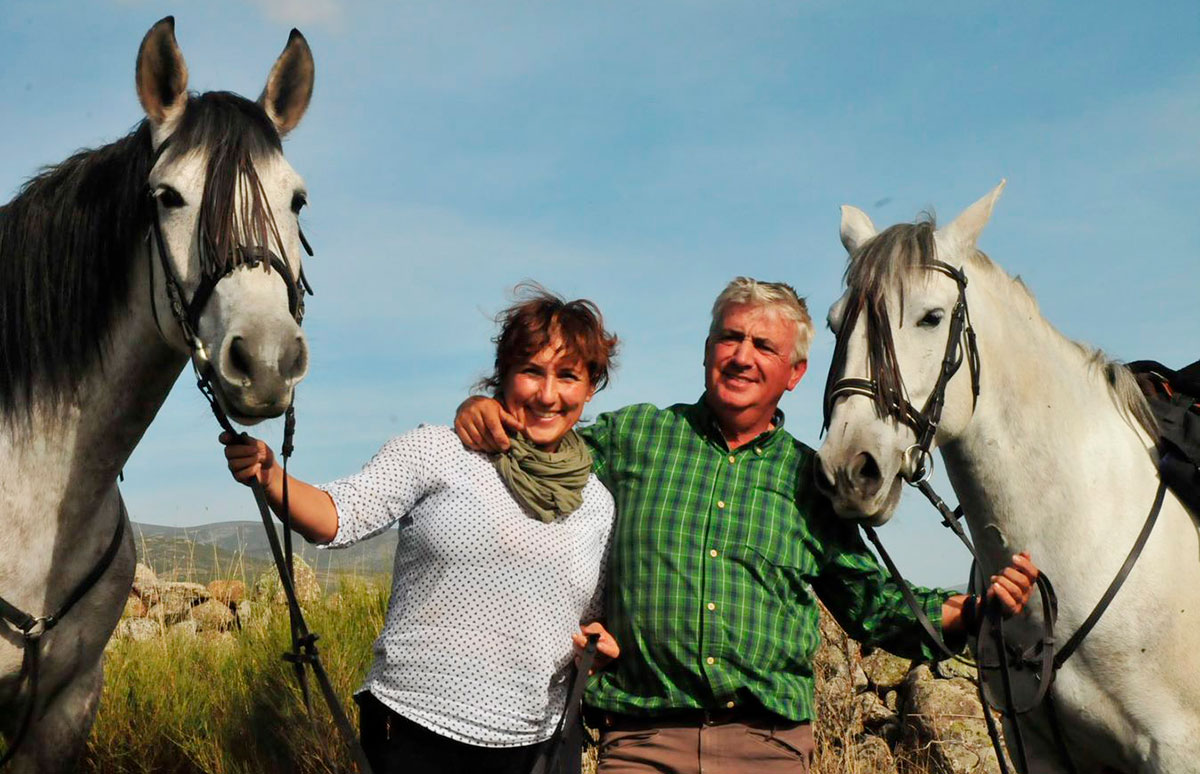
Count and Countess Tibor and Anna Kalnoky, one of the last aristocratic families of Transylvania, want to promote sustainable tourism in this wonderful landscape, where horses have retained their original role.
Ágnes Szekeres, head of marketing, introduces us in this interview to Transylvania and the equestrian activities they offer to visiting riders.
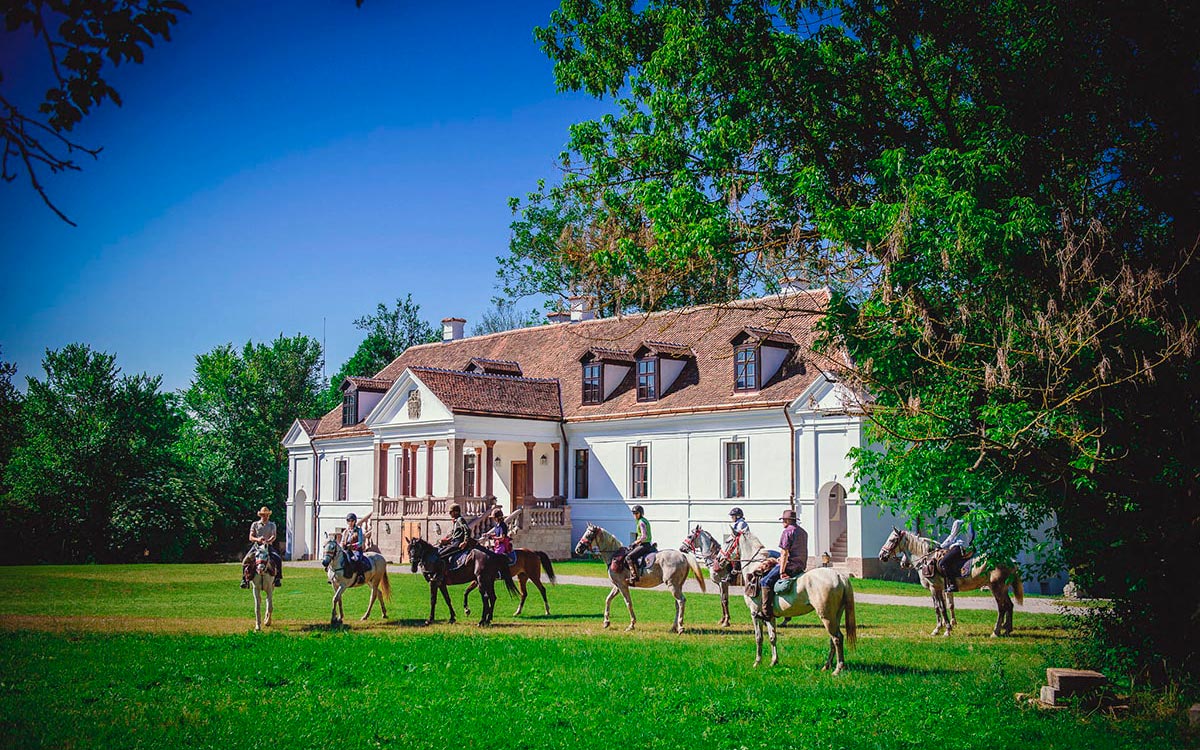
Get to know the Count Kalnoky Equestrian Center
Where is your equestrian center located and how can we get there?
The equestrian center is located in Valea Crisului (Sepsikorospatak). Riders arrive in Miclosoara (Miklosvar), at the Count Kalnoky inn.
We offer airport pickup and transfers.
In which regions of Romania do you take your horseback rides? What is the geography like?
In Transylvania, specifically in the region inhabited by the Szeklers, which is located in central Romania, at the foot of the Carpathian Mountains.
The area we travel through is also called the forest region.
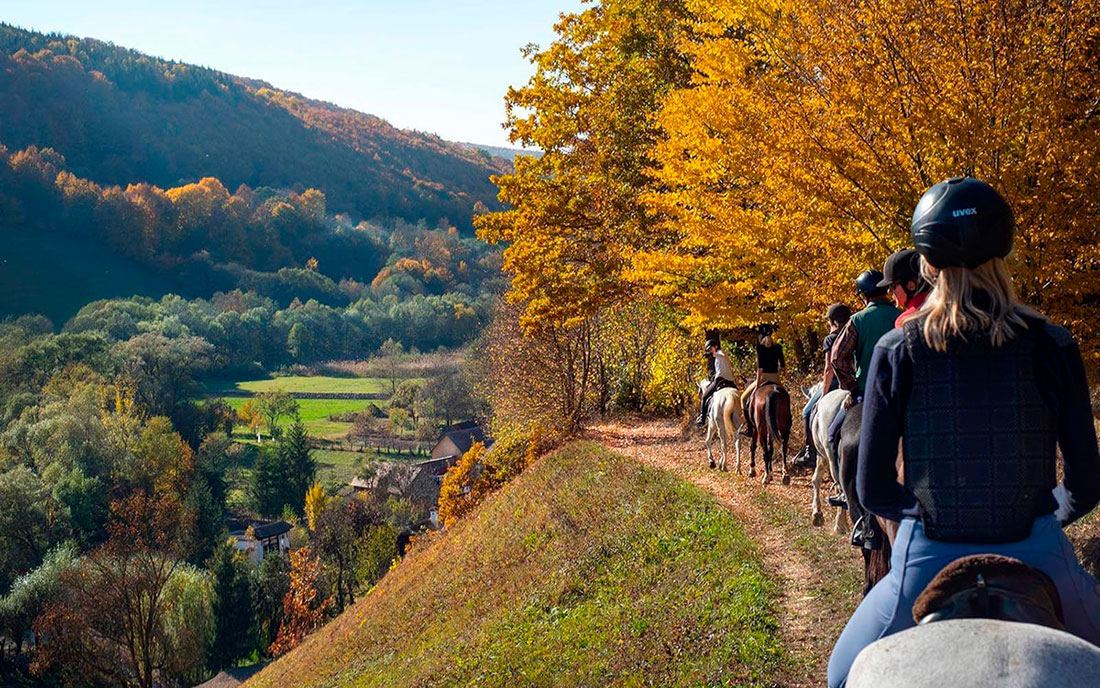
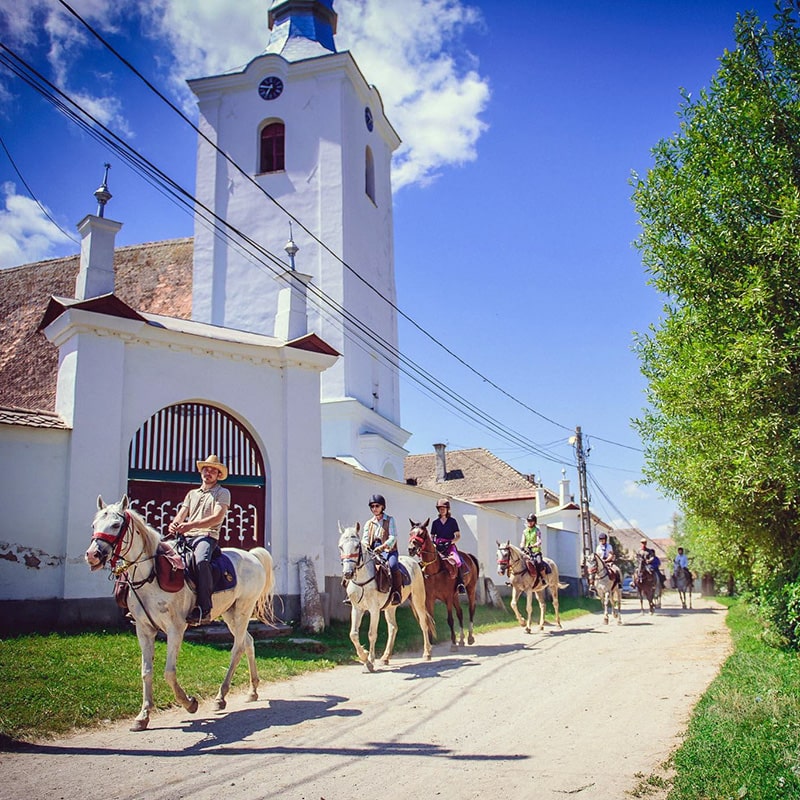
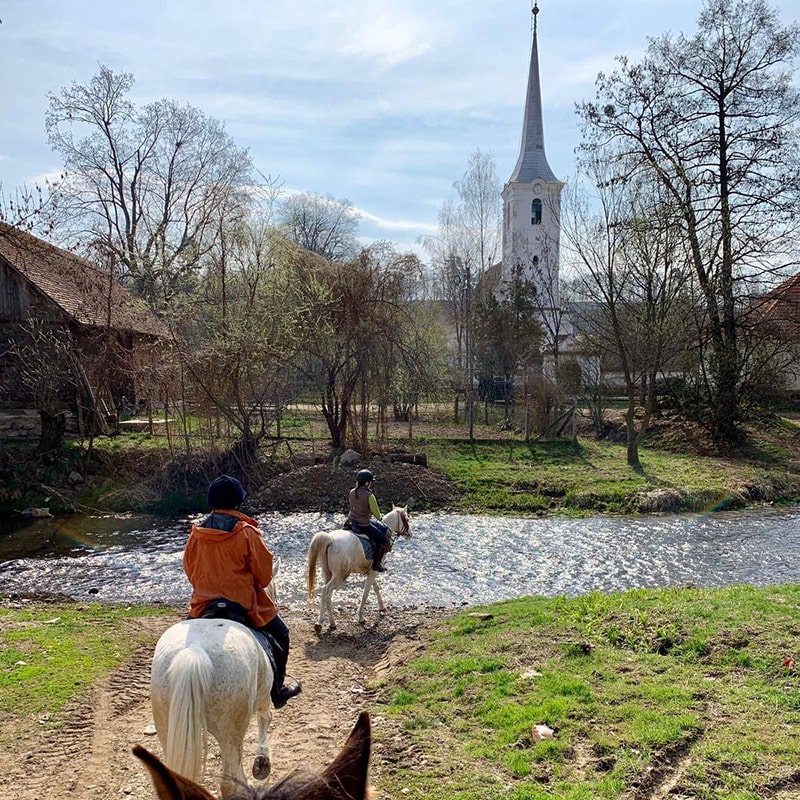
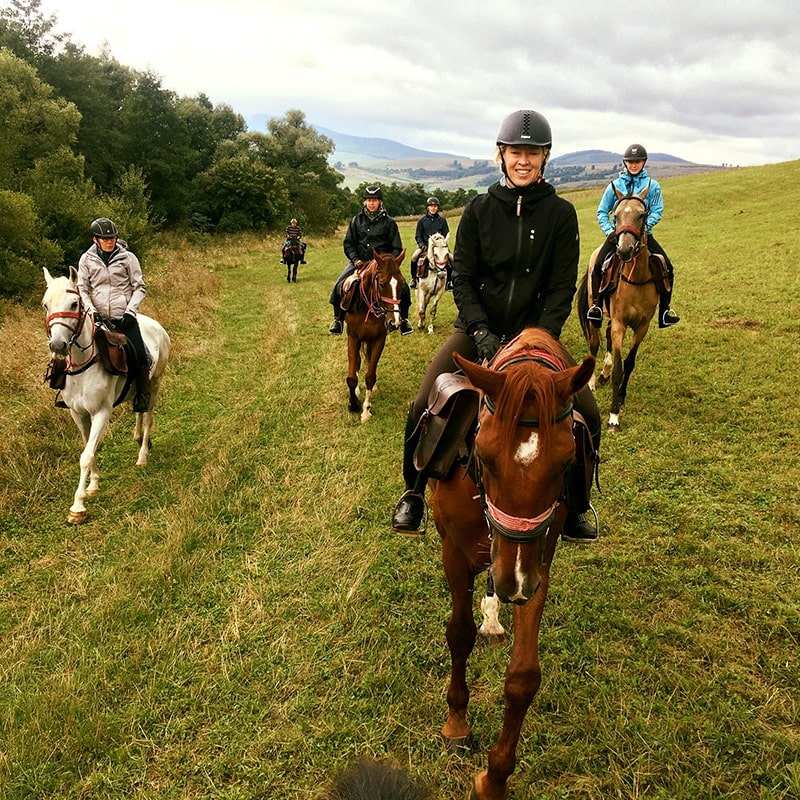
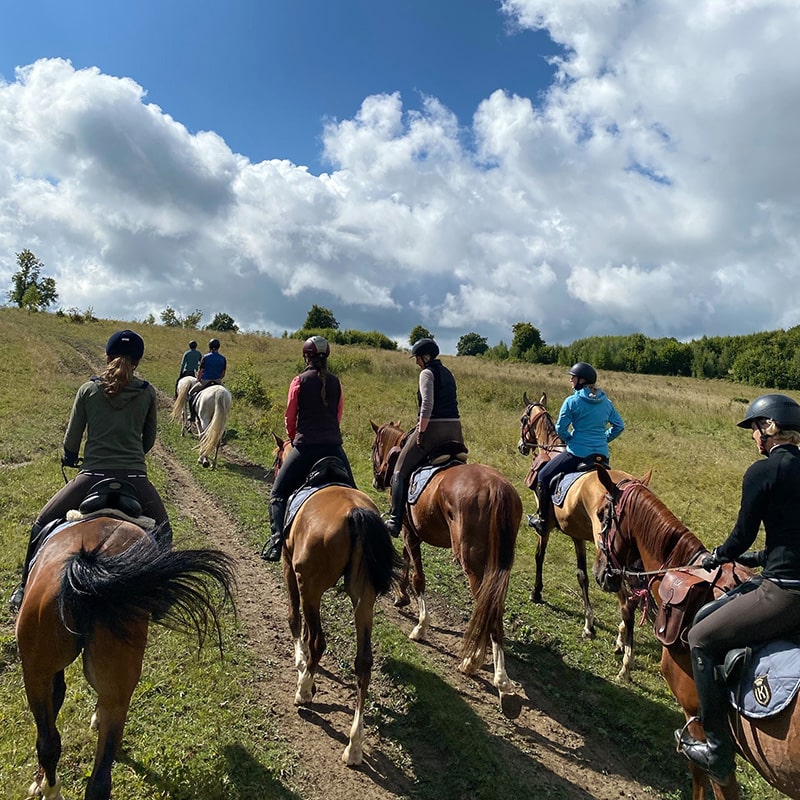
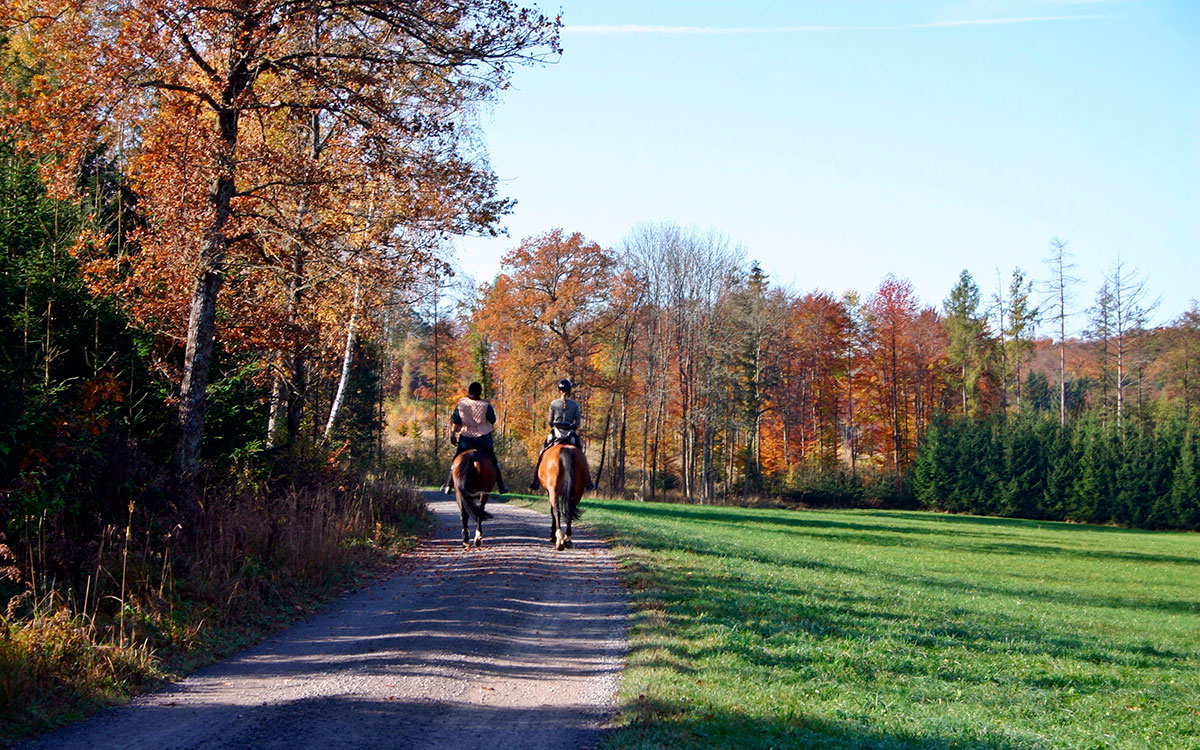
The route takes us through unmarked terrain, over hills and through forests, visiting small villages along paths used only by horse riders and carts.
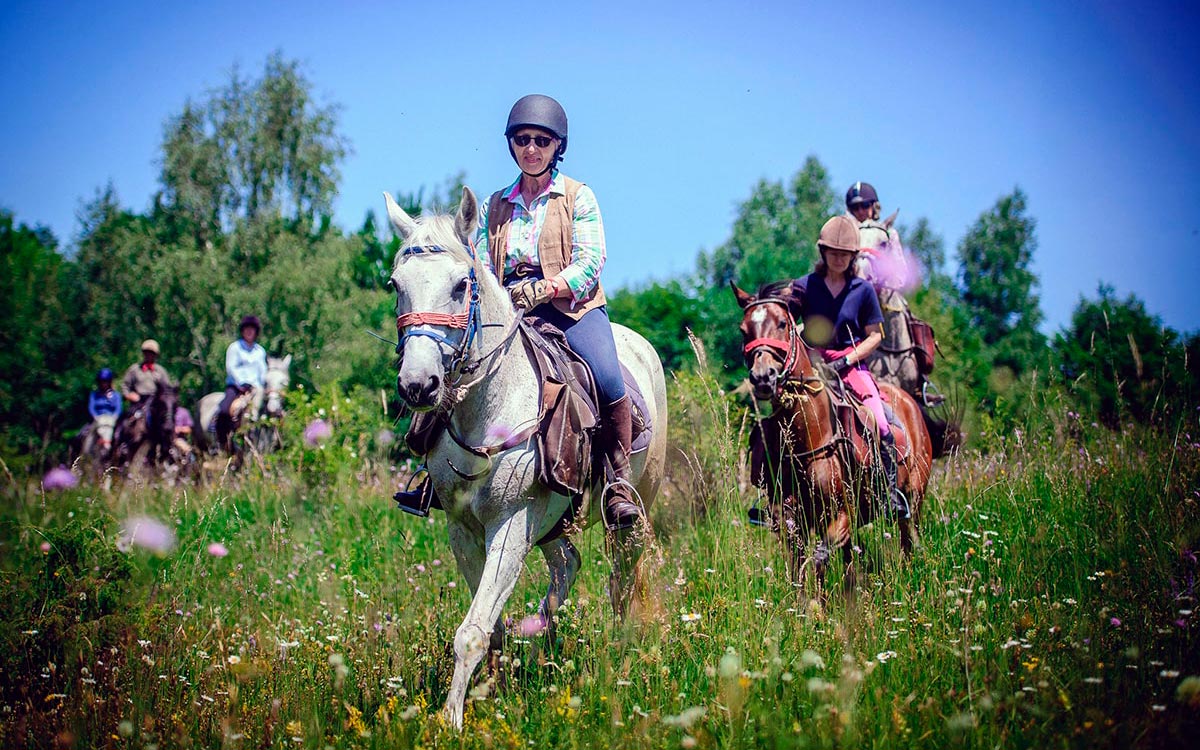
Each day, we ride for between 4 and 6 hours (20 to 30 km) and cross different types of terrain as we make our way through these rugged landscapes where hills and forests abound. The total route is between 110 and 120 km.
The villages are located at an altitude of between 450 and 700 meters, and the hills can reach 800 or 900 meters.
What are the company's main values?
- Restoring heritage
- Giving back to the local community
- Tradition
Can you tell us about the guides who accompany the riders on your horseback routes?
We have the collaboration of several guides. Our main team is made up of:
- Máytás: he is the eldest son of the Kálnoky family. In addition to being an excellent rider, he has a great knowledge of the area and its culture, having studied history at university. He has been riding since he was a child and is a graduate of the Romanian Equestrian Federation. His English is impeccable.
- Sándor: has been working with the horses at the equestrian center since it opened. Although he does not speak English, he knows the language of the horses very well and looks after them with great love and dedication.
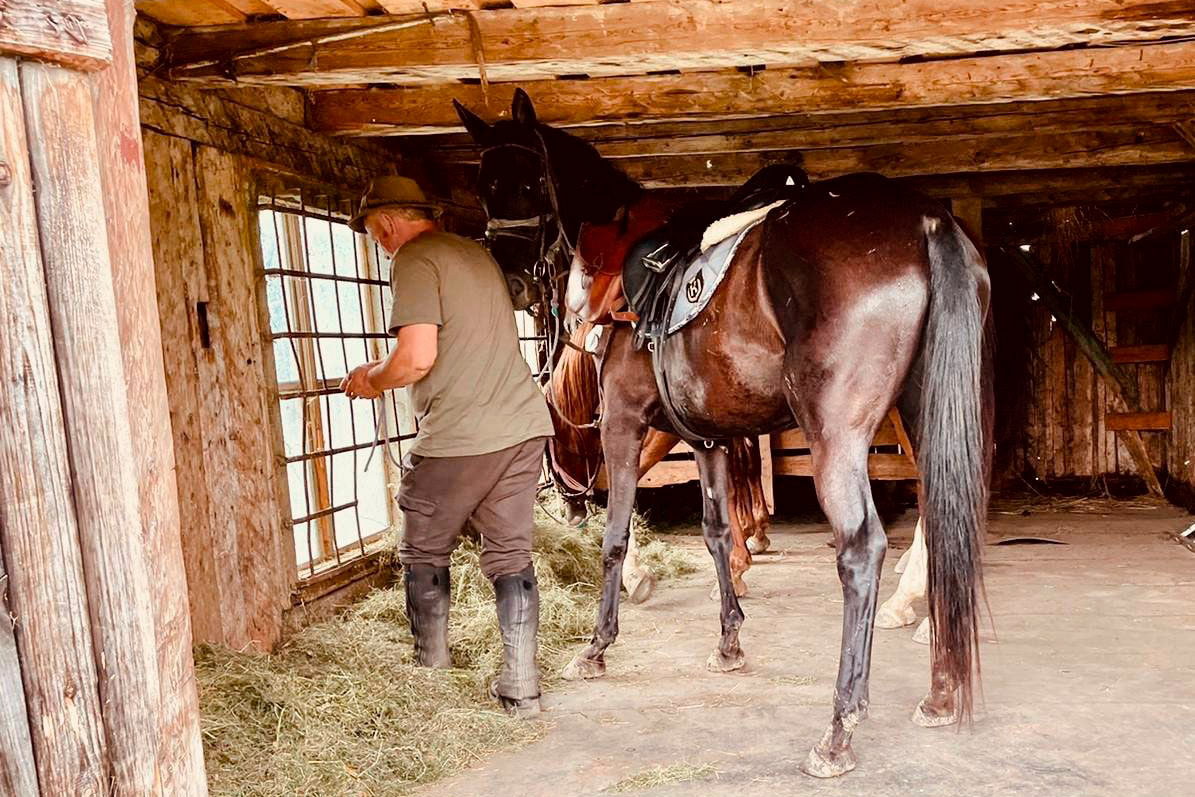
Count Kalnoky's Riding Treks horses
What breeds do you have and how many do you have available for the treks?
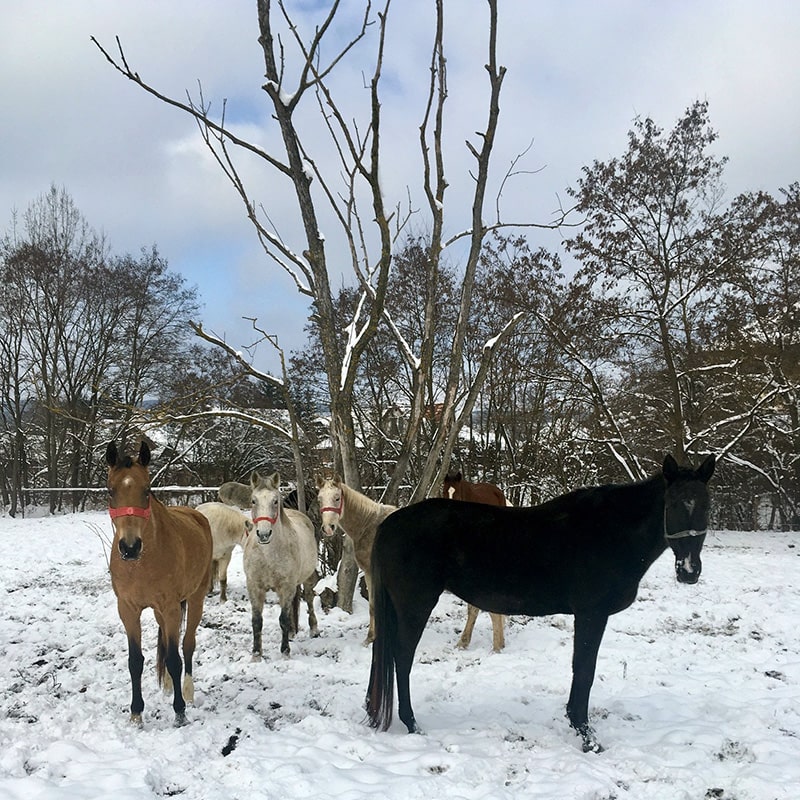
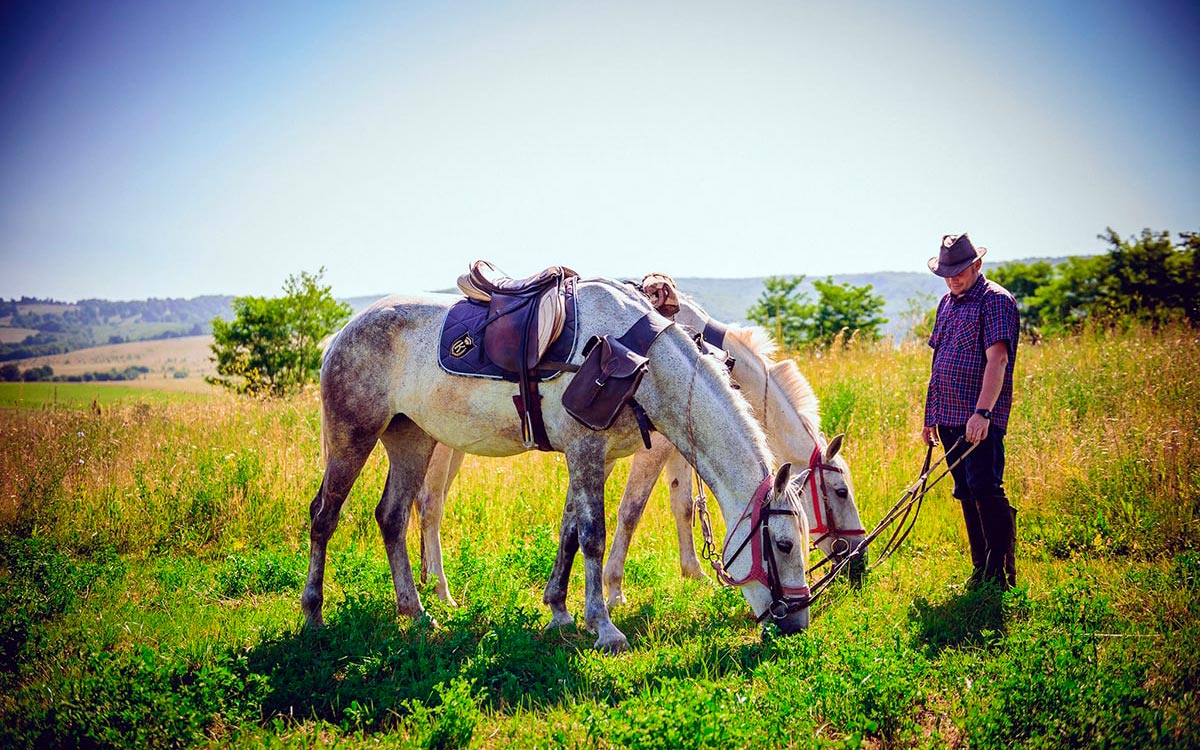
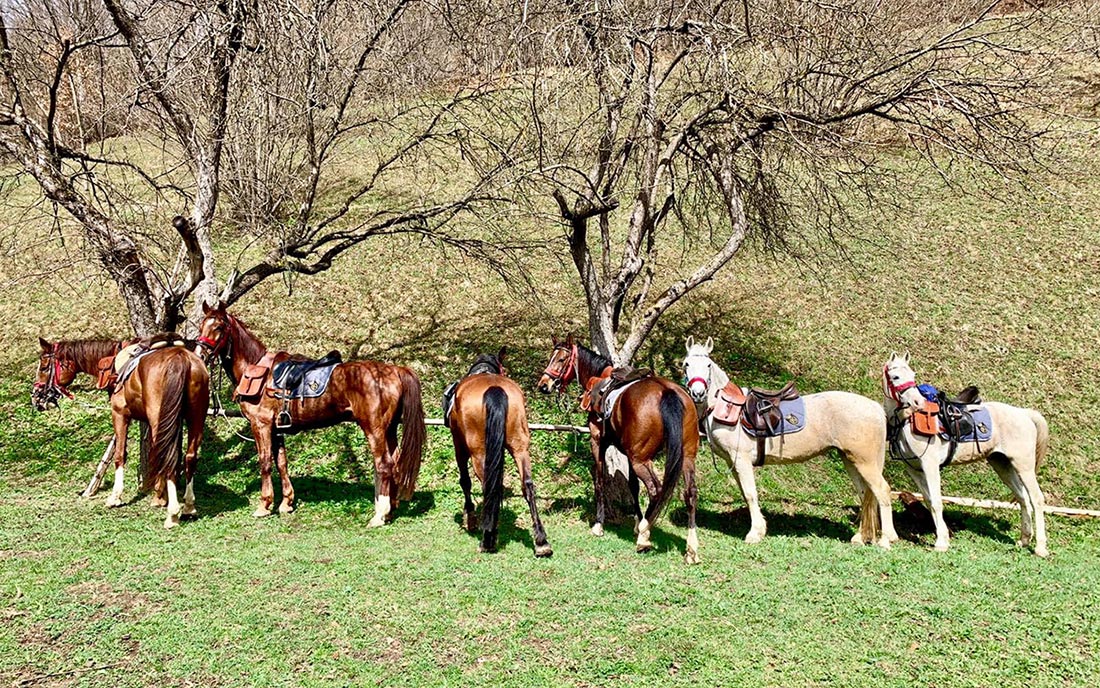
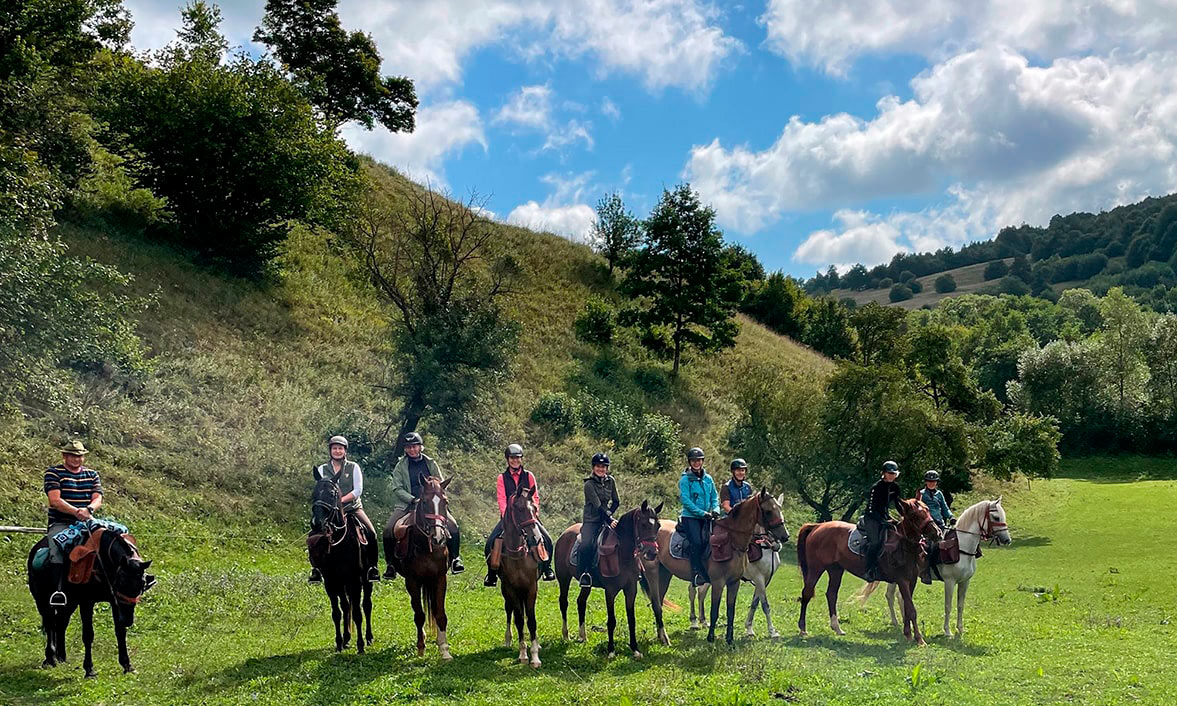
We currently have Shagya Arabian horses (the kind used by the hussars), Lipizzaner horses, Gidran horses (used by the Hungarian cavalry), Lipizzaner crossbreds with mountain horses and Akhal Teke Turkoman horses, famous for their speed, endurance and intelligence.
In total we have 35 horses.
Please tell us about these breeds. What are their main characteristics?
The Kalnokys established their first formal regiment of hussars in 1741. Horses have always played an important role for us and all our people: the Szeklers, who claim to be the descendants of Attila and the Huns.
Our horses are intelligent, very well prepared for the routes we take and are ideal for riders with an intermediate or advanced level of riding.
- Shagya Arabian: This is an equestrian breed that was developed during the Austro-Hungarian Empire in the 19th century, in the stud farms located in Bábolna, Mezőhegyes, Radautz, Piber and Topolcianky. It has some similar features to the Asil or pure Arabian horse: the raised tail, good bone structure and great endurance.
- Lipizzaner: It dates back to the 16th century. Today, 8 stallions are recognized as the classic blood base of the breed, all born between the end of the 18th century and the beginning of the 19th century. They are compact, muscular horses and most are gray. Traditionally, they are associated with the Spanish School of Riding.
- Gidran: This horse originated in Hungary from the Arabian horse. All the horses of this breed are chestnut in color. They are distinguished by their speed, endurance, agility and spirit. The head is small and the profile is straight. The manes are well formed and the ears are small. Generally, the back is long and the eyes large. They have very developed and strong musculature.
- Akhal-Teke: This is a Turkmen breed. These horses are famous for their speed, endurance and intelligence.
Do you breed the horses or are they provided by other breeders? Both: we breed our own horses and we also buy them from other breeders. For example, we buy the Akhal-Tekes from a breeder in Hungary.
What training methods are used at your equestrian center to keep the horses in optimal physical condition?
In our Equestrian Center, we have two instructors who do a great job. One of them specializes in classical dressage and the other in show jumping and vaulting.
The horses receive a complete training, taking into account all the work they do during the equestrian routes. Almost all the teaching and corrective training with them is done in the winter.
Our horses work all year round. Everyone remarks on how well trained they are and how well they respond on the routes.
The cultural charms of Transylvania
What are the real charms of Transylvania?
On our routes we travel through an unspoiled area where tourism is almost non-existent. Part of the route is along forest and mountain paths.
In some places and depending on the conditions, riders will have to get off their horses because the terrain is very difficult, but it's a good opportunity to stretch their legs.
But in general, it is an area that can be traveled very well on horseback. There are large open spaces with meadows that are covered with wildflowers in spring. The landscape changes a lot, offering us fantastic views.
From a cultural point of view, there is also much to see. Here the locals still live in the same way they have for hundreds of years and use horses for their rural tasks.
These are the main charms of Transylvania:
- The luxury of simplicity
- Large open spaces with no signposts
- Unspoiled nature
- Cultural diversity: Hungarians, Saxons, Romanians and Romans
What cultural excursions do you offer guests?
Every day, after riding, comes the cultural part of the trip. We venture into the small villages of Transylvania and the guide usually tells us the history of the place.
Some examples:
- Visit to a 19th-century water mill that still works.
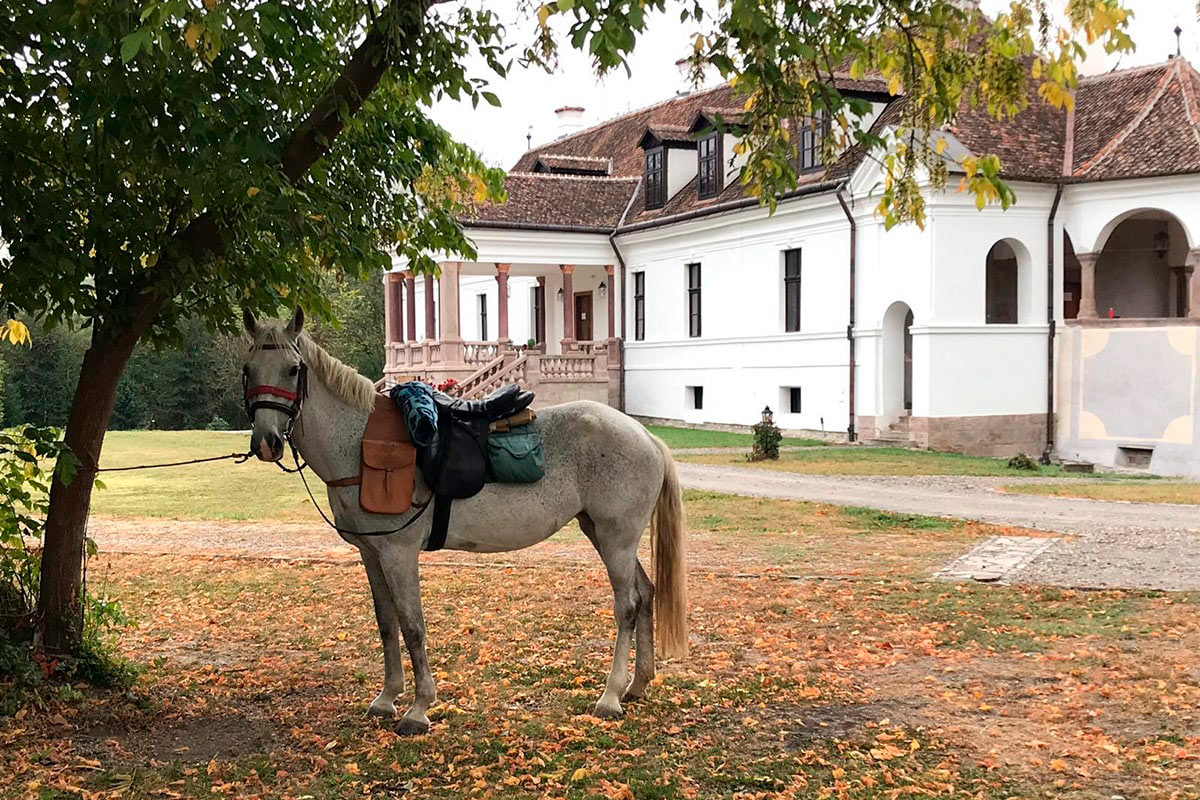
- Visit to the former hunting ground of Kálnoky Castle, where the Museum of Transylvanian Life is located.
**How do your activities contribute to the socio-economic sustainability of the local inhabitants? **
As we explain on our website, your stay here contributes to the sustainable development of Transylvania and the conservation of its cultural and natural heritage.
The Kálnoky Foundation (kalnoky.org) collaborates with the Prince of Wales Foundation in Romania.
What curiosities would you highlight about the flora and fauna in the regions you travel through on your horseback routes?
The flora and fauna of this region are immensely rich. Each of our routes is named after a wildflower that usually blooms at that time of year.
There is a great variety of plants, mushrooms, insects, birds and large mammals such as bears, deer and foxes (we sometimes see them during our routes).
Here in the forests of the valley, you can also find one of the rarest and most spectacular orchids in Europe, the Lady Slipper (Cypripedium calceolus), which flowers between May and June near the home of Prince Charles.
Accommodation and gastronomy
What types of accommodation do you offer riders during your equestrian programs?
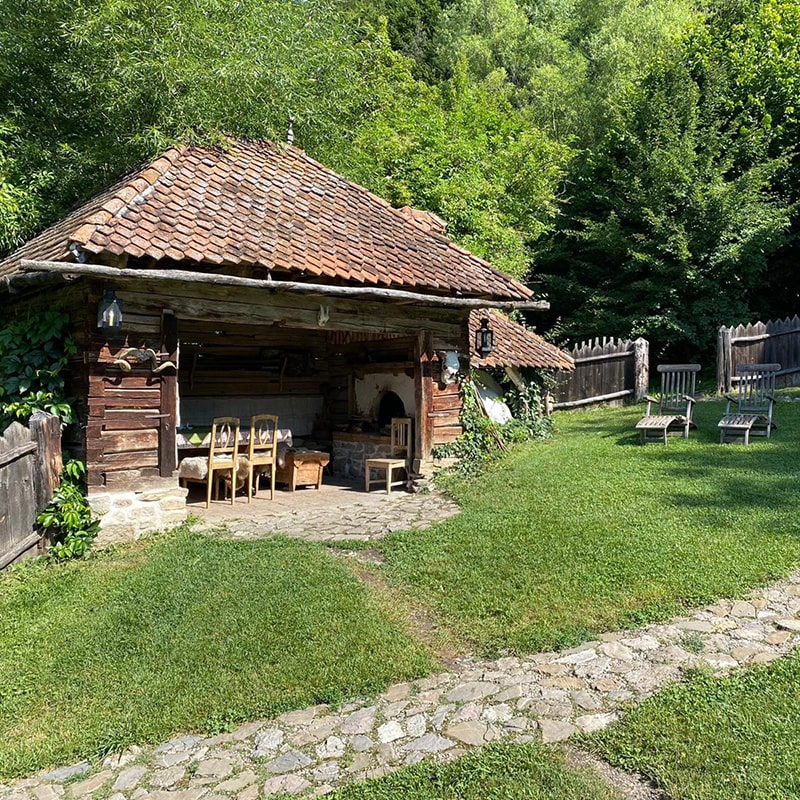
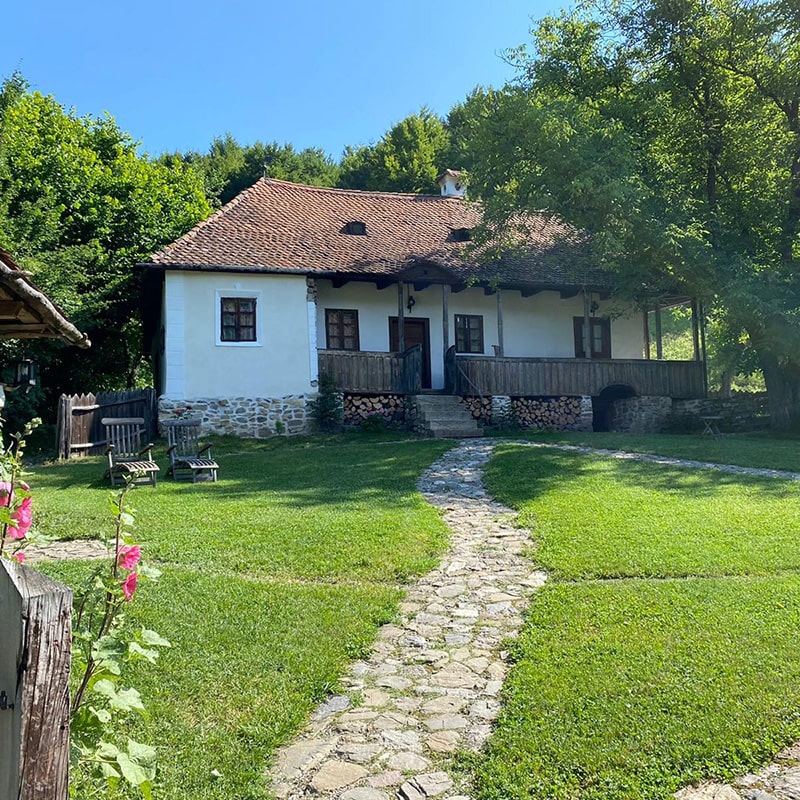
The accommodation during the routes is quite varied, which allows us to observe the way of life of the local people and, at the same time, enjoy the charms offered by the Conde Kalnoky and Príncipe de Gales lodges.
Gastronomy is part of a country's culture. Could you tell us what meals are served to the riders and if they are typical of the area?
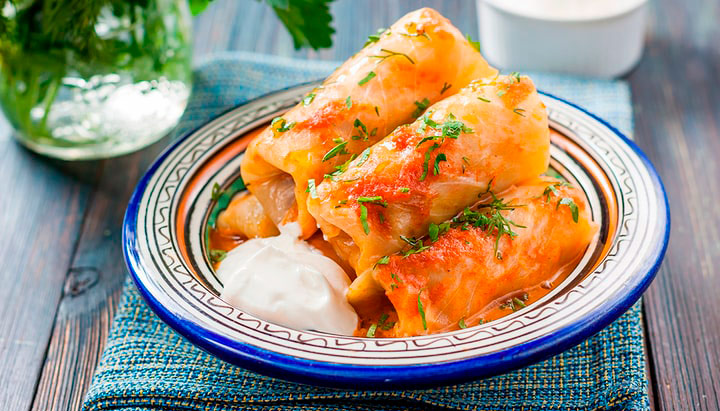
All meals are prepared here and we have a set menu. There are no à la carte dishes. Local people work in our kitchens and we mainly use local and seasonal products.
There is a different menu for each day of the week, bearing in mind that each menu is fixed. Our dishes reflect the gastronomic variety offered by the different ethnic groups of Transylvania (Romanians, Hungarians, Saxons, etc.).
In the event that a rider has any dietary restrictions due to illness or other reasons, can you provide an appropriate diet?
Those who require a special diet should let us know in advance.
Final questions about equestrian tourism
What are the most important challenges facing the equestrian tourism sector in your country?
The most important challenge facing this sector in Romania is probably not to lose the typical features that characterize this region.
One of the strong points of our horse riding routes is the unspoiled nature that still exists in these mountains where we can travel for miles and miles through fields without fences or signposts.
This gives the rider more freedom to move around. We take care of showing the villages in this area, where people still work and cultivate the land with the help of horses.
As long as we can enjoy all this living nature, that is precisely what we will show on our routes.
How do you think equestrian tourism in Romania will evolve in the coming years?
It is difficult to generalize if we think of all of Romania, as it has very different regions, from the Danube Delta to the Carpathian Mountains.
We want to continue focusing on showcasing the local culture, working closely with guides from this area and using well-trained horses, mainly Hungarian breeds.
We try to face all the challenges that come our way with a high level of professionalism.
For our horse riding routes, we choose the Peruvian Paso horse because of its gait. Are you familiar with this breed?
No.
Would you like to come on vacation to Argentina and discover our landscapes and our culture while enjoying riding a Peruvian Paso horse?
Yes
Acknowledgements
We would like to thank Ágnes Szekeres for giving us this interview to tell us about Count Kalnoky's Riding Treks in Transylvania.
Thanks to their horse riding routes, riders have the chance to enjoy the historic landscape of Transylvania, with its endless rolling hills adorned with meadows of wildflowers, forests and small villages, and the Carpathian mountain range as a backdrop.
Don't miss out on the horse riding routes with them!
Continúa leyendo
Este artículo es exclusivo para miembros.
To view this blog, please complete the form
Access full content
Comments (0)
No comments yet.


Comments
Leave your comment