
10 Things to learn about Show Jumping – Part I
Introduction, origin and rules of Show Jumping
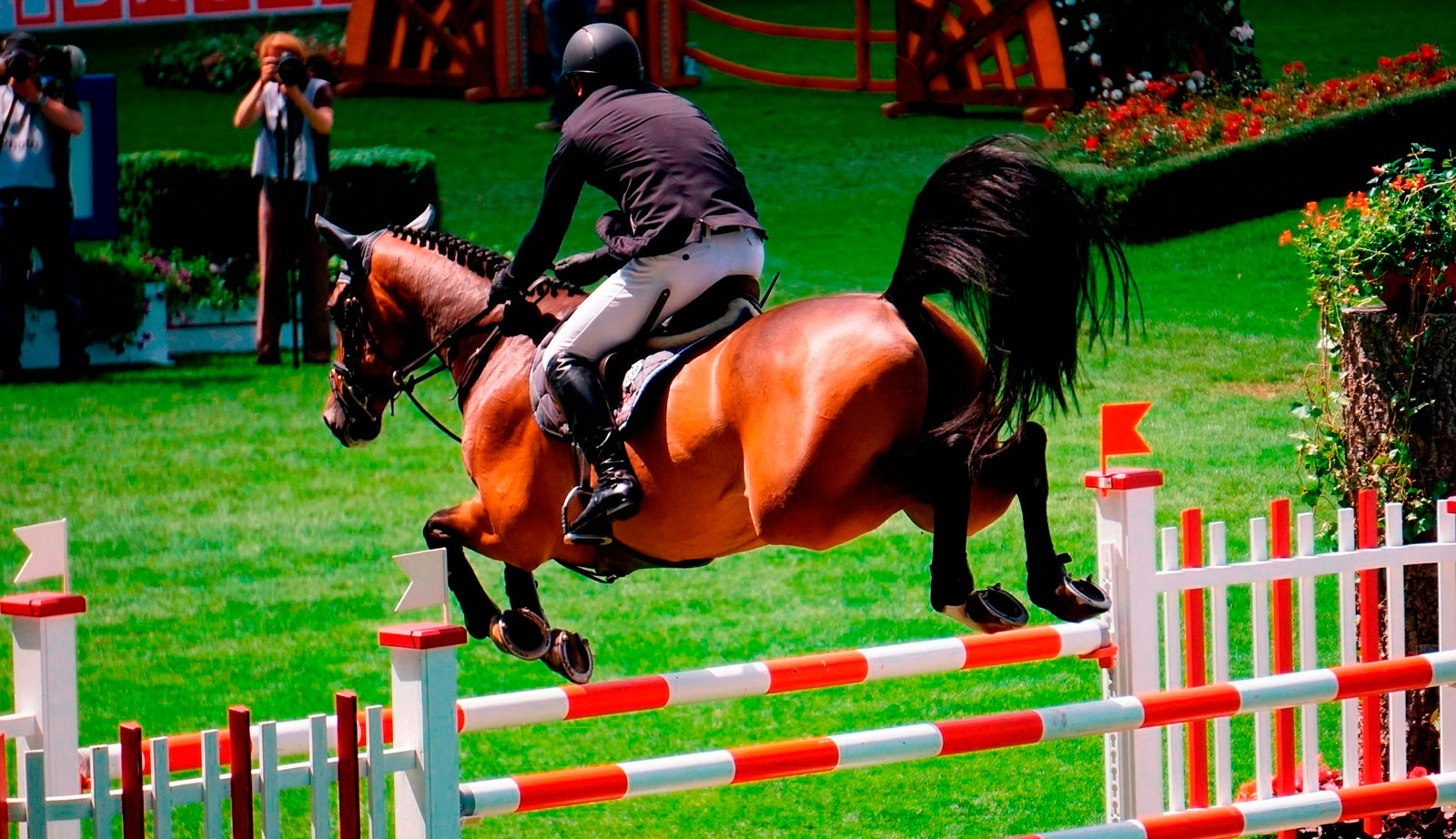
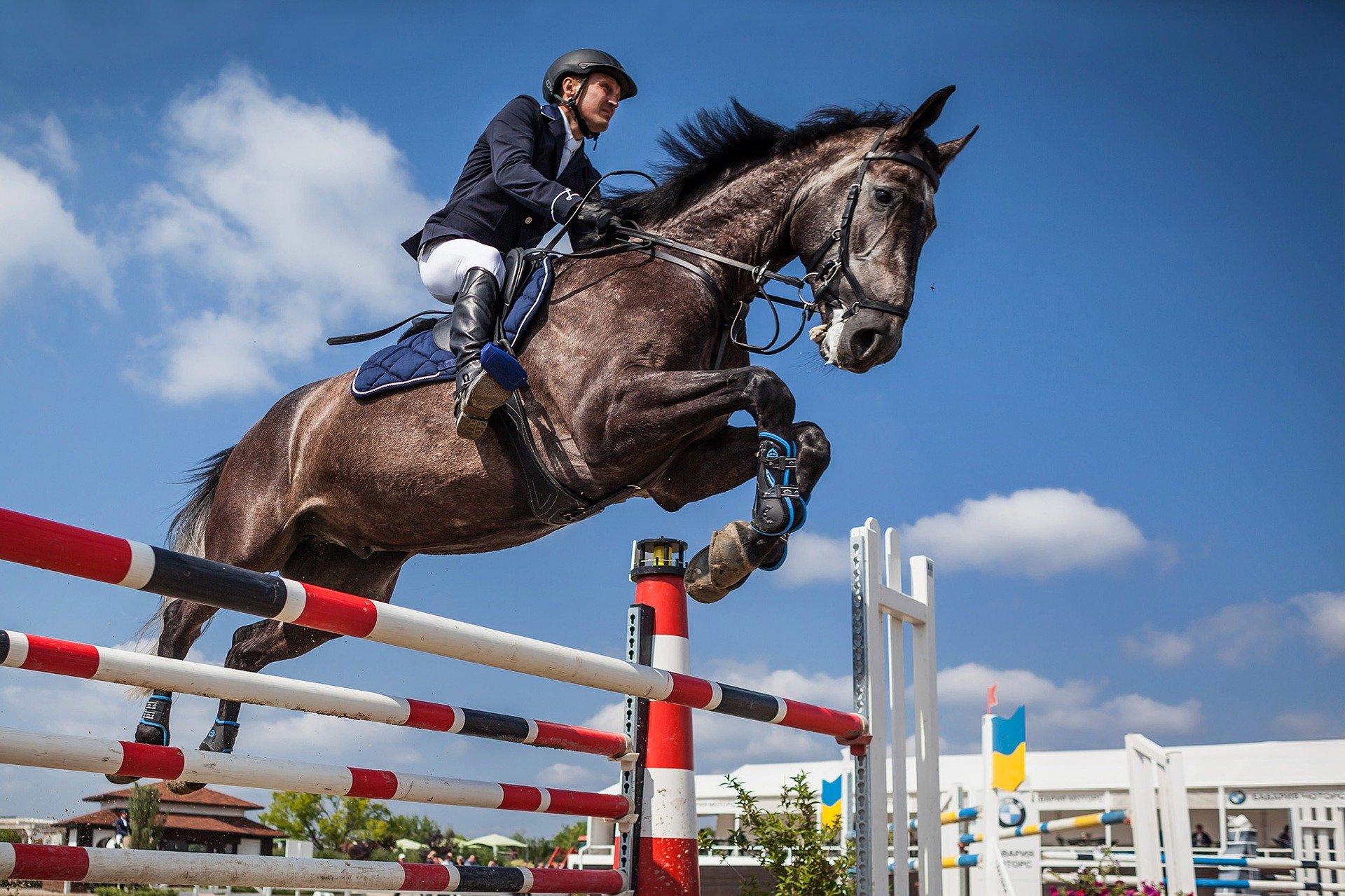
Among equestrian sports, Show Jumping is one of the most popular disciplines. It is a classic equestrian sport, and at the same time a great spectacle in which the rider and his horse face a series of obstacles to jump.
Nestor Imberti, a member of our content team, has written an article covering the 10 topics about show jumping that we will present in 4 parts so that you can truly immerse yourself in the world of show jumping and expand your knowledge of this fascinating subject.
The Agenda of the Article
** Part I**
- Introduction
- What is the sport of show jumping?
- The origins and history of show jumping
- Organization, rules and competitions in show jumping
Part II
- The main problems presented by horses for jumping
- The mechanics of the mounted horse's jump
- How the rider should act in show jumping
Part III
1. Introduction to the Principles of Learning Theory Part IV
- Training for Show Jumping according to the Principles of Learning Theory
- Benefits of Show Jumping for the rider
In this first part we present an introduction to the subject, then we define what the sport of show jumping is, then we look at its origin and history, and the basic rules of show jumping in official competitions.
Introduction
In this article I intend to provide information aimed at people who are interested in the equestrian sport of show jumping, and who already have a basic level of riding, explaining a series of topics, in summary form, about the main points to bear in mind for those who want to start in this equestrian discipline.
For riders with some experience in showjumping, the approaches I will outline here on how to train horses to jump, based on the principles of Learning Theory and Ethology, may be of interest.
I make this reference because after breeding horses for more than 25 years and having applied different methods or forms of Dressage with all kinds of experts and those not scientifically trained. A little over 12 years ago, I came across the theoretical bases, based on the scientific principles of Learning Theory and Ethology, when I got hold of a book by Andrew McLean, which gave me the basis to start applying these principles, and thus enter a world of theoretical knowledge developed by many other researchers who gave shape and content to the aforementioned principles.
This process also helped me to discover my own ignorance about horses, and that of many of those who are dedicated to the training and breaking in of horses, in a practical way and without theoretical training.
I did not only learn the teachings of Andrew McLean and other researchers of equine behavior in a theoretical way, but also by taming and training the horses of our breeding and also by training people, who, according to these principles, we have been able to train more than 50 horses, obtaining from them great emotional stability, lightness in their mouth, and which have also allowed our riders to always keep the horse's limbs of the horse under control of the stimulus produced by clear and well-trained signals or aids from the reins and legs.
Show jumping with horses, although they can do it naturally, is also a learned response to specific signals given by the rider, and that is why, in this article, I am going to discuss the training of show jumping horses based on the principles I have mentioned, which are disseminated internationally through annual conferences held in a different country each year by the International Association for the Science of Equitation Science (ISES).
My theoretical sources for training horse jumping, which I rely on to give this post a different treatment on the subject, come from McLean's book and many other articles he has written, as well as other scholars of ethology and equine learning theory.
What is the sport of show jumping?
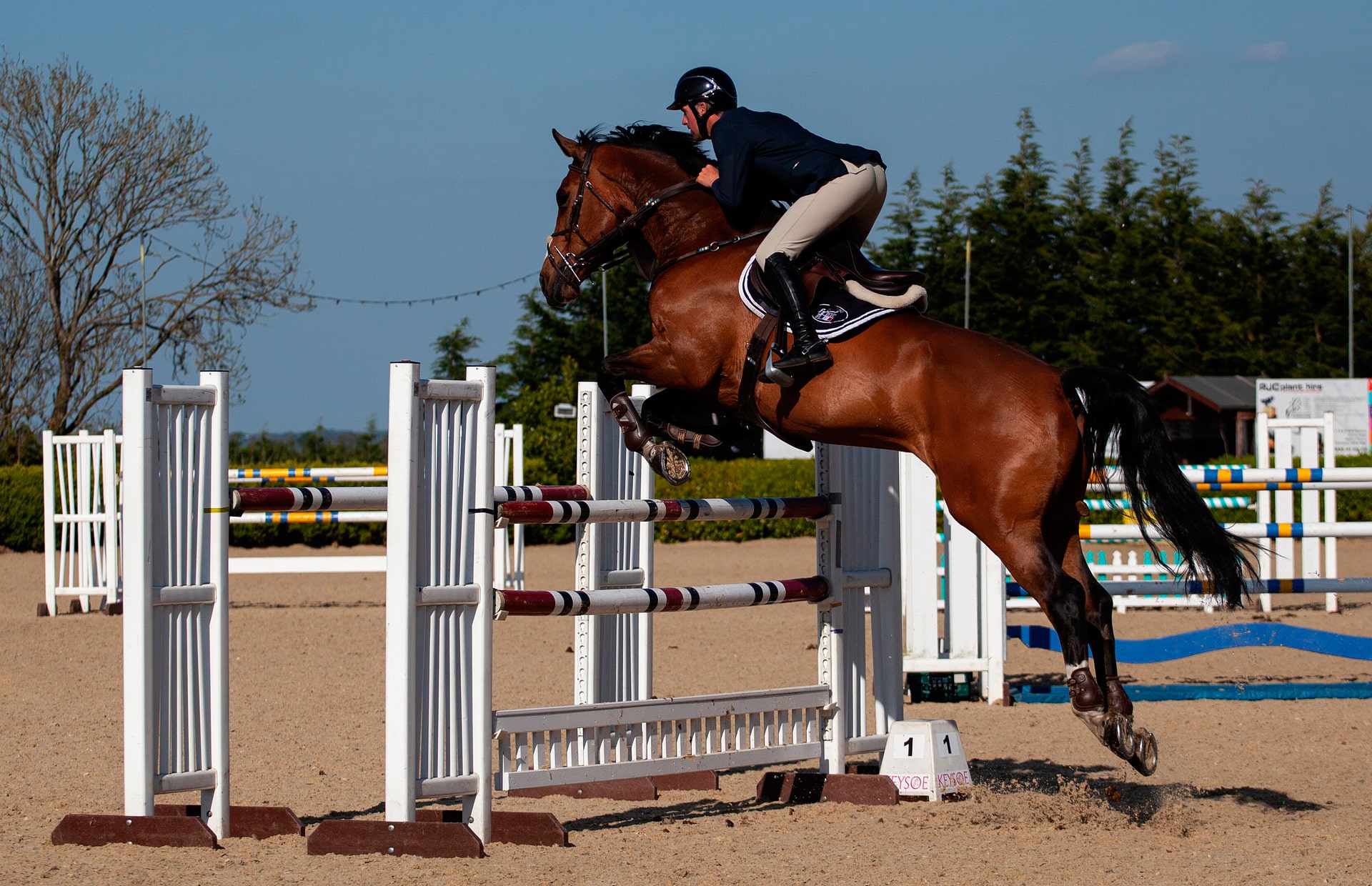
Show jumping is a discipline of equestrian sport that involves an extremely synchronized performance by horse and rider to jump a series of obstacles in a given order and time and at given heights, according to the competition categories, all these parameters being fixed by the regulations of the discipline, which have been approved by the International Equestrian Federation (FEI).
The categories are not only determined by the heights to be jumped, but also by the ages of the riders.
It is important to emphasize that in the sport of show jumping, men and women compete on a completely equal footing.
The horse and rider are known as a pair and both are considered athletes.
In a competition there are a series of penalties for the participating rider, which are applied during the competition, and the one who receives the fewest penalties is the winner of the event.
Having established these concepts, I would like to point out that show jumping is one of the most popular equestrian disciplines, which also allows contact with nature, because it is practiced outdoors, and provides a very attractive spectacle that attracts many fans in various parts of the world, especially in Europe.
In addition, show jumping brings great benefits to physical health and also stimulates the ability to concentrate to a high degree.
The origin and history of show jumping
It is often said that its origins date back to the mid-18th century in England as part of the sport of hunting.
But the truth is that there are no concrete references to the origin of show jumping as an equestrian sport, but as we said, it was an essential part of the sport of hunting.
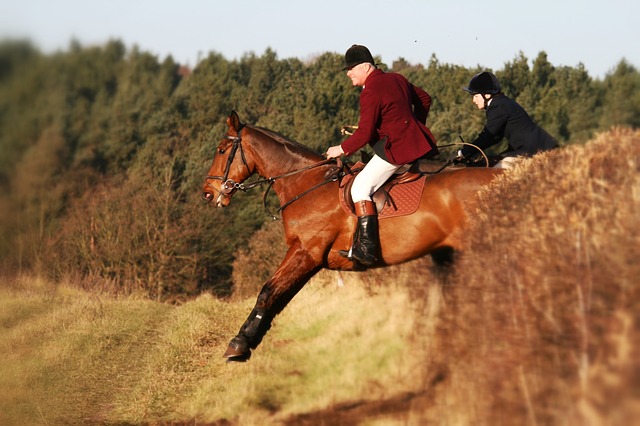
In the 19th century, hunting through fenced fields increased this practice considerably, not only in the United Kingdom, but in almost all of Europe.
From this point on, horse breeds began to be improved with the aim of achieving greater physical ability to gallop and jump at higher speeds, and this served as the basis for the modern sport of show jumping.
Jumping began with the first courses in which a series of obstacles had to be jumped over as quickly as possible, and these consisted of hurdles and courses or ditches with water and mounds of earth, so to speak, it was an obstacle course that had to be jumped.
Given that these obstacle courses were uncomfortable for the public to follow because they were held cross-country, competitions began to be held in enclosed venues, and there interest in the sport of jumping began to increase more than that of hunting.
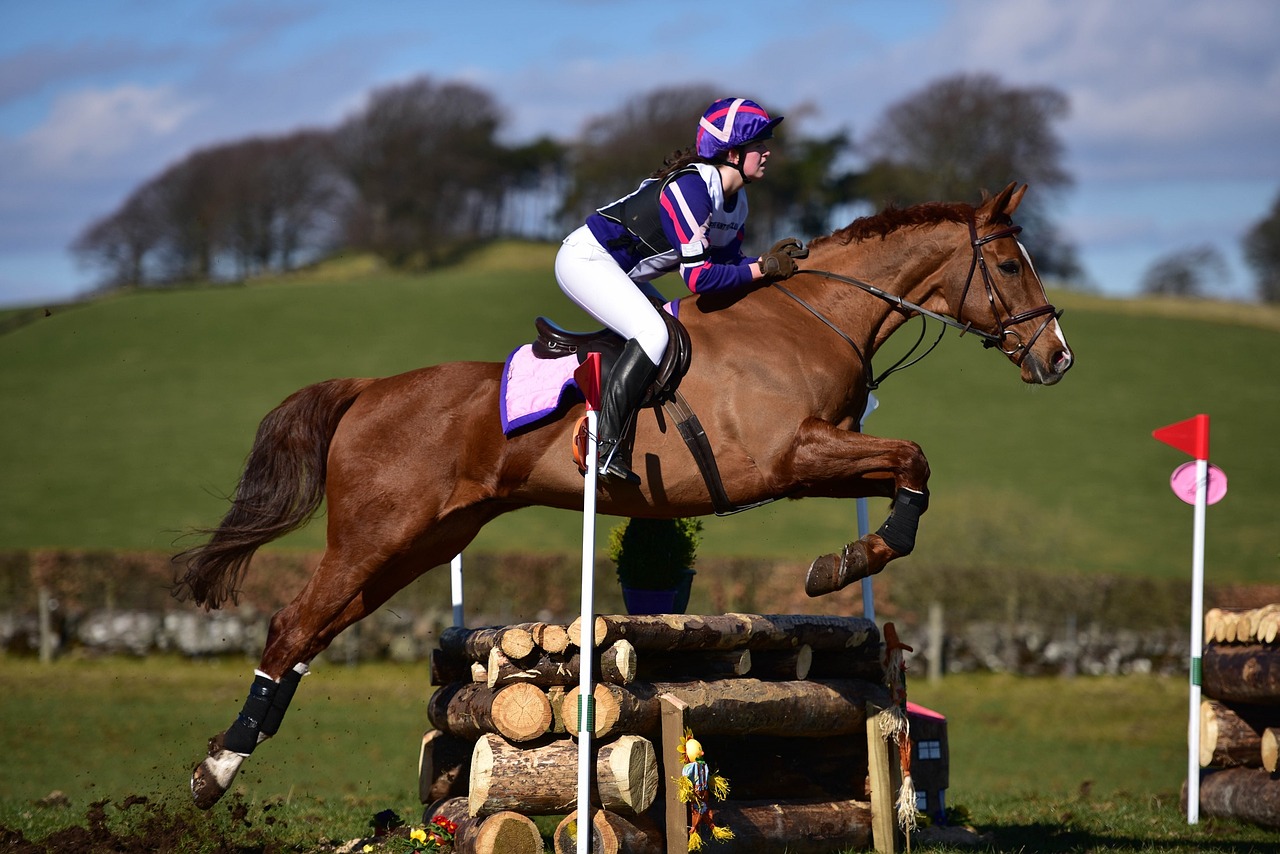
This type of competition, in enclosed areas, was known as “lepping” and some authors cite the year 1865, in Ireland and in the context of the Dublin Horse Show, as the first lepping or show jumping competition that was held.
=https://ampascachi-bucket.s3.us-east-1.amazonaws.com/media/blogs/imagenes/salto-hipico/salto-hipico-foto5.jpg/> From then on, this type of jumping competition quickly began to gain a following until, in 1900, a group of enthusiasts managed to include this sport in an Olympic Games, specifically the Paris Olympics.
However, it was not until 1912 that show jumping was definitively considered an Olympic discipline.
Who was the rider who modeled and promoted Modern Show Jumping?
As we have been discussing, in the initial period, from jumping fences in the countryside for hunting, through cross-country racing with obstacles and up to participation in the first Olympic Games in 1900, riders jumped without having developed a proper technique, they did so by keeping their bodies rigid and did not accompany the movement of the horse's body.
It was then that an Italian military man, Federico Caprili, introduced the way of riding in suspension to relieve the horse's back, but above all he accompanied the movement of the horse in such a way that the rider never hindered the movement of the horse, he favored short stirrups and long reins, he improved the saddle and many other things that led him to produce ever higher jumps until achieving the first world record of 2.08 meters and being considered “the mentor of modern horse riding”.
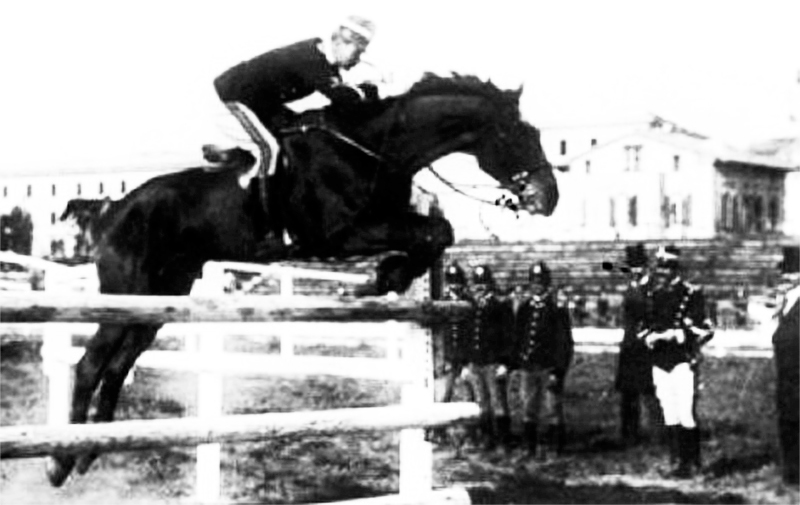
Finally, we will say that in 1921 the “International Equestrian Federation” was founded, which was responsible for standardizing the regulations of equestrian disciplines and the various official international competitions, including the World Equestrian Games and the Olympic Games.
Until 1952, equestrian sports were almost exclusively represented by officers of the cavalry of the various national armies and it was not until 1956 that they were able to participate in an Olympic game.
Organization, rules and competitions of show jumping
Show jumping is organized in each country by a national organization that can determine different rules and competition modalities, but the International Equestrian Federation (FEI) is in charge of dictating the regulations for official international competitions, including the Olympic Games and the World Equestrian Games, and is also recognized to establish the world records for show jumping and vaulting.
What do modern competitions consist of?
In a show jumping competition, the participating pair (rider and horse) must generally complete a course in which they have to perform between 10 and 13 jumps, necessary to overcome certain obstacles, which are numbered, the objective being to qualify or select the greatest skill, the best training and the precision of the different pairs participating in the competition.
The aforementioned route must be completed, jumping the obstacles, in a predetermined sequence and trying not to make mistakes. The mistakes are determined and penalized with points that are assigned to each type of mistake and these points are cumulative during the test.
The winning pair is the one that completes the obstacle course with the lowest error penalty score and in the shortest possible time.
It should also be noted that there are competitions in which time limits are set for the course and exceeding these limits is also penalized.
What are the types of penalties?
There are different types or characteristics of penalties. Here we are going to list these types giving a brief description, without going into further detail about them, and we will give the score that is usually awarded to them in general, as well as indicating which of the penalties implies disqualification or withdrawal from the competition for the participating pair.
The types of penalties are:
For knocking down an obstacle, for a limb in the water or for any mark left on the bar that delimits the jump of the estuary on the reception side. Penalty of 4 points.
For disobedience, penalty of 4 points. The following are considered disobedience:
- Refusal: The horse refuses to jump.
- Escaping: The horse escapes the rider's control and avoids jumping.
- Defending: The horse stops for any reason, or takes one or more half or full turns, or begins to buck, or moves backwards for any reason.
- For a course error. Course errors are considered when the pair:
- Does not complete the course according to the plan stipulated in the test.
- Does not jump the obstacles in the order or direction indicated, except in some particular tests.
- Does not cross the start or finish line between the flags in the correct direction.
- Omits the compulsory steps.
- Jumps or tries to jump an obstacle that is not part of the course or forgets to jump an obstacle. This type of error results in elimination of the pair.
- Due to the horse and/or rider falling. A fall is considered to have occurred if:
- The rider has touched the ground.
- The rider needs to resort to outside support or help of any kind to get back in the saddle.
It is considered a fall of the horse when its back and hip have touched the ground or the obstacle and the ground. This type of error results in elimination of the pair.
For prohibited unofficial assistance. Assistance from an external third party. This type of error results in elimination of the pair.
Exceeding the set time limit. Penalized by elimination of the binomial.
These penalties are guided by a Table A and is used in most tests.
There are other tests that are guided by the penalties of a Table C which is intended for speed tests where only time matters.
In these, faults committed in the jumps are converted into penalty seconds which are then added to the total time of the binomial on the course.
In both types of tables there is a set of time limits that cannot be exceeded and binomials that pass these time limits are penalized with 1 point for each second they exceed.
What are the different types of events?
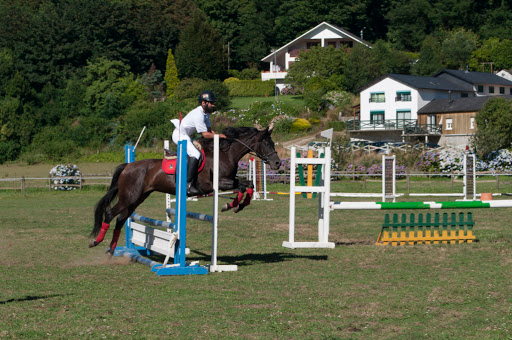
Progressive difficulty test
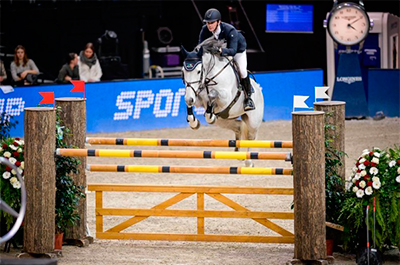
This test is contested over six, eight or ten types of obstacles, which become progressively more difficult.
There should be no combination of obstacles.
The difficulties are not only due to the height and depth of the obstacles, but also to the course laid out.
 **Derby trial**
This is held over a minimum distance of 1,000 meters and a maximum of 1,300 meters, over a course where at least half of the jumps are over natural obstacles and there is only one jump-off, if one is scheduled.
It does not have a timed event but it does have a time limit.
Pairs and Triples Event
This event must present a course comprising six obstacles: one single as the first and five combinations, of which at least one has a triple obstacle.
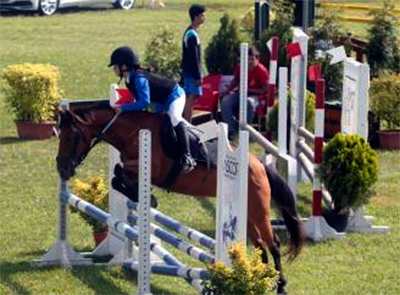
If there is a tiebreaker, if it is stated in the preview, the course must include six obstacles: one double, one triple and four single obstacles or three doubles and three singles.
Combinations that have been used in the initial course must always be eliminated.
Endurance test
The aim of these tests is to demonstrate the horse's aptitude for jumping a few, but large, obstacles.
They are carried out with a maximum of five laps, with an opening lap followed by a maximum of four tie-breakers, with no pre-established time for each intervention.

The first round has four to six large individual obstacles, including the power wall.
The first obstacle must be a minimum of 1.40 m high, two obstacles between 1.50 m and 1.60 m and a vertical wall or obstacle that can be 1.60 m or 1.70 m high. All combinations of obstacles, rias, ditches and natural obstacles are prohibited.
In the tie-breakers, only two obstacles are set, a horizontal (depth) or a vertical and the power wall. The vertical obstacles must be raised and the horizontal ones widened at each round, if the participants who have tied for first place have not been penalized in the previous round.
In case of a tie after the fifth round, the competitors share the first prize.
With regard to the power wall, we will say that a jump of 2.4 m has been achieved, constituting the world record on the track so far.
These power wall events have been decreasing in equestrian competitions because they are considered very dangerous for the horse, if it has an accident. This is why this event has evolved into the six-bar skill test.
Six-bar test
In this test, the horses must overcome six vertical obstacles arranged in a straight line, with a distance of two strides, approximately 11 m, between them.
The obstacles must be identical in shape, using only bars of the same type.
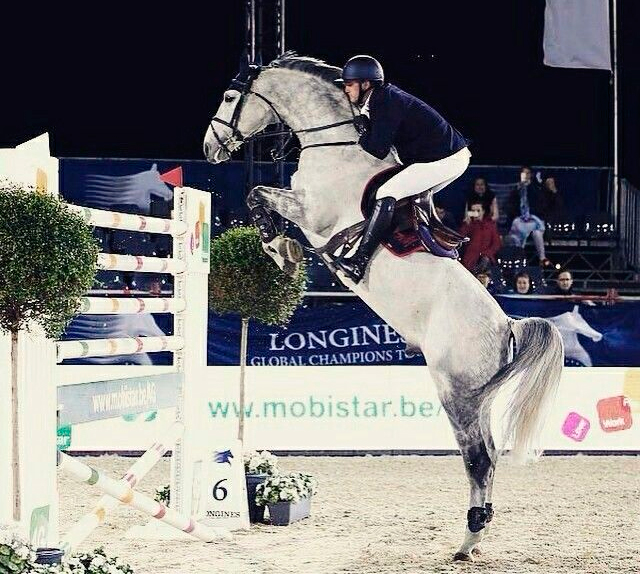
If the size of the track does not allow for the six obstacles to be placed in a line, they can be made with fewer.
The obstacles can be placed at the same height or you can choose to increase the height progressively, either one at a time or two at a time.
In the event of disobedience, the competitor must restart the course at the obstacle where the fault was committed.
The first tiebreaker is carried out over the six obstacles that have previously been progressively raised, except in the case where competitors tied for first place have incurred penalties in the initial course.
After the first tiebreaker, the number of obstacles can be reduced to three or four, with the lower obstacles being removed and the distance between them of 11 m mentioned above being maintained for the first course.
If there are multiple tie-breaks, the height of the obstacles in the final laps can be raised to more than 1.80 m. Speed and handling tests
These are designed to test the obedience, handling and speed of the horse along winding courses with various obstacles. We call them Speed and Handling Tests.
When they are carried out on courses with natural obstacles, such as embankments, ditches, slopes, etc., they are called hunting tests.
All these tests allow for alternative obstacles, which give the competitor the possibility of shortening their route, but in exchange for jumping a more difficult obstacle.
In terms of the route, there will be no fixed route to be used, but a set of arrows must be placed to indicate the direction in which each obstacle should be jumped.
High jump tests
In this event, the pair of competitors must jump over a single obstacle.
Starting from a minimum height of 1.60 meters, it differs from all the other events in that only one jump is made.
The high jump event has a set of rules governing both the shape and the arrangement of the vertical obstacle, which is an upward-sloping plane.
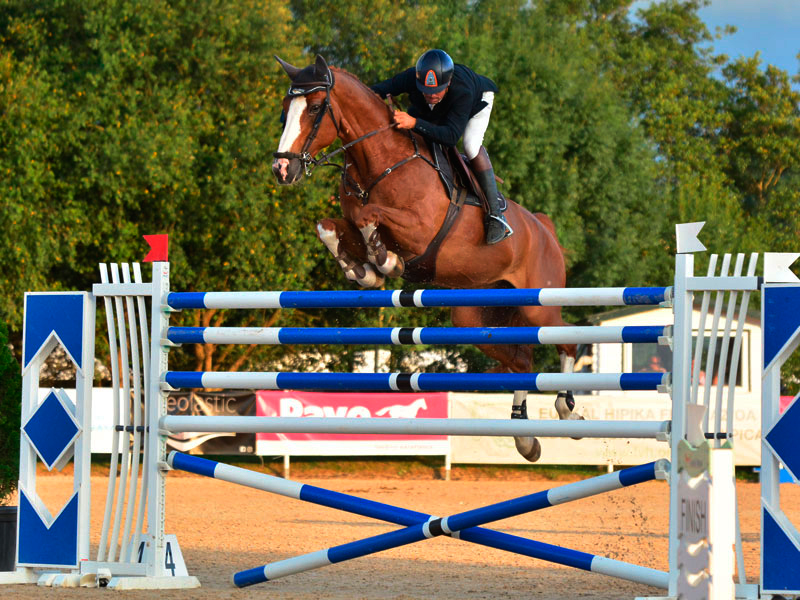
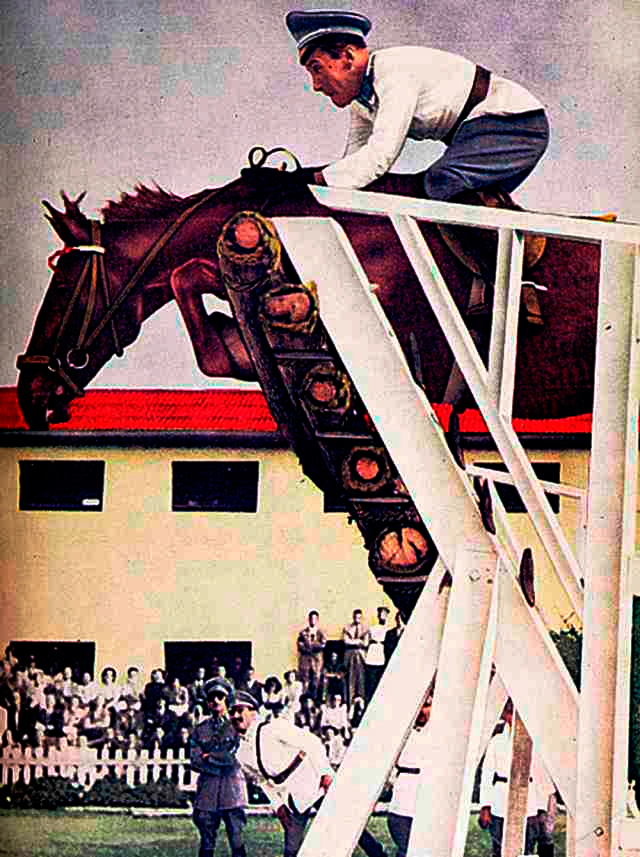
The first pair to exceed two meters in the high jump was the aforementioned Italian officer Federico Caprile and his horse Melapo, who jumped 2.08 meters in 1902.
This record was then surpassed until 1949 when Alberto Larraguibel, a Chilean army officer, reached 2.47 meters with his horse Huaso, a record that has not been beaten to this day.
Long jump test
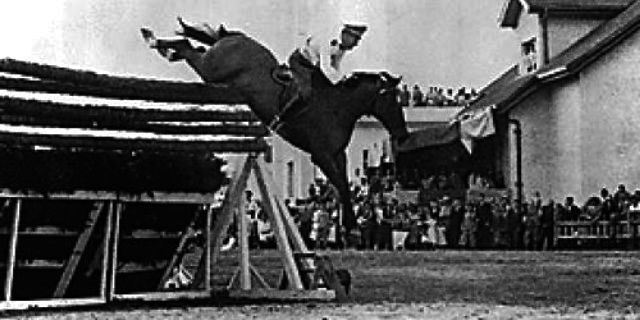
In this test, the binomial must jump over a single obstacle of a given length located on a horizontal plane, consisting of a low fence and a stream, performing a joint jump. The distance between the fence and the stream is increased and the winner of the test will be the one who jumps the greatest distance, without receiving penalties, whatever those received in previous attempts.
Penalties include touching the bank of the estuary or putting a limb into the estuary, refusal of the horse, escape or defense.
Only three attempts are allowed to make a long jump without penalty, if the pair fails to do so, they must withdraw from the test.
The long jump course must comply with a series of requirements stipulated in the regulations issued by the national equestrian federations and the FEI.
Cross-country eventing
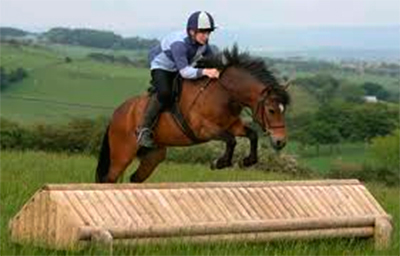
This event, also known as Cross Country, is considered an equestrian discipline in itself, but we mention it here because show jumping is one of its most important characteristics, apart from the speed that the horses must develop, in fact constituting an obstacle course, which is part of the history that gave rise to the equestrian discipline of modern show jumping.
 The cross-country test, together with the Dressage and Jumping tests, make up the three tests that make up the event called Eventing.
The aim of the event is to test the speed, stamina and jumping ability of the horse in open country, when it is well trained and at the peak of its condition.
It also demonstrates the rider's ability to control the different gaits in which a horse moves cross-country.
The fences for the courses in this event try to imitate the obstacles that are found when riding in the countryside, such as hedges, walls, water. These are also solid, which means that they do not fall over if we crash into them.
It is possible that obstacles may have to be jumped when going up or down hills, depending on the course and the chosen countryside.
Some issues to consider in the events
The rider's equipment
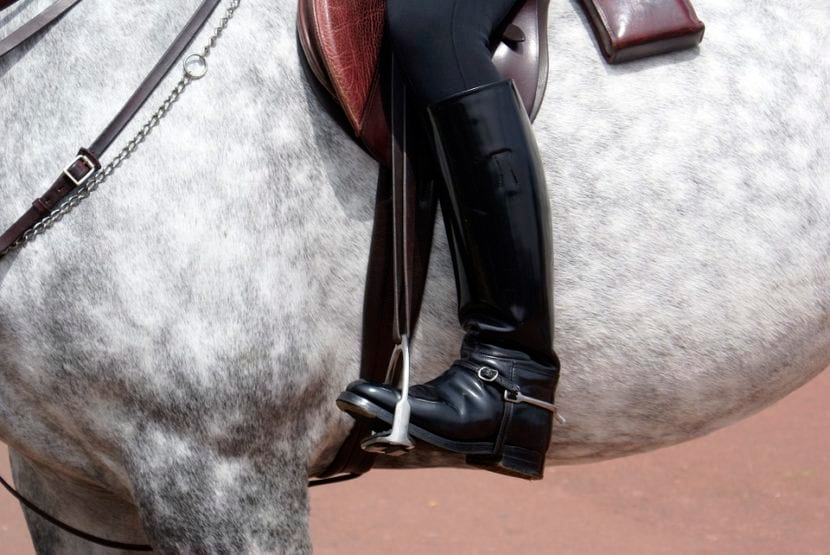
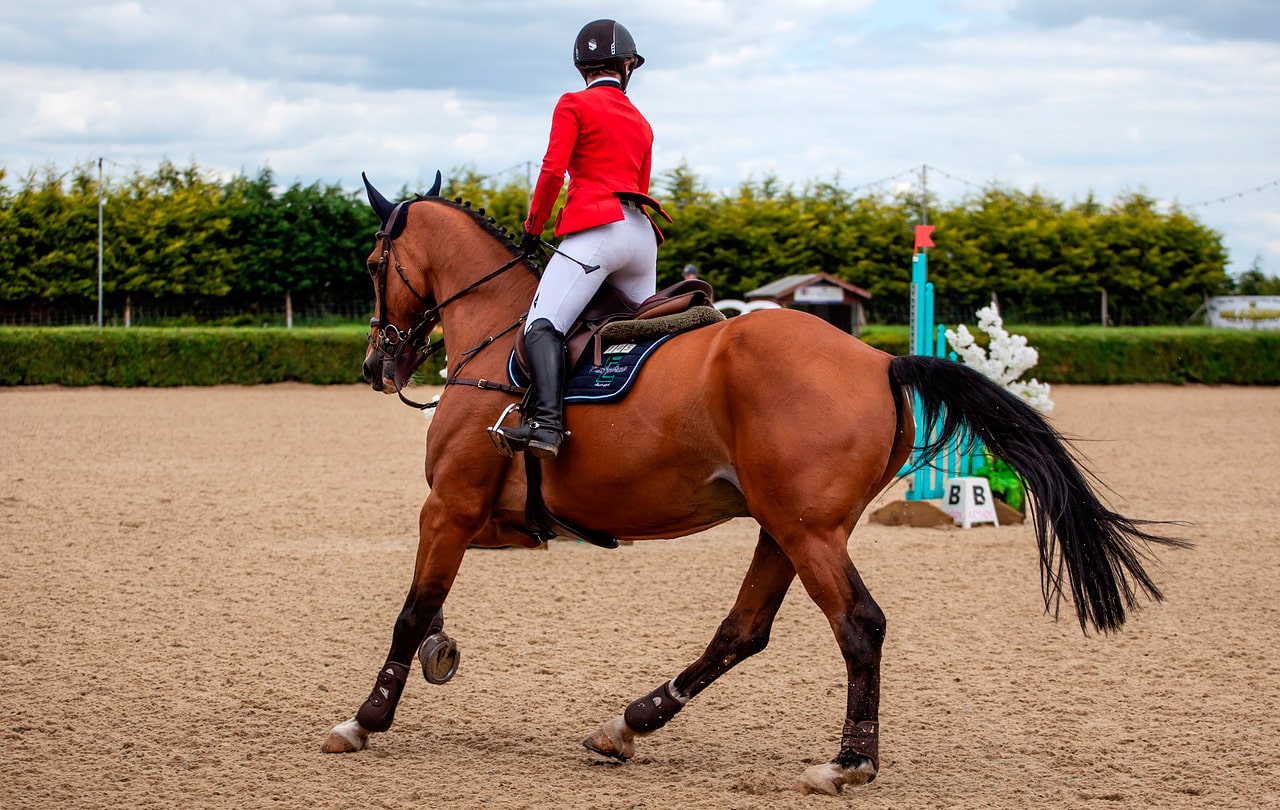
Riders are required to dress elegantly and wear a helmet. In addition, their riding crop cannot exceed 75 cm. In international competitions, the rider and their mount must not weigh less than 75 kg, regardless of whether they are a man or a woman, and they are weighed before the start of the competition.
 https://ampascachi-bucket.s3.us-east-1.amazonaws.com/media/blogs/imagenes/salto-hipico/salto-hipico-foto18.jpg'/>
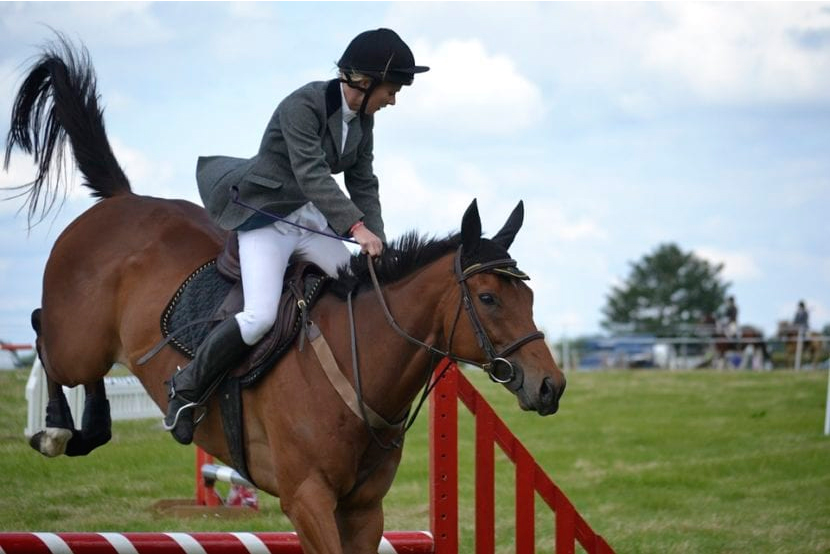
The course This must be designed and set up by a qualified person.
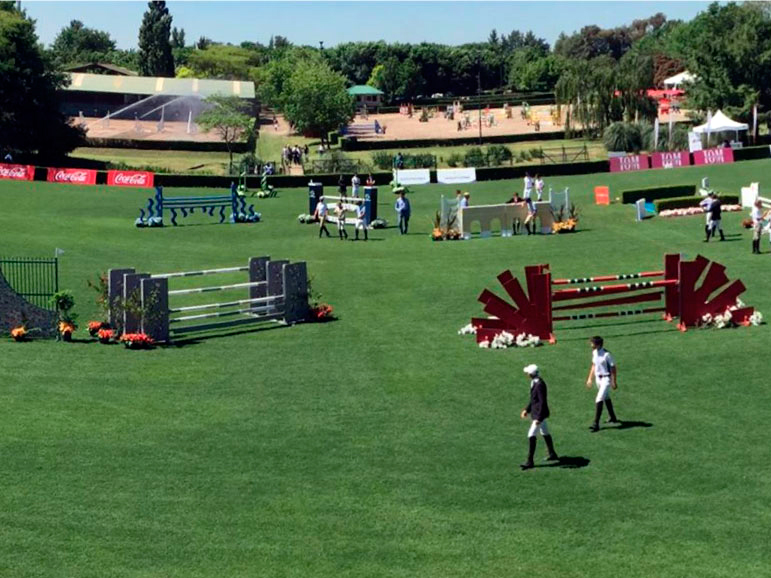
It must be enclosed on all sides and have a minimum surface area of 2,500 m2. In general, a course has between 10 and 13 obstacles that can be moved and they have various shapes, such as walls, fences, gates or bars.
The 5 types of obstacles
- Vertical: This has all the bars on the same plane, they are all one below the other.
- Oxer: Any jump that has two planes is an oxer.
- Wall: These jumps are designed to look like stone or brick walls.
- Spreads: When there are two or more jumps in a row within 1 or 2 strides of the horse, we have a spread.
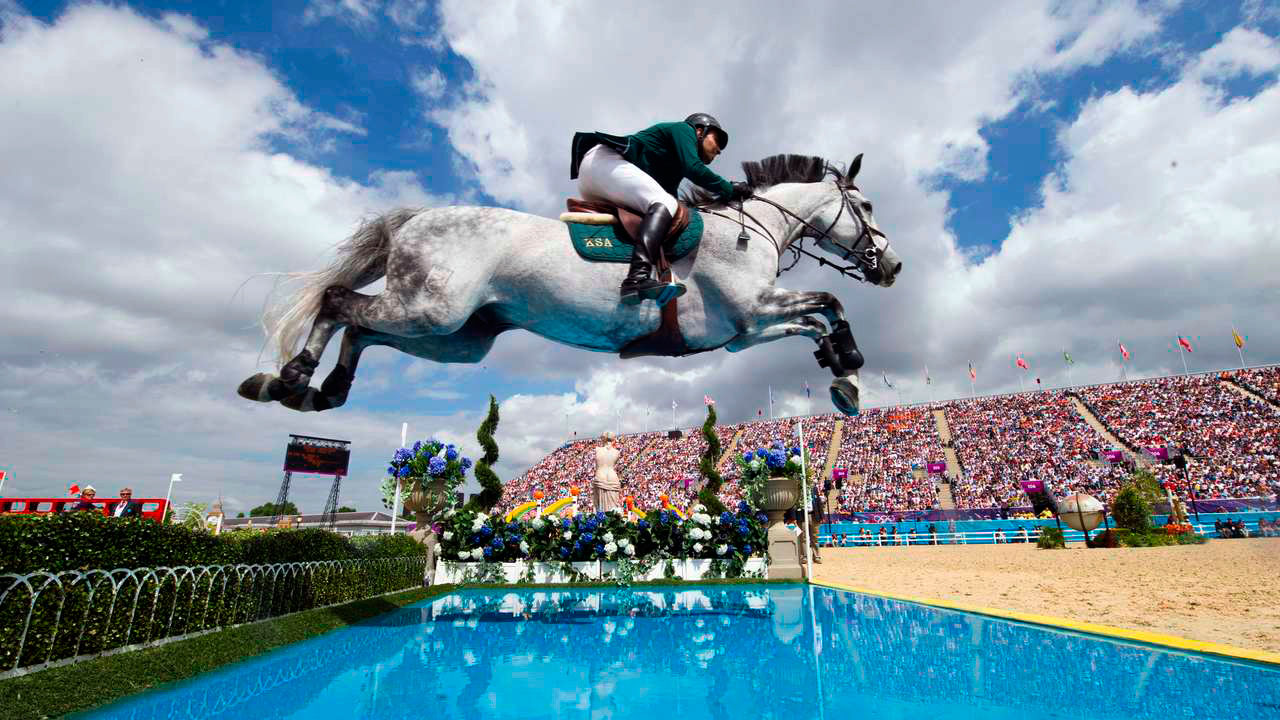
- Water jump: This is a wide jump over water, usually with a small fence at the starting point, and the horse must land with its feet beyond the mark where the water jump ends.
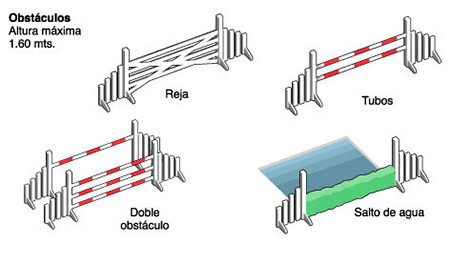
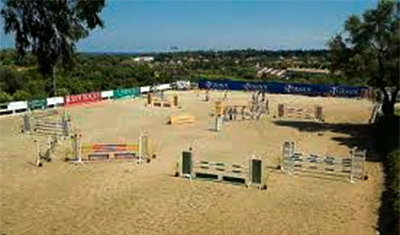 The way in which the obstacles are placed on the course varies according to the route or course and the level of the competition.
But in all cases the length to be covered from the starting point to the finish line must not exceed the number of obstacles multiplied by 60, expressed in meters.
In addition, there must be a distance of between 6 m and 15 m between the starting point and the first obstacle, and between 15 and 25 meters between the finish line and the last obstacle.
All riders have the right to walk the course to study the most convenient way to move and to check the surface of the course before the start of the event.
The most important international competitions
- The Olympic Games, which are held every 4 years. The next Olympics will be in Tokyo in August 2020 (postponed until 2021).
- The World Equestrian Games (WEG) which take place every four years, between the Olympics. The next ones will be in 2022 and will be held in two venues, one in Denmark and the other in Italy.
- The FEI World Cup Jumping Series consists of competitions in riding arenas that take place from October to April, and the highest ranked pairs in the FEI can compete. This series culminates in a grand annual final.
- Nations Cup and Super Leagues: This is the Nations Cup and it is the oldest and most prestigious team competition in the world. It was first held in 1909, when a team competition for officials was held in London. There is no individual prize money in this competition.
To increase the interest of the media and spectators, in May 2003 a new partner entered the Series. A Super League, where the best 8 countries compete in 8 very important events.
This was received with great enthusiasm by the riders and has brought a lot of excitement by creating a system between the Nations Cup and the Super League, in which the best 8 nations go on to compete in the Super League the following year and the nations that are not among those 8 stay in the Nations Cup.
Here we close the first part of the Equestrian Jumping series. We hope you liked the introduction and that we have piqued your interest and curiosity to continue reading the next part of the article.
If you have any questions or experiences of your own in Jumping, share them with us!
Comments (0)
No comments yet.



Comments
Leave your comment