
10 Topics to learn about Show Jumping – Part II
Three important issues about show jumping
In the first part of this series of articles on Show Jumping, we offered an introduction to the world of Show Jumping.
Now, we continue to delve deeper into the subject from a technical perspective.
- We will talk about the main problems that horses can present in show jumping.
- We will detail the phases and mechanics of the jump.
- And finally, we will explain how riders should act when performing this equestrian sport.
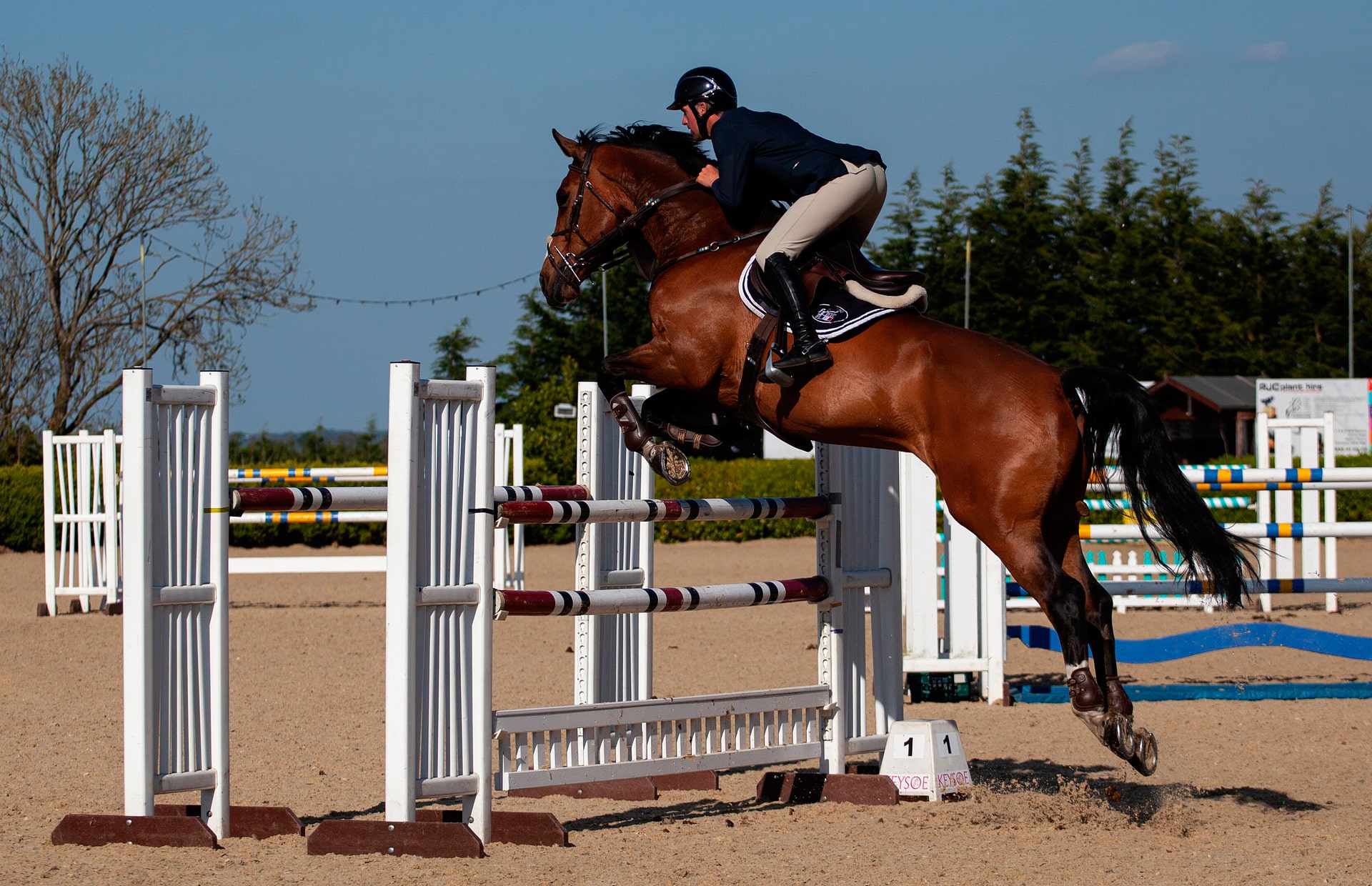
The main problems that horses have jumping
The main problem that horses have jumping is linked to what we have called disobedience and which we have characterized as: a) Refusal, b) Escaping and c) Defensiveness.
In our opinion, these so-called “disobediences” are mainly based on fear, that is to say, the horse gets scared and this is a very dangerous vice for the rider, but it responds to errors in the training process or dressage in general of the horse, and more precisely in the case of jumping, an issue that we will see later.
We should also mention that an inexperienced rider can use signals with their legs or reins that confuse the horse, and this confusion leads to fear and “disobedience”.
The rider's nervousness, which translates into tension and the release of adrenaline, leads to confusion and fear in the horse, which it translates into “disobedience”.
For this reason, whether due to circumstances beyond the horse's control or the inexperience of the rider, who is also showing signs of nervousness, a situation that the rider must improve, we always end up with the horse being afraid, which is what we must combat to reduce the chances of disobedience.
For this reason, as we will see later, the rider must perfect his or her jumping technique, with clear signals, balance that does not hinder the horse's jump, etc.
It is very important to concentrate on the issue of fears, independent of the rider and in this we must note that the type of vision that the horse has has a great influence on these fears, and that is why the rider must learn something about the horse's perception of the outside world.
Let's see what happens or why the horse gets scared, as this behavior, if reinforced, either because the causes are not understood or because inappropriate corrective measures are used, will become a real problem.
There are horses that produce this type of disobedience without warning in situations to which they had not previously reacted. Others may do so because they perceive something strange that surprises them, but once they discover that this something does not pose a danger, in the future they ignore it, which is why we must determine what the object or something that scares the horse is in order to accustom the horse to it, this being part of the training.
This behavior is mostly seen in young horses, and if, because of this, riders allow them to carry it out, they reinforce it, which, far from improving the training, ruins it. We will look at these issues later when we talk about training horses to jump.
We have mentioned above that several of these “disobediences” are explained by the horse's type of vision.
Professor W Blendinger, in a study he carried out on the psychology of horses, explains the following about vision:
- It cannot be said that a horse's vision is worse or better than ours. It has been designed by nature to suit the needs of the animal in the wild and we can only have a limited idea of how horses see the world.
- Horses can see their surroundings from almost any angle, but they cannot focus on objects as well as we can.
- The lateral position of the eyes makes it difficult for them to see objects in front of them, and deprives them of a sense of volume.
- Their ability to see so many things at the same time reduces their ability to concentrate on a specific object. From the point of view of the show jumper, this is an interesting observation that indicates that horses must be taught to look carefully at the obstacle.
- The adaptation to see things in very bright light or total darkness is a characteristic of the horse's eye, but it is not designed to adapt to rapid changes in luminosity.
- The ability to detect very slight movements is much more acute in horses than in humans.
- It is not true that horses cannot distinguish colors. It is practically true that they can distinguish red, yellow, green and blue, although less precisely than we can, and they also seem to distinguish yellow and green better than blue and red.
It can be seen from these observations of the professor's study that the horse's eyesight is a source, due to a lack of capacity, for focusing on objects and also the difficulty in perceiving those in front of it, taking away its sense of volume, and even an inability to concentrate on them, added to the great capacity of its eyesight to detect very subtle movements, very influential in mobilizing in them the strongest emotion which is fear, and therefore instantly activating the flight instinct, which is the evolutionary condition that has allowed them to survive, predators, to this day.
The horse, in the face of any confusion, does not wait to rationalize it, it simply runs away.
In addition, the horse has a great aversion to water that is where it must tread, although this reaction is very variable between each individual.
For all these reasons, in the training of any horse we must use the process of habituation, which is a technique based on the principles of Learning Theory and Ethology, which allows horses to be trained to learn not to fear a large number of situations or objects that generate fear in them. Especially in jumping, the horse must become accustomed to the obstacles it must jump, as well as to the public surrounding the arenas where the competitions take place, or to the signs or flags that may be in the arena. where the competitions are held, or to the signs or pennants that may be on the show jumping arena.
By getting the horse as used as possible to the different types of obstacles, what we achieve is that fear does not block the signals we give the horse, so that it offers the response we are looking for, which is to jump the obstacle in front of it.
This synchronization between signals and responses is what makes the horse-rider pair seem like a single entity.
We must also say that whoever wants to jump must, like the horse, learn the techniques of horse riding, especially balance, and also give the signals or aids without confusing the horse.
Remember that the horse naturally trots or gallops or jumps and balances itself. But when we ride it, it must learn to do all these natural movements by balancing the rider on top of it, and for this the rider must train it for all these movements and help the horse, maintaining its own balance, so as not to hinder the horse's movement.
The mechanics of the horse's jump when ridden
We know that horses jump naturally when they are galloping freely and face an obstacle, especially if they are in the process of a fear-induced escape.
The movements that the horse makes, as well as the movements it makes when galloping or trotting, must be well known and understood by the rider so that, based on these natural movements of the horse, he knows how to balance his weight through the position of his body, from the seat, legs, hands with the reins, trunk and head.
All the movements of the rider should accompany, without opposing, the movements of the horse, especially its front and rear limbs, its neck, head, spine and back.
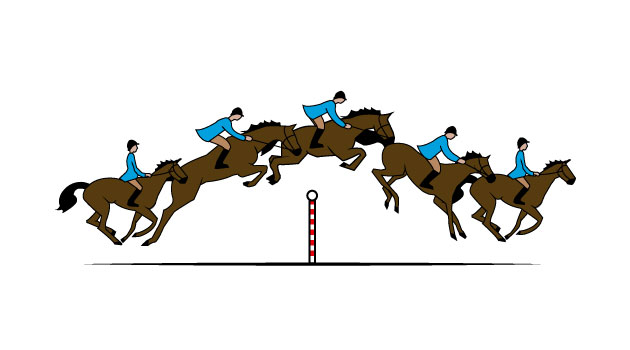
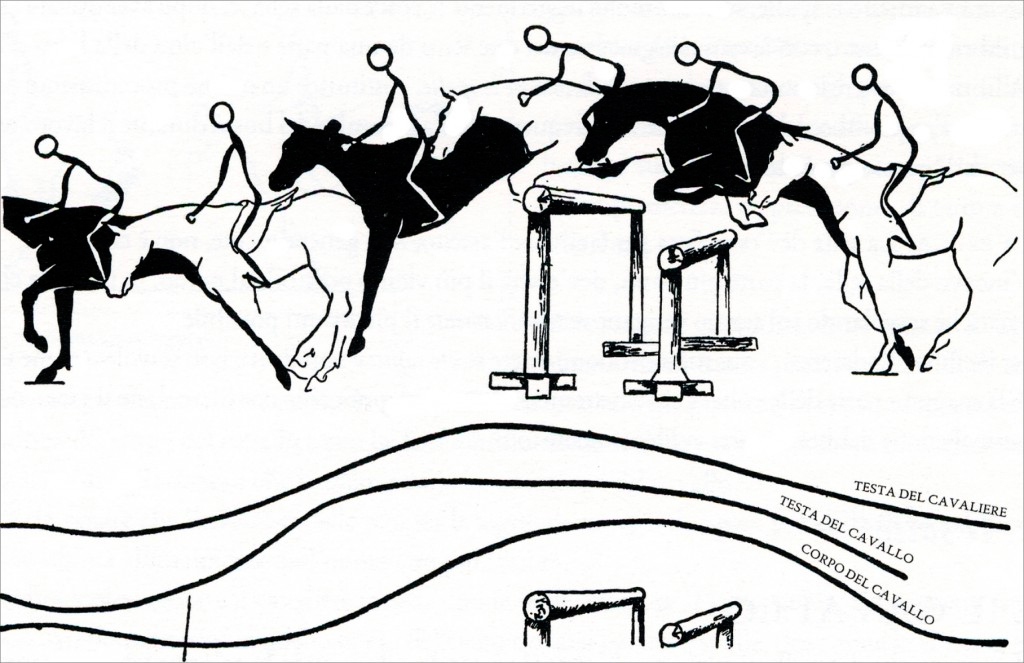
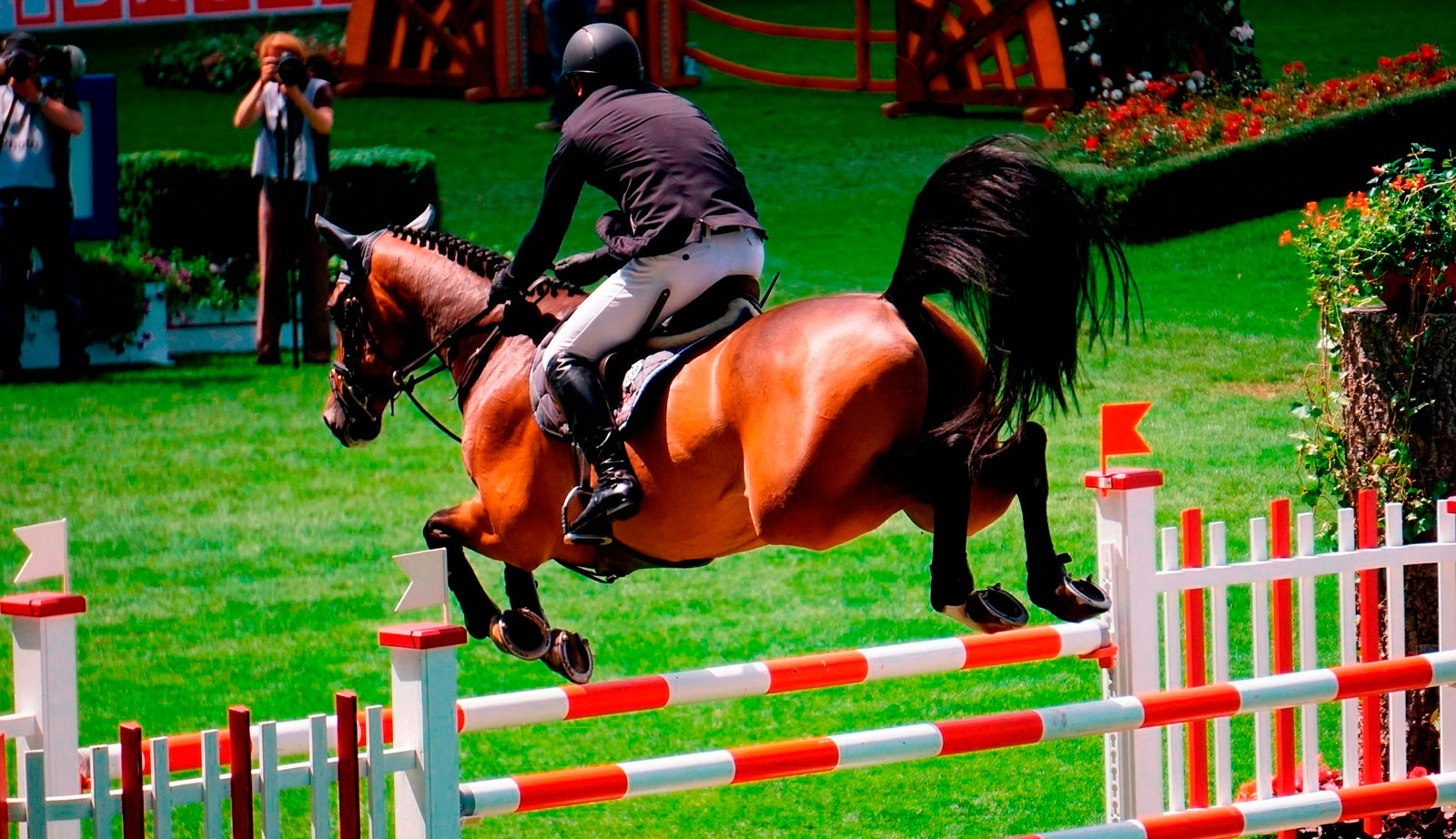
For these reasons we are going to explain the 5 phases that make up a horse's jumping movement.
These phases, which can be seen in photo 1, are:
- Approach
- Takeoff or lift-off
- Parabola, flight or scale
- Reception or landing
- Exit or recovery
If the rider manages to understand how these phases work and what happens at each stage, they will be able to learn to improve their jumping through practice and the guidance of another expert rider. This also helps to avoid accidents and injuries and to improve jumping performance.
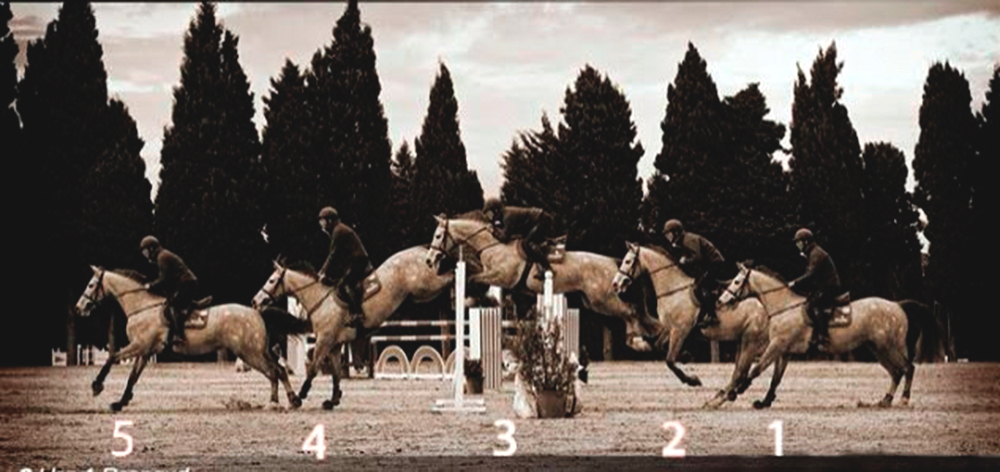
1. Approach
In this phase, with the course in clear view and the horse facing the obstacle, the horse must be able to see it and the rider, depending on the height of the jump, must regulate the rhythm and speed of the horse, adjust the direction, balance, impulsion and length of the strides, in order to reach the take-off at the right point.
The rider achieves this by getting the horse to canter at a good pace and with good balance to stretch its spine, and then allowing it to collect to get its hindquarters under the mass or body, in order to jump.
In this phase, due to the shape of its lateral vision and its characteristics, the horse will have to move its head down or raise it to adjust the focus on the object to be jumped.
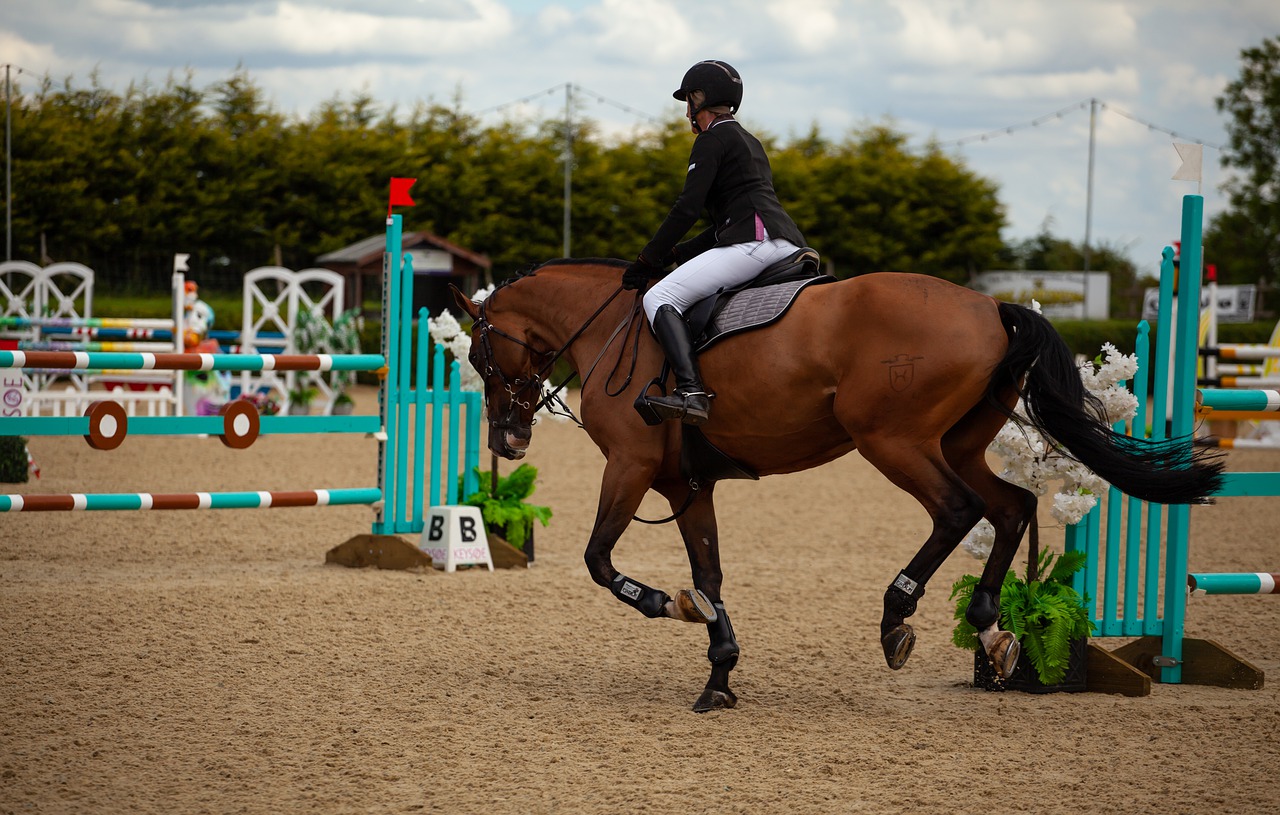
2. Takeoff
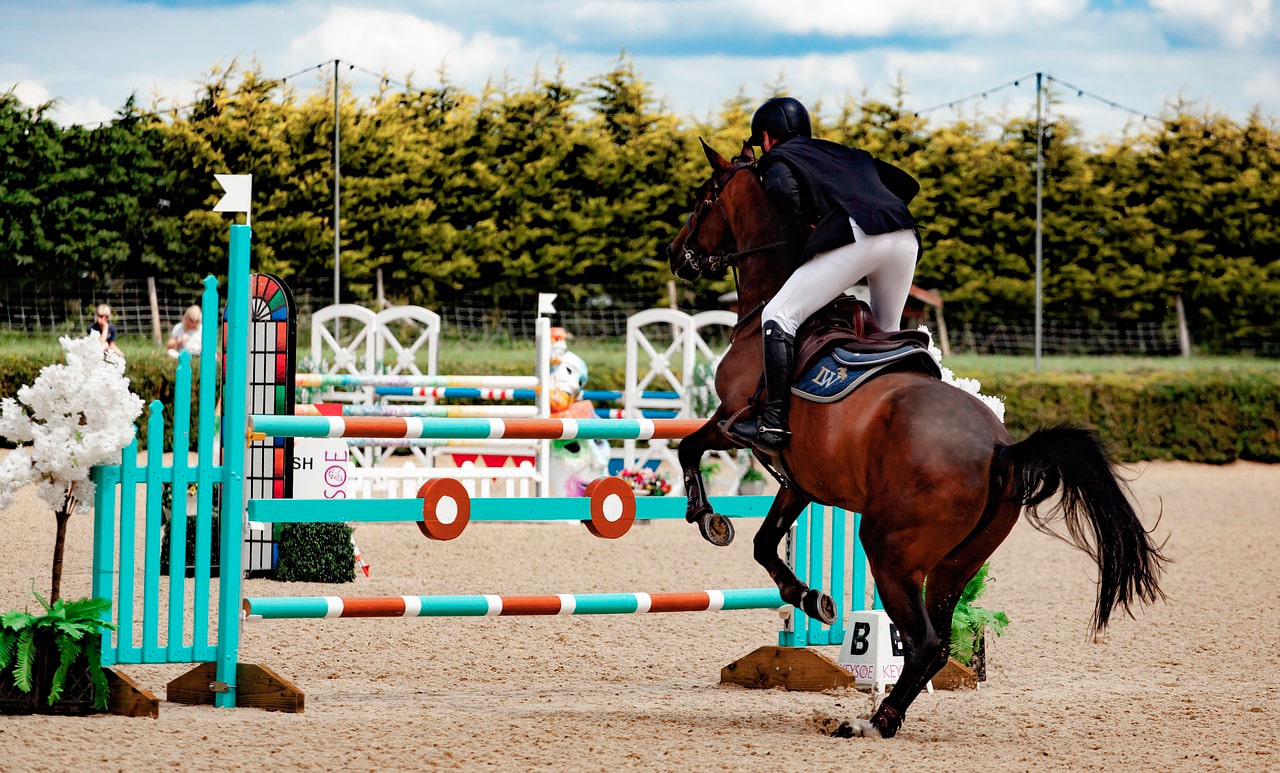
At this moment, the horse should arrive with a shortened stride, balanced on the front legs and with the hind legs tucked in and aligned under the horse's mass, and flexing the loin at the height of the lumbosacral joint.
At this moment the horse, which is collected, sits on its hindquarters, bending the hocks and the hands push on the ground, to initiate the vertical takeoff, making use of the shoulders.
Regarding the role of the forelimbs in the beat, in the sense of pushing against the ground to achieve elevation, there may not be a generalized criterion that this action of the hands is part of a beat, as some consider that this is due to the impulsion action of the hind limbs, but in my opinion, the action of the forelimbs contributes notably to the achievement of the objectives of the beat, especially to initiate the vertical component of speed, a criterion supported by several studies on the subject.
The hind limbs are the ones that push against the ground to send the entire weight of the pair upwards and forwards.
The moment the horse takes off from the ground, with its front legs, its neck stretches forward as far as possible, its shoulders rotate and its front legs fully bend, so as not to touch the obstacle to be jumped, and the hind legs are fully extended backwards, the moment the horse completely leaves the ground.
This is a crucial moment in which momentum and balance are the most important factors, as the height and length of the jump will depend on it, because once in the air, nothing will make it rise any higher.
If it does not lift and collect its front limbs, turning its shoulders fast enough, it can hit the obstacle with them, causing a fall.
3. Parabola, flight or bascule
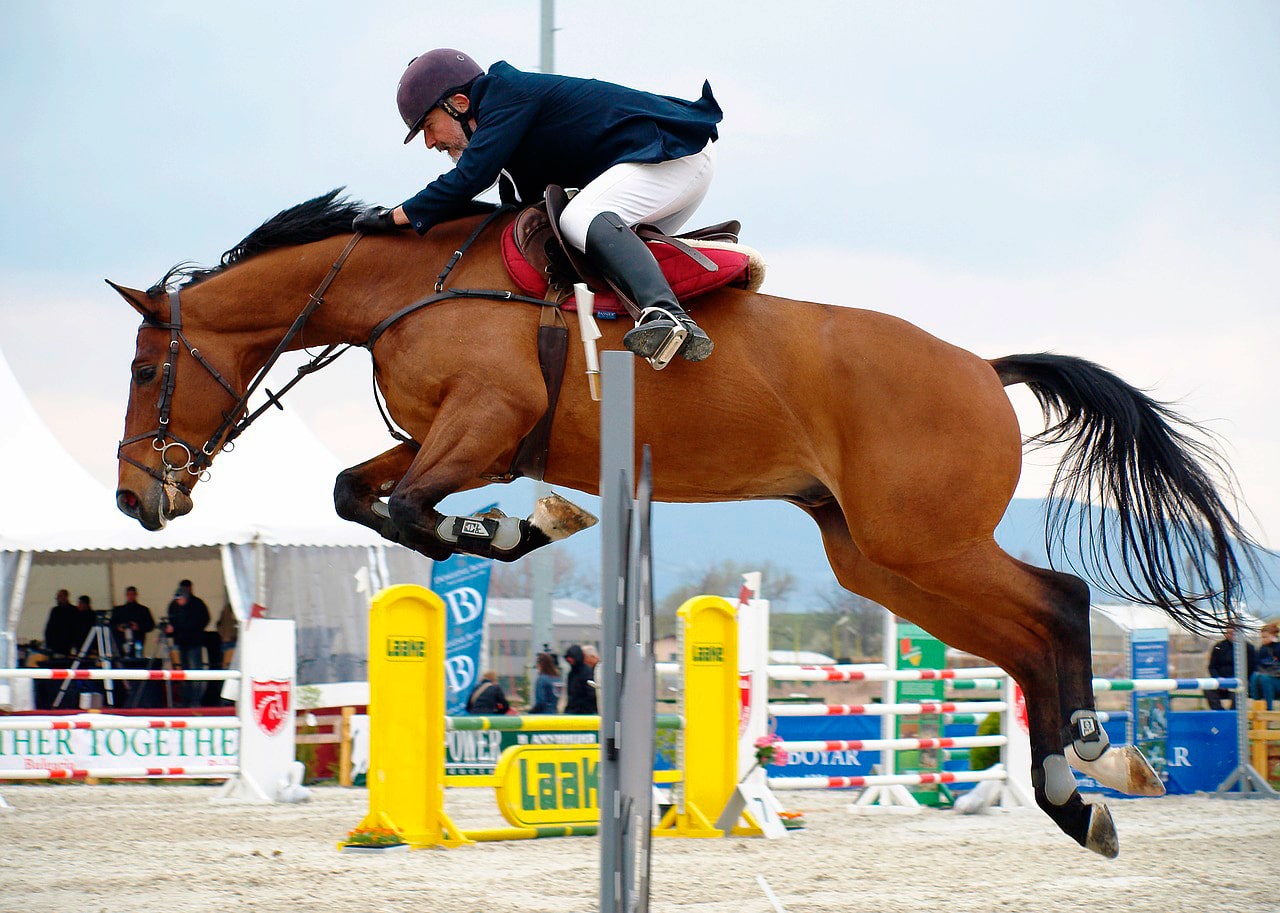
This is the moment when the horse rises upwards and forwards, thus forming a parabola over the obstacle. Its neck is extended forwards and downwards, its shoulders have turned allowing it to raise and bend its forelimbs to the maximum as it passes over the highest part of the obstacle.
The movement of the head and neck causes the nape and back to extend, helping the horse to balance its body.
As it advances along the parabolic trajectory, the hindquarters rise and the hind legs begin to bend.
When the hindquarters are passing through the highest point of the obstacle, the hooves or feet of the hind legs begin to flex and the hocks are fully flexed and raised, behind the hindquarters.
As the forelegs descend towards the ground, the back becomes flat, the lumbosacral joint, which had been flexed, closes, the neck is raised, and the forelegs are extended, stretching towards the landing point.
If the back is rigid or the neck is retracted, it impedes the rocking action, causing a very rigid jump.
This means that without a good action of the body swinging back and forth, the front legs can neither lift nor bend sufficiently, leaving the horse's hind legs very low and thus hitting the obstacle.
4. Reception or landing
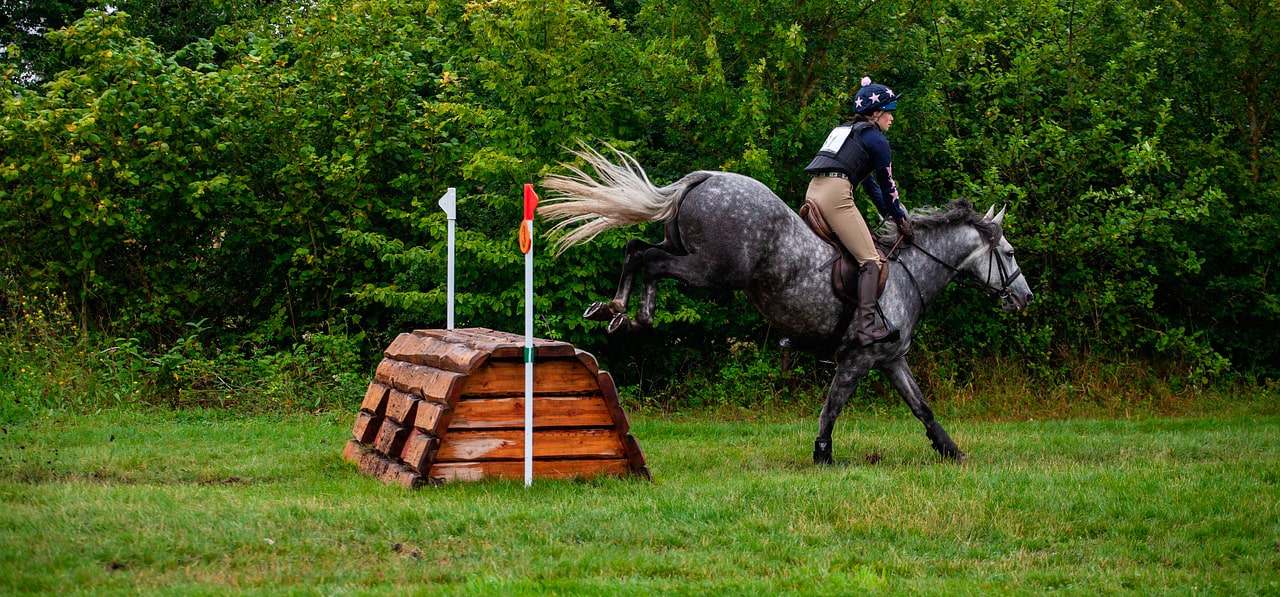
The landing takes place first on one of the extended forelegs and immediately afterwards the other leg lands. In this way the horse's body begins to turn forward, supported by the forelegs, which are then brought together and bent backwards, under the body, thus generating a period of suspension, before the first hind leg touches the ground.
When the horse's hooves or feet are firmly under its body, the forelegs bend and then extend to properly resume the gallop sequence.
The first jolt of landing is absorbed by the muscles and tendons of the shoulder, the hooves or hands of the forelegs, the pasterns and the joints of the forelegs.
The landing is correct when it is balanced, elastic and coordinated. On the contrary, if it turns out to be hard, unbalanced or uneven, it will also be hard for both the horse and the rider, and may cause injury to the horse. When a horse becomes tense it cannot dissipate the energy of the fall between its joints, that is to say it is not cushioned correctly and in this way it is more likely to make mistakes and even seriously injure itself.
The lack of momentum, added to poor balance, can cause a horse to fall heavily on its front legs, preventing or hindering it from resuming its canter, and in some slippery or very rough terrain, it can cause a fall.
Similarly, if a rider, for whatever reason, interferes with the horse, either because they fall behind the movement or pull on the rein, trapping the horse's mouth, during this landing phase, or in the subsequent recovery phase, it can cause the horse to lower its back and hindquarters prematurely, resulting in an almost simultaneous landing on all four limbs, which is very harmful to the horse's back.
5. Recovering from the canter
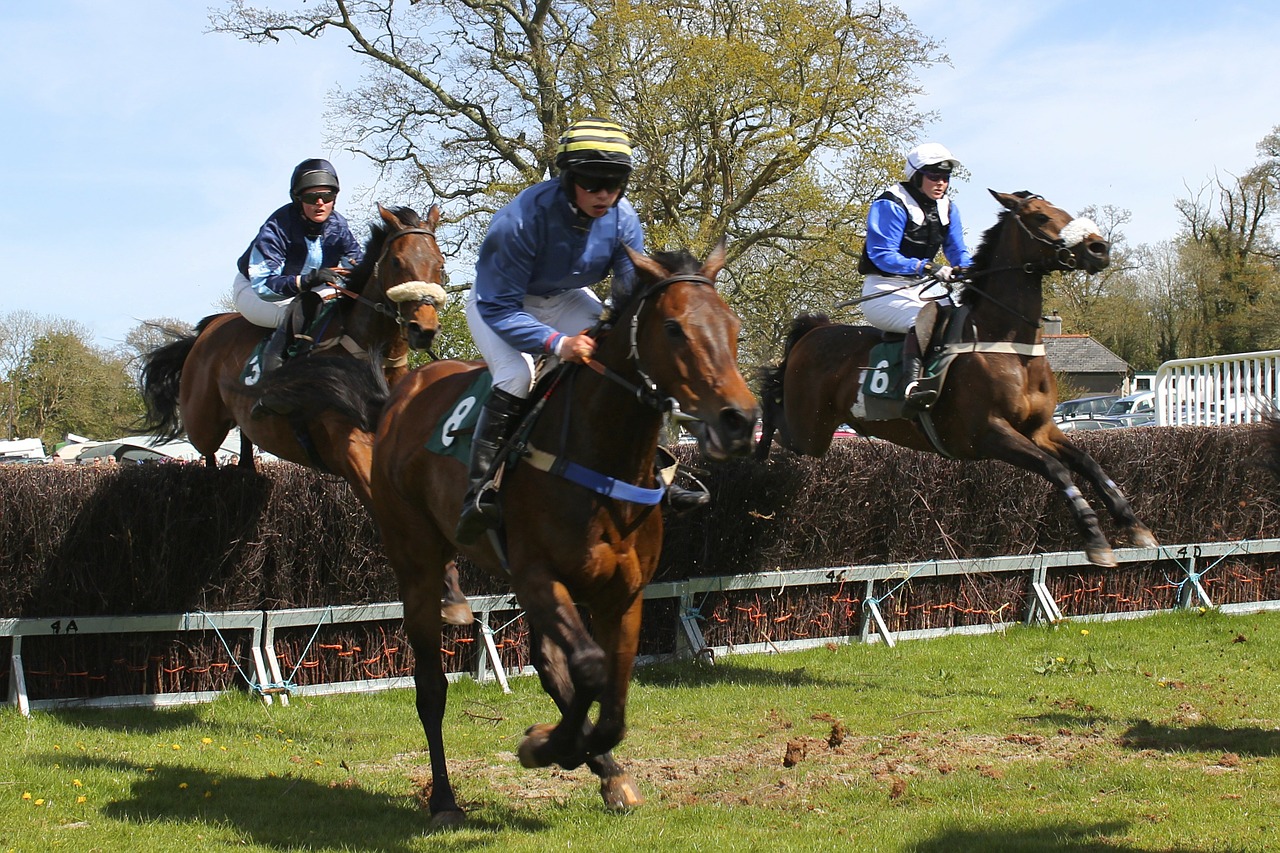
This is the moment when the horse regains the balance of a normal canter, and can continue at that speed.
When a horse jumps elegantly and lands with elasticity and in balance, its recovery is natural, almost effortless, and it manages to move forward comfortably.
The same goes for the rider; if they remain balanced and do not clash with the horse's movements, everything will be easier.
If the reception is bad, either due to stiffness and lack of balance, or to a lack of impulsion, it makes the recovery a great effort for the horse.
When this happens, we have a delayed recovery that causes the horse to slow down to distance itself from the obstacle, and also takes more effort and time for it to regain its balance and canter stride.
The state of the track can also have a negative influence on the take-off or recovery, causing the front and hind legs to touch, which can be very harmful for the horse.
How the rider should act in show jumping
Jumping over obstacles on horseback is a very rewarding sensation for those who like to ride, and it is also very enjoyable to do when you learn how to do it correctly.
I will tell you, in principle, that before you decide to jump, you must first learn to ride correctly, with the guidance of an experienced teacher and develop an adequate technique for walking, trotting and cantering with total balance, and also have trained the set of signals, both of legs and reins, to move with a certain comfort in the three gaits or ways of walking of the horse, as I said, Walk, Trot and Gallop.
Having said that, I would add that jumping can be dangerous and therefore you should protect yourself, at the very least, by wearing a protective helmet for your head, and if you can get a protective vest for falls, all the better.
Having completed the training mentioned above, and if you decide to learn show jumping, look for a qualified instructor to teach you the jumping technique and to select a horse that has already learned the jumping response.
Now I will give you a series of instructions to keep in mind for jumping. You can read them here, but the important thing is to practice them, always guided by your instructor.
Get into position
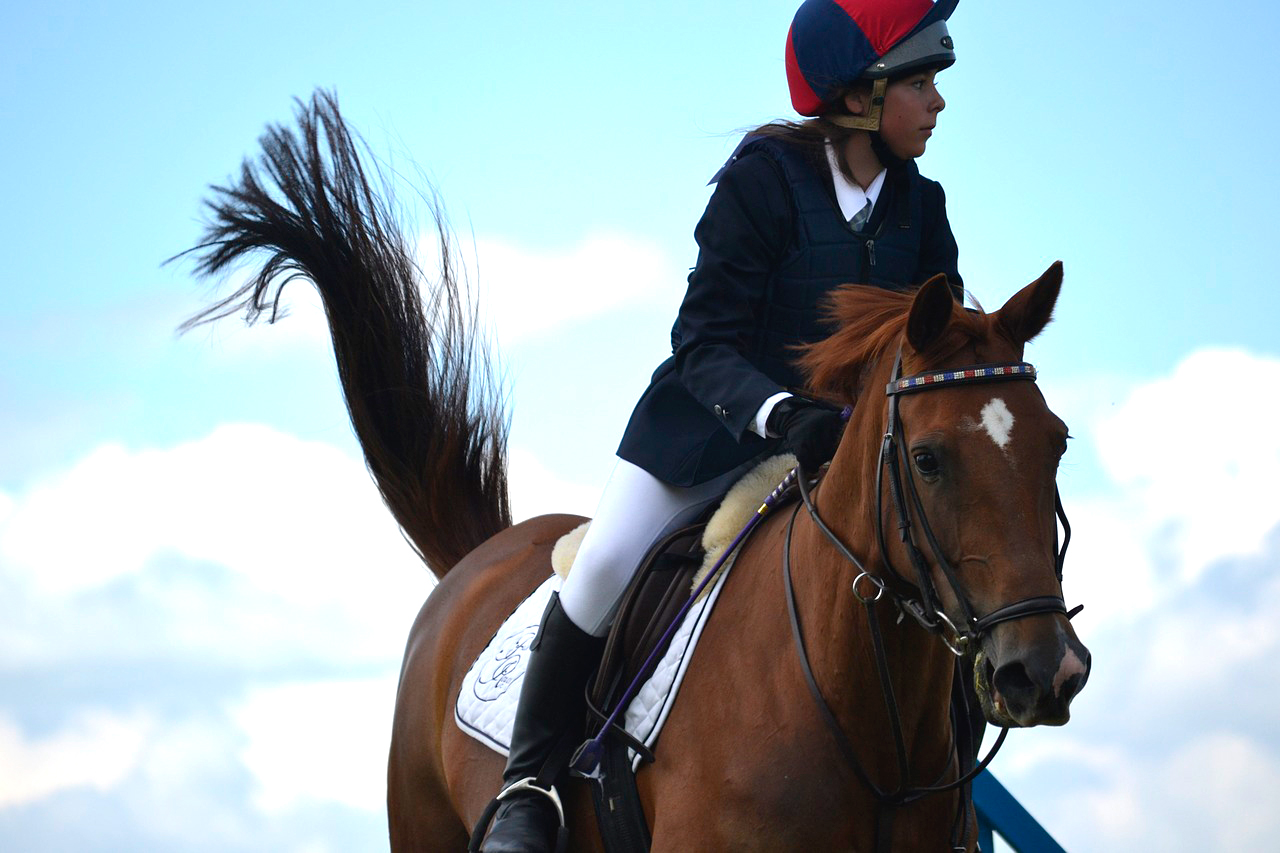
- Getting up from the saddle. The first thing to do, when you give the leg signal for the horse to jump and it starts to do so, is to get up from the saddle leaning on the two stirrups, and lean forward as you get up. For this, check the length of the stirrups so that they allow you to get up, leaning on them. It is necessary to get into position especially when the horse is about to move from the last stride of approach to the execution of the jump.
- Shift your weight. This action consists of transferring your weight to the horse's front legs. This transfer should be done naturally while you have gotten up from the saddle and leaned forward.
- Adjust the position of your legs. Don't make the mistake of riding in the aforementioned position, with your heels raised, but rather with your heels down to ensure your weight is on the stirrups, and you should also bend your legs slightly, to make sure they don't move backwards, which can encourage the horse to go faster and rush at the obstacle, losing its rhythm.
- Move your hands upwards. This means that you should move your hands forward over the horse's neck, leaving the place where you normally have them when you are riding. This action will allow the horse to stretch its neck and head while jumping, and ensure that you do not interrupt this movement with the rein in its mouth. It is important to anticipate, because when the horse jumps it launches its neck and head forward very quickly.
- Practice these recommendations beforehand. These comments, said or expressed in this way, seem simple, but doing so naturally is not easy, so it is important to practice these movements in advance, and not to jump without having done so. You can do it while you are trotting or cantering your horse, so that when you become familiar with the right position for shifting your weight forward, you will be in a position to perform the jump.
Performing the jump
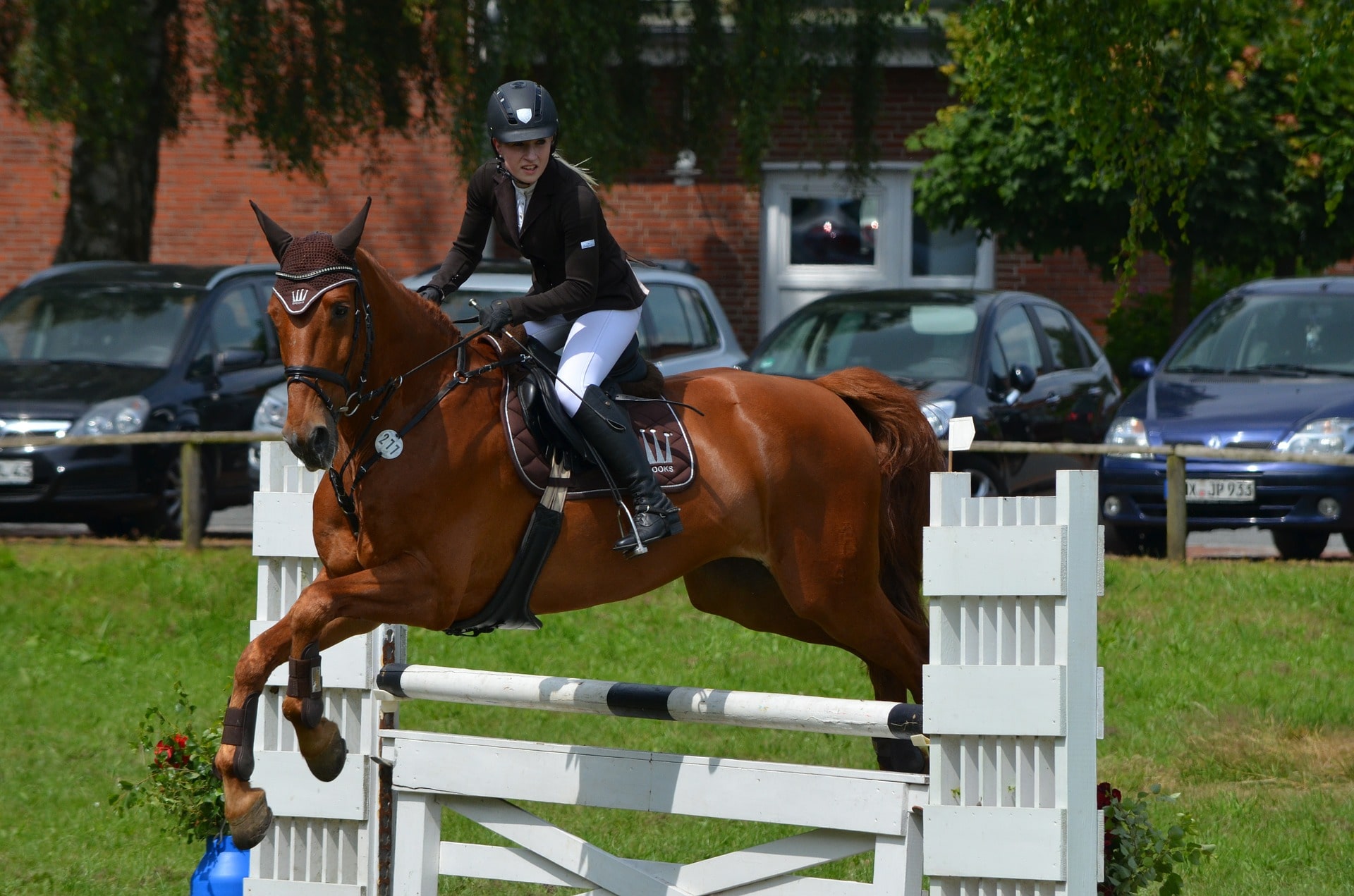
- Align the horse correctly. You must make sure that the horse is perfectly facing and centered on the obstacle to be jumped. You should not be at an angle to the obstacle, keep this in mind especially when you come out of a turn and have to jump. To do this you should look straight ahead and maintain the rhythm of the canter approach, in line in the correct direction, perpendicular to the obstacle.
- Support your weight on the stirrups with your thighs and calves. You should make sure that none of your weight is linked to the reins, and take the position we mentioned above, and make sure you keep your legs around the horse, to avoid falling, looking forward and not down.
- Increase your forward lean. When the horse is jumping, lean forward a little more. This helps to maintain the horse's balance while shifting your weight, helping the horse in the parabola of the jump.
- Return to normal position. As the horse begins to descend from the jump, return to the normal position while the horse lands and regains its normal gallop speed. During this passage you should maintain contact with the reins and the horse's mouth, but without preventing it from balancing itself. Once the horse has regained its canter, you can move towards the next obstacle, making sure you approach it head-on and not at an angle, always looking straight ahead.
This concludes part two. Hopefully we have been able to provide valuable information for understanding the mechanics of jumping that you can apply in practice.
In the third part of this series you can read about the principles of Learning Theory for training show jumpers.
Continúa leyendo
Este artículo es exclusivo para miembros.
To view this blog, please complete the form
Access full content
Comments (0)
No comments yet.


Comments
Leave your comment