
10 Topics to learn about Show Jumping – Part III
Introduction to the principles of learning theory
In this third part of the Show Jumping series, we talk about the theory and scientific methods of learning that can ensure the success of training and the results of show jumping horses.
We said at the beginning of these articles that we would talk about how to train a horse to jump, based on the Principles of Learning Theory.
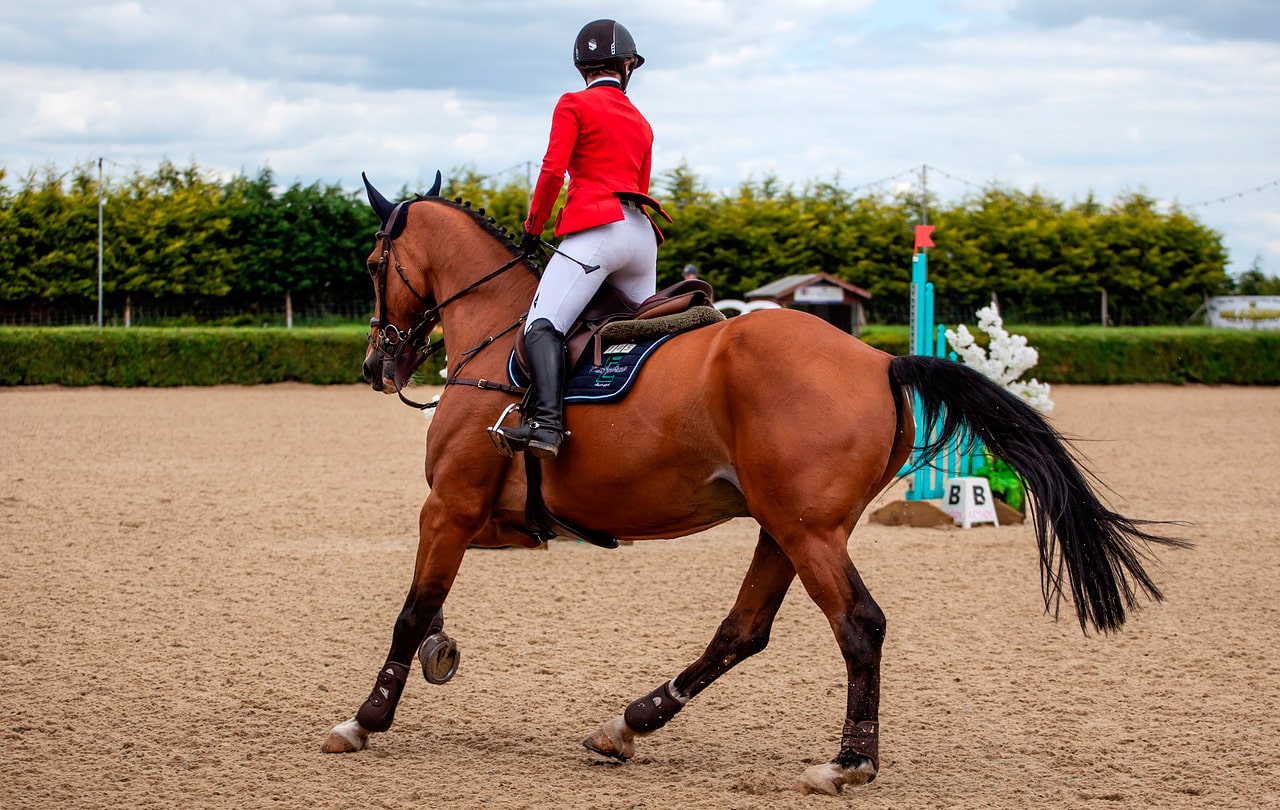
Here I am going to express some concepts, in a very summarized way, referring to the Principles of Learning Theory, and then go fully into their practical application, with regard to training a horse to jump.
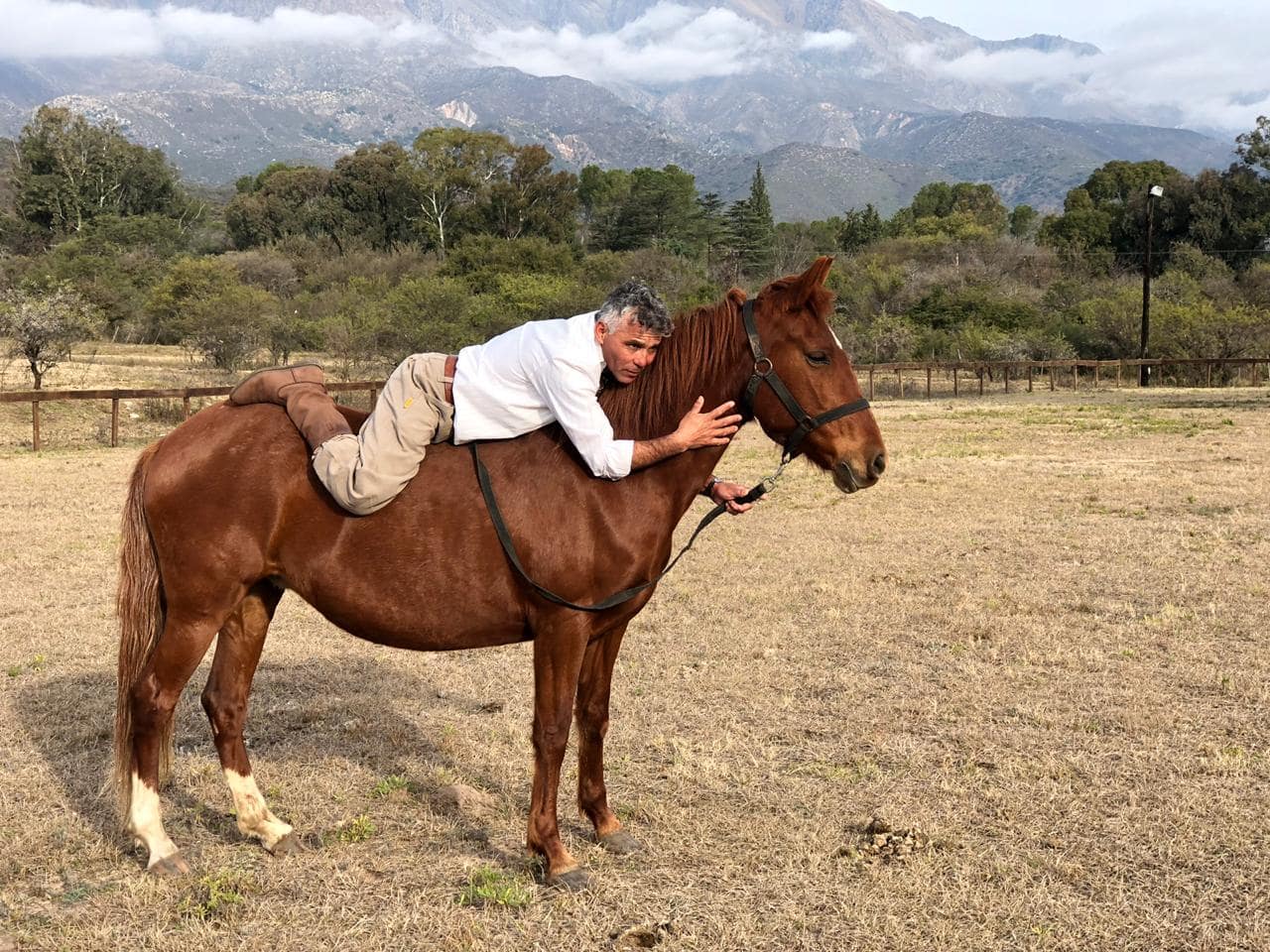
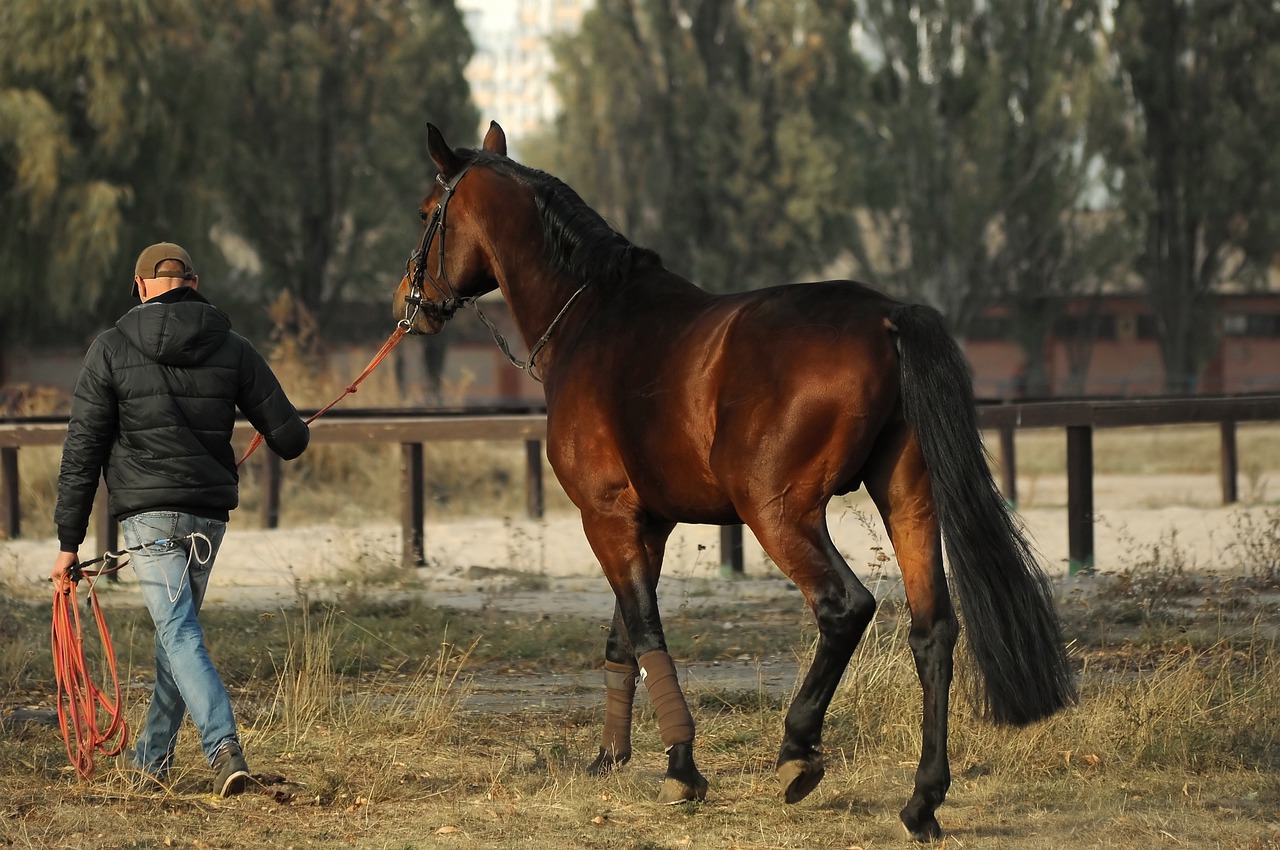
I should clarify that at Ampascachi, we train our Peruvian Paso horses for our equestrian routes. As part of the dressage and training program of signals and responses, and given that jumping is a natural action for horses, we train them to jump small heights, in order to have all the possible movements of a horse under clear control of the stimuli.
In addition, as a way of getting used to obstacles that may be present in the countryside such as fallen logs, streams of water, etc., in which case the rider can choose to make the horse jump or look for another place to pass, but ensure that the horse does not disobey.
In my opinion, before training a horse to jump, we must have it fully trained to be ridden and respond to the basic signals of walk, trot, short and long canter, and turns on its haunches and hindquarters, in a safe manner, when these are indicated by the rider, both with the legs and with the reins.
Basic principles of learning theory
Horses, like other animals that can be trained, are born with neural circuits designed to carry out the instinctive or impulsive behaviors that have allowed them to survive and therefore they only learn those behaviors, already marked by evolution.
The horse will know how to gallop or trot or jump on its own, and will learn to show flight if it gets scared, etc.
What we horse trainers or handlers are really left with is the possibility of shaping the manifestation of these behaviours, by thoroughly training the signals that motivate them.
Animals can learn a new behaviour or modify an existing one.
In order for the horse to learn, and therefore for us to teach it something, it is necessary to establish relationships between stimuli and responses, in such a way that a stimulus produces a certain response.
The stimulus can be the environment or it can be produced by the trainer.
Some horses are more easily frightened than others, but although there may be a genetic predisposition to behave in one way or another, through learning we can improve these situations until we achieve stable horses.
If a horse gets scared and tries to get away from something and we let it practice this behavior, it can quickly develop a habit that it repeats faster and faster until it ends up standing on its hind legs or starting to buck.
If the horse does this, it will have incorporated into its phobia an acceleration of its limbs, which is a manifestation of the flight instinct, which reinforces the response to the stimulus produced by the aversion or fright experienced at the beginning.
This is why it is so important to prevent the manifestation of the flight instinct. We could almost say that one of the keys to training is knowing how to stop a horse that is trying to flee.
Finally, we would say that this sensitivity, between the stimulus-response relationship, is what allows us to train a horse effectively, of course, if we understand it and learn to use it correctly.
Learning theories were studied by scientists such as Pavlov, Watson and Skinner, who, following the scientific method, observed the acquisition of behavior in animals and humans, and thus arrived at the study of behavior.
In animals this is called ethology (animal behaviorism) and in humans it is called psychology (human behaviorism).
Learning
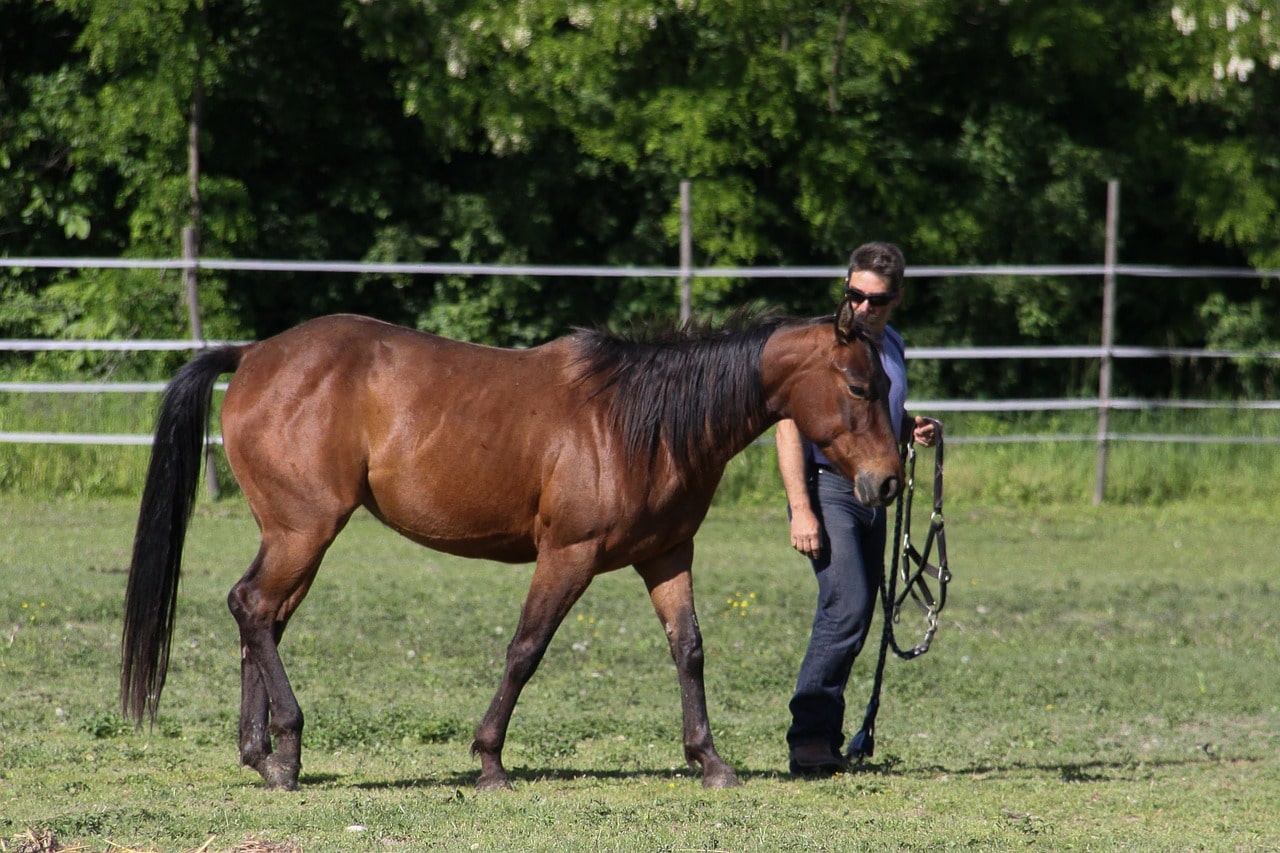
The horse accepts the rider on its back through this process, as well as numerous other circumstances: the girth, the saddle, the environment in which it finds itself, etc.
In habituation, in the most common form of it, nothing is done for the horse to learn, it is not reinforced either positively or negatively, it simply gets used to it.
We should get horses to get used to new situations by conditioning them thoroughly and repeatedly so that they respond to certain signals such as those to stop or to go.
This conditioning includes two types of learning:
Operant conditioning: the horse responds to signals given by the human, on foot or on horseback, by reinforcing the behavior by releasing the pressure, or giving a reward, both acts reinforce the correct response. Classical conditioning: transfers these learned signals to weaker or completely new ones.

The synchronization of signals
It is essential for the horse to be predictable, to get it to respond to signals. For this, the horse has to get used to the stimulus that produces a correct response from it.
The signals must be clear and the response must be given to a single signal, that is to say, we should never give more than one signal for a response and we should not remove the signal before the desired behavior occurs or maintain it for longer if the desired behavior appears.
If we do not do this, it will cause conflict for the animal.
The acquisition of habits
A horse is said to have acquired a habit when it gives learned responses more automatically.
Surely this is because it no longer offers alternative trial-and-error behaviors.
When more stable behaviors are established, unique nerve connections have been established for each response
The formation of habits is based on numerous repetitions, depending on the desired response, so that these become totally stable.
Operant Conditioning
Operant Conditioning is the most important form of training, using this technique: “The horse learns that the manifestation of a behavior is followed by a reward”, e.g.: The release of pressure for a certain behavior.
THERE ARE DIFFERENT WAYS TO OBTAIN A RESPONSE BY OPERANT CONDITIONING.
| Type of Reinforcement | Process | Description | Example | Observation |
Operant conditioning by negative reinforcement in horses is based on the following:
- Only the desired behavior results in the release of pressure.
- The first pressure applied should be light, as it will later become a signal.
- The pressure should increase progressively and should only cease when the desired behavior appears.
- That when applying intermittent pressure, such as with whips or legs, there should be no pauses longer than one second, so that the horse does not perceive the pause as reinforcement.
- The removal of the signal (pressure): it is removed almost instantly with the beginning of the response. This is very important, as the horse has a poor short-term memory and if the release is not practically instantaneous, it will not link the release of the pressure with the stimulus of the pressure.
The release of pressure is what conditions the response.
In other words, we could say: Pressure stimulates the response and the release of pressure trains it.
When a signal produces the desired response, permanently and constantly, we say that we have that behaviour under the control of the stimulus.
This response must occur as a result of the signal, purely and exclusively.
In the case of horse training, most of the behaviors desired by the rider are related to the limbs. That is why we say that a horse is well trained when the rider has the horse's limbs under stimulus control.
For learning theory, the horse's response to the pressure exerted by the rider's signal is what reinforces learning.
Therefore, the way in which trainers and riders apply pressure largely determines the future of the horse.
When the mechanism of pressure and release is applied correctly in training, no conflict is allowed to arise.
All types of training can be achieved through Pressure-Release, that is, we repeat, through Negative Reinforcement.
The primary responses that are trained are:
- Moving forward, accelerating or lengthening
- Stopping, braking, shortening or backing up
- Moving the shoulders to the right (turning)
- Moving the shoulders to the left (turning)
- Moving the rump to the right (yielding)
- Moving the rump to the left (yielding)
All these responses will be trained, with the concept of modeling it, recognizing the following qualities or stages of perfection of the response:
- Basic Attempt
- Synchronization
- Speed and Rhythm
- Direction and Straightness
- Connection and Placement
- Ability to Adjust
- Verification
Each of the responses will be trained separately, as will the qualities, always bearing in mind not to mentally exhaust the horse, so the work, until uniformity of responses is achieved, will be done for no more than 20 minutes a day and progressing as long as the horse does not decline in its responses, and will be worked on six days a week.
We must always keep the horse relaxed, so that the learning conditions are optimal and with the aim of getting it to generate uniform responses to the light signal and for these to become habits through the mechanism of repetition.
Everything we want to do must respond clearly to this principle.
This concludes the third part of the series on show jumping.
I hope you have found this introduction to the principles of learning theory useful and that you will continue reading the fourth part in which we try to focus on the practical application of these principles for the training of showjumping horses.
Continúa leyendo
Este artículo es exclusivo para miembros.
To view this blog, please complete the form
Access full content
Comments (0)
No comments yet.



Comments
Leave your comment