
Crossing the Andes on horseback from Argentina to Chile
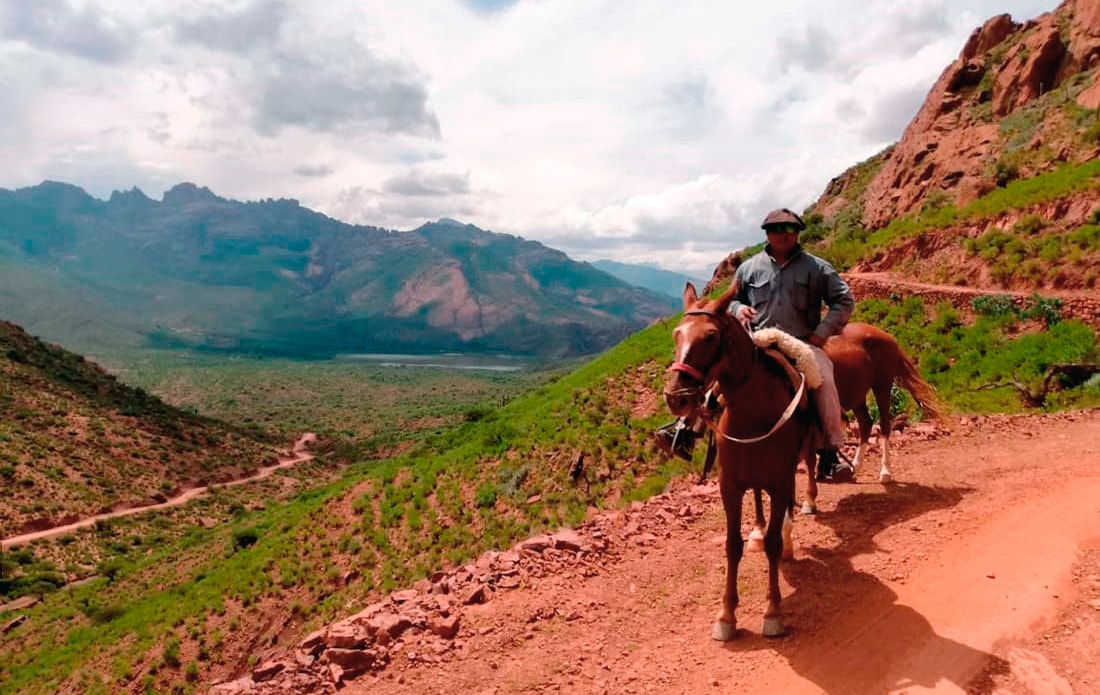
Crossing the Andes mountain range is a long and hard journey through a stunning natural environment that places us in the midst of immensity itself.
It is considered superior to a horse trail. It is a wonderful and unique horseback expedition with serious challenges.
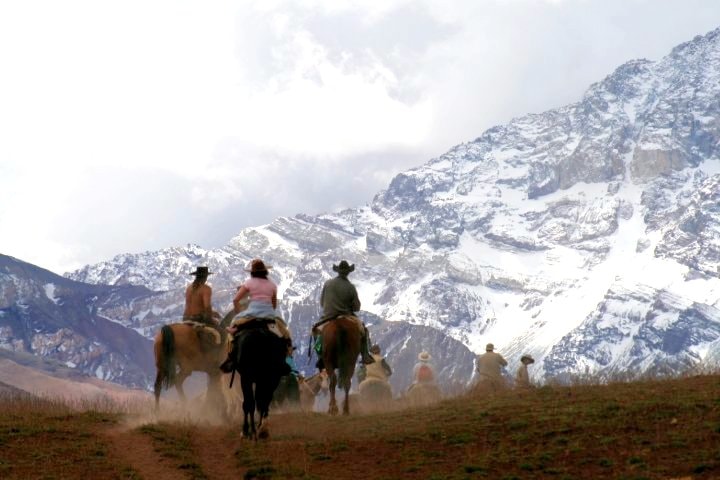
It is the vision of the snow-capped mountains, the valleys, rivers and waterfalls, the inclement weather, all in front of us alone in the middle of this immense mountain range.
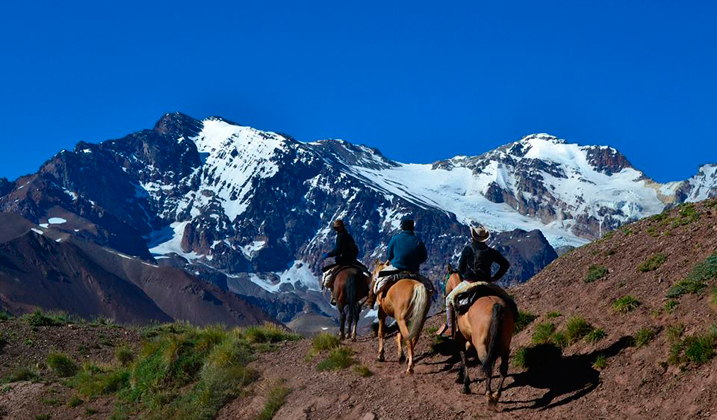
The challenge of crossing the Andes on horseback
The Andes is a touch of adventure and effort, beauty, solitude and magnificence, which means spending 6 or 7 nights sleeping in the open or in tents, riding horses for up to 7 hours a day on some occasions, enduring the harsh climate, appreciating what the horse means in those circumstances, and what it meant when an entire army, under the command of General Don José de San Martín, crossed this mountain range to initiate one of the most important emancipatory exploits in the history of the Americas.
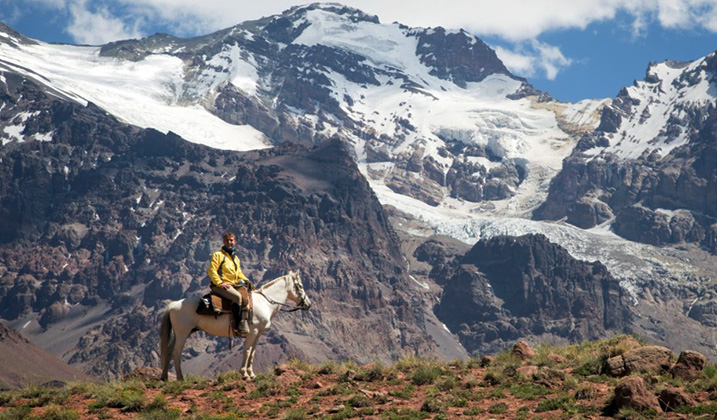
The Miracle of the Andes
Let's not forget that in those mountains, in October 1972, a plane crashed with a young rugby team from Uruguay on board.
Those who survived the impact, the cold and subsequent deaths due to injuries and snow avalanches were lost for more than 72 days, with no one able to find them and having been given up as definitively missing. Three of them managed to get out of the mountain and into a valley, and only then make contact with civilization.
This episode, known as The Miracle of the Andes, is one of the most impressive examples of survival of all time.
Horseback expedition
All of the above is the Andes mountain range, and crossing it on horseback, with the security provided by the providers of these services, is and will undoubtedly be an experience you will never forget.
For all the challenges that crossing the Andes on horseback can present to riders, we can define these equestrian routes as HORSEBACK EXPEDITIONS.
In this article we will show you some facts about the historic crossing led by General José de San Martín, together with information about the places where you can cross the mountain range. In addition, we provide information - in our opinion - about the best companies that provide this service.
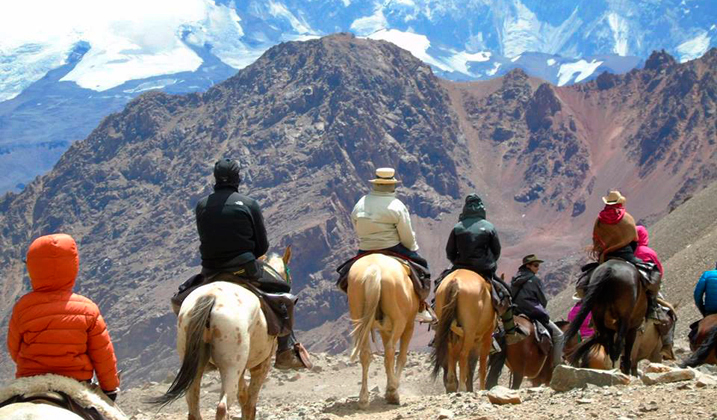
Crossing the Andes in history
At the start of the expedition we cannot help but remember the historical question, not only evoked by the Argentines who are making the crossing but also by the foreigners, because as soon as they arrive, the guides and coordinators of the different providers bring them up to date with what that feat was, which they themselves are about to re-enact, only in a slightly more comfortable way than José de San Martín had to be.
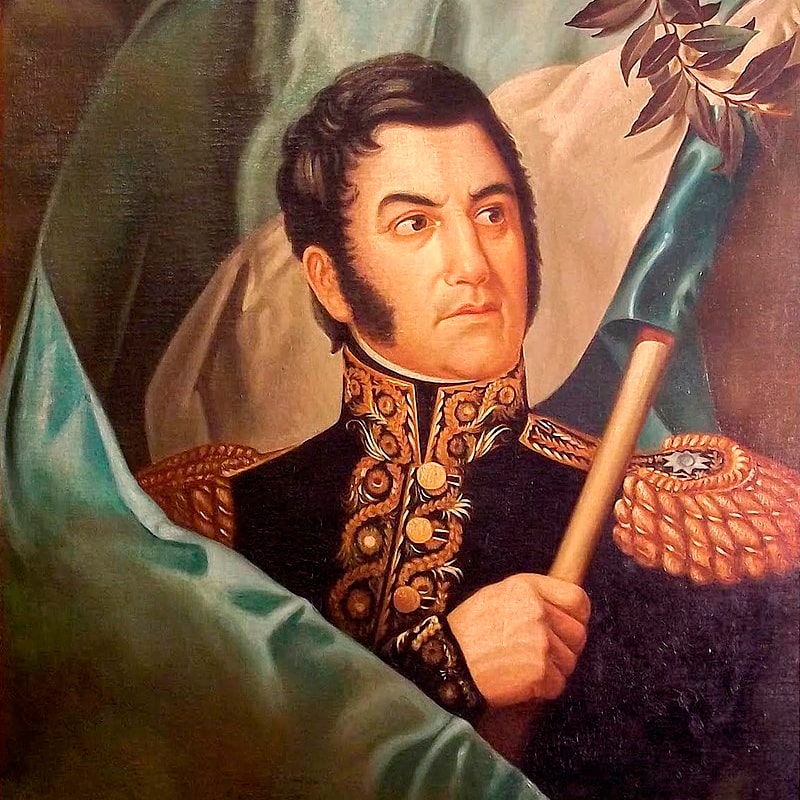
San Martín is a recognized figure in world history, and is studied as a strategist in all the military academies of the world.
The army that would cross the Andes to begin the military campaign that would consolidate the independence of Argentina and liberate Chile and Peru was ready to begin the march on January 12, 1817, heading for Chile, more than 800 km away, taking approximately just over 25 days, as on February 5, 1817, it was in Chilean territory.
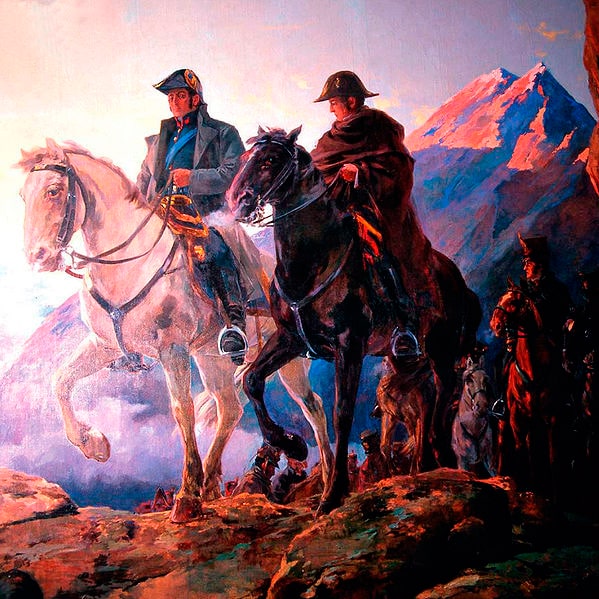
It was divided into two main columns, one commanded by General Soler, together with O'Higgins, who would cross through the Paso de los Patos, and the other, commanded by Colonel Las Heras, marched through the Paso de Uspallata, with the bulk of the heavy artillery, which could not pass through Los Patos.
Both columns totaled 3,500 soldiers, 100 baqueanos (local guides), 1,600 horses, 10,000 pack mules and 600 cattle to slaughter along the way.
This, added to all the military and logistical equipment that had to be moved, gives us an idea of the scale of the feat, and the difficulties that would arise along the way.
To illustrate the latter, suffice it to say that half of the horses and 3,800 mules arrived in Chile, that is, only 38% of those that left. These two figures show the harshness of the journey.
As for the equipment transported and the food they had, we will mention some figures: 22 cannons, 1,129 sabers, 5,000 rifles with bayonets and pistols that only the chiefs and officers carried, 40 tons of charqui (dehydrated meat with salt), corn biscuits, wine and fiery water to overcome the cold.
These are some of the figures that, as we said, give an idea of the scale of the feat, above all the effort and logistics involved, because as well as the above we could mention that they carried howitzers, grenades, carts of shrapnel and bullets for them, cartridges for the rifles, tents, fodder for horses and mules, etc.
Of course, the rider who decides to undertake this extraordinary experience will find it much more comfortable than those soldiers in 1817, but no less exciting.
Most of the programs offered by the providers of this adventure follow the same route, which in those days was used by the liberating army, crossing the mountain range through the same mountain passes that San Martín's army passed through.
The mountain passes to cross the mountain range
There are different mountain passes where you can cross the Andes on horseback.
All the horse riding programs on offer start from the city of Mendoza, which is well known worldwide, not only for the beautiful mountain landscapes and valleys that surround it, but also for its main activity, which is wine production, and it is very interesting to visit its wineries.
Mendoza is located in the west of Argentina at the foot of the Andes, 1098 km from the city of Buenos Aires, the capital of Argentina. The journey of 1098 km can be covered by land in 13 hours along National Route 7.
There are around three flights a day from the city of Buenos Aires, as well as flights from other destinations such as Córdoba and Neuquén in Argentina, São Paulo in Brazil and Santiago de Chile.
The places where you can experience crossing the Andes on horseback are linked to the historical crossing made by San Martín's army, and there are six of them:
- The route known as “Los Patos”.
- The road called “Uspallata and the Mendoza River Valley”.
- The route through “Talacasto, Pismanta” and crossing the mountain range through the “Paso de Gauna”.
- The crossing through the “Come-Caballos” pass.
- The road through “El Portillo” and the crossing through the “Piuquenes” gap.
- The crossing through the “Paso del Planchón”.
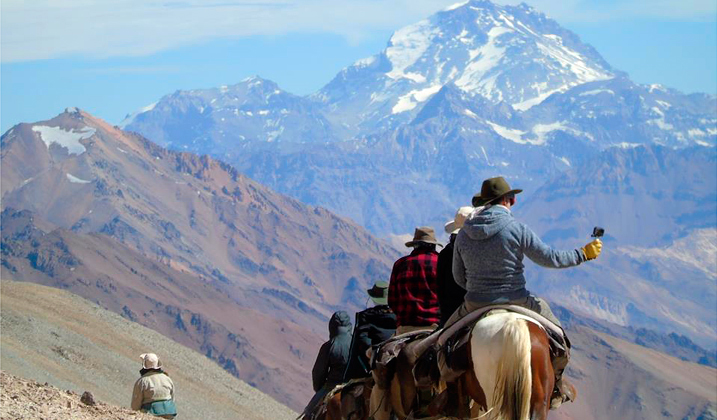
Another of the activities that are carried out before starting the crossing is a visit to the town of Barreal and a trip to the surrounding national parks such as Leoncito Park.
The equestrian route awakens the most adventurous spirit in riders, as it presents the challenge of crossing these magnificent mountains from Argentina to Chile on horseback, while experiencing strong emotions, dealing with various types of weather, crossing rivers and ascending high mountains.
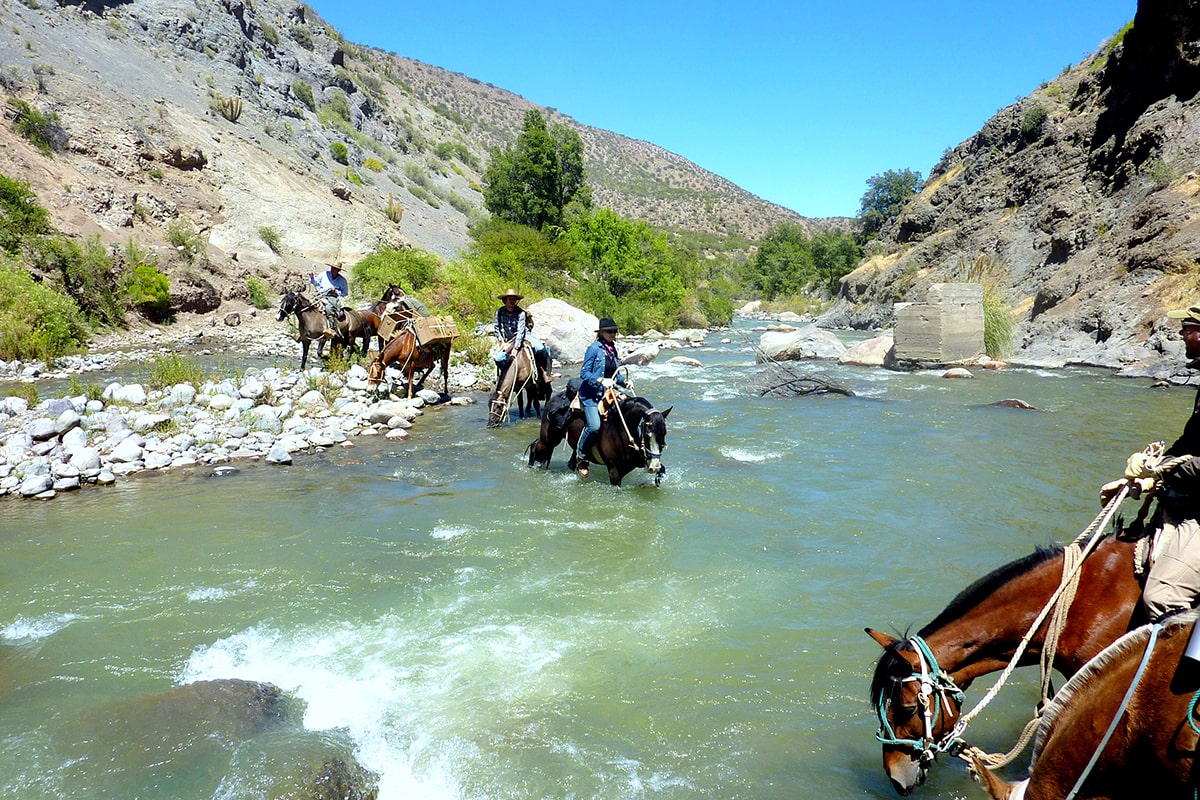
The horseback adventure begins in Las Hornillas, located at the foot of the Cordillera in the province of San Juan (Argentina), and then heads towards the border with Chile, spending two and a half days on the Chilean side, which has beautiful places until reaching Los Patos.
This journey is made with two types of horses: on the Argentine side, the ride will be made with Peruvian Paso Horses, which are characterized by their smooth gait and for covering great distances without tiring the rider.
Once at the border with Chile, for health and safety reasons, the horses are changed. There you will have the opportunity to ride the magnificent Chilean Criollo horses.
We invite you to see the details of this alternative of the Andes Mountain Range on Horseback from Argentina to Chile (10 days and 9 nights), designed for adventurous riders.
Trekking Travel
Trekking Travel is the provider that offers the most alternatives for horse riding routes, with respect to the experience of crossing the Andes mountain range on horseback and horse riding in the areas surrounding Mendoza, with variations in duration, for the latter, from 1 to 4 days.
A very important fact about this provider is that they have their own horses, which are very well cared for and tamed, for a safe and reliable service, especially for the crossing of the Andes.
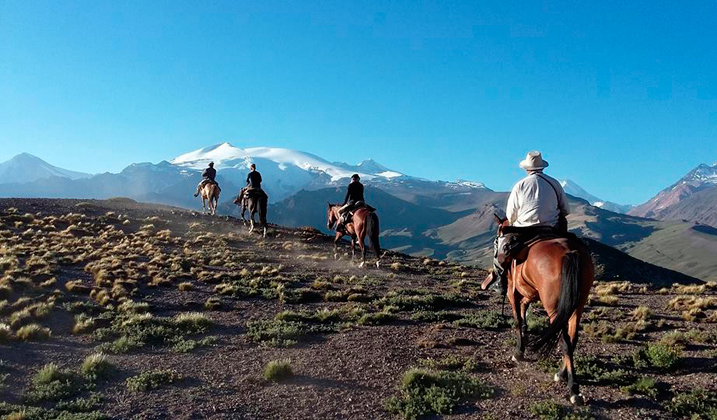
The scheduled routes have it all: beautiful scenery, the unique thrill of riding in the conditions imposed by the mountain range, and the chance to recall historical events.
- Crossing the Andes via the Piuquenes Pass, which takes 6 days with a passage to the Chilean side.
- Crossing the Andes via the Valle de los Patos, an alternative of 10 days returning via the Argentine side and another of 11 days descending via the Chilean side.
- Paso del Planchón, an expedition that takes place entirely on the Argentine side and lasts 8 days.
These are the programs related to crossing the Andes, and the Trekking Travel team, under the direction of Pablo Alejandro Champagna, will make you live a wonderful experience.
Information on the programs mentioned and general conditions are accessible on the company's website: www.trekking-travel.com.ar
Cabalgatas Cordilleranas
Cabalgatas Cordillerana is a supplier that, led by Javier Mauricio Vargas, a dedicated and meticulous organizer, coordinates both the logistics and the constant improvement of each program, based on the details of the program itself. Together with his muleteers Nino, Ramiro, Cesar and Jorge, men on horseback and connoisseurs of the Andean territory like few others, he offers an experience, such as crossing the Andes on horseback, in a professional and personalized way, to experience unique emotions. Facing the Andes and crossing them on horseback, in the midst of an immensity of landscapes of all colors, is an unforgettable adventure.
Cabalgatas Cordilleranas has a number of programs. They are all very interesting, of which we will only mention two here:
- Crossing the Andes on horseback - Paso Piuquenes. This program reaches the border with Chile and descends on the Argentine side and lasts 7 days. It does not offer a program that descends on the Chilean side.
- Cabalgata Avión de los Uruguayos (Horseback Ride Uruguayan Plane). This is a very attractive and exciting program because it takes us to the Valley of Tears, a place very close to the border with Chile, where the wreckage of the plane that crashed in 1972 is located, and allows us to pay tribute to the memory of the victims and the courage of the survivors, lasting 4 days.
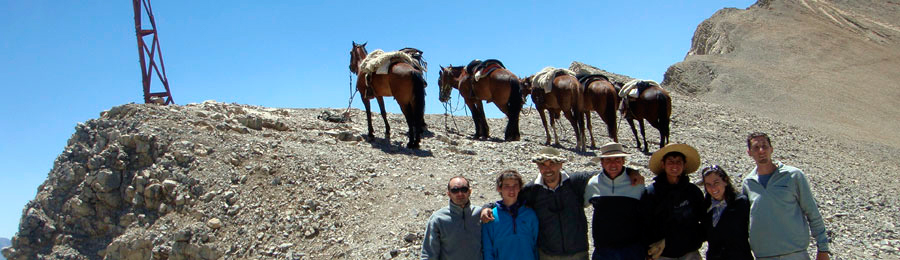
Crossing the Andes with Cabalgatas Cordilleranas
Cabalgatas Cordilleranas has several other programs of varying lengths that offer many possibilities for horseback riding routes, with a high level of safety for the experience of riding in nature.
For more information and to learn more about this provider's programs, visit the company's website: http://cordilleranas.com.ar
Cabalgatas del Alma
This is an important provider of horseback riding and the expedition of the crossing of the Andes, since the organizer and director of this equestrian tourism company, Diego Díaz Guiñazu, had been traveling since he was 9 years old, together with his father, to all corners of the foothills valleys and the trails of the great mountain range.
For more than 20 years he has been practicing Equestrian Tourism with the crossing of the Andes and with other horseback rides, which he organizes from the ranch that his family owns in the department of Tunuyán, Los Arboles district.
The crossing is made alone up to the border with Chile at the Piuquenes Pass at 4,000 meters above sea level after crossing the Portillo Pass on the Argentine side.
Something important about this service provider is that it has its own horses, which have been tamed and are kept trained, so as to have calm horses that respond to the help or signals that different people can give them, and thus try to guarantee the safety of the crossing.
This is a very important detail in the providers of these services.
Cabalgatas del Alma is a company that, due to its professionalism in customer service, with a warm and humble approach to meeting the needs of its guests, lives up to its name: “Cabalgatas del Alma”.
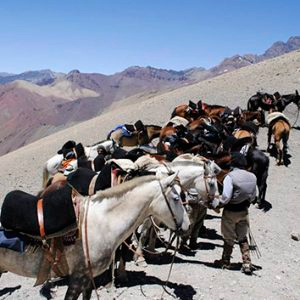
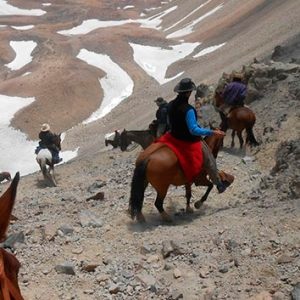
We mention their two main programs, in our opinion, in order to inform the reader about the subject of this article, which is crossing the Andes on horseback. They are:
- Crossing the Andes on horseback. This is a six-day program that takes you to the border with Chile and then down the Argentine side, including a trip to the foot of Cerro Mesón in San Juan, which is 5,500 meters above sea level and has a huge ice wall.
- High mountain horseback riding. It is a three-day tour that starts at the Guiñazu ranch and takes us to Real de Dr. Scarabelli, Portillo Argentino. It is a short but intense adventure
Regarding this point, we should say that each company providing the service provides certain items and equipment or not. Therefore, the traveler should consult with the company they hire to find out exactly what things they should bring for the trip.
I should point out that none of the companies mentioned here require a protective helmet, something that I advise travelers to use, at least while riding, as this is an important safety measure required by most insurance policies and regulations around the world as an essential element, among other things, for riding safely.
The equipment list for the expedition
For head and neck
- Wide-brimmed hat (protective helmet): with a chin strap to keep the wind from blowing it off.
- Dark glasses: as dark as possible with a grip strap to prevent them from falling off.
- Scarf: made of thread or cotton to protect the neck. It can be a tube scarf.
For the torso
- Short-sleeved T-shirt: Not for riding!
- Long-sleeved T-shirts or shirts: These protect us from the sun during days out on horseback. Light colors. Preferably synthetic, they dry faster (sweat or rain).
- Thermal T-shirt: “First skin”, they help to get through the cold of the night and in case of snowfall.
- Lightweight coat: wool jumper, not too thick cotton or fleece.
- Warm jacket: preferably lightweight and waterproof.
- Windbreaker: lightweight, the same waterproof jacket can be worn.
- Rain gear: preferably trousers and jacket, it is advisable to have a hood.
Legs
- Comfortable trousers: take 2 pairs. We recommend gaucho-style shorts or cargo-style trousers and thermal underwear such as long johns or leggings. Do not wear jeans as they are hard and chilly in the cold.
- Comfortable underwear: preferably cotton and with soft seams.
- Leggings for riding.
Feet and Hands
- Gloves: for riding. Do not wear work gloves for skinning.
- Socks: cotton or wool. Or technical socks for the mountains.
- Shoes: sturdy (trekking type). We do not recommend boots because they may not be comfortable depending on the type of stirrup you have to use on the saddle.
- Other footwear: we recommend bringing other, more comfortable footwear for rest periods.
Equipment
- Sleeping bag: we recommend -10° (minimum). We do not recommend basic camping sleeping bags.
- Mountain hat: made of yarn or cotton for sleeping at night.
- Water bottle or “Camel Bag”: or technical bottles for this use. Guarantee 2 liters of water. We do not recommend carrying common plastic bottles.
- Prescription medication: bring the necessary amount for the duration of the Expedition.
- Sunscreen (+30): for the body and lips (No cocoa butter).
- Eye drops: for people who are sensitive or allergic to dust.
- Flashlight: miner's type and/or small hand flashlight and batteries.
- Personal hygiene items: baby wipes, toothbrush, toothpaste, soap in a soap dish, small/medium cloth towel, toilet paper. We recommend “baby” wipes for cleaning at physiological moments, as well as for personal hygiene.
- ID card or passport.
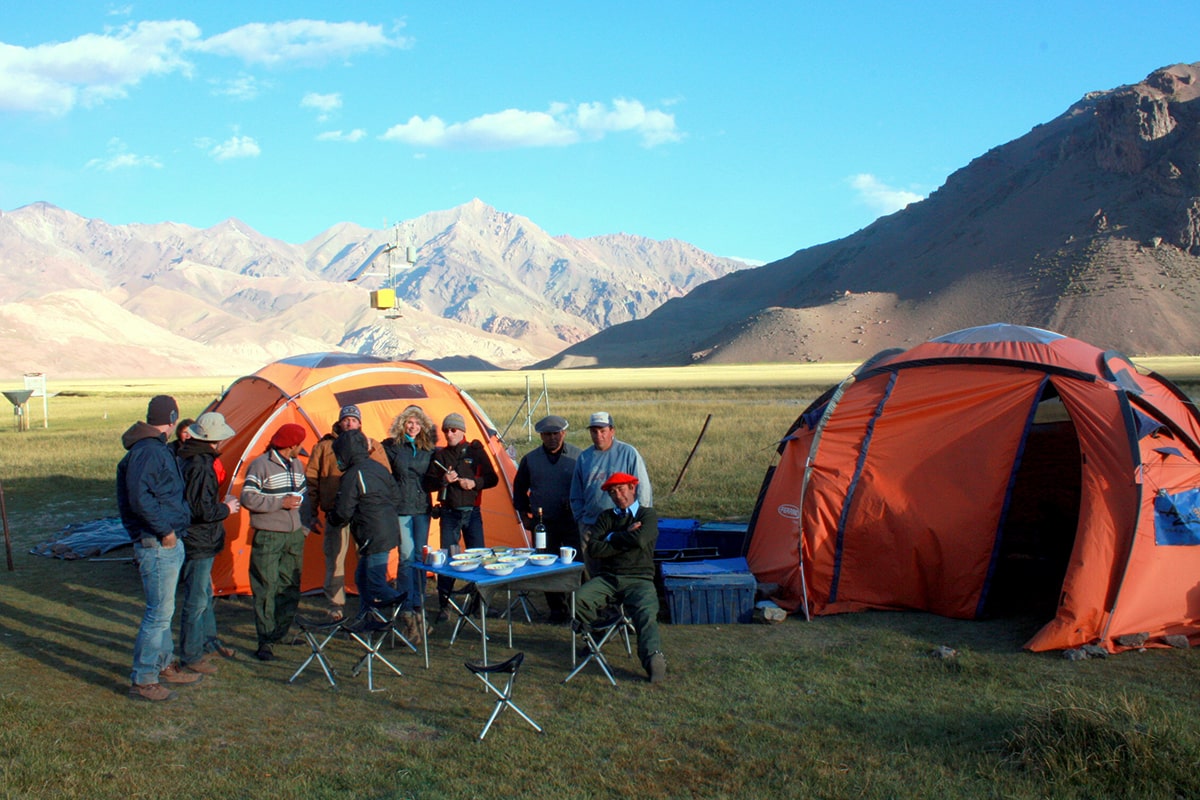
img src='https://ampascachi-bucket.s3.us-east-1.amazonaws.com/media/blogs/imagenes/cruce-de-los-andes/equipamiento.jpg'/> We hope you have found this information useful. If you decide to cross the Andes on horseback, you will enrich your life with a great and unforgettable experience.
Do you have any questions?
We are here to help you clarify any doubts.
Comments (0)
No comments yet.
You might also like
Estancia Buena Vista: Equestrian Tourism in the Northeast of Argentina
Discover the Jesuit legacy in the province of Córdoba on horseback
Travel on horseback in the Quebrada de Humahuaca
Interview with Andesluna: Horse riding in Patagonia
Horse riding in the Calchaquí Valley



Comments
Leave your comment