
Equestrian games and sports: Polo
Origin and objective of Polo
We have all seen on television those riders mounted on muscular, medium-sized horses, chasing a small wooden or plastic ball with a stick towards the rival's goal.
This equestrian sport is called Polo and in this article we will tell you what it consists of.
It is an ancient sport, the practice of which dates back more than two thousand years, and whose probable origin is in Central Asia.
Do you want to know how to play polo?
It is played between two teams of four people each. The objective of each team is to take the wooden ball towards the rival team's goal and score as many goals as possible. With each goal scored, which counts as one point, the teams must change sides of the field.
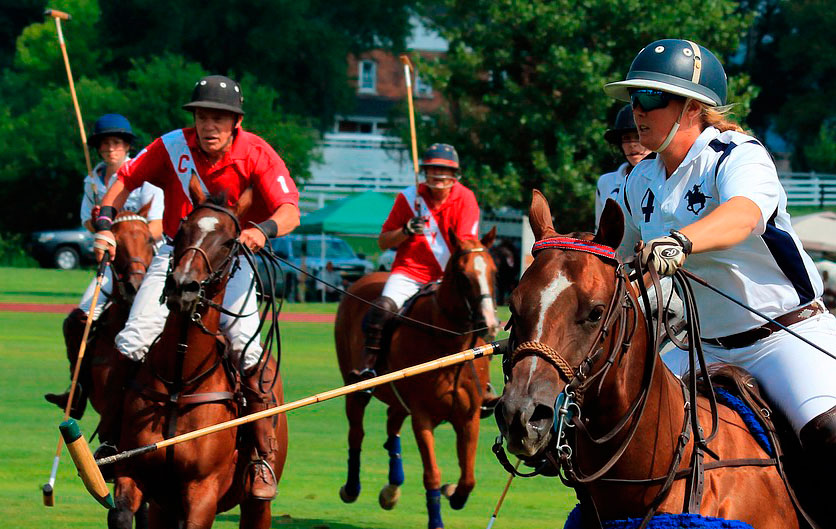
Each match lasts two hours and is divided into six periods (or halves) called “chukkas”. A polo match has between six and eight chukkas, and a chukka is a period of seven minutes. The game is usually very intense.
The polo horses are replaced at the end of each chukka. It is played professionally and competitively by teams from the five continents, becoming, in economic terms, an investment for many people and/or companies.
Clothing and equipment needed to play polo
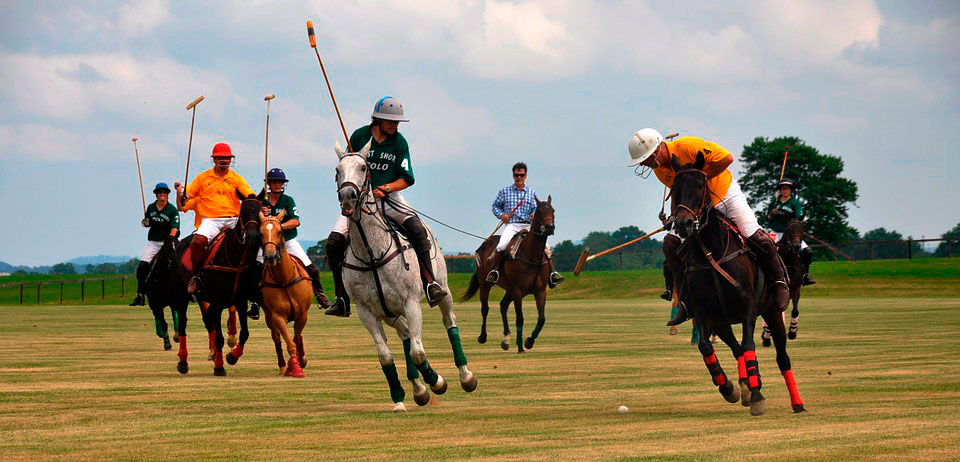
- The mallet: This is the implement used to hit the small ball. It is made of a bamboo stick and a wooden “cigar” head. It is between 1.19 and 1.37 cm long.
- The ball: This is made of plastic, although wooden balls are used in some tournaments. Helmet: This is used for safety reasons, as it protects the rider in the event of a fall. It is padded on the inside and also serves to identify the player. Riding boots: These protect the players' legs from possible injury. They have a heel that holds the feet firmly in the stirrups.
- Knee pads: Like the boots, they are used to protect the player's legs from possible kicks, punches or falls.
- Gloves: They protect the rider's hands and improve grip on the stick and reins, as well as preventing scratches.
- Elbow pads: They provide protection for the player's elbows against possible blows or falls.
- Protective glasses: These provide the player with safety and protection against possible impacts or blows.
- Riding crop: This is used to direct and control the horse.
The Polo field of play
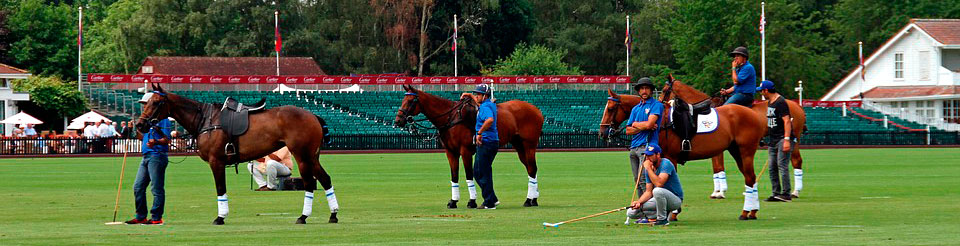
A polo field is approximately seven times larger than a normal football field. However, the size of a polo field can vary within certain measurements.
The traditional sport of polo is played on a grass field measuring 270 by 150 meters.
The field will have a free strip of land 10 meters wide on each side of the sidelines and 30 meters behind each back line. The playing field next to the free strips of land is the safety zone.
Main polo techniques
The main techniques of polo combine two very different aspects: the need to ride a horse well and the technique for hitting the ball. Below you will find four of the polo techniques most used by professional polo players.
Forward stroke
This is the natural stroke, delivered from the “loop side”, or right side of the horse. The direction of the ball depends on the angle of rotation of the torso, which in turn determines the angle of the mallet head. Ideally, the mallet should strike the ball at the moment when the animal's right “hand” (front leg) is planted on the ground and next to the ball.
Backhand stroke
The stroke is made forwards but on the left side of the horse. In the optimal backhand, the cue impacts the ball at the moment when the animal's left “hand” (front leg) is planted on the ground and next to the ball.
Back
Stroke made backwards on the right side of the horse, with the backhand of the cue.
Backhander
A shot taken backwards on the left side of the horse.
*How many horses does it take to play polo?
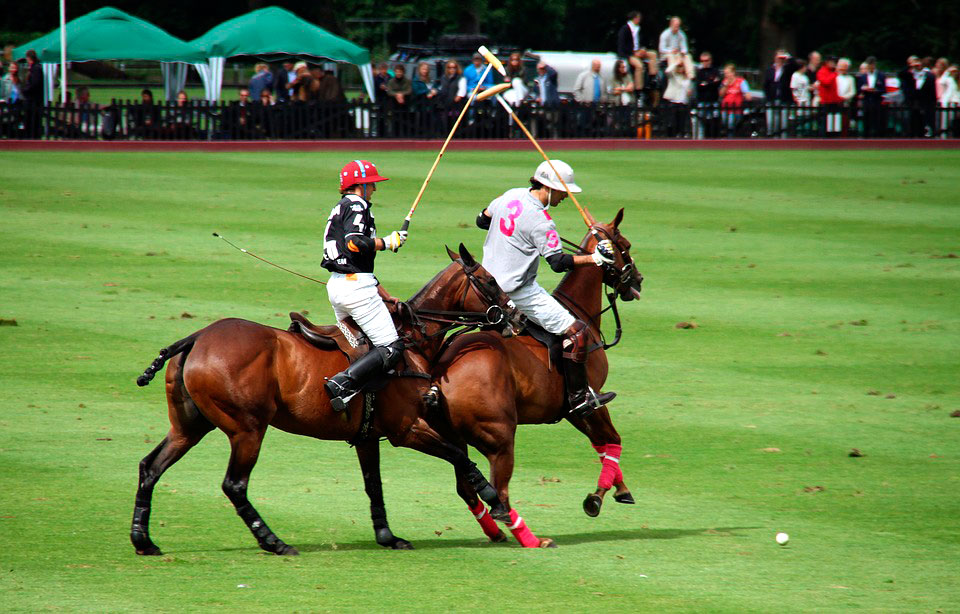
It is considered that each polo player should have at least 4 horses, so that they can be rotated during the game and so that they do not get too tired.
Thus, in total, 16 horses per team will be present in the game, but this does not mean that all 16 from each team will go out to play. It is estimated that at least an average of 12 will be used.
This means that, adding the two teams, there are 32 horses present and approximately 24 of them are used.
Polo Rules
In our country, the Argentine Polo Association (AAP) is the entity responsible for regulating and enforcing the regulations.
These rules are adopted by different polo associations and clubs around the world to preserve the true spirit of the sport in all countries.
Who is responsible for enforcing these rules during a game?
In every polo match, there are three authorities involved: two riding referees and a third referee, who stays off the field. It is the latter who makes the final decisions regarding the application of the rules.
What are the basic rules of the sport of polo?
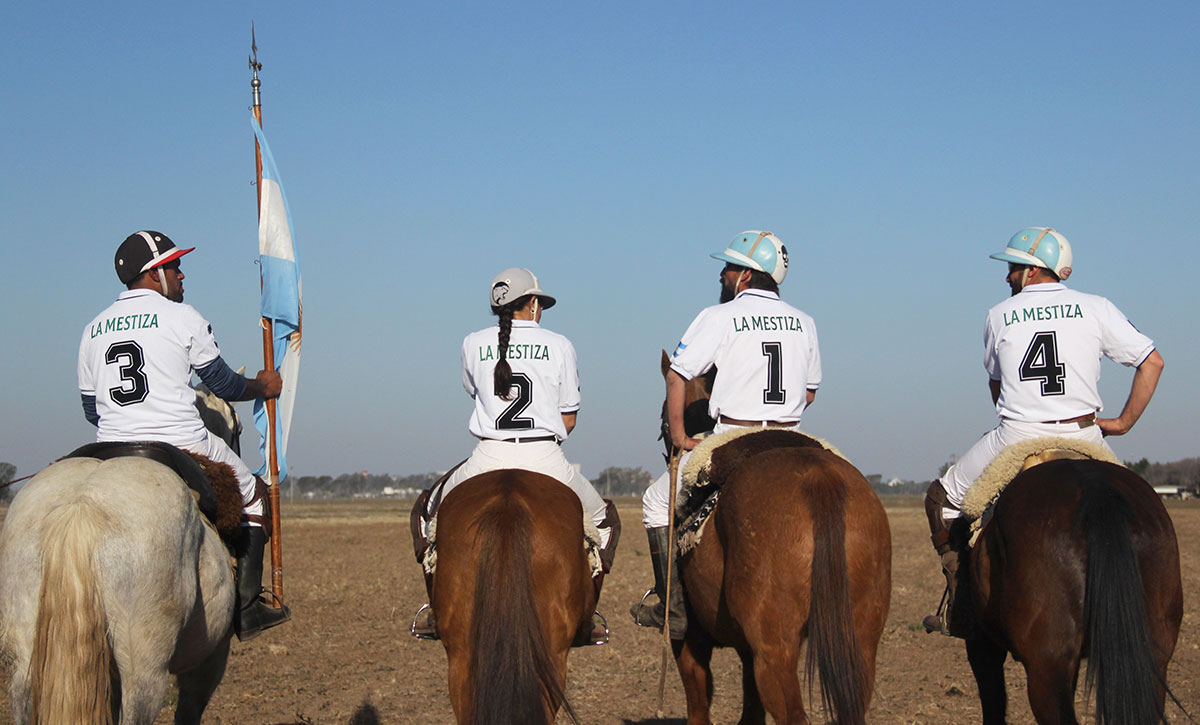
- On the field, each player fulfills a role within the team: number one plays as a forward; numbers two and three play in the center of the field, and number four is in defense.
- A player may not cross paths with another player who is following the “line of the ball,” unless he is at a distance where there is no risk of collision or danger to other players.
- After each goal, teams must change sides of the field to avoid any advantage due to the wind or sun.
- If the game ends in a draw, an additional chukka is played. The first team to score a goal will be the winner.
What are the basic rules that players must follow?
- Players must always handle the mallet with their right hand and carry it in such a way that it does not disturb another player or horse.
- The use of a helmet is compulsory.
- Players are prohibited from using the mallet to hit a ball or to hit another player's mallet above the height of the horse, or below the horse, as this creates a dangerous situation.
- Players must avoid intercepting the player who has the ball by crossing the imaginary line drawn by the ball.
- A player can “take” the imaginary line by pushing the opposing player aside. They can push with the arm up to the elbow, as long as it remains pressed against the body. This is known as “hitting”.
- They cannot grab, hit or push with their head, hand, forearm or elbow.
Handicaps for players
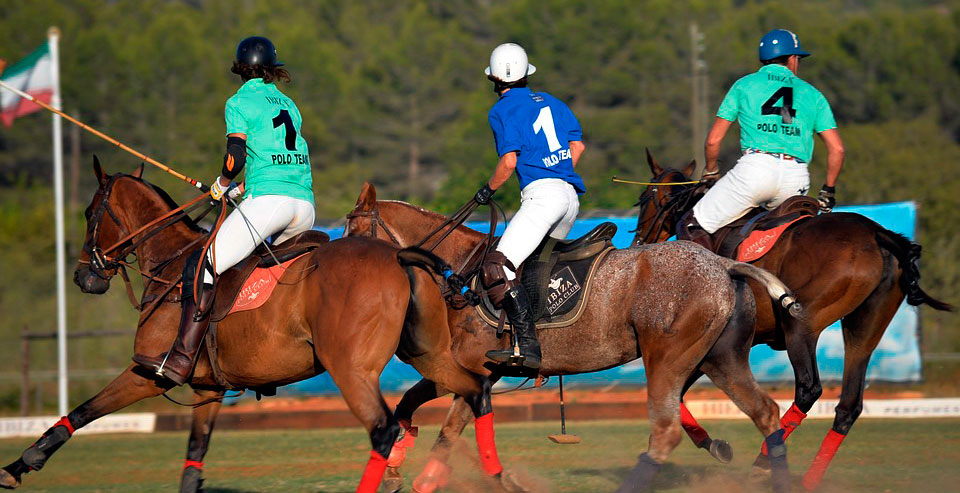
Each player has a handicap level of -2 to 10 goals depending on their ability. The lowest handicap is -2, with 10 being the highest possible. A team's rating is calculated by adding up the handicaps of the 4 players.
Penalties
Definition of a foul: “Any infringement of the rules of the court constitutes a foul and the referee may stop the game; but it will be at his discretion not to do so in order to apply a penalty, if stopping the game and applying the penalty would be disadvantageous for the side against which the foul has been committed”.
Different types of penalties are awarded depending on the nature of the offense.
A free kick towards the goal at a distance ordered by the referee depending on the offense committed by the opposing team:
- Foul No. 1: automatically a goal.
- Foul No. 2: 30 yards to an open goal.
- Foul No. 3: 40 yards to an open goal.
- Foul No. 4: 60 yards to a defended goal.
- Foul No. 5: a kick from the place where the foul was committed.
- Foul No. 5B: a shot from the center of the field.
Attackers must be level with the ball when they strike. Defenders must be behind the baseline.
Variations of the game around the world
Arena Polo: a reduced version of polo played on horseback in a much smaller field surrounded by walls on all sides.
Elephant polo: a form of polo played on the backs of elephants instead of on horseback.
Yak polo: a Mongolian variation of sport polo played with yaks instead of horses.
Beach polo: horse polo, although it is played on a sandy field with sideboards so that the ball is always in play.
Canoe polo: the canoeists throw or heat the ball with a paddle through a goal suspended about two meters above the water.
Cowboy polo: similar to regular polo, although the riders compete with Western saddles, generally in a smaller arena and with an inflatable rubber medicine ball.
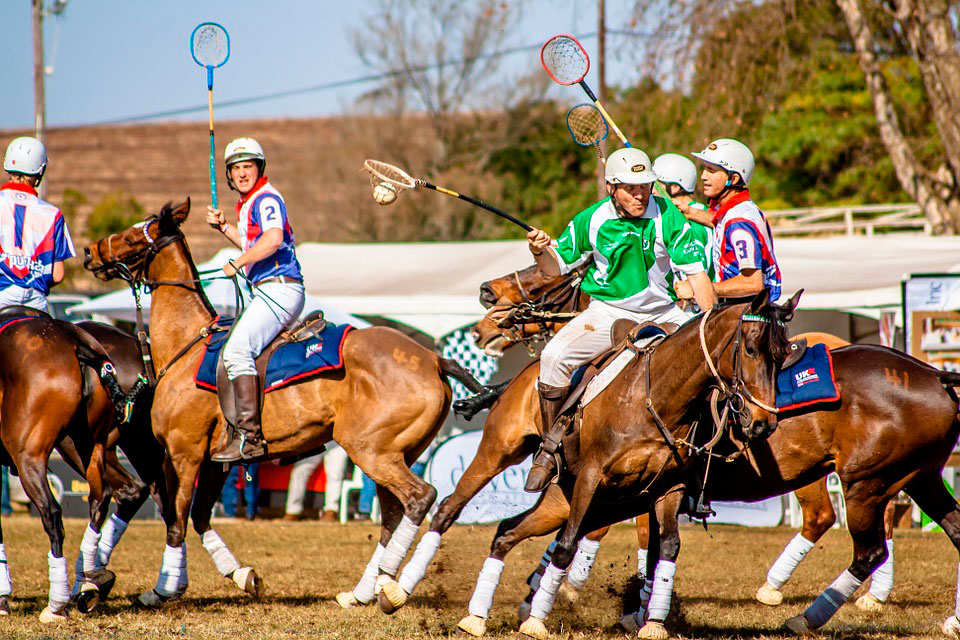
Polocrosse: an equestrian sport that combines lacrosse and polo.
Polo in Argentina
Polo arrived in Argentina together with the English, who were horse and land owners. These immigrants arrived in our territory in the second half of the 19th century. Thanks to these men, polo was able to find men and horses in Argentina to take it to the very top of the world rankings.
The key to the superiority of Argentine polo has as much to do with the skill of the riders as with the quality of the horses.
The high level of skill of the Argentine game has made the three most important Argentine tournaments, the Argentine Open, Hurlingham and Tortugas, the most prestigious tournaments in the world. These three tournaments are known as the Triple Crown of Argentine Polo.
Another indication of the level of skill in Argentine polo is that eight Argentine players have the highest handicap in the sport: Adolfo Cambiaso (considered the best polo player in history), Juan Martín Nero, Gonzalo Pieres, Facundo Pieres, Hilaro Ulloa, Nicolas Pieres, David Stirling and Pablo Mac Donough.
Argentine polo horses are the product of carefully controlled breeding and training. From the robustness of the “criollo” horse, used first, to the speed of the “thoroughbred”, the performance of the horses has only improved with time.
These days the Argentine polo horse is a cross between the “mestizo” ranch horse and the thoroughbred. This breeding is carried out under strict control and careful selection, creating an incredibly valuable breed of highly qualified horses that are unique to the rest of the world.
Debunking myths about polo
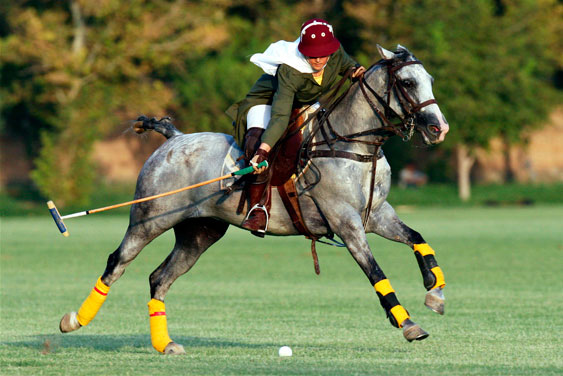
There is a false belief that the only people who play polo are wealthy people.
Although at one point in history this was really the case, nowadays many equestrian centers, associations and clubs rent the horses so that the practice begins to become more popular.
At Ampascachi, we believe that it is necessary to promote this sport because of its many benefits: you are in contact with horses, it encourages teamwork, you learn to be alert to reflexes, you exercise the body and improve posture.
If you've always wanted to play polo, now that you know about these advantages... What are you waiting for to start training?
Comments (0)
No comments yet.


Comments
Leave your comment