
Interview with Gangpferde Vierhaus
Ellen and Stephan Vierhaus and gaited horses
We interviewed a German couple, Ellen and Stephan Vierhaus, who train gaited horses on their farm “Gangpferde Vierhaus” in Hünxe Drevenack, Germany, and are happy to pass on their knowledge.
Ellen has been riding horses since 1973. She is a judge for the International Gaited Horse Association (IGV) in Germany, as well as a recognized breed judge for Paso Finos and Paso Peruanos.
Stephan has been riding since 1975. He is an IGV trainer, also a recognized Working Equitation livestock trainer. He moderates tournaments and comments, among other things, at many trade fair appearances and other equestrian events.
“Our style of training and riding is characterized by the fact that we reward the horses by foregoing aids. It has developed with us through decades of experience and is still developing.”
It is a great honor that they have accepted our invitation to do this interview in which we want to discover their opinions, methods and visions that have been shaped and based on decades of experience with paso horses.
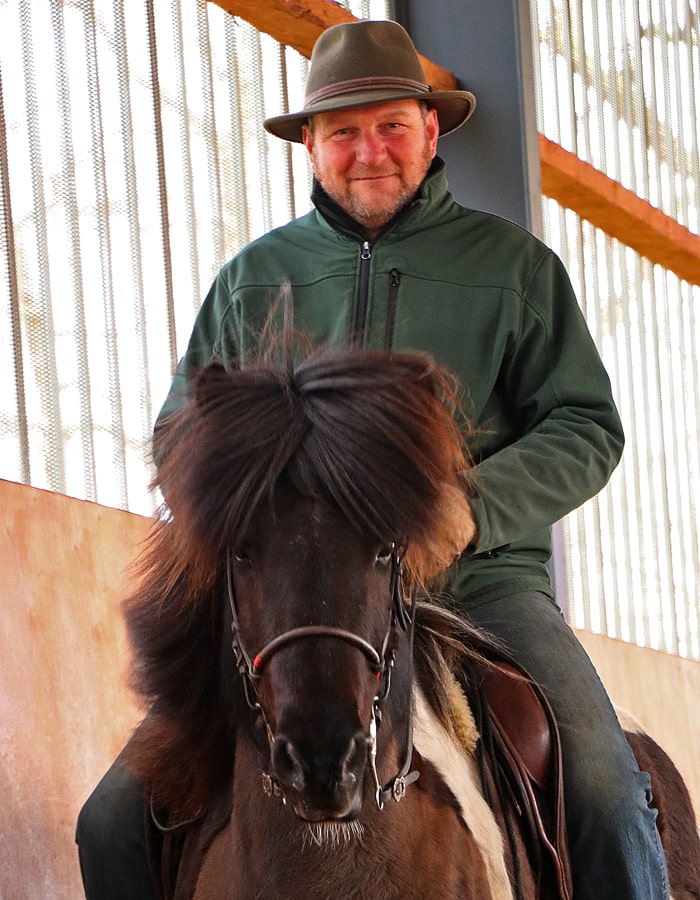
Gangpferde Vierhaus
What makes Gangpferde Vierhaus special? How does it differ from other horse farms?
Gangpferde Vierhaus, the name represents an open-minded approach to different breeds and how they are ridden, as long as the welfare of the horses is taken care of.
Over the last 40 years we have worked with different types of horses and we are still very enthusiastic. From the beginning, we have received many paso horses and special three- gait horses, so we have developed flexible and varied methods for training the horses, consulting with different trainers and we have also learned a lot from the horses themselves and thus developed our own style. And so, we hope, we will continue to develop.
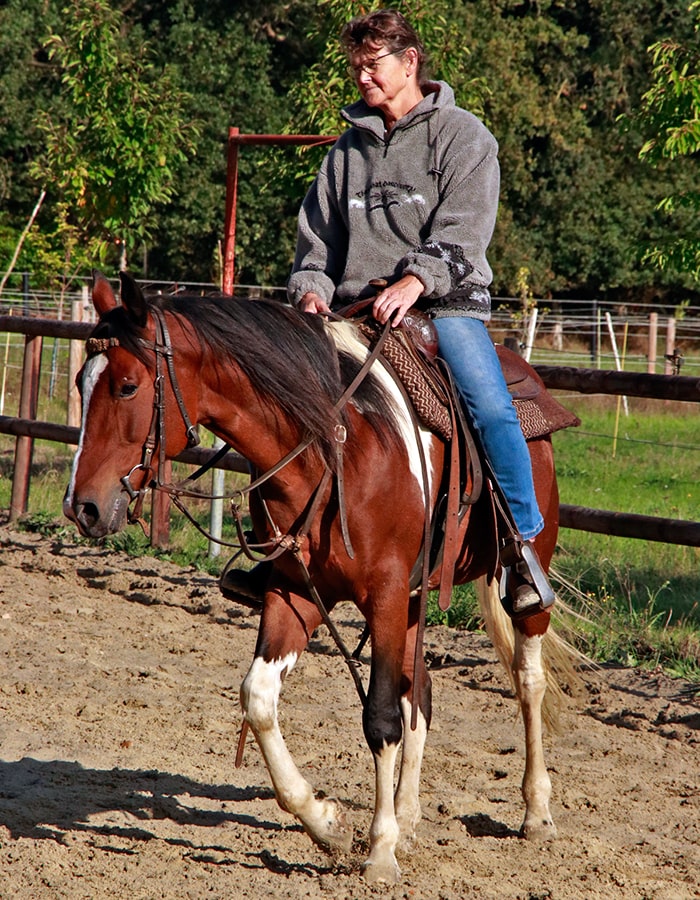
Dressage and Horse Training
What are your principles in the dressage and training of your horses? Do the principles of Learning Theory and Ethology applied to horse training, driven by the scientific work presented at the conferences of the International Society for Equitation Science (ISES), show differences with your way of training and educating your horses? If there are any, could you tell us what they are? ?
We didn't know about the ISES, but having looked at the website, we feel we are very much in line with it. In almost 40 years we have developed our principles for looking after the welfare of horses. During training we train the horse's brain, taking care with its balance and physical abilities. We don't force anything, we work in small steps adapted to the horse. The horses are happy and our success proves us right.
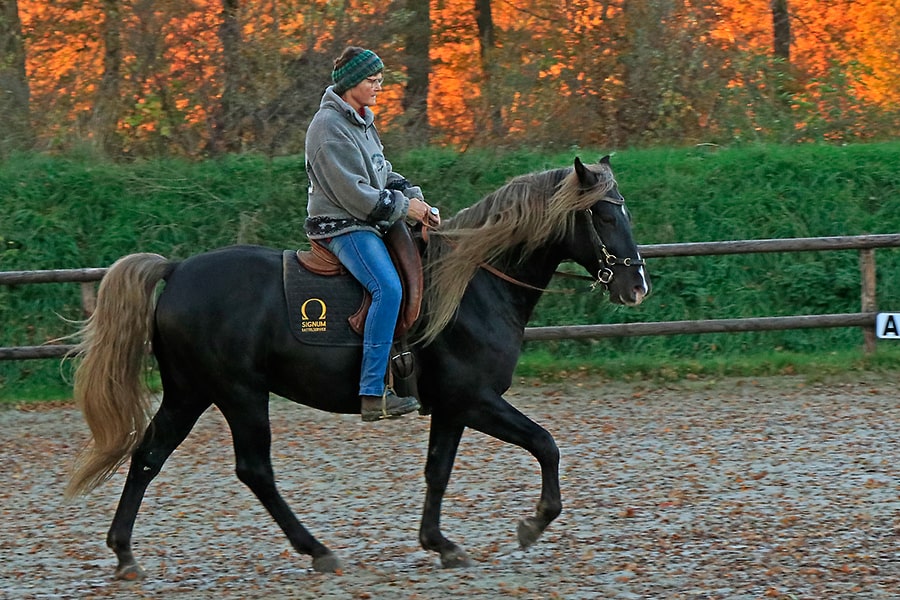
Judge of Colombian Paso Fino and Peruvian Paso horses
Ellen, how did you become a judge of Colombian Paso Fino and Peruvian Paso horses?
I have been a certified IGV (International Paso Horse Association) judge for many years and with this qualification I can judge all breeds in IGV competitions.
I am particularly interested in South American paso horses, which is why I did several internships with Paso Fino and Peruvian Paso judges from the USA and South America at different tournaments and championships. Finally, I also participated as a judge and thus obtained recognition as a judge for these breeds.
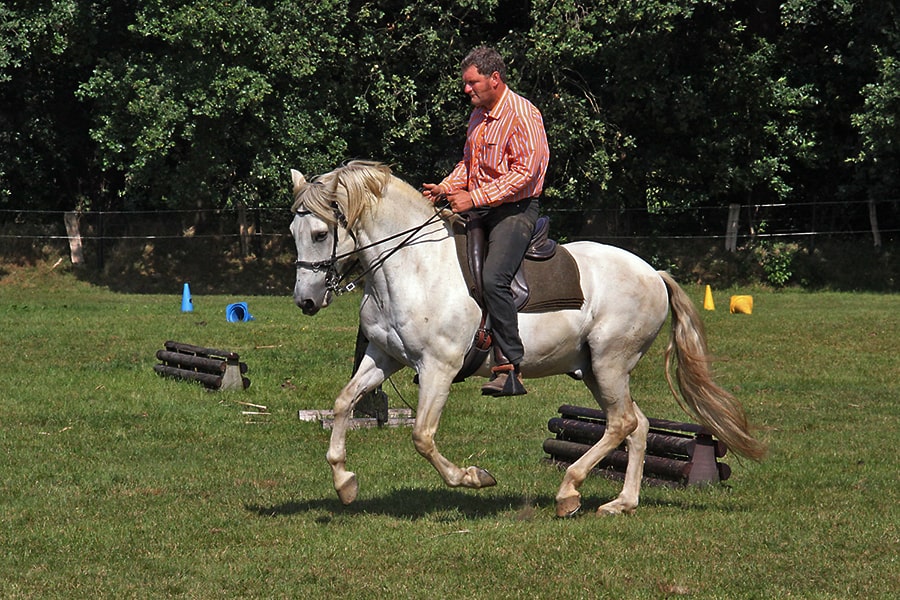
What are the most important characteristics and requirements that you value when judging Peruvian Paso horses?
Peruvian Paso horses are among the most comfortable of the paso horses. I had a fabulous example of the breed for 10 years. They should have an air of comfortable four-beat walking, with a term and a smooth, elastic glide. The rump should barely move, and they should be easy to ride and react quickly.
Have you been interested in judging other breeds of gaited horses, for example the Icelandic horse? And especially with this breed, what is its future and its popularity in the horse market?
In the framework of the IGV exams I also judge Icelandic horses, but I am not a specialized judge (like the IPZV judges).
In Germany there are more than 60,000 Icelandic horses and it is the most numerous gaited horse. Icelandics vary in their gaits, temperament and expressions.
There is something for everyone: horses for families and horses for competition, those that naturally move at a “tölt”, those with five gaits, etc.
The likelihood of finding the ideal horse for each rider is very high. I understand very well the popularity of the Icelandic horses and they will surely continue to have a large representation among the paso horses in Europe.
Could you tell us what is the main characteristic that differentiates the Icelandic horse from the Peruvian Paso horse and the Paso Fino?
The main difference with the South Americans is the winter coat, often the distribution of the gaits and the variety in the possibilities of executing the gaits.
Among the Icelandic horses there are calm, tolerant, friendly and strong specimens, which give confidence to not so experienced riders because of their ability to “filter aids”, the Peruvian Paso and Paso Fino are generally more sensitive and react faster. That requires a confident and sensitive rider (there are exceptions on both sides).
Tournaments, courses, fairs
Stephan, in your opinion, which are the most important fairs? Do you show Gangpferde Vierhaus at them?
I have been riding different breeds of pacer (Standardbred, Walker, crossbreeds, etc.) in tournaments since the 90s, I have commented on many shows at fairs (Equitana, Pferd und Jagd, Pferde Rhein Ruhr, Hund und Pferd), I have given riding lessons in demonstrations, for example in the big arena of Equitana, presentations in Avignon and Tarbes with Trotones con tölt and PRE, I have given public interviews.
For years I was the vice-president of the IGV and the person in charge of organizing the paso horse shows at fairs.
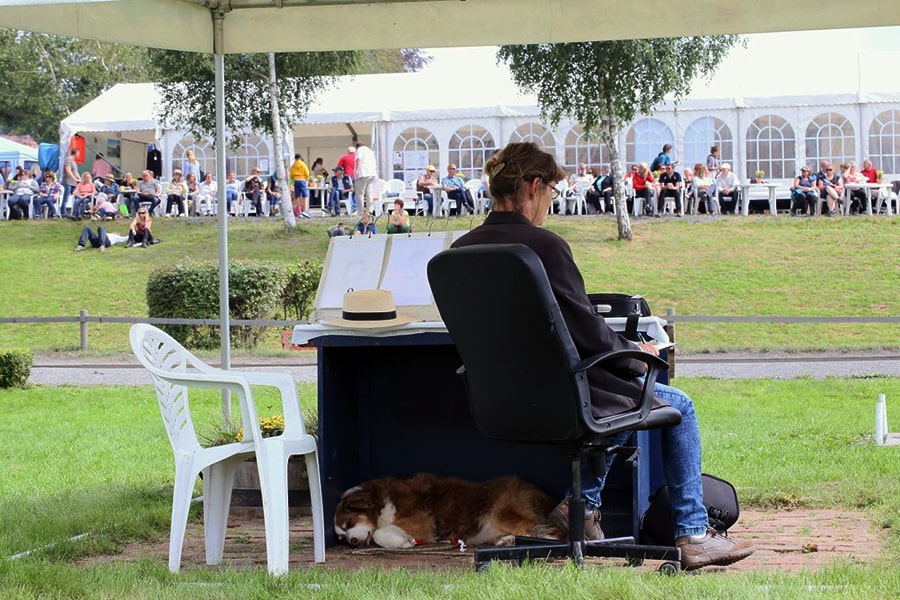
Have you had the opportunity to attend paso horse competitions in Peru, Colombia, Iceland or the United States? What did you think of them?
I give riding lessons in Germany and elsewhere in Europe, but I haven't been to the American continent.
Equestrian Tourism
How do you see the development of Equestrian Tourism and leisure activities such as horse riding in the countryside?
At the moment, equestrian tourism is complicated due to the coronavirus pandemic, but we hope that the situation will change for the better and that the virus will be brought under control soon.
In your opinion, which breeds of horse are best suited to these activities and why?
In general, for horse riding in the countryside, different breeds of paso horse are suitable, if they have balance and a good distribution of their gaits, if they are well broken and trained and if they are corrected, as the four-beat gaits can unfortunately be “destroyed”.
It certainly helps if the horses are easy to ride, not too sensitive and if the riders are not beginners and can “relax”.
Acknowledgements and conclusion
Ellen and Stephan, thank you very much for sharing your experiences and professional opinions on paso horses.
The Paso Fino breed is highly valued for its comfort and is ideal for equestrian tourism, for covering long distances at a good pace, with strength and an incomparable smoothness of movement.
Continúa leyendo
Este artículo es exclusivo para miembros.
To view this blog, please complete the form
Access full content
Comments (0)
No comments yet.



Comments
Leave your comment