
Peruvian Paso Horse III - Gait
Gait overview
In the equine world, all breeds share the gait of the walk and the gallop, but the same is not true of the trot. The gait of the trot is not shared by the Paso horses.
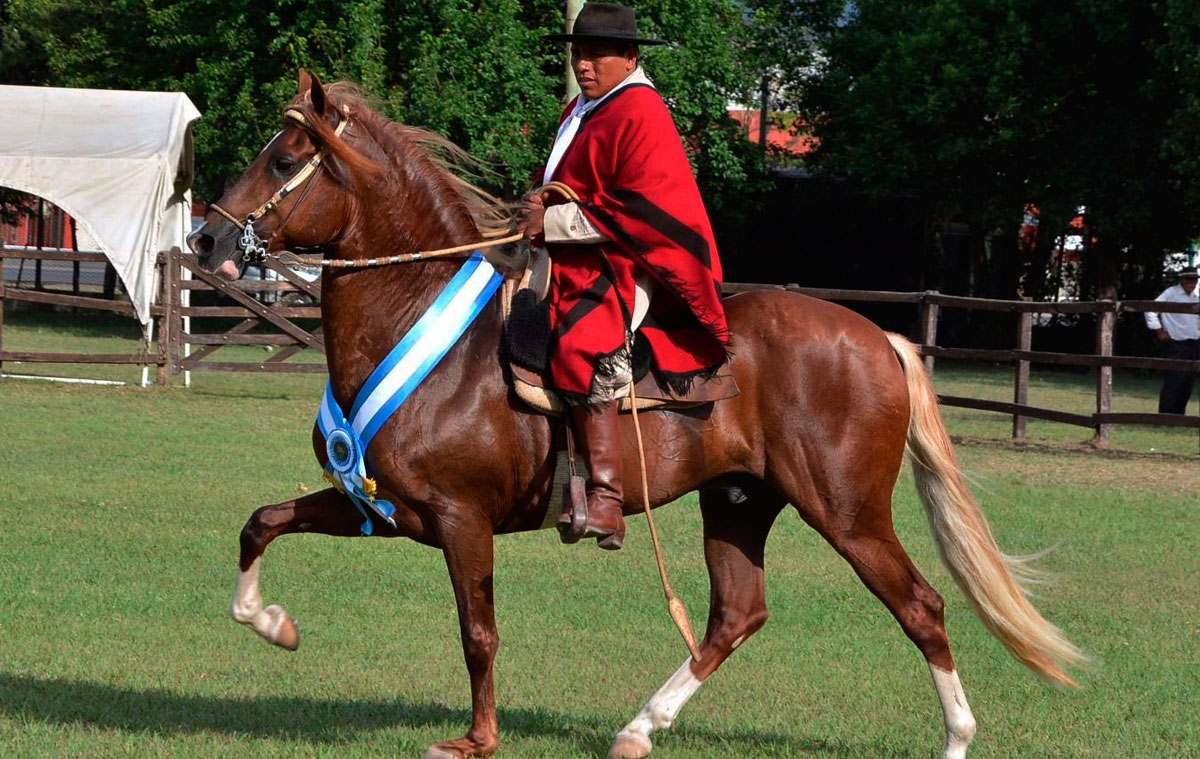
The air of the paso - four beats
All horses can move at a paso because in this mechanism they move one limb at a time, raising it and putting it down or reaching the ground, also one at a time. In this way, if we listen to the beat produced by each of the limbs when they reach the ground, we can hear a sequence of four distinct beats, and that is why we say that the air of the paso has four beats.
Note that we say four beats but we do not mention the time that separates each beat, what we could call rhythm, we will talk about this later.
The important thing at this stage of the explanation is that we understand that the air of the paso is “four beats” and as we say, this air is shared by all the breeds and they execute it with an elongated neck and it is a slow, relaxed walk, with speeds of no more than 3 or 4 km/h.
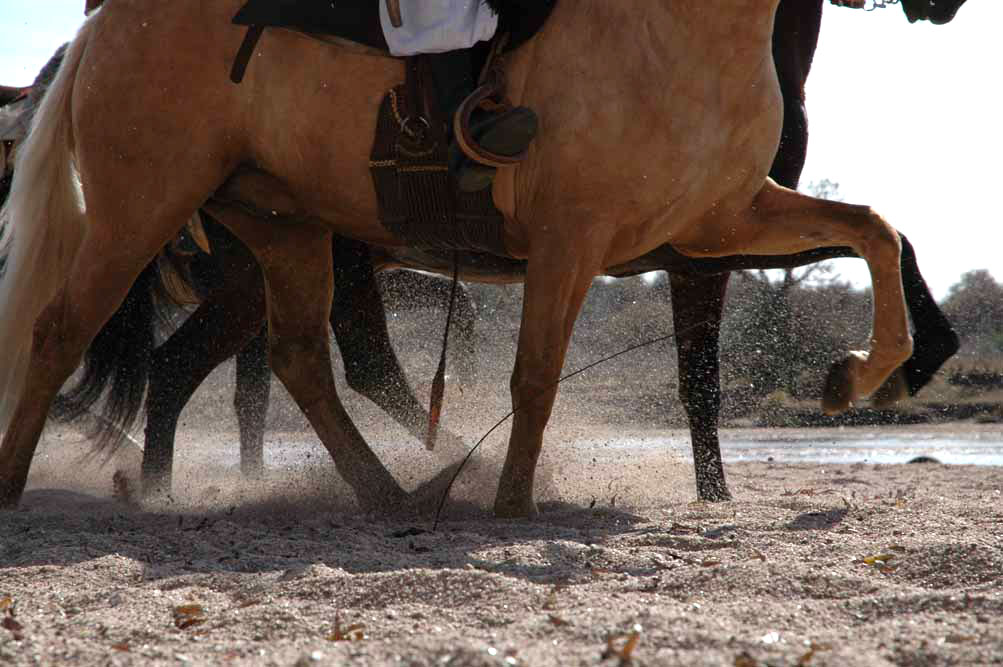
Trot gait – two beats
Well, when you want to speed up this gait, most breeds resort to airborne gait or trot gait, which is a two-beat gait because the horse simultaneously raises two limbs at the same time, by raising them, and simultaneously drops or lands both limbs to make way for the next jump in the sequence, that is, it moves a right hind limb with a left front limb to land, after the stride, at the same time with the same limbs and starting the other stride, with the other diagonal limbs (left hind and right fore).
If we listened to the landing we would only hear two beats instead of the four of the step, as two limbs are raised or suspended in the air and land together at the same time, which is why it is a two-beat rhythm.
We could say that in this air the horse advances at a faster speed and its center of gravity moves forward and upward, describing, in the vertical plane, a sinusoid whose period depends on the different variables of the trot, and on the qualities of each animal, even of the same breed.
In the descriptive example we have shown a diagonal trot (right hind leg with left front leg) but there is also a two-beat gait or lateral trot known as “ambladura” or “andadura”.
In this trot the horse raises two legs at the same time but on the same side, that is, left hind leg with left front leg.
In order to make this movement, the horse swings to the right or left, supporting itself on the support of two lateral limbs, and then drops the two raised limbs to the ground at the same time, thus marking the two characteristic beats of a trot, but in this case, the ambladura trot, the horse's center of gravity moves forward and to the side producing a sinusoid, but in the horizontal plane .
Having said the above, we are in a position to say that gaited horses are those whose genetic antecedent is ambling, but which have managed to dissociate themselves from it, breaking down the two-beat rhythm that is characteristic of ambling into a four-beat rhythm, as in the gaited horse's walk.
Breaking or dissociating from ambling means that paso horses can increase their speed without leaving the four-beat rhythm, that is to say, they lack the air of the trot and for very high speeds they must begin to gallop.
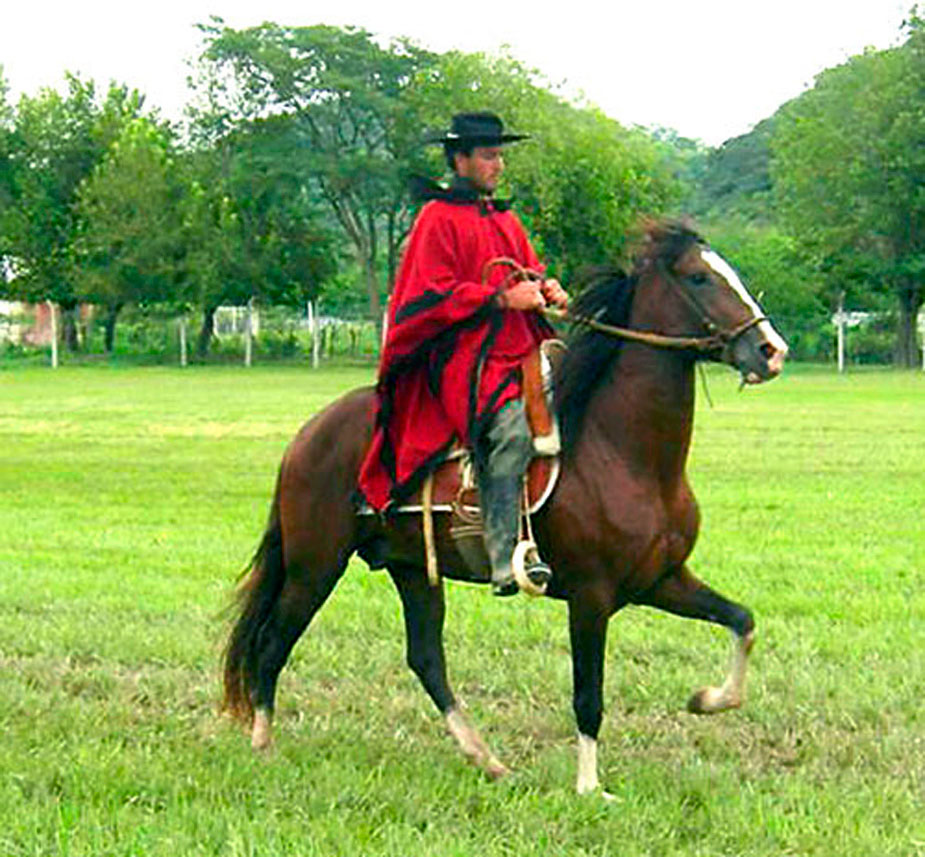
This is the big difference between paso horses, like the Peruvian Paso Horse, and other breeds that can trot.
Paso breeds can increase their speed by trotting in a four-beat gait, and if the rider wants to increase the speed even more, they can go directly from the pace to the gallop.
The CPP is, of all the paso breeds, the one that in our opinion best executes the four-beat gait at speeds at which others trot, and they also do it naturally, as it is an inherited trait, specific to the breed, and nothing needs to be taught for it to do it.
As we explained in the article Peruvian Paso Horse I, the CPP evolved through the selection of the man who sought to fix the characteristic of ambling and within this, those who dissociated it, and that is why the rider does not need to have to accommodate his mount in order for it to walk at a walk when asked to speed up the gait.
When we say that within the gaited breeds, in our opinion the CPP is unique, it is because all the other gaited breeds, although they have the genetics of ambling, some manage to dissociate it, but they still coexist with the neural connections of diagonal trot and it is necessary to reinforce with a lot of training, or with the expertise of the riders, so that they walk in the four tempos of the gait and do so smoothly. .
The proposal consisted of classifying these Base Phases according to the delay in support of the front limb with respect to the back limb on the same side, on the path of dissociation from ambling to trotting.
The base phases thus described were classified, according to the mechanics of forward movement and the order of arrival of the feet on the ground in the continuous beats, as follows:
- Ambladura or lateral trot (In Peru it is known as Huachano)
- Pasiamblado
- Paso Llano
- Pasitrote
- Trote
We will say that a “beat” is the time or period of time, during the movement of the horse, in which the same limb touches the ground again.
The CPP, walking at a walk, initiates the movement by shifting the body's weight onto lateral bipedal support (rocking movement) and regains balance through triple support, in the sequence of movements, to lateral bipedal support and diagonal bipedal support.
The vector representing the rocking movement, to carry the weight of the horse on the lateral support, added to the vector representing the direction of advance and the impulsion, throw the center of gravity forward and to the side, marking, in its path, the sinusoid, which we talked about before, and which is formed on the horizontal plane, its amplitude being dependent on the time over which the imbalance is distributed, and which in the case of the air passing through the CPP, is when triple support occurs, resulting in four beats being marked instead of two, which would be the case with ambling (huachano in Peru) and trotting.
This sequence can be seen in the set of eight frames shown in the cartoon below.
Watch the video and see how, after a triple support of two front limbs and one back limb, there is a lateral bipedal support, followed by a triple support of two back limbs and one front limb, followed by a diagonal bipedal support, in order to change sides in the sequence.
You will see in the video (which you can follow step by step with the stop function) how the horse's back remains motionless in the vertical plane.
The horse's center of gravity, which sways to one side, distributes the imbalance with the seat of the third member or triple support, this means that the movement to one side to lose balance, due to the effect of the impulse, smooths the sway to the side through a forward component and the amplitude of the sinusoid depends on the support times of the lateral and diagonal bipeds.
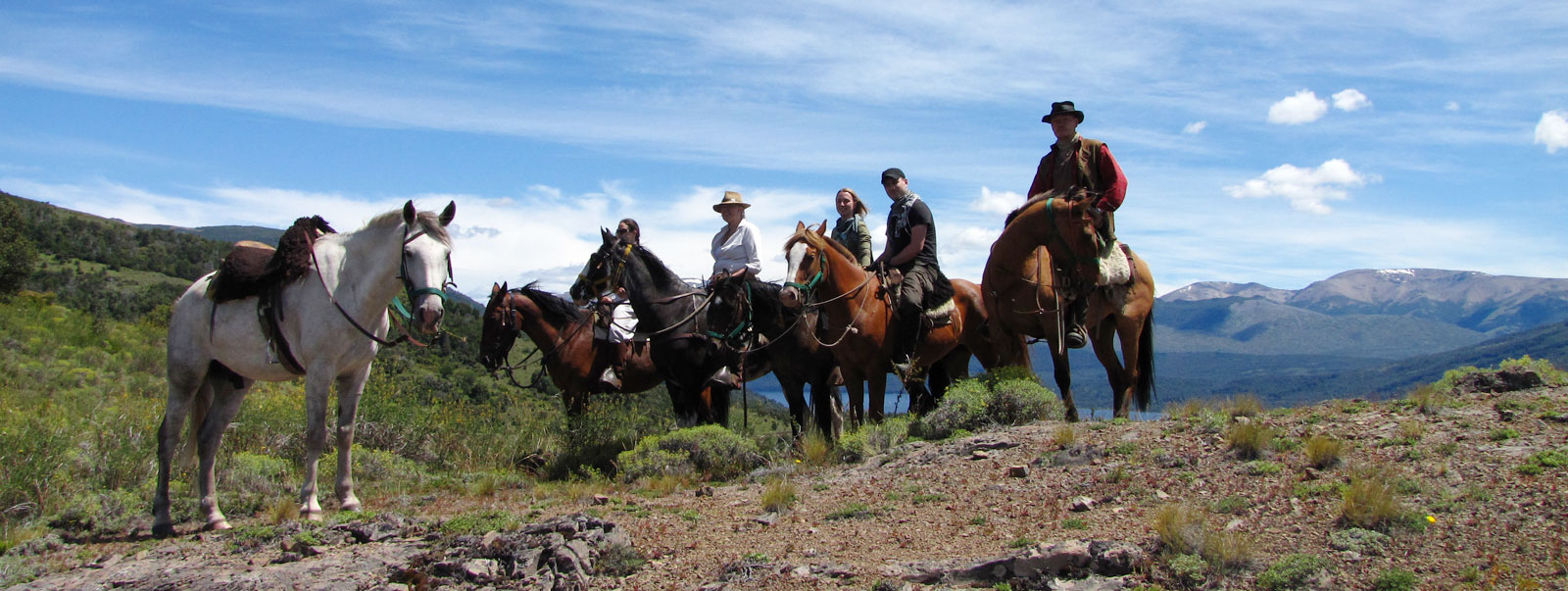
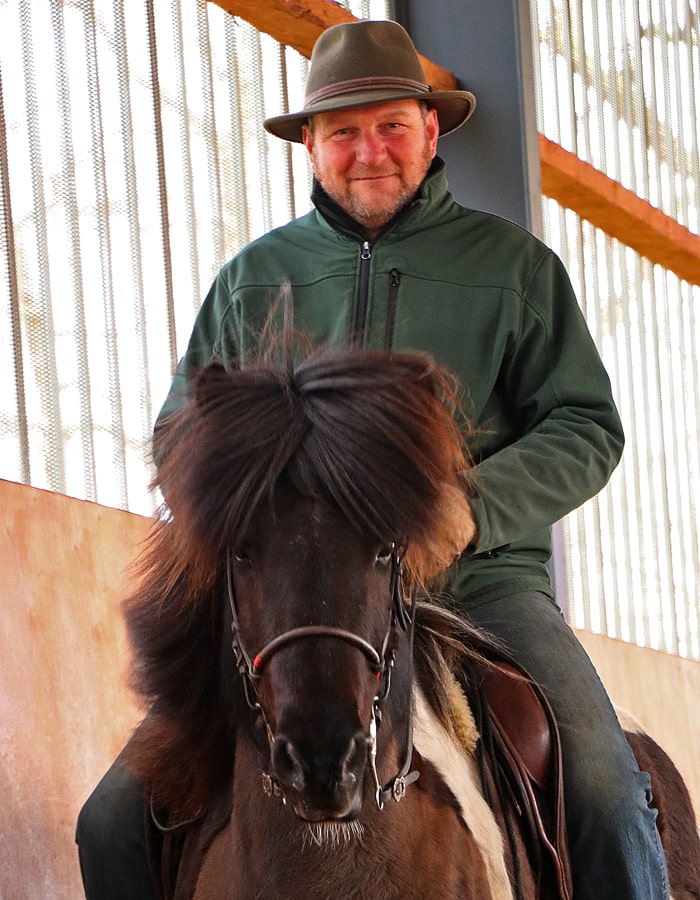
Riding a Peruvian Paso is a very relaxing and comfortable experience. We love going out riding with them.
Continúa leyendo
Este artículo es exclusivo para miembros.
To view this blog, please complete the form
Access full content
Comments (0)
No comments yet.


Comments
Leave your comment