
Peruvian Paso Horse I - Origin of the breed
Introduction to the breed
We explain in detail why we, the breeders of the Peruvian Paso Horse, think that we have an “Equestrian Jewel” in our hands.
It is important to understand the great value of the Peruvian Paso Horse (hereafter PPH) for those of us who breed and ride them on a daily basis, keeping them in good physical condition so that they can withstand the long distances we cover with our guests on each of the equestrian routes we have designed.
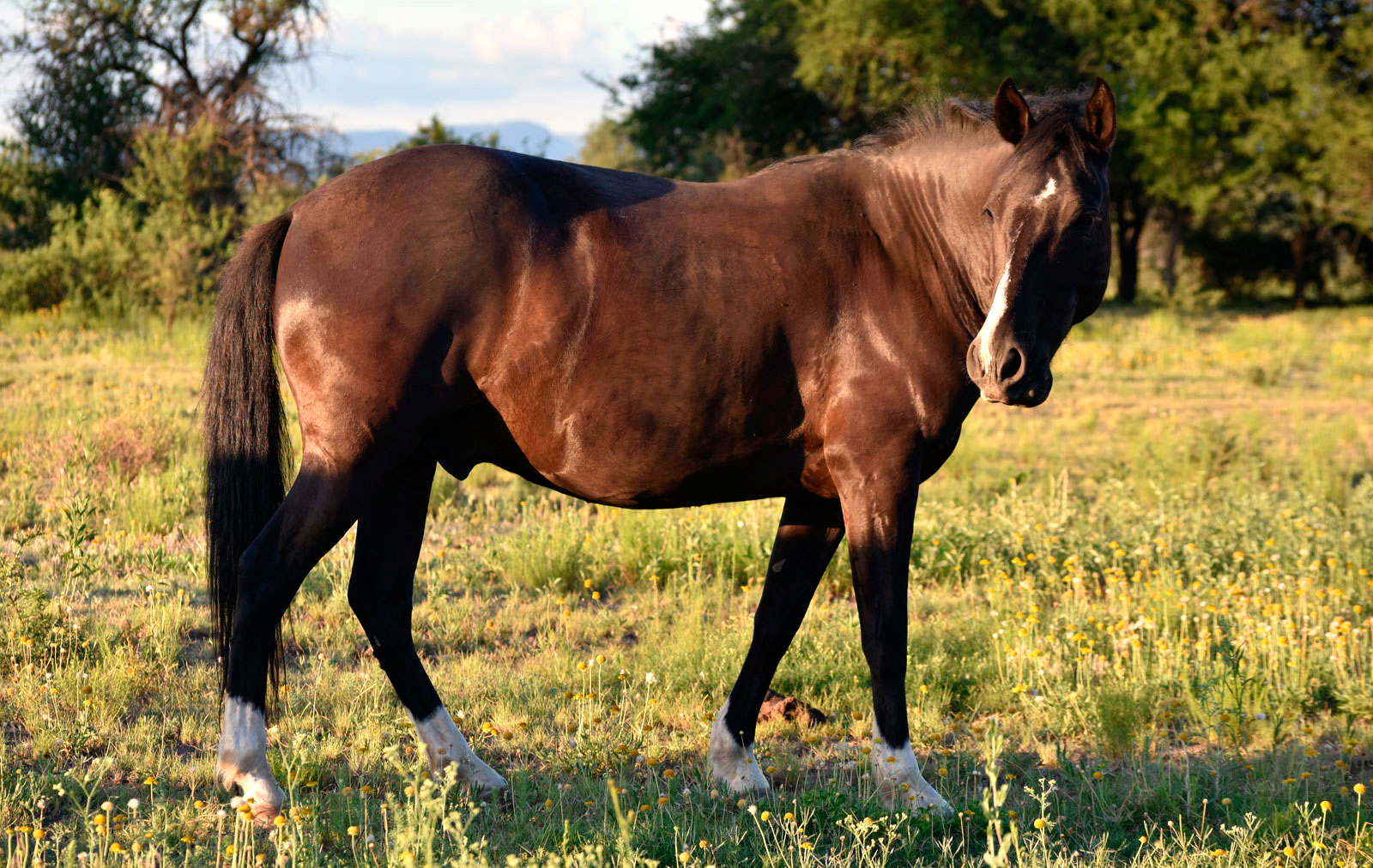
For us as breeders, this horse means the responsibility of reproducing, improving and polishing an equestrian jewel that has taken the men who populated the viceroyalty of Peru, at the time of the conquest and subsequently until the present day, more than five hundred years of a selection process based on two attributes that were already in the genetics of the horses that arrived with the Spanish conquest, and that are:
- A smooth gait, with great forward movement.
- A great stamina to be able to travel long distances, in an environment that varies from the sands of the coastal desert of Peru, through the intricate paths of the fertile valleys, to crossing the freezing and challenging heights of the Andean Puna.
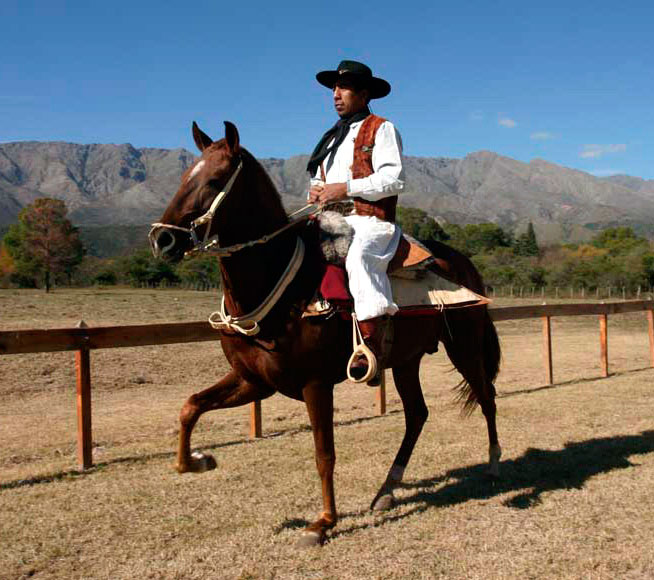
Due to the characteristics mentioned, we think it is the best saddle horse, for riding comfortably, over long distances and at the same time making us feel the pleasure of riding a horse that presents a constant energy, product of the endless verve that characterizes the breed.
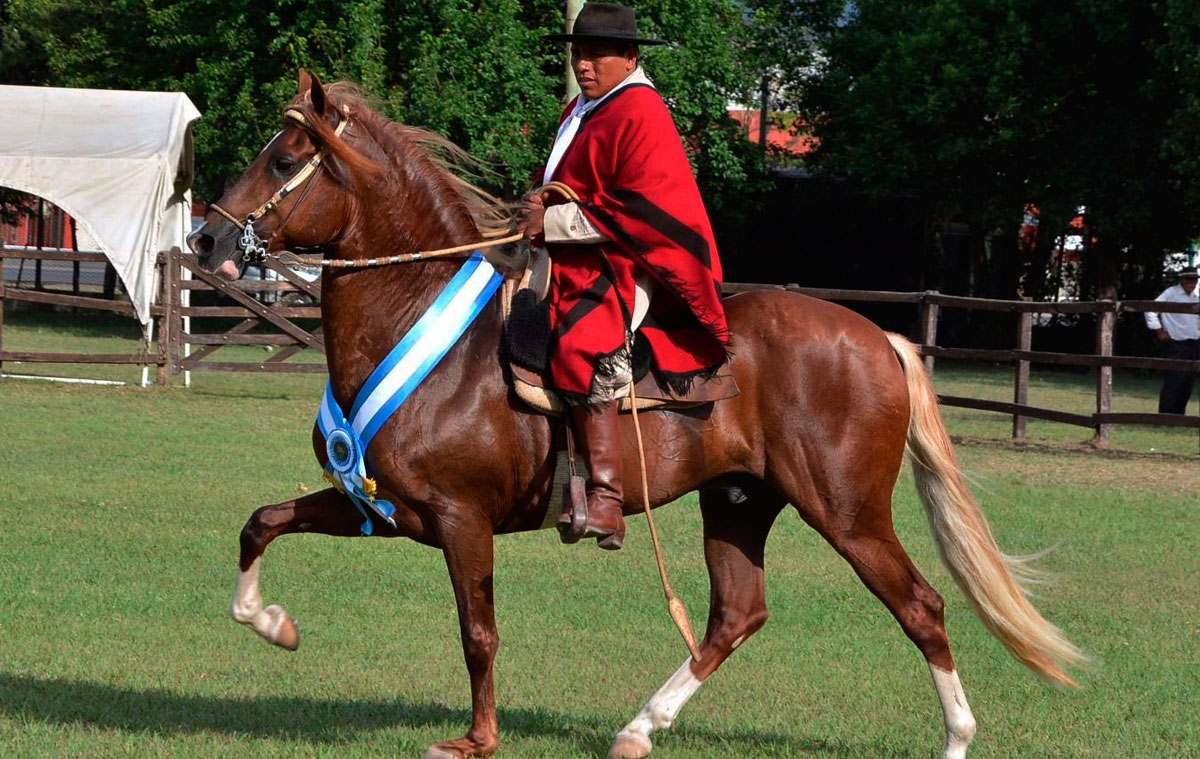
Although there are other paso breeds, apart from the Colombian Paso Fino, all of them, including one of the best, which in our opinion is the Icelandic horse, must be led by their rider so that they do not use the diagonal gait of the trot when trying to speed up the horse's pace, and it is only the Peruvian Paso Horse that has this natural gait and performs it with rhythmic harmony covering a lot of ground in each stride, and reaching a considerable speed (10 to 12 km/h in a traveling gait).
Breeders' commitment to the breed
The continuous selection, made by man, in the search for these attributes, added to the more orderly and strict work, from the technical point of view, carried out institutionally for more than 70 years, by the National Association of Breeders and Owners of Peruvian Paso Horses of Peru (ANCPCPP).
In addition, breeders' associations from other countries contribute, mainly the one in Argentina, founded in the city of Salta, more than 46 years ago.
In this way, today we can have this horse that allows us to ride until the day we die of old age, due to its smooth gait and its verve put at the service of the rider, producing an unimaginable experience every time.
You can only understand “what the CPP is” if you ride it.
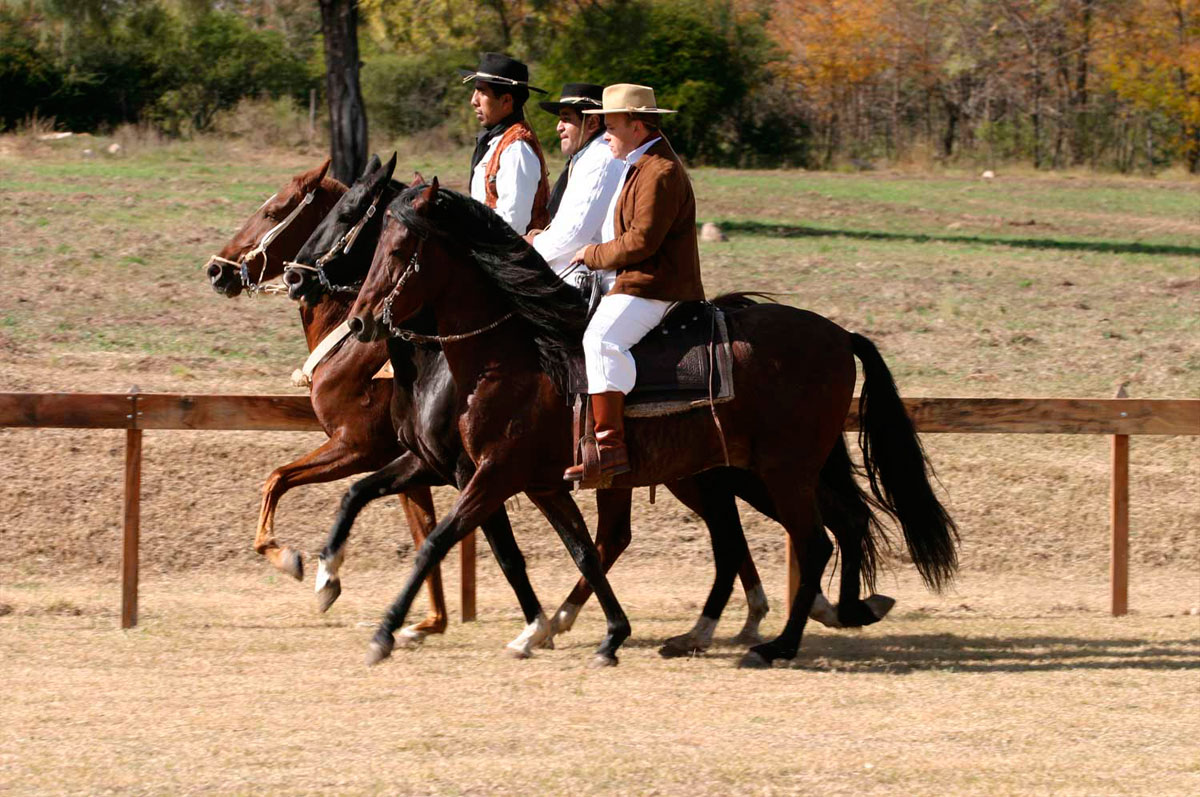
Taking care of all the aforementioned values is the great responsibility of those of us who breed and promote the CPP breed through the practice of Equestrian Tourism, to bring it to the attention of horse riding enthusiasts all over the world.
As proof of our love and commitment to the breeding and promotion of this breed, there is a Code of Honor among the breeders of the Peruvian Paso Horse: “No breeder of the CPP will ever send a specimen of the breed to a slaughterhouse or meat processing plant. All the specimens that we have bred and ridden, and that we still have, will die of old age in our fields, with the food and care they require”.
Origin and history of the breed
Without doubt, the origin of the Peruvian Paso horse can be traced back to the group of horses that arrived with the Spanish conquest of the Americas. We know from history that the first horses to set foot in what is now Peru were 62 horses that arrived with the 170 men who accompanied Francisco Pizarro and captured the Inca Atahualpa in November 1532.
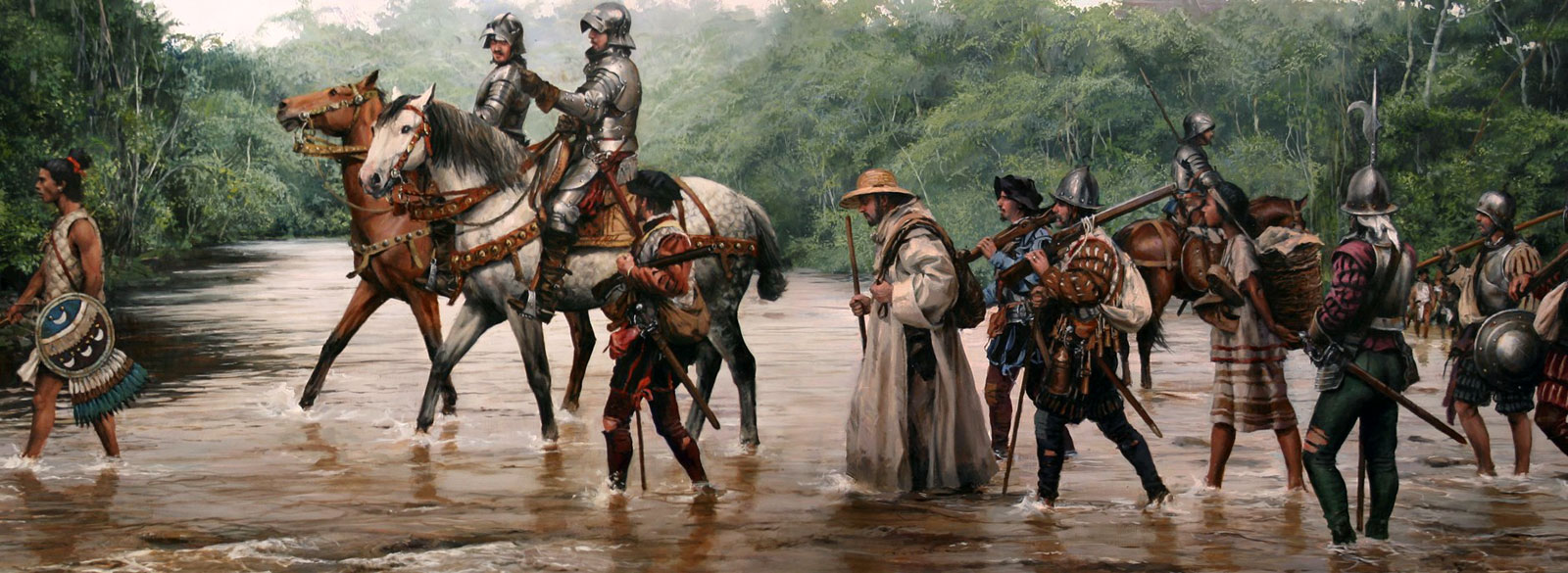
These horses came from the stud farms of Nicaragua, an area to which a large number of horses were brought by Christopher Columbus on his second voyage, which set sail from the port of Cádiz on September 25, 1493.
To these 62 would later be added 84 brought by Diego de Almagro along with others brought by Hernando de Soto, who, according to the Inca Garcilaso de la Vega, was an extraordinary horseman and had gone to interview Atahualpa, commissioned by Francisco Pizarro.
Finally, Pedro de Alvarado, governor of Guatemala, arrived in the province of Quito of the Inca empire at the beginning of 1534, in command of 500 men with 227 horses.
As we can see, in just three years, a large number of horses were brought together that constituted the genetic basis of what is today the Peruvian Paso Horse.
What, then, was the genetic background of this group of horses that would explain, in the end, the unique characteristics of the Peruvian Paso?
Going back even further in time
But what were the origins and characteristics of all these horses?
To answer the question, we will say that these horses were what was then known as the Spanish or Andalusian horse, and at that time this breed was the result of the crossbreeding of the horse from the north of the peninsula, of Celtic origin, known as the Galician horse, with the Sorraia horse that was bred in the area of Portugal genetically linked to the extinct Tarpán horse, and the Bere Bere horse from Morocco or North Africa, which arrived on the peninsula with the Muslims and remained there for more than 700 years.
These horses that arrived in Peru were large in stature, which, in the crossbreeding, was contributed by the horses of Iberian origin, and had a smooth gait due to the tendency to amble that was contributed by the Berber horse from North Africa.
This Andalusian breed that arrived in Peru included both trotting and walking animals, the latter being softer, that is to say, with a greater predominance of the Berber from North Africa.
These horses began to reproduce in a territory completely different from that of the Iberian Peninsula, but they began to be selected by man based on their smoothness for travel and their ability to withstand the most difficult geographical environments.
That is to say, the tendency to amble began to be genetically fixed in the crossbreeding of different bloodlines, discarding the trotters, and in addition to the aforementioned smoothness, derived from the ability to amble, those that were most resistant were chosen.
This process developed over 500 years, with the particularity of having remained isolated from the influence of crossbreeding with other breeds.
Today, as a result of the selection made, in the search for a smooth gait and endurance, they developed or derived the rhythmic gait of the paso, the elegant and proud bearing of a true conqueror, and the ability to travel great distances, and that is the Peruvian Paso Horse.
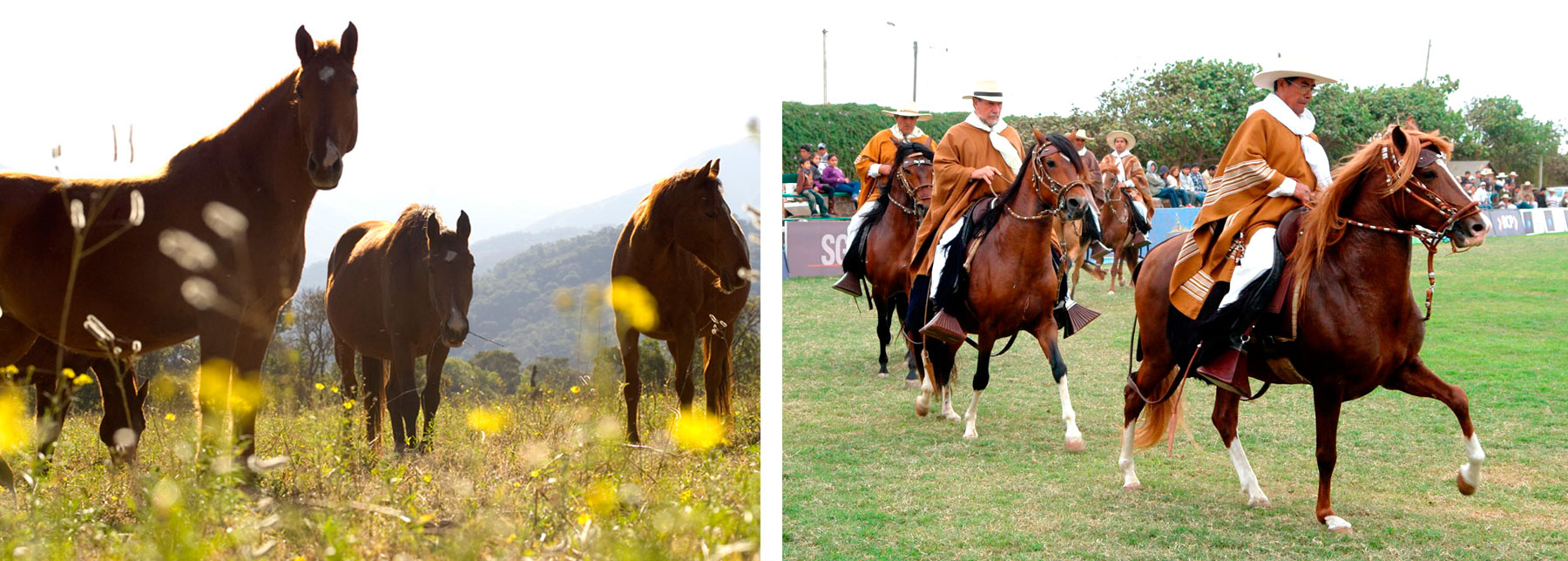
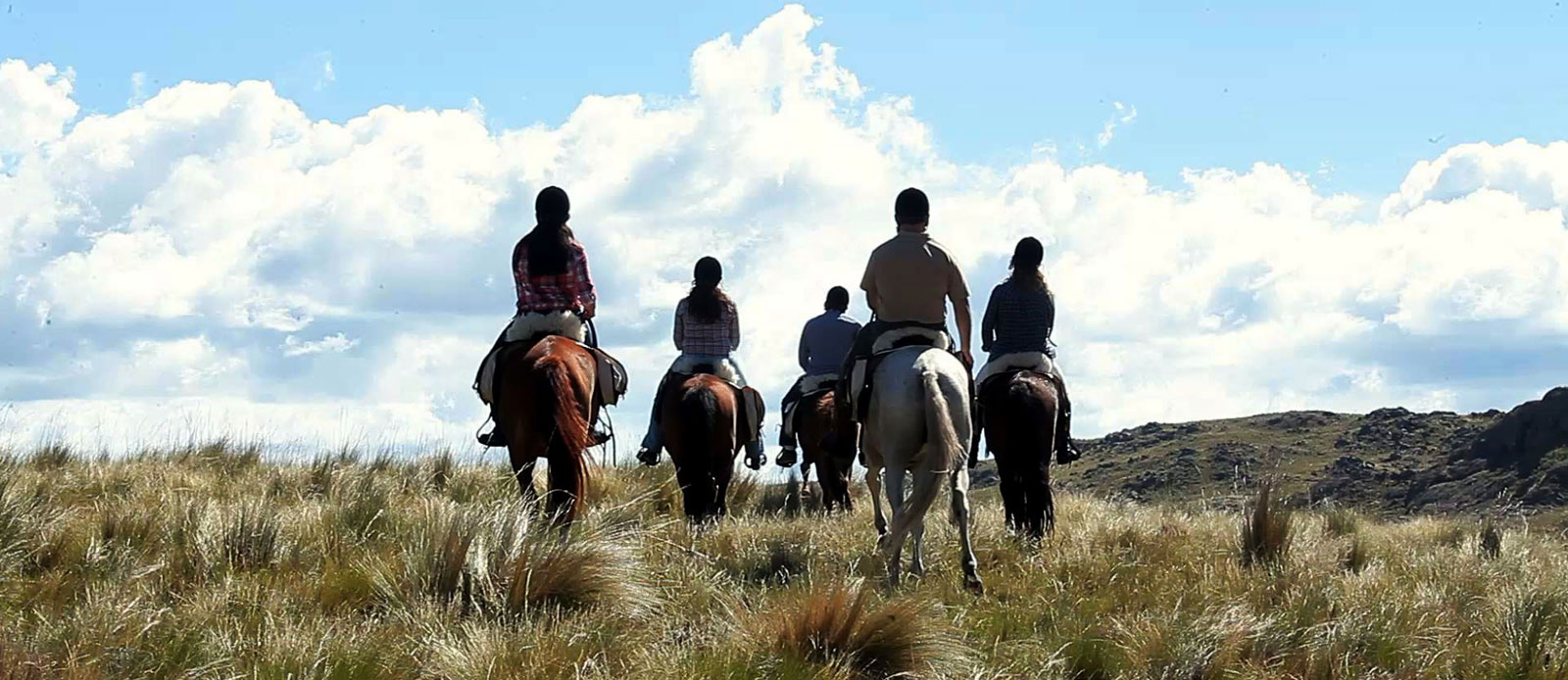
We could say, surprising as it may seem, that the CPP is a true Spanish thoroughbred, which evolved in this part of the American continent, and which was part of the viceroyalty of Peru, with no other action than genetic fixation, produced in the selection made by man, for its biomechanics of gait and the morphology that allows it to perform that gait with endurance and elegance, in an environment of pastures and geographies, with their own characteristics.
This fact, of selective evolution without crossbreeding with other breeds, but based on one of them, the Andalusian horse of the time, prioritizing only certain characteristics as we have mentioned, makes the CPP a unique specimen.
And when we say Spanish thoroughbred it is so, because the Andalusian horse, from which it descends, lost its original characteristics.
What happened to the Andalusian horse in Spain?
During the reign of Felipe II, in the famous stables of Cordoba, they began to crossbreed the Andalusian horse, which arrived in Peru, with Neapolitan, Danish and Norman horses, thus beginning for that horse to acquire characteristics different to the original, such as greater height with a loss of agility, grace and beauty.
By the time the Bourbons arrived in the kingdom of Spain, they promoted the practice of haute école, which led to the total disappearance of horses with a tendency to amble, and crossbreeding continued with horses of the origins mentioned above.
In short, today the Andalusian horse or the officially named Pure Spanish Breed is a very different horse to the CPP, but the latter is the evolved expression, without interference from other foreign breeds, of that ancient Spanish horse that arrived on the American continent, and which only, in the territory of the viceroyalty of Peru, evolved so that today we have that horse, converted into the CPP.
Enjoy the experience of this equestrian jewel
It is for this reason that we say that we have an Equestrian Jewel, which we must look after and improve so that millions of fans of riding in nature can get to know it and enjoy it: a “historical legacy” that we, the breeders and the institutions that bring us together, cannot renounce.
As we have explained, the CPP was patiently modeled, like things of great value, for riding and traveling long distances.
Today, this activity is known as Equestrian Tourism and allows millions of people around the world to experience the feeling of freedom, communing with the horse, in a form of transportation that today we can practice without needing to get from one place to another, but rather to feel and live the experience, because for transportation, today we use cars, trains or planes.

The horse that will carry us comfortably and at the same time make us feel the controllable energy of its verve and allow us to travel great distances in nature is, without a doubt, the Peruvian Paso Horse. In our opinion, it is the best breed for practicing equestrian tourism.
Comments (0)
No comments yet.



Comments
Leave your comment