
Dr. Camie Heleski: Equine behavior and welfare
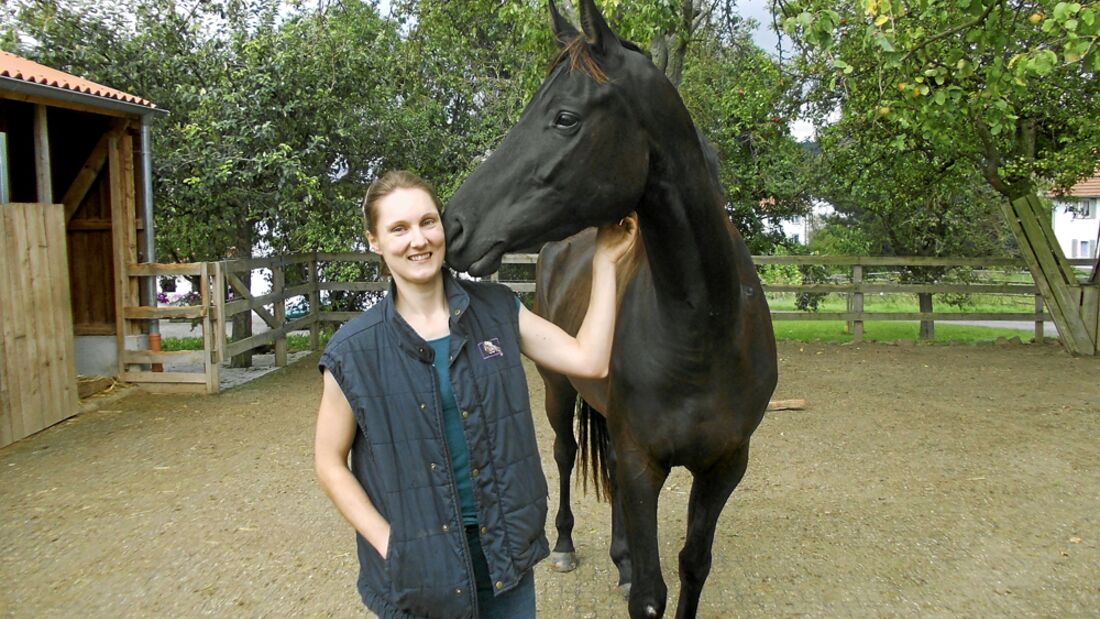
Camie Heleski has lived surrounded by horses since she was a child. Her family's farm raised and trained horses.
This encouraged her to specialize professionally in equine behavior and welfare, earning a doctorate in Animal Science. She specialized in equine nutrition and exercise physiology.
In this interview, Dr. Heleski talks to us about horse training, equine welfare and the different methods used to assess the welfare of horses.
Her professional life
Professor Heleski has worked at Michigan State University for 25 years as Coordinator of the Horse Management Program.
In 2016, she began collaborating with the University of Kentucky in the Equine Science and Management program.
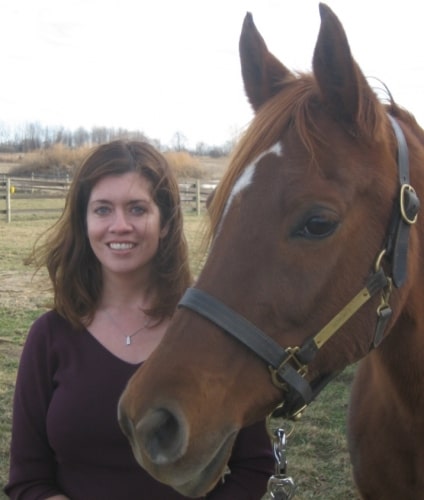
Her main research is based on three aspects:
- The behavior and welfare of equines
- The interactions between humans and horses
- Working horses in developing regions of the world
Recently, she has branched out into thoroughbred horse racing research.
Let's meet Dr. Heleski
Dr. Heleski, where does your interest and passion for horses come from?
I would say from my dad... I was lucky to be born into a family that already had horses. When I was young, we had about 15 or 20 horses on our farm where we offered training, lessons, livery, etc.
Do you have your own horses to train and ride?
I have a 14-year-old Arabian gelding that I ride mainly for pleasure and to do a bit of dressage. And my daughter has a 5-year-old thoroughbred here that was previously used for racing and with which she now does basic dressage.
The welfare of horses
What are the most important rights of horses?
The terminology between “animal welfare” and “animal rights” can be a little confusing.
What I would like to see is all of us making an effort to guarantee true welfare for the animals we work with.
Whenever I can, I try to follow one of the sayings of my colleagues: friends, food and freedom of movement are very important.
What is the difference between an animal's welfare and its rights?
In my view, “animal welfare” has a lot to do with what we provide for the animal: how we strive to meet its biological needs, attend to its affective states and offer it natural living conditions.
“Rights”, on the other hand, have more to do with ‘moral rights’ and is a concept more closely linked to the human point of view.
How are the two concepts applied in the care and training of horses?
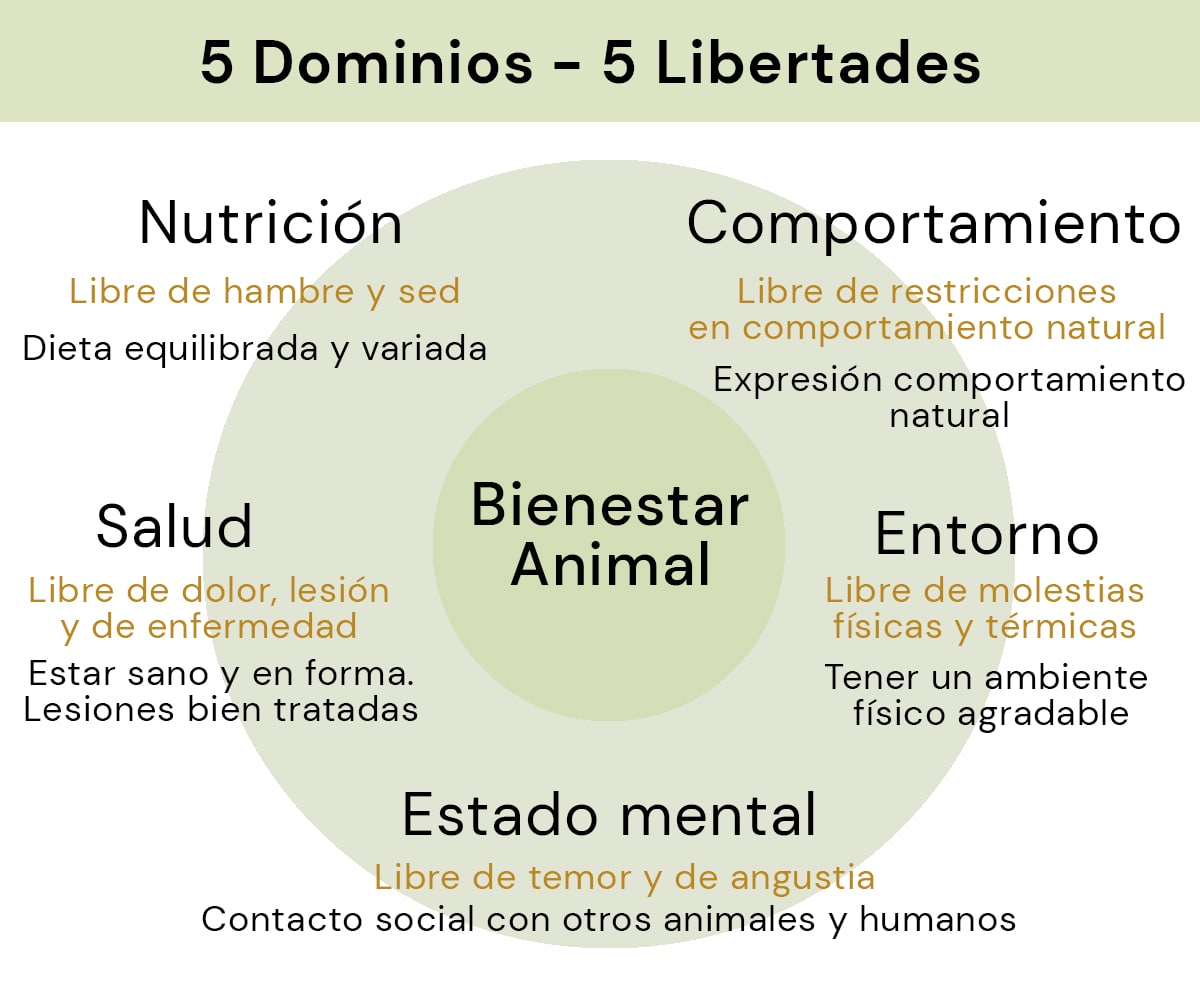
I like to know that we are moving towards thinking based on the “Five Domains” (beyond the way of thinking based on the Five Freedoms): now we are not only thinking about avoiding suffering, but about something more.
As the Farm Animal Welfare Council puts it: “An animal's welfare includes both its physical and mental state. We consider good animal welfare to involve both physical fitness and a sense of well-being. Any animal kept by man should be protected from, at the very least, unnecessary suffering.”
The Five Freedoms provide a logical and comprehensive framework for the analysis of welfare within any system, together with the steps and commitments necessary to safeguard and improve welfare within the appropriate limitations of an effective livestock industry.
- That the animal does not suffer from thirst or hunger: it has access to fresh water and is provided with a diet appropriate to its needs.
- That the animal is comfortable: it is provided with a suitable environment, including shelter and a comfortable resting area.
- That the animal does not suffer from pain, injury or disease: thanks to adequate prevention and rapid diagnosis and treatment.
- That the animal is able to show most of its normal behavior patterns: it is provided with the necessary space and adequate facilities, and is housed in the company of other individuals of its species.
- That the animal does not experience fear or distress: the necessary conditions to avoid mental suffering must be guaranteed.
You can find more information about the Five Domains and their differences with the Five Freedoms at this link.
The Five Freedoms may have fallen somewhat into disuse, but they still provide very valuable information. They refer mainly to how to avoid suffering in order to achieve animal welfare.
Many of us are trying to move towards a more positive perspective on animal welfare, with the Five Domains model.
Dr. Heleski, you have traveled to Brazil, Mexico, Honduras, Egypt and Mali to support your research with working equids. What results and conclusions did you reach from these scientific studies?
Hmm... I'm not sure I've achieved very conclusive results... rather a greater empathy with those people who live in low-income areas and have to face many difficulties.
The problems are often similar: insufficient nutrition, lack of access to clean and safe water, lack of hygiene and treatment for injuries, etc.
Many owners want to be able to provide good care for their horses, but often they don't have the resources to do so (sometimes due to lack of education, which is something our groups worked on).
I could talk for hours about these projects, but I'll keep my answer short.

Dressage and training of horses
What are the fundamental concepts for creating a correct training pattern for horses?
Wow! ... that's a very good question. When the trainer gives a clear signal and then provides a precise and well thought out response, the horse generally learns quickly.
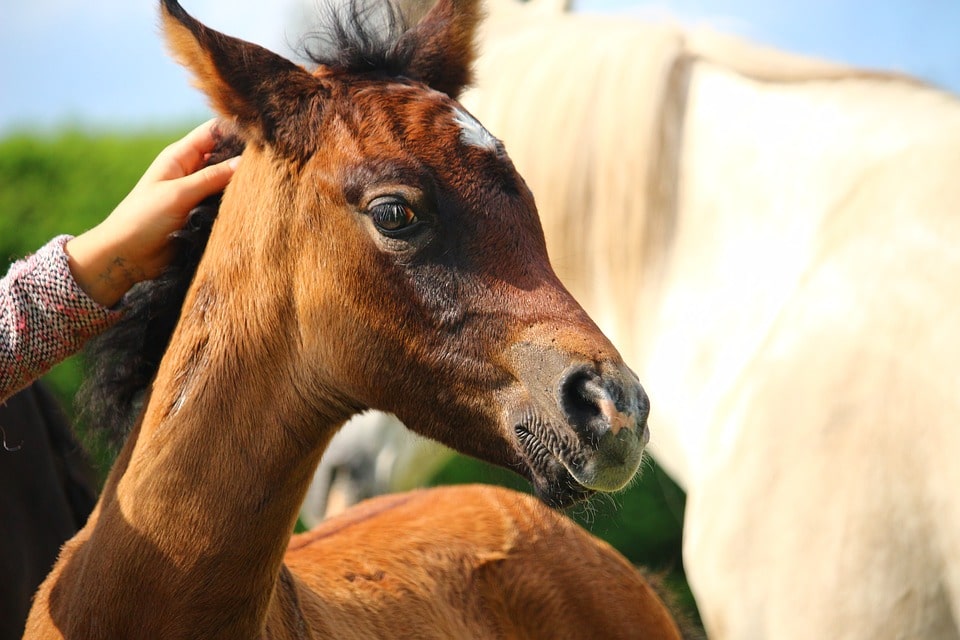
For example, you are trying to teach a young foal to move forward: you pull gently but firmly on the rope or halter (the signal) and the foal moves slightly forward. You immediately reduce the pressure on the rope or halter (the negative reinforcement). You could also stroke its forehead (positive reinforcement).
When there is good synchronization, the foal learns to walk very quickly.
What is the difference between punishment and negative reinforcement, and how do they apply to learning theory?
I hope that these concepts are becoming clearer to most people.
- Negative reinforcement: with this we want to “increase” the frequency of a behavior pattern by “subtracting” pressure in the equation. For example, a rider asks the horse to move forward by pressing down on its legs... as soon as the horse moves forward, the pressure of the legs should be eliminated or reduced, and at that point the horse receives negative reinforcement (it is a subtraction, it is not something negative in the real sense of the word). An example of punishment: a horse bites the trainer, the trainer “touches” it with a whip on the chest and the chances of the horse biting again are reduced. Many trainers follow the guidelines of the Science of Horsemanship and are quite “anti” punishment. For me, it depends a lot on the situation. Sometimes, if it's a safety issue, I'm convinced that punishment might be the most appropriate thing to do in a given situation.
Do we use positive reinforcement enough in the horse industry?
In most of the industry, NO! “Traditional” trainers need to realize that positive reinforcement, for example, a biscuit or a pat on the withers, is considered silly.
People who have “traditionally” worked with horses need to be more open-minded; especially when a horse is afraid of something, positive reinforcement can be very useful.
Can giving food to the horse as a reward by applying positive reinforcement cause the horse to get used to it?
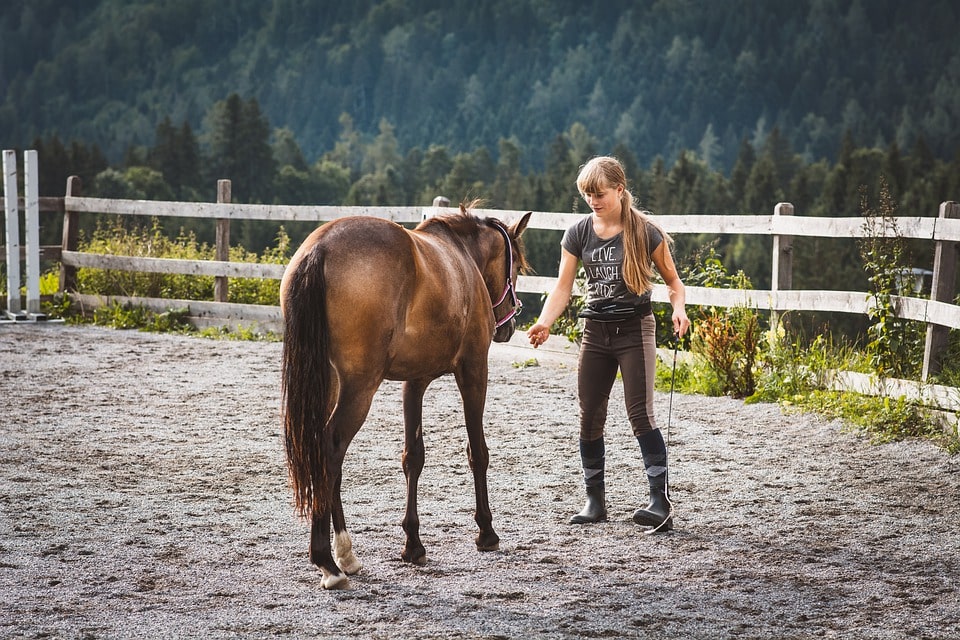
It is very rare for that to happen... Of course, you have to know how to manage time well and be very clear about what you want to achieve. If we are working with stallions, we have to be a little more cunning about timing and the use of food as positive reinforcement.
Occasionally, this can cause problems with horses that are a little “aggressive”, but they can be avoided if we rely on learning theory.
What advantages does negative reinforcement training have over positive reinforcement training for ridden horses?
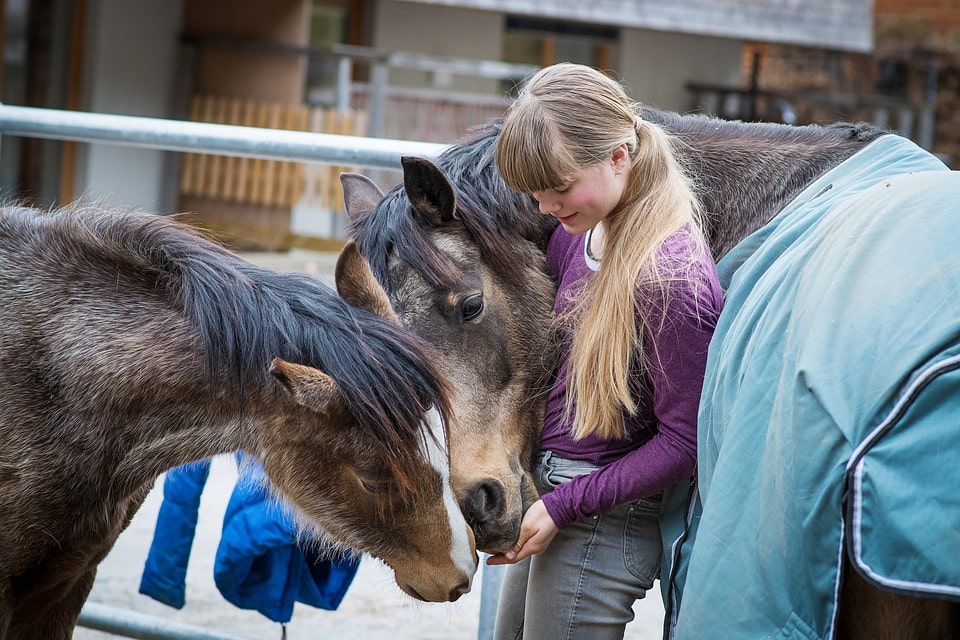
Negative reinforcement is very practical when we ride and it is what we are most used to. But we can also carry a couple of treats in our pocket to reward the horse when we see it doing the right thing.
My daughter gives her thoroughbred a couple of horse biscuits every time she rides him, which hasn't “spoiled” him at all. On the contrary, I think he tries harder.
How important is it for horses to be in the company of other horses?
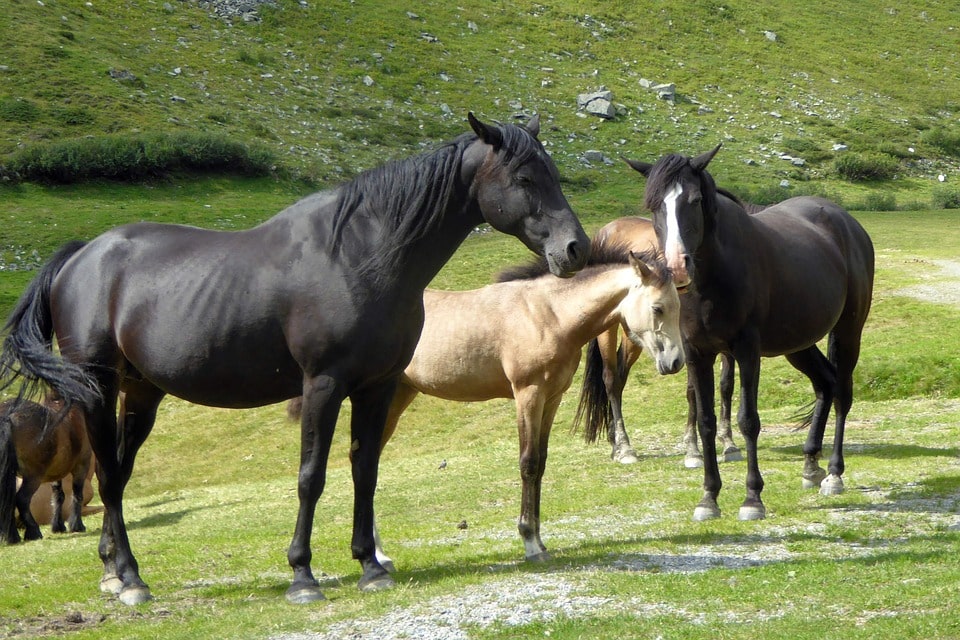
Sometimes that's not possible, but in general, horses have a great need for social interaction with other horses.
As I mentioned before, having “friends”, “food” (pasture or fodder) and “freedom” to move around... are super important. Horses don't really care if they are super brilliant, for example, that is a human construct.
human construction.
Equestrian Tourism
Yes, I know them and they are lovely! I have only ridden them once.
Have you ever visited Argentina? Would you like to discover it on the back of a Peruvian Paso horse?
I have been to Brazil three times and Honduras twice, but I have not yet been lucky enough to go to Argentina.
Final conclusions
Thanks to Dr. Camie Heleski for answering our questions. As she says, timing is crucial when giving signals to our horses during the teaching process.
On the subject of equine welfare, Dr. Heleski assures us that it is very important to understand and satisfy the needs of horses. Based on the model of the 5 freedoms, this has evolved into the Five Domains model to ensure the welfare of our horses.
Continúa leyendo
Este artículo es exclusivo para miembros.
To view this blog, please complete the form
Access full content
Comments (0)
No comments yet.



Comments
Leave your comment