
Eve Barmettler - 45 years with Icelandic Horses
Interview with Eve Barmettler
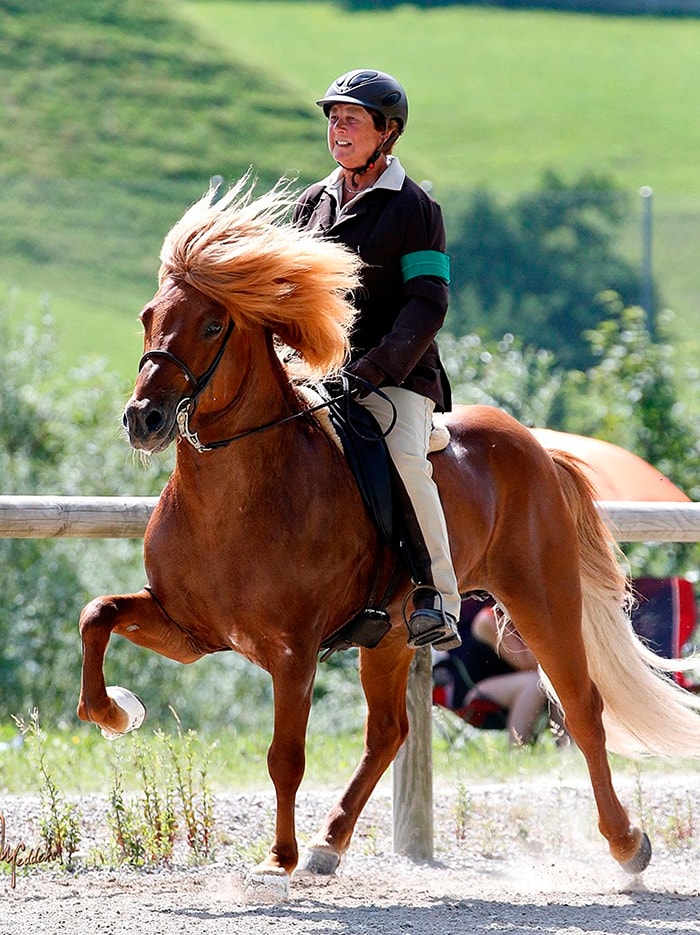
We interview Eve Barmettler, former owner of Hestar-Hof who has dedicated herself to breeding, riding and training Icelandic horses in Switzerland. She is a professional who has had a wealth of experience and has dedicated her whole life to the equestrian world.
Eve Barmettler is the founder of the Hestar-Hof company, which has a long history with Icelandic horses dating back to 1975. She also has an extensive background as a professional rider and competition judge, and a long career in equestrian training and horse breeding.
We have invited her to an interview to learn about her activities, the challenges she faces as a horse breeder and her opinion on the application of science in the training of these adorable and noble animals.
We invite you to read the interview to learn about these interesting issues through the eyes of this professional who has dedicated her whole life to the equestrian world and has decades of experience in it.
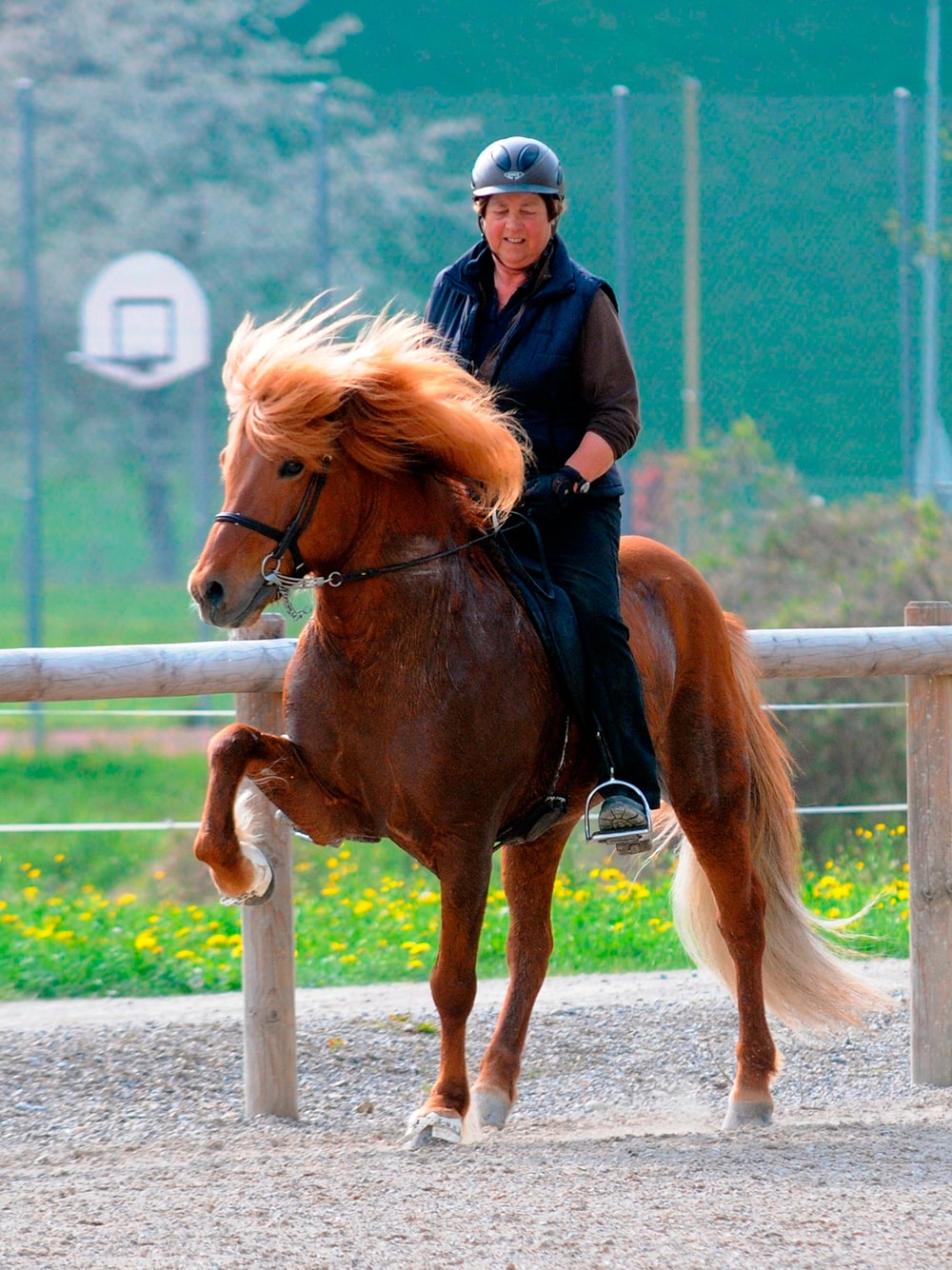
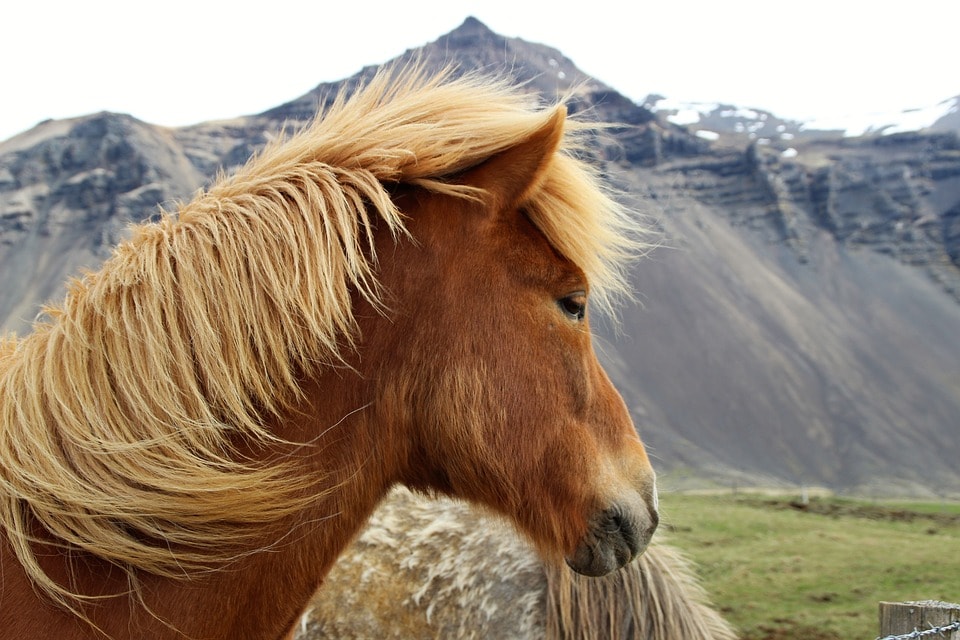
Introducing Eve Barmettler and the Hestar-Hof stud farm
Eve, where does your passion for paso horses come from?
Since I was a child, when I went to school, I looked after Icelandic horses. I also lived through the beginning of the leisure riding movement and of having horses in an open stable. In 1966 I had my first Icelandic horse of my own.
You are the founder of the company “Hestar-Hof” which has a long history dating back to 1975. What does this company offer and what does it do?
From 1975-2012 there were always between 60 and 70 Icelandic horses and sometimes other horses passing through the farm. It was a boarding house for Icelandic horses, a place to buy Icelandic horses, a breeding farm for Icelandic horses, a place to train Icelandic and other horses, and a place to sell equipment for Icelandic horses www.evebarmettler.ch.
In 2012, the Hestar-Hof farm was sold to a well-known Icelandic horse trainer, the new name is “HestarHofHeller”.
Over so many decades, how has the company grown and what were the fundamental changes?
The hobby became my profession, I specialize in riding Icelandic horses, as well as other gaited horses.
“Hestar-Hof” is 45 years old this year and you must be very proud. How are you going to celebrate and are there any new projects?
I already sold it, but I'm happy that the activities specializing in Icelandic horses are going ahead.
My new projects are already underway: a university degree specializing in paso horses with a diploma.
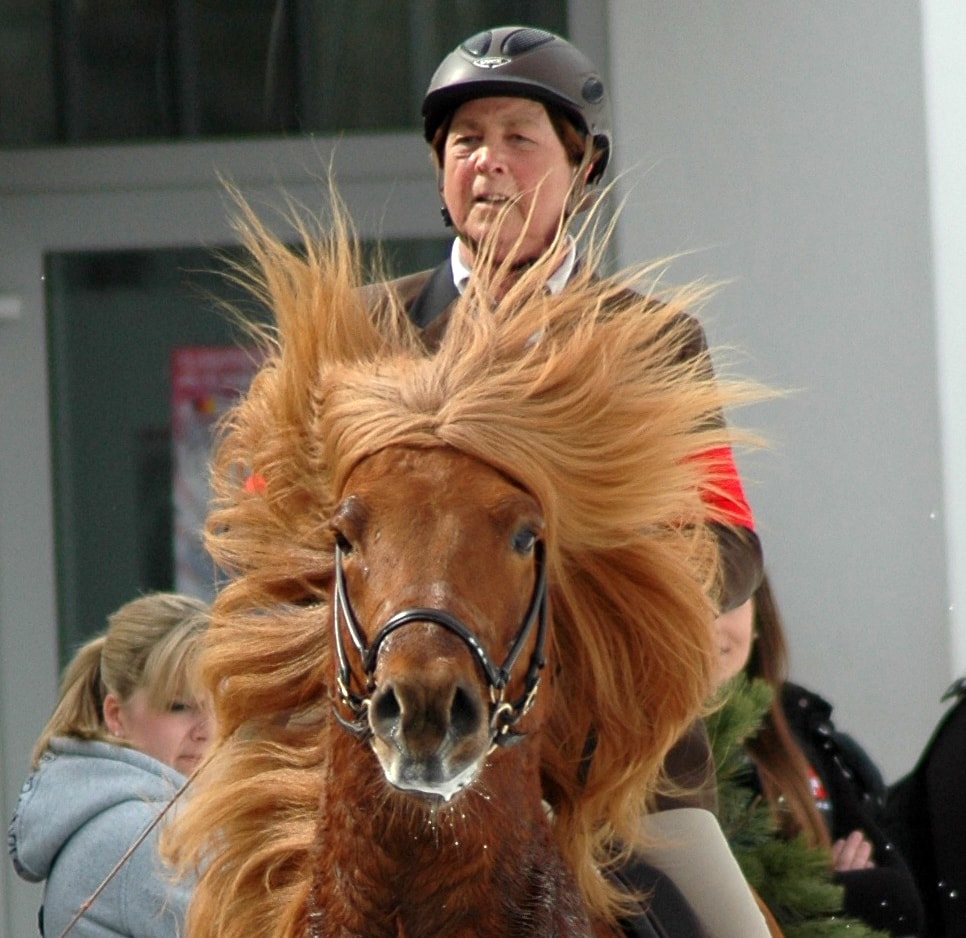
The horse breeding farm
When and why did you decide to breed paso horses?
There is an Icelandic saying: “Among Icelandic horses, even geldings breed.” In the first 20 years we had more than 30 foals with our mares and stallions registered in the breed registry. www.worldfengur.com
How many horses do you currently work with and what breeds are they?
I retired a few years ago, but I still ride every day at a friend's farm. I have two Icelandic horses of my own and between four and five horses to train or sell. www.islandpferdehof-heuberg.ch
And why Icelandic horses?
In 1961, while still at secondary school in Zurich (Switzerland), I discovered Icelandic horses and fell in love with them.
**What are these animals like? What is it that you like so much about them, more than other breeds? **
I have been working with paso horses for more than 5 decades, I had Peruanos de Paso, Paso Finos, Mangalarga Marchadores, American Saddlers, Aegidienberger etc.
But my favorites are still the small, hardy Icelandic horses, they are easy horses with five unique gaits.
Since the middle of the last century they have become popular and have developed both in breeding, their use for leisure and in sport up to world championships and this shows that it is the ideal horse that has everything for Central Europe.
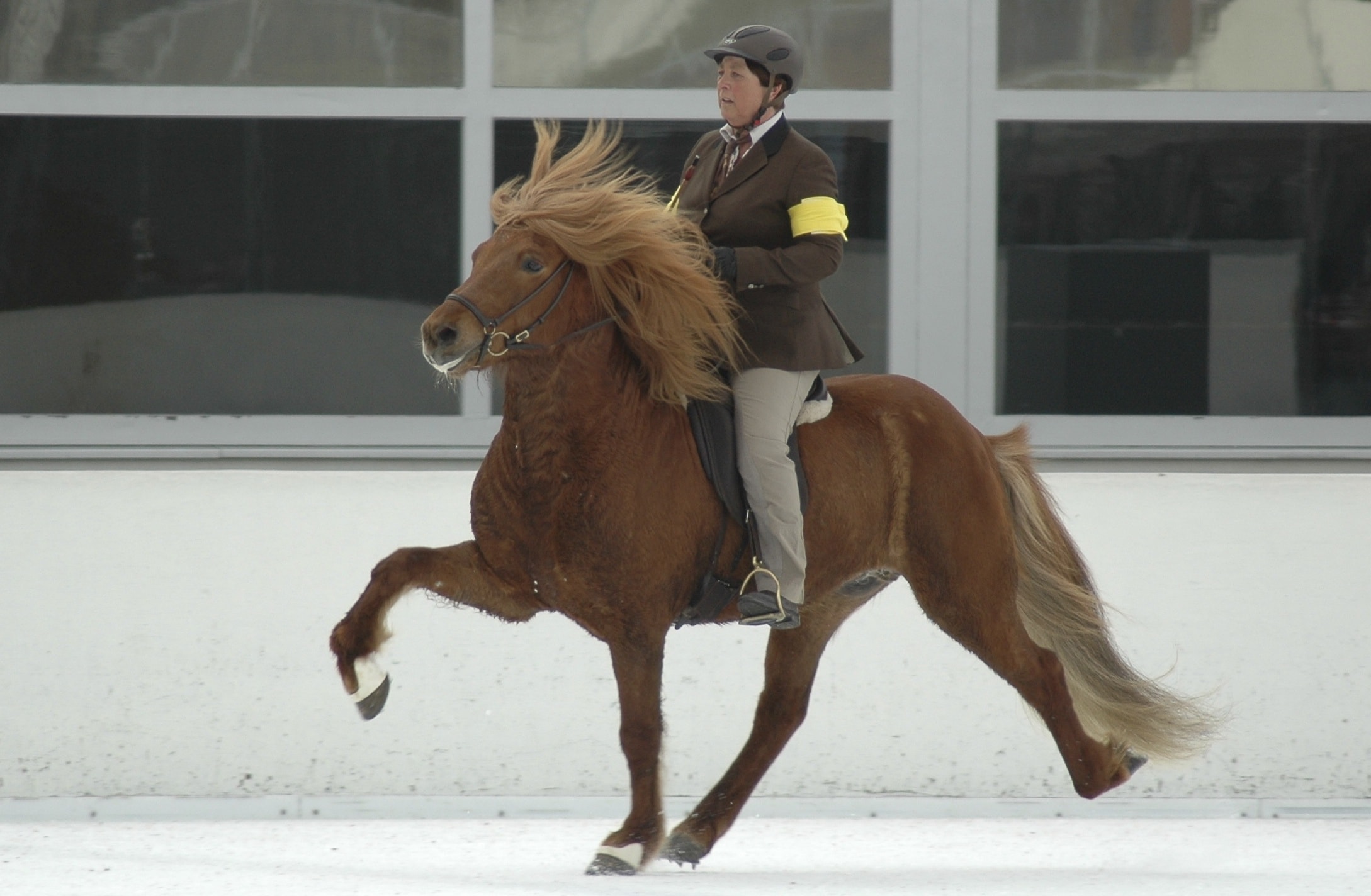
Is there an institution in Switzerland that brings together or represents paso horse breeders?
Icelandic horses: The IPVCH - Islandpferde Vereinigung Schweiz (Icelandic Horse Association of Switzerland) which is regulated by the FEIF (International Federation of Icelandic Horse Associations) the breeding of Icelandic thoroughbred horses which has been going on for 1000 years and the sport with Icelandic horses at an international level.
Paso Fino: “PFHAS - Paso Fino Horse Association Switzerland” which regulates breeding and sport at a national level in collaboration with the countries of origin.
Are your horses bred in the countryside or in stables?
Icelandic horses live in an open stable with fields, with a few exceptions (injured horses, stallions).
Passing horses, depending on their breed and use, live in an open stable or indoors.
Have you used cloning or embryo transfer techniques in your breeding program?
Icelandic horses are rarely bred using artificial insemination or embryo transfer. Cloning is under debate, but is not yet prohibited, there are about 60 to 70 foals a year.
There are too few paso horses in Switzerland, I have no experience, there are only about 10 to 15 foals a year: Paso Fino 2-5, Peruvian Paso 0-1, Mangalarga 0-1, American Saddler 0-1, crossbreeds 0-2.
In your opinion, what are the biggest challenges for horse breeders?
Switzerland is too small and expensive a country to breed horses and, furthermore, there is a very large supply of three- gait horses (not paso) at very low prices. Only the best specimens of each breed should be used for breeding.
Breeders who do it as a hobby use their only mare or the one that is not for sale on the market with the only stallion they can get and thus create a base of second-quality horses. Breeding is not very different from other breeds (with the difference that Icelanders do not start riding until they are 4 or 5 years old).
The challenge in breeding paso horses lies in the professional selection and specialized preparation/training of each breed with its specific gaits.
How is the horse sales market environment changing?
There is a high demand for Icelandic horses and there is a need for imports from the country of origin, Iceland, or other important breeding grounds. They are usually prepared for riding or, depending on their use, they receive more specific training. The stud farms that sell Icelandic horses are also training centres with a very good structure for both horses and riders.
Other gaited horses are not well known as the market is poorly organized (Paso Fino are making progress).
Riding a horse with an isochronous four-beat gait requires a lot of training and does not always coincide 100% with classical riding. Many riders who do it as a hobby concentrate a lot on working in hand or on the lunge, riding in a light seat, but the training of the four-beat gait is neglected. This makes it difficult for paso horses to spread and will be the reason why they are not making much progress in Central Europe.
What is the mission and vision of your company “Hestar Service”?
- It has already been achieved with Icelandic horses: breeding, dressage and training, international sport.
- Paso Fino: professionalism is in its infancy.
- Other gaited horses: difficult, there is no interest and there is a lack of professionals.
- Grouping of those interested in gaited horses, in 2017 the formation of the club.
- Zusammenschluss der Gangpferdeinteressierten, 2017 Gründung des Vereins “Gangpferde Schweiz” (Swiss gaited horses), but interest is limited (Icelandic horses are well organized internationally, but for other gaited horses there is not much interest).
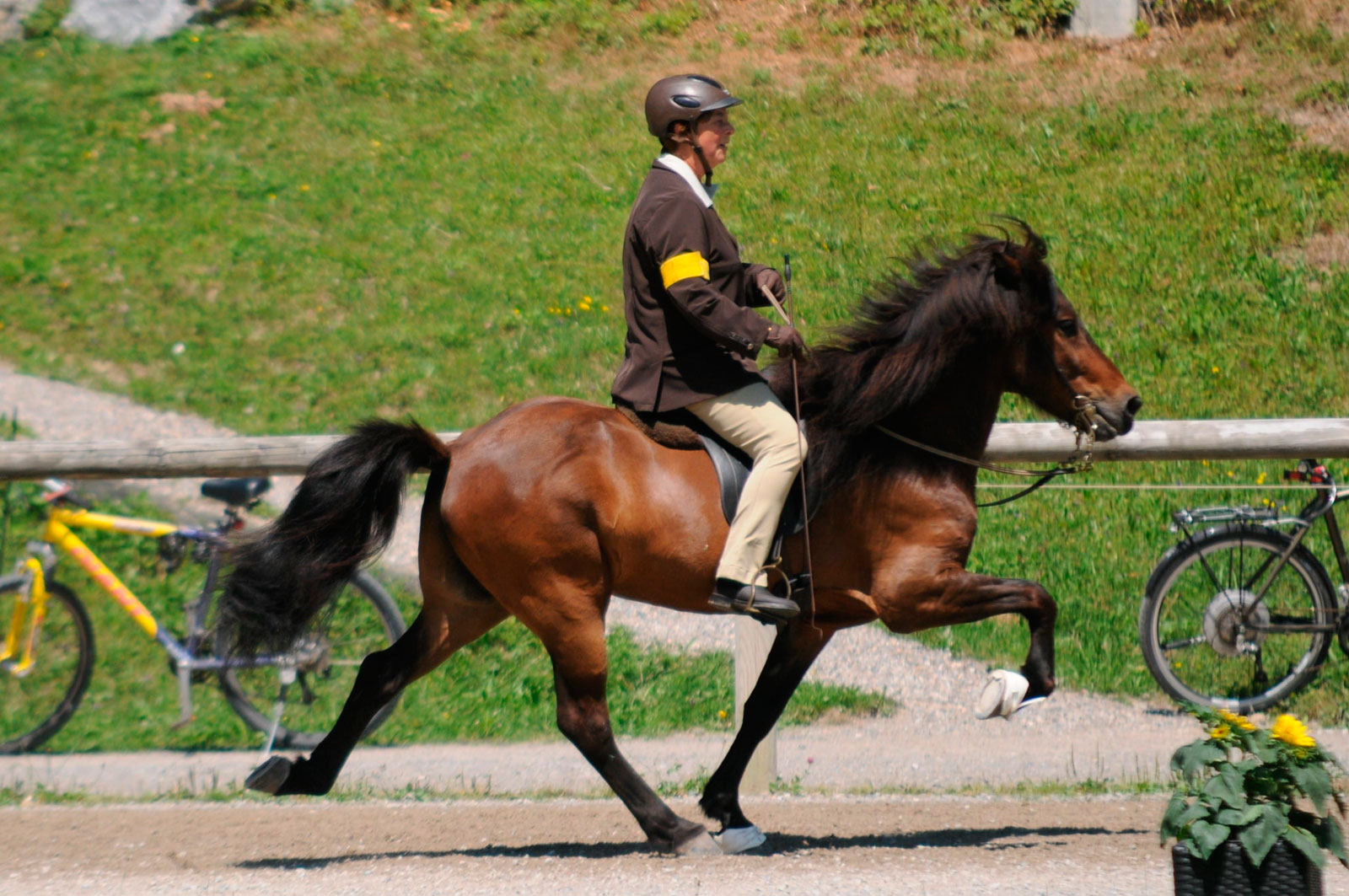
Horse training
Do you think that the Learning Theory and the fundamentals of Ethology, ideas disseminated by the International Society for Equitation Science (ISES), are heading in the right direction so that we can have sound principles for training horses and at the same time consider the welfare of equines? Is scientific knowledge about equine behavior sufficiently widespread in the horse industry world?
Today, there are many serious offers for learning professions in the equine field, especially for horses (OdA Pferdeberufe / IPV CH / IGV) and there is a strong focus on the welfare of equines.
As well as breeding horses, you also train them. At what age do you start training the horses you have bred? Do you do any work on them by hand (not mounted) from an early age?
The paso horses and the riders are trained according to the regulations of the OdA Pferdeberufe (Organization of the world of work for equine professions) with the award of a diploma, and are oriented towards classical riding.
Icelandic horses are started between the ages of 4 and 5 (their growth ends at 7-8 years).
Passing horses, depending on the breed, are started between 2 and 4 years old.
Work on foot - Work on the lead rope - Hand horse - Light seat / signals - basic dressage - training of the paces.
Assuming the training of the passing horses, what principles do you apply?
Depending on its lineage, its potential for the basic paces is already defined to a certain extent.
To see its lateral potential, the young horse is observed in the field, in the herd or when it walks freely in the arena. Different traits are sought depending on the breed or the use to which it is put.
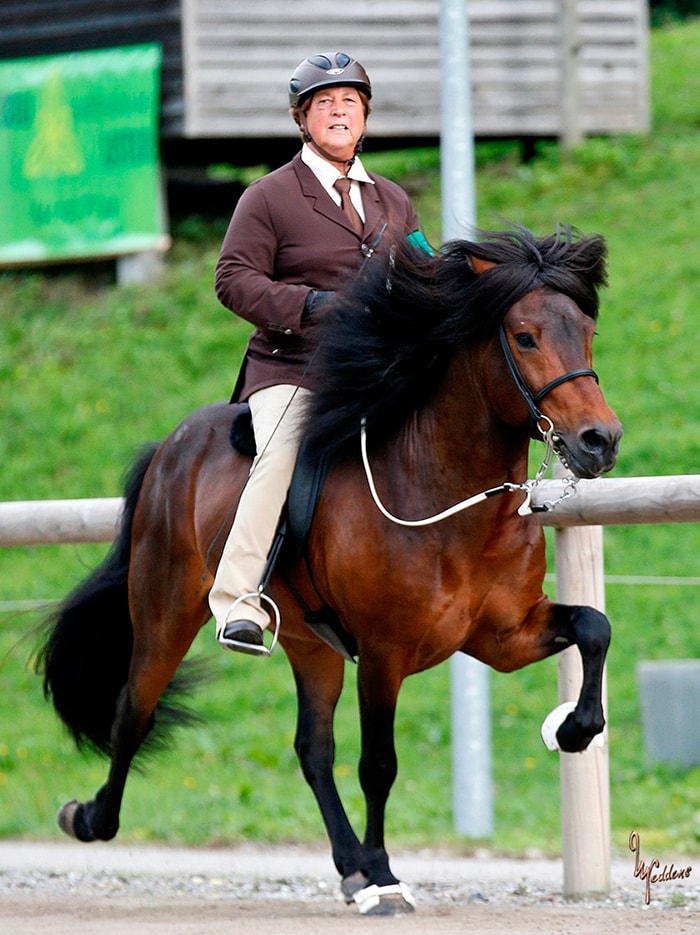
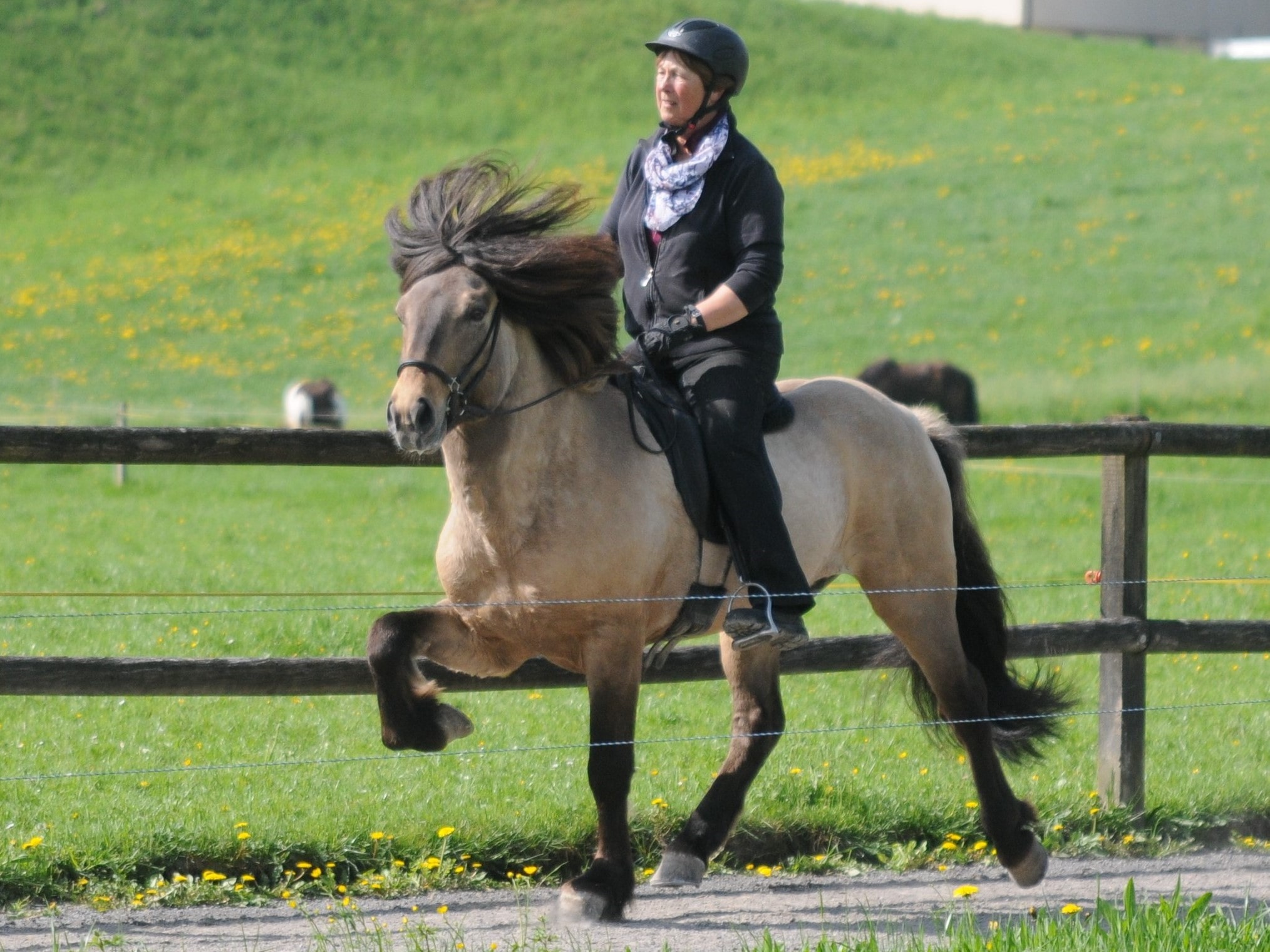
If the horse shows lateral potential without human help or even clean tölt for a certain distance, it is almost certain to be a pleasure to ride.
The experience of the rider is fundamental, as is what he or she can achieve with meticulous work on a talented young horse. In horses with lateral potential, balance and tension are fundamental. The tölt / four-beat gait must be achieved throughout their training with the support of few aids.
Work on foot – Work on the lunge – Hand-held horse – Work on two lunges – Light seat / signals – basic dressage – training of the paces.
In horses with little potential for tölt or four-beat gait, it is essential to give them classical dressage and training at the beginning. Only when you know the aids can you prepare the horse for tölt training with gymnastic exercises.
If the horse is not very talented, it must be taken into account that the tölt training will be long and difficult and will go against the animal's well-being.
The training is individual and adapted to the horse's potential.
Do you train horses from scratch or horses that have already been trained by someone else?
Nowadays I no longer train them from scratch, but I do train difficult or poorly trained horses. My specialty is flying-step training and correcting problems with the four-beat gait.
 ## Equestrian sports activities
You prepare the paso horses and the riders for different tournaments. What are the main tournaments in which you participate and what do the competitions consist of?
Tournaments for Icelandic horses with FEIF/FIPO regulations www.feif.org.
To comply with the requirements of Icelandic horse riding, oval tracks and specific 200m-200m passage tracks with a hard, smooth surface are required. The 4-gait, 5-gait, tölt and passage tests, as well as flying passage races, are offered for different age ranges and difficulties both nationally (Switzerland) and internationally.
Once a year there is the championship in Switzerland and twice a year the international championship of Icelandic horse riding.
There are paso horse tournaments organized by the IGV (International Paso Horse Association) www.igv-online.com / www.gangpferdeschweiz.ch.
The equestrian sport of paso horses is not very well known in Switzerland. The club “Gangpferde Schweiz” (Paso Horses Switzerland) organizes a paso horse tournament with competitions once a year, it is not big and mostly Icelandic horses participate.
In the competition, what is the biggest challenge for horses and riders?
Touch - dressage - training - experience - enjoying participation.
Riding a horse, not only in equestrian sports, falls and injuries can occur. How can riders who have suffered some major injuries overcome their fear and get back on the horse?
Dressage – training – experience – safety measures – suitable trainer.
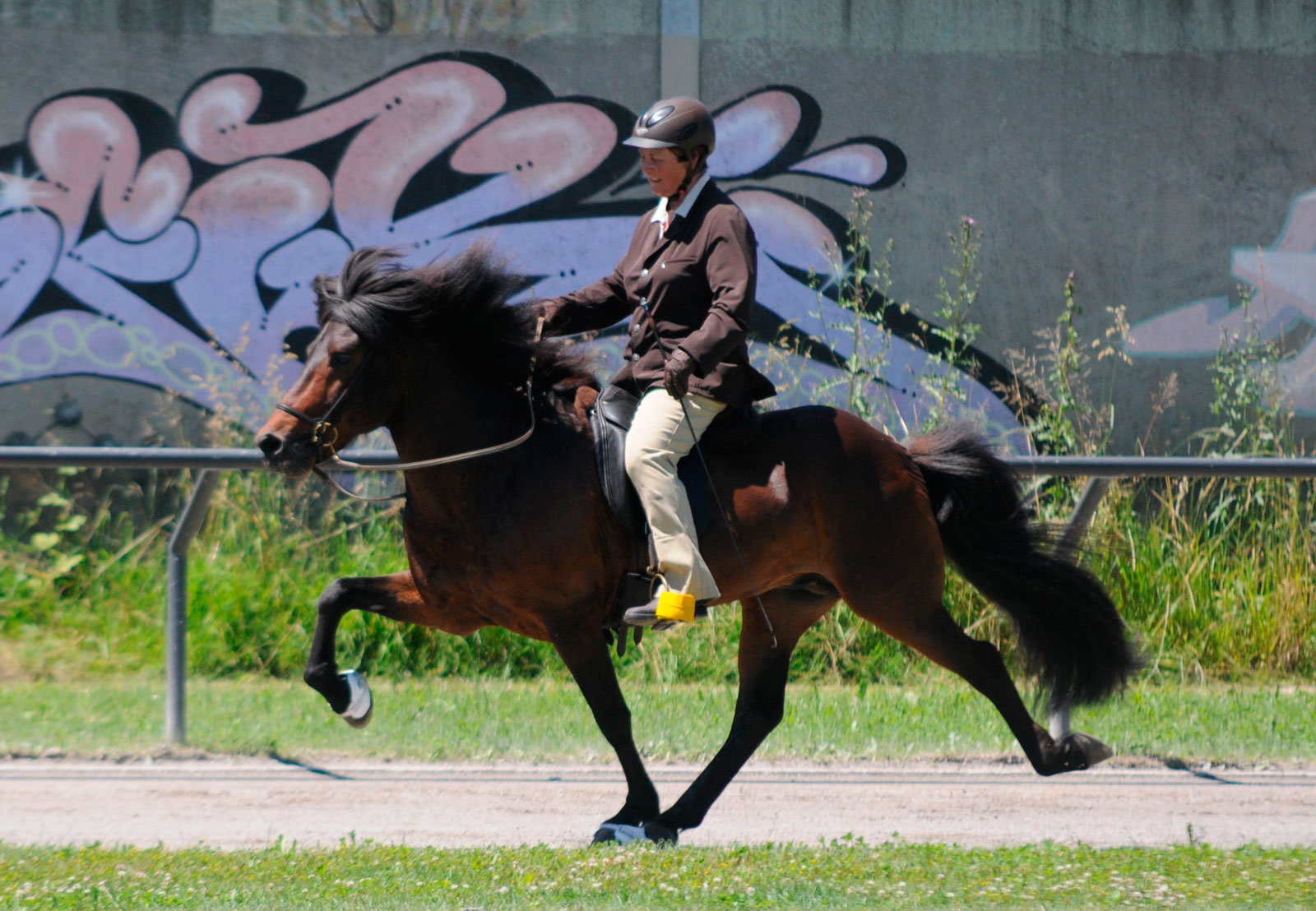
Training and equine professions
How is training for equine professions changing? What prospects do people have who want to train and dedicate their lives to paso horses professionally?
Paso horses require specific dressage, training and riding styles, which in Central Europe were known and recognised just a few decades ago.
Since 2008, in Switzerland there has been official vocational training with a diploma in training paso horses.
How can we start an equestrian career today and what levels of education can we follow to become experts? What do you recommend to those interested?
- With a lot of talent and/or a lot of money!
- Training, training, training!!
- Turn to official institutions (in Switzerland: OdA Pferdeberufe / HBB Berufsbildung / IPV CH / IGV).
- Find niche markets, try to find an entry point according to the breed of horse and forms of riding.
- The area of hobby riding requires many patient trainers for riders who love horses.
Are there new professions that horse lovers can learn? Does Switzerland have any qualifications or degrees for horse tamers or trainers who teach horses to react correctly to leg and rein aids?
OdA Pferdeberufe (Organization of the World of Work Equine Professions)
- 3-year vocational training / basic training with diploma in 6 specialties:
- Horse care
- Classical riding
- Western riding
- Horse racing
- Carriages
- Riding: paso horses (Trainer level C)
OdA Pferdeberufe / HBB (Organization of the Working World Equine Professions, higher education)
- “Higher education” offers specialized training and exams at university level for specialties:
- Specialist in gaited horses (Trainer level B)
- Expert in gaited horses (Trainer level A university)
IPV CH / FEIF
- The IPV CH (Icelandic Horse Association Switzerland) offers all internationally recognized training courses, respecting the regulations of the international FEIF, with exams in:
- Icelandic Horses, training for level C/B/A coaches
- Icelandic horses, initial dressage training (teaching the horse the basics of riding)
- Icelandic horses, breeding and judging for equestrian sports
** IGV**
- The IGV (International Paso Fino Association) offers professional training and tests for Paso Fino horses:
- Paso Fino horses, C/B/A trainer
- Paso Fino horses, initial dressage trainer (teaching the horse the basics of riding)
- Paso Fino horses, judge for equestrian sports
Experiences in Equestrian Tourism
Equestrian Tourism activities are becoming increasingly popular and the Icelandic horse is a key player in this activity. Eve, what do you think about this trend that allows more people to be in contact with these noble animals and to travel on them in contact with nature?
Riders with little or no experience, families, riders who ride as a hobby want to enjoy nature on horseback.
Advanced or expert riders prefer clinics or courses with their favorite breed and their favorite way of riding.
Have you ever taken a horseback vacation to discover other countries in the world? If so, which countries have you visited and what did you like most about these experiences?
I haven't taken an equestrian vacation... (in tourism, they would give me horses inferior to the ones I have at home).
I travel abroad for tournaments, clinics, information about breeds or to sell horses (IS, NO, SE, FI, DK, NL, FR, E, DE, AT, IT, GR, USA, CAN, etc.).
Do you think that paso horse breeds have a future, especially in equestrian tourism?
For tourism in Switzerland, the purchase and maintenance of the horses and the training of their specific gaits would be too costly.
There is little promotion for paso horses in Switzerland, and there is a lack of professional trainers and handlers for these breeds.
- Icelandic horses: optimally covered
- Paso Finos: gaining popularity
- Other paso horses: little to none
At Ampascachi we share your passion for breeding another breed of paso horse: the Peruvian Paso horse. That's why we want to ask you: Are you familiar with the Peruvian Paso horse? Have you had the opportunity to ride one of them?
I had excellent Peruvian Paso horses, I also trained several of them and presented them at shows.
Have you ever visited Argentina? Would you like to discover it one day riding Peruvian Paso horses?
A trip with Ampascachi is on my list of preferences!
Eve, thank you very much for the interview and for revealing so much information about the profession and your activities. When you are available it will be an honor for us to welcome you to Argentina and show you our beloved Peruvian Paso horses and wonderful landscapes.
Comments (0)
No comments yet.


Comments
Leave your comment