
How do horses learn? - Part II.
Learning Theory: Studies on animal behaviorism
Learning Theory and studies on animal behaviorism are the basis that support us in training horses to establish relationships between stimuli and responses that are automated in these noble animals.
Let's see how to apply them in practice!
Horses, like other animals that can be trained, are born with the neuronal circuits constituted to carry out the instinctive or impulse behaviors that have allowed them to survive and therefore they only learn those behaviors, already marked by evolution.
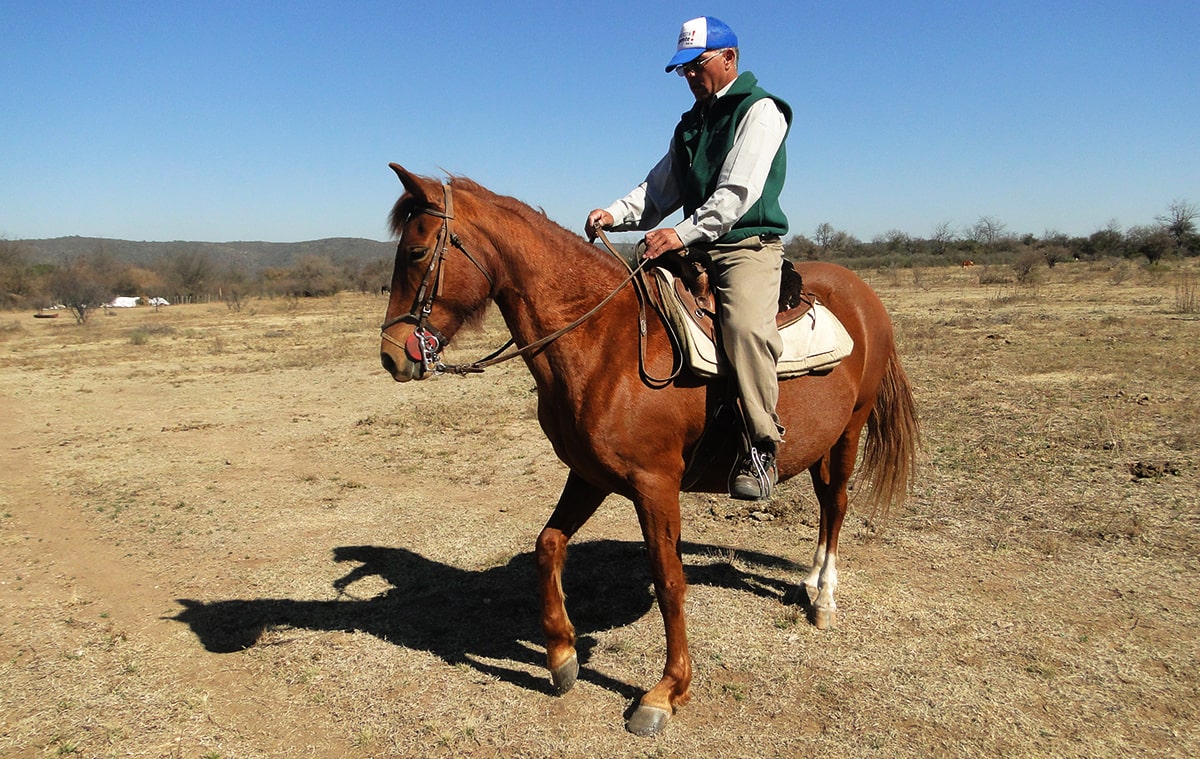
As we said in our introduction, the horse will know how to gallop or trot on its own, it will learn to show flight if it gets scared, etc.
What we horse trainers or handlers are really left with is the possibility of shaping the manifestation of these behaviors, thoroughly training the signals that motivate them.
Animals can learn a new behavior or modify an existing one.
For the horse to learn, and therefore to be taught something, is to establish relationships between stimuli and responses, in such a way that a stimulus produces a certain response.
The stimulus can be the environment or it can be produced by the trainer.
Although the horse's brain has a limited capacity for processing information, it has an incredible memory that links the stimulus with the response, which will be presented to it as if it were a photograph, for many years.
Example: A horse that moves through a certain place, to which it is already accustomed, and perceives the slightest change in it, such as the presence of an object that was not there the day before, may be frightened and try to flee, but it may also have a tendency to get used to the variation in that environment and not be frightened, this being a characteristic that varies greatly among horses, a product of the selective breeding that we did from their domestication.
This has produced horses that get scared more than others, but although there may be a genetic predisposition to behave in one way or another, through learning we can improve these situations until we achieve stable horses.
If a horse gets scared and tries to get away from something and we let it practice this behavior, it can quickly develop a habit that it repeats faster and faster and ends up standing on its hind legs or starting to buck.
If the horse does this, it will have incorporated into its phobia an acceleration of its limbs, which is, as we saw, a manifestation of the flight instinct, which reinforces the response to the stimulus produced by the aversion or fright experienced at the beginning.
For this reason it is so important to prevent the manifestation of the flight instinct, we could almost say that one of the keys to breaking in and training is knowing how to stop a horse that is trying to flee.
Finally, we will say that this sensitivity, between the stimulus-response relationship, is what allows us to train a horse effectively, of course, if we understand it and learn to use it correctly.
Theories of learning were studied by scientists such as Pavlov, Watson and Skinner, who, following the scientific method, observed the acquisition of behaviour in animals and in humans, and thus arrived at the study of behaviour.
In animals this is called ethology (animal behaviourism) and in humans it is called psychology (human behaviourism).
Meanwhile, in parallel, studies have been carried out on Neuropsychology, Applied Ethology and Evolutionary Psychology, which in time will surely broaden the horizons of horse training even further, as science itself is the manifestation of the movement towards more advanced facts of knowledge.
Which, in short, is what leads to an improvement in all aspects of life.
The union between psychology and ethology achieves a training that is based on the instinctive patterns of animal behavior added to those of learning.
The object of study of Skinner's Radical Behaviorism is: Operant Behavior, which is that by which the animal intervenes in the environment and through which it achieves situations that influence it positively or negatively.
Operant Behavior is a function of the elements that follow the behavior and not, as in classical conditioning (Pavlov), which were the ones that preceded it.
This determined that a stimulus is a REINFORCER if its presence determines the occurrence of a desired behavior.
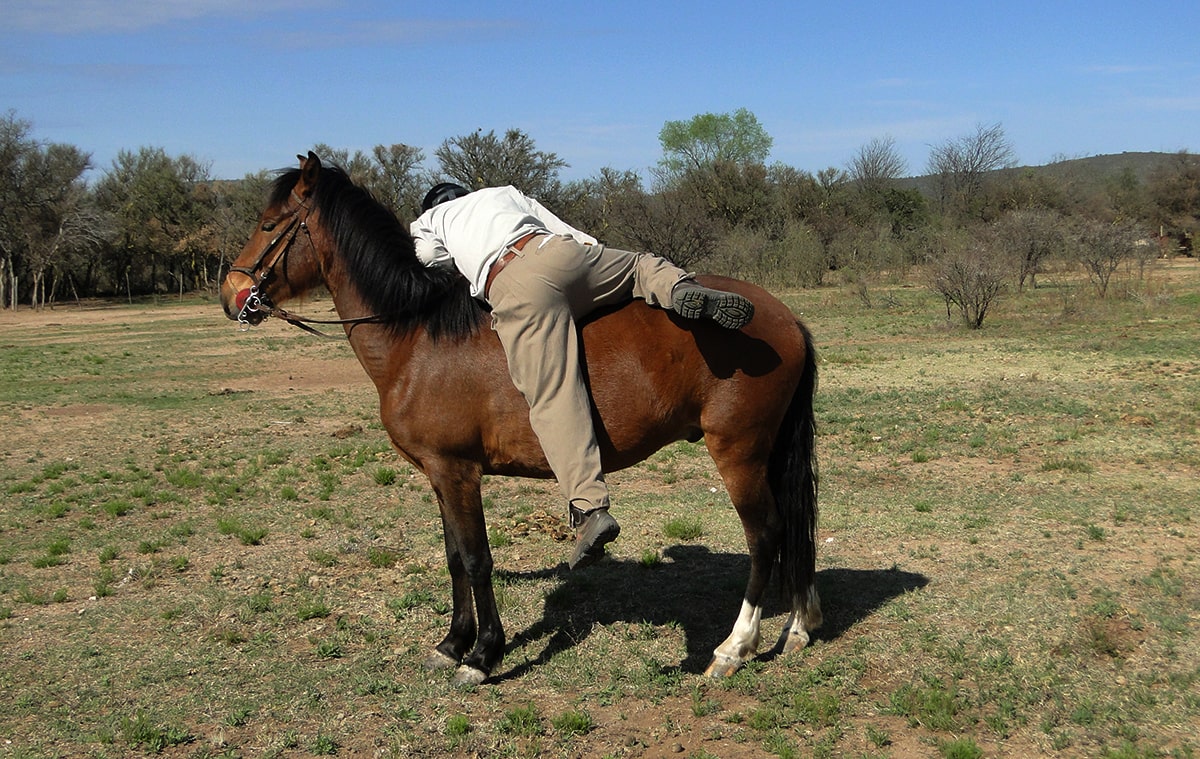
Learning
A clear understanding of the evolution of horses and the theory of animal behaviorism will be the basis for interpreting their learning and therefore being able to carry out training with a correct scientific basis.
Is habituation learning?
It is the most economical, especially with the environment, however there are different ways of habituation.
The horse accepts the rider on its back through this process, as well as numerous other circumstances: the girth, the saddle, the environment in which it finds itself, etc.
In the most common form of habituation, nothing is done to make the horse learn; it is not reinforced either positively or negatively, it simply gets used to it.
We should get horses used to new situations, conditioning them thoroughly and repeatedly so that they respond to certain signals such as those to stop or to start.
This conditioning includes two types of learning:
Operant conditioning: the horse responds to signals given by the human, on foot or on horseback, by reinforcing a certain behavior through the release of pressure, or the giving of a reward, both acts reinforce the correct response or behavior. Classical conditioning: transfers these learned signals to weaker or completely new ones.
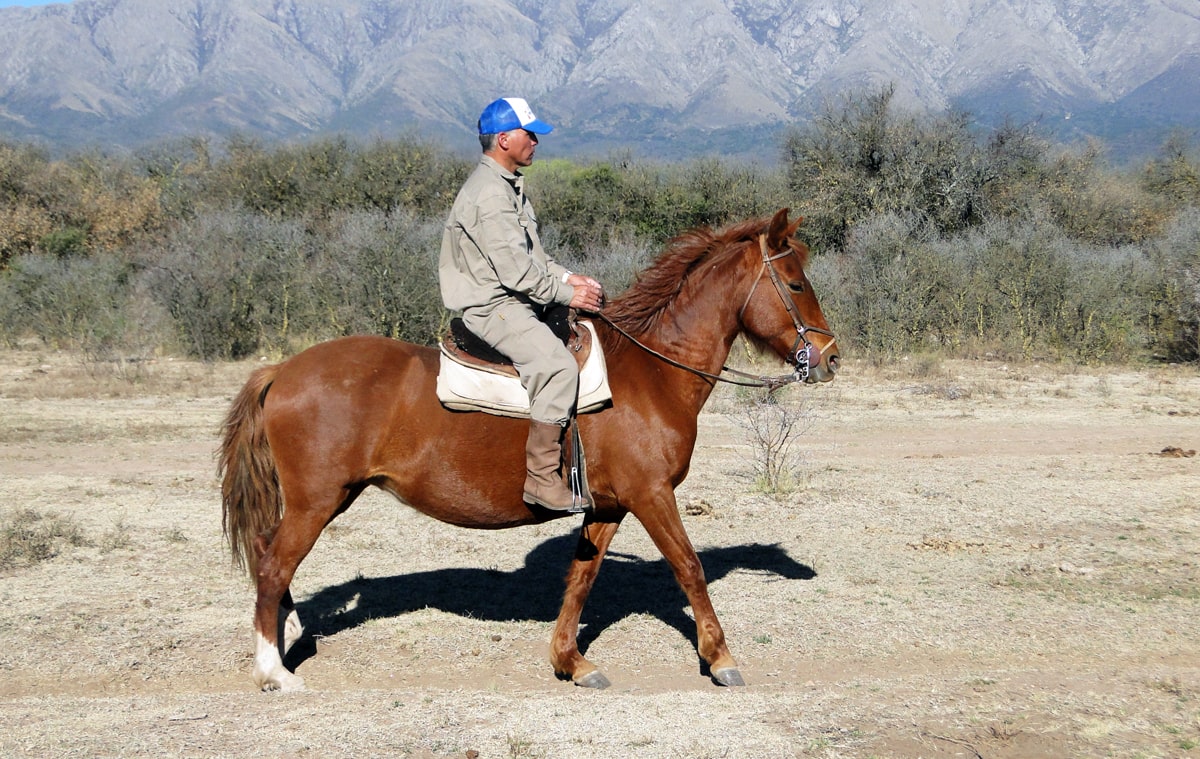
The synchronization of signals
It is essential for the horse to be predictable, to get it to respond to signals. For this, the horse must get used to the stimulus that produces a correct response from it.
The signals must be clear and the response must be given to a single signal, that is to say, we should never give more than one signal for a response and we should not remove the signal before the desired behavior occurs or maintain it for longer if the desired behavior appears.
If we do not do this, it will cause conflict for the animal.
The famous French riding master François Robichon de la Guérinière, as I mentioned before, already took into account some of the principles of Learning Theory, the product of his observation and practical knowledge, saying in his treatise on riding “Legs without hands and hands without legs” to indicate that a single signal should be given for a single response: The reins (hands) only to stop, slow down, step back and legs only to move forward, accelerate, turn the rump, never both signals.
Another behavior to avoid is “learned helplessness,” which is the horse's habituation to pain.
This occurs due to exaggerated pressure, especially in the mouth, through the brake and the failure to release this pressure when the horse gives the stop response.
As the animal is unable to free itself from the pressure with the stop response, it becomes accustomed to the pain and does not stop, that is, it has been trained in the wrong way.
This develops to the detriment of the horse's health. This is the case, for example, with horses known as “hard-mouthed” which tend to suffer lesions in the mouth.
Horses with learned helplessness present symptoms similar to depression in humans.
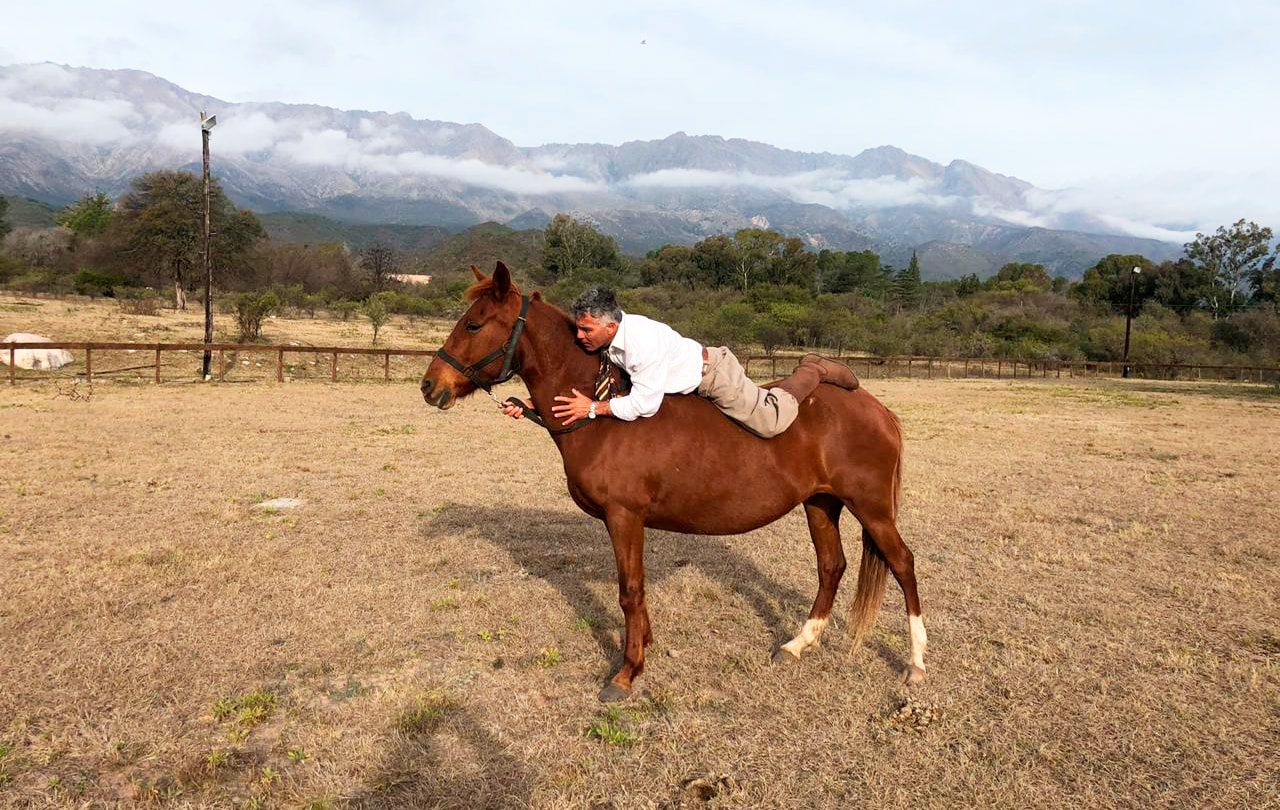
='https://ampascachi-bucket.s3.us-east-1.amazonaws.com/media/blogs/imagenes/como-aprenden-los-caballos2/foto4.jpg'/> Habituation rate to the stimulus
The habituation rate to the stimulus varies greatly between different breeds and/or individual horses.
Sometimes this rate can be accelerated by applying extreme doses of stimuli.
In horses it works quite well as a technique to accelerate training, but the horse must be immobilized and the stimulus or factor that scares the animal must be approached gradually.
In this way, the immobility will prevent it from expressing or manifesting the flight instinct and the gradual approach will cause it to suffer very little stress.
Does punishment teach?
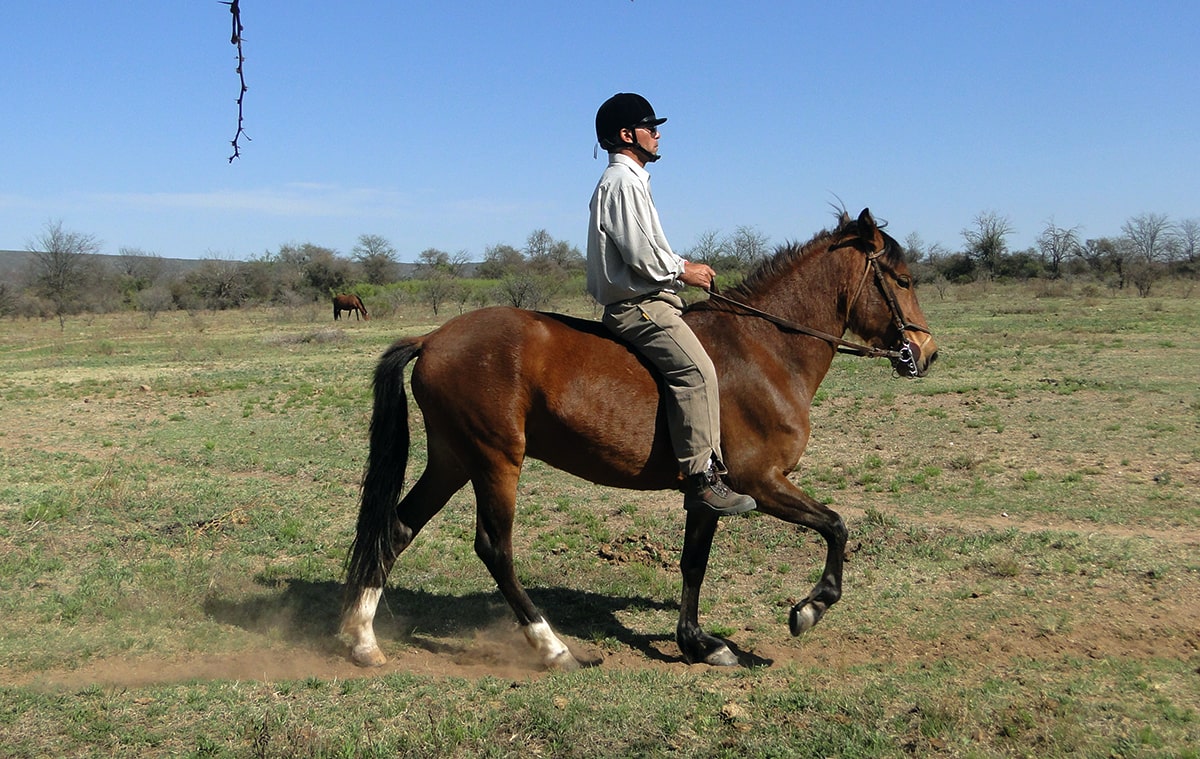
We will say something about punishment as a form of teaching: It definitely does not work with most horses. Except when applied less than a second after the appearance of the undesired behavior (a kick, a bite), it can be effective, but it does not resolve the causes of the behavior being punished.
When the punishment is delayed, the horse gets scared, causing a great deal of conflict that deteriorates the horse's behavior, which can lead to dangerous situations for horse and rider. The longer the delay, the worse.
Habit acquisition
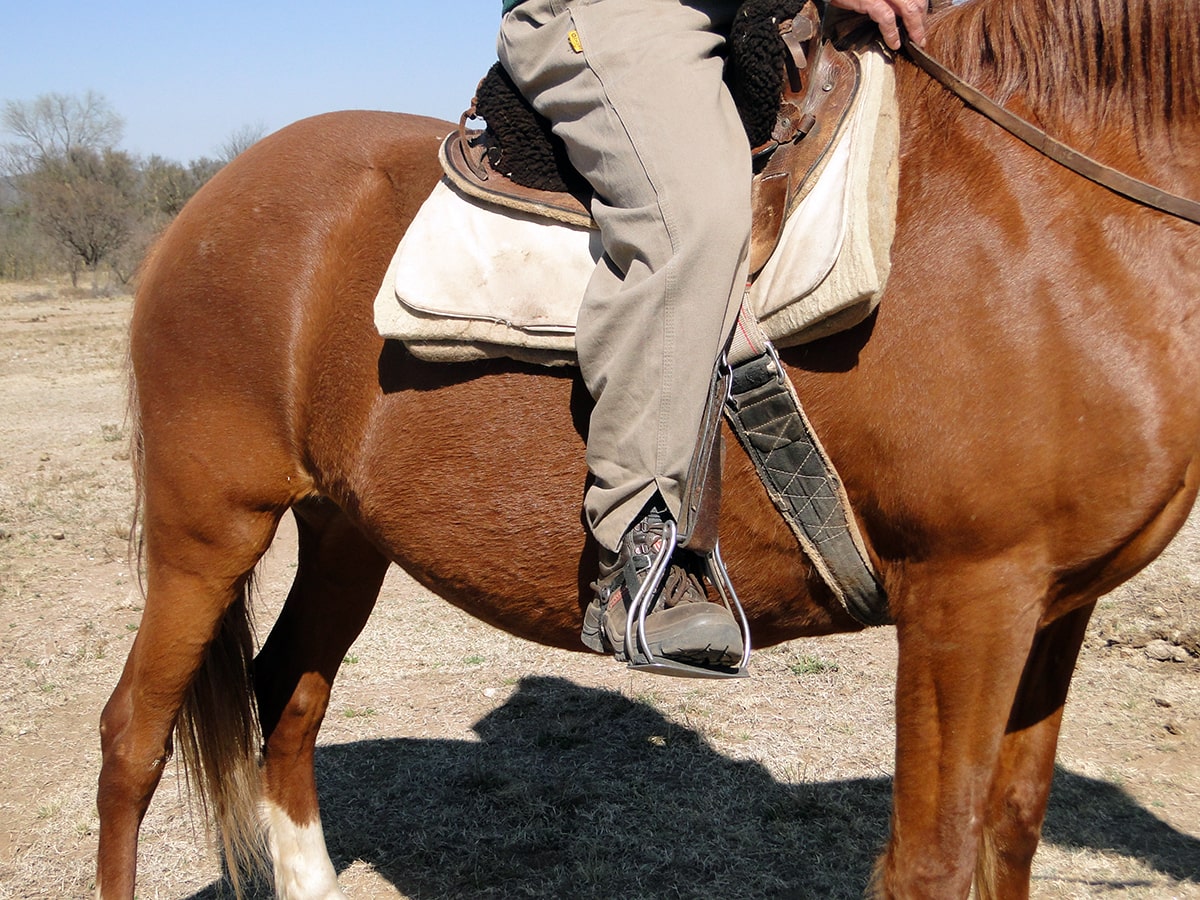
It is said that the horse has acquired a habit when it gives learned responses more automatically.
This probably means that it no longer offers alternative trial-and-error behaviors.
When more stable behaviors are established, unique nerve connections have been established for each response.
The formation of habits is based on numerous repetitions, depending on the desired response, so that they become completely stable.
Operant Conditioning
Operant Conditioning is the most important form of training, using this technique: “The horse learns that the manifestation of a behavior is followed by a reward”, e.g.: The release of pressure for a certain behavior.
THERE ARE DIFFERENT WAYS TO OBTAIN A RESPONSE BY OPERANT CONDITIONING.
Here is the table in markdown with 2 columns and 3 rows:
| POSITIVE REINFORCEMENT | NEGATIVE REINFORCEMENT |
|---|---|
| Add stimuli: ADDITION | Reduction: SUBTRACTION |
| Something is given to reward a certain behavior. For example: Food. The downside of these techniques is that the trainer ignores the appearance of behaviors that are not desired. | Remove something to reduce the motivating impulse. E.g. The pressure is released when a correct response is given. |
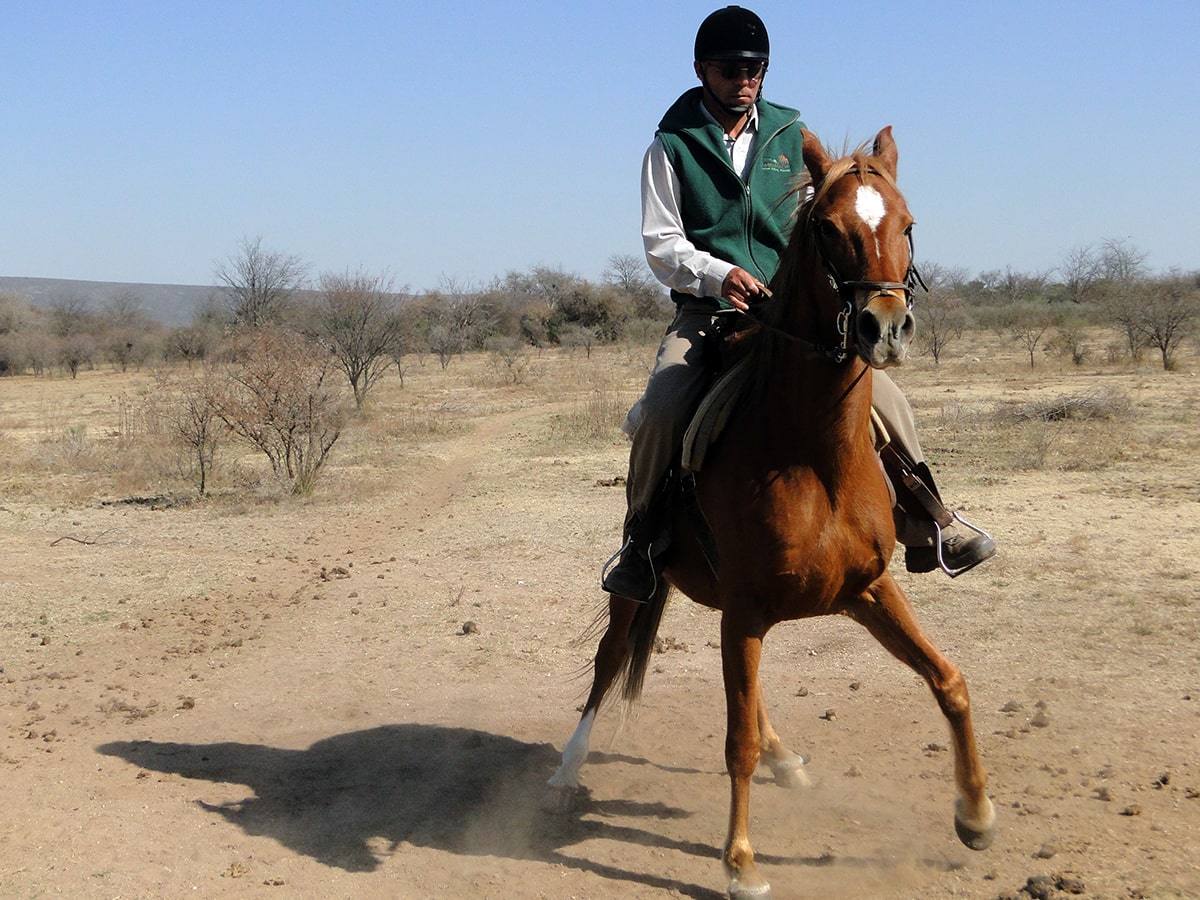
Operant conditioning by negative reinforcement in horses is based on the following:
- Only the desired behavior results in the release of the pressure.
- The first pressure applied should be light, as it will later become a signal.
- The pressure should increase progressively and should only cease when the desired behavior appears.
- That when applying intermittent pressure, such as with whips or legs, there should be no pauses longer than one second, so that the horse does not perceive the pause as reinforcement.
- The elimination of the signal (pressure): it is eliminated almost instantaneously with the beginning of the response.
This is very important, as the horse has a poor short-term memory and if the release is not practically instantaneous, it will not link the release of the pressure with the pressure stimulus.
Advantages of negative reinforcement over positive reinforcement in the case of horses
- It ensures that the response follows the stimulus.
- Behaviors are tested under the control of the stimulus. In the case of positive reinforcement, other random behaviors of the animal are allowed, rather than controlling them through the stimulus. (This technique, with positive reinforcement, is widely used with dogs, dolphins, etc.)
- Random movements can be corrected and eliminated. It quickly learns the stimulus-response relationship. (There is no conflict, no random movements).
- The use of halter and reins forces the horse to learn without making mistakes, such as “breaking loose”.3
- The smoothness of the signals is quickly established, the horse learns to stop at a slight rein signal and with few repetitions.
Horses respond to minimal pressure.
The release of pressure is what conditions the response.
In other words, we could say: Pressure stimulates the response and the release of pressure trains it.
When a signal produces the desired response, permanently and consistently, we say that we have that behavior under the control of the stimulus.
This response must occur as a result of the signal, purely and exclusively.
In the case of horse training, most of the behaviors desired by the rider are linked to the limbs, which is why we say that a horse is well trained when the rider has the horse's limbs under stimulus control.
For the Learning Theory, the horse's response to the pressure exerted by the rider's signal is what reinforces learning.
Therefore, the way in which trainers and riders apply pressure largely determines the future of the horse.
When the mechanism of pressure and release is applied correctly in training, conflict is not allowed to arise.
It is important to emphasize that when we start training with operant conditioning by negative reinforcement, we must do it thoroughly, that is to say, we must repeat the practice many times, until the horse gets used to it and does not leave the operant signal half-finished and start using some other type of signal, such as the voice.
This is the case that can occur when we train the stop by negative reinforcement. The horse begins to stop when we apply pressure with the rein, but before we get it used to it completely, we start to use, for example, the typical: “Soo!”, a second before tightening the rein, and the horse will begin to stop when it hears this sound without the stop response being fully trained, by negative reinforcement, and this is a source of conflict in the future, so when these manifest themselves, we must re-train the responses that fail, in response to a certain signal.
Classical Conditioning
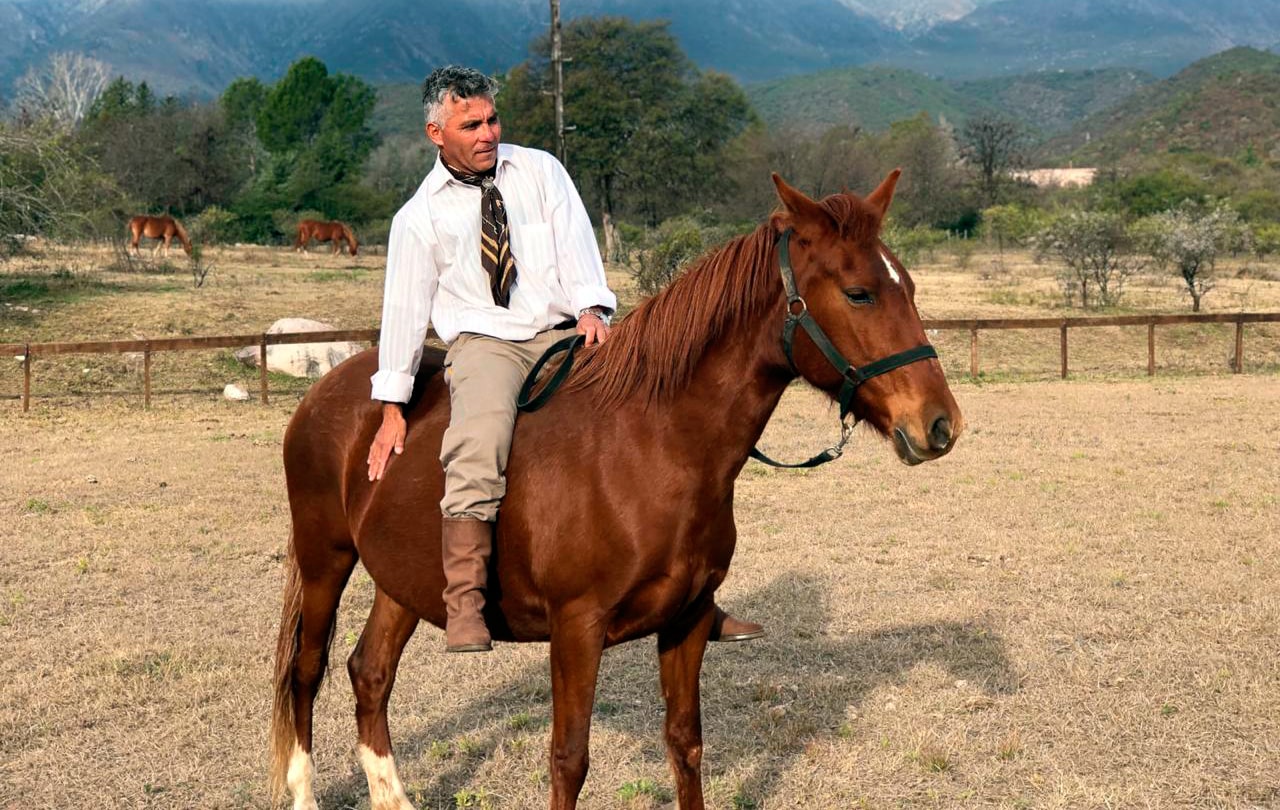
Classical conditioning occurs when the horse learns to perceive the slight signal of pressure, from the more intense signal that comes immediately afterwards.
The training consists of taking the pressures to their lightest version, the horse already knows how to respond perfectly to the training by pressures, which make it reliable.
In the natural world, pressures form part of the life of the herd and through them they interact with other horses.
Through classical conditioning, as we said, we can pass a light signal, for example a “sit” signal, as an indication of the start of a response, for example: “stop”, but it is very important that the response through negative reinforcement is perfectly trained beforehand.
It is very important that under the signal of classical conditioning, of the response, all the operant conditioning by negative reinforcement of that response is present, because the signals of classical conditioning are weak and in situations of fright or fear of the horse, only operant conditioning will be able to control the situation.
Final summary
In summary, we can talk about the potential of correct training, in all equestrian disciplines, both for showjumping and racehorses, if we always use the principles in the way we have explained, taking into account the way the horse learns. This, far from being derogatory, is respect for this species that has been with us since the beginning of time.
For this reason, the following ten principles must be followed:
- Signal-response relationships should be trained with negative reinforcement from the start, thus reducing random mobility responses.
- Pressure training-session synchronization should be maintained so that signals are quickly reduced to mild signals, and return to more powerful pressures when a signal-related conflict arises.
- Train one cue for each response; the whip's flicks can serve as additional pressure.
- Train one response at a given moment.
- Model one quality at a time, for example, rhythm, speed, etc.
- Train the limbs before placing the head and neck.
- Train and favor natural placement.
- Do not overwhelm the horse with excessive repetitions, especially before the behaviors are established as habits.
- Use error-free training to eliminate hyperactive behaviors.
- Remember that the reward up to the level of synchronization is the elimination of pressure, later you can add caresses or voice rewards.
By following the application of these principles you will obtain a calm, reliable and healthy horse that will allow you to enjoy it in different ways, according to your equestrian preferences.
I hope this summary of the theoretical concepts regarding how horses learn will motivate you to study more about it.
Whatever method you decide to use to tame or train horses, if you do it according to the principles listed here, you will see how your horse learns and is also calm, avoiding above all the confusion that is what makes it most uneasy.
All the topics mentioned in this article are covered in much greater depth in our Ebook “How to tame and train horses step by step”, which you can access for free.
And if you want to learn on the job and become a professional trainer, you should find out about our training program. You will have the opportunity to live at our equestrian center and experience the entire dressage process with young horses.
Continúa leyendo
Este artículo es exclusivo para miembros.
To view this blog, please complete the form
Access full content
Comments (0)
No comments yet.
You might also like
Dr. Camie Heleski: Equine behaviour and welfare
Dr. Uta König von Borstel: Equitation science applied to horse welfare and breeding
Dr. Paul McGreevy: specialist in horse behaviour and welfare

Ylvie Fros – Horse trainer in the Netherlands
How do horses learn? - Part I.




Comments
Leave your comment