
Ylvie Fros - Horse trainer in the Netherlands
Interview with Ylvie Fros
Interview with Ylvie Fros, a horse trainer in the Netherlands. She applies scientific methods to the training of horses and achieves success with them. Today she has her own farm for training horses.
On this occasion, we would like to introduce you to a young horse trainer, Ylvie Fros, who works in the Netherlands.
Ylvie is particularly interested in “misunderstood horses”. She started working with problem horses and during her master's degree, she specialized in horse behavior.
She also spent time studying different riding methods and learning more about Przewalski's horses in Mongolia.
Before starting her own horse farm, she worked as a teacher trainer. She taught communication skills and learning theories.
We invite you to read the interview to get to know Ylvie and learn more about her profession.

Ylvie Fros, passionate about horses
Ylvie, where does your passion for horses come from?
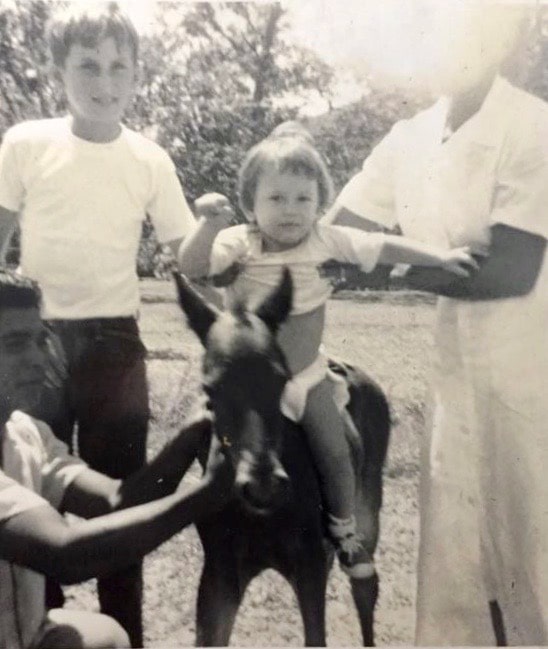
I think I was born with this passion for horses. I've liked them since I was a child. Although my family wasn't very interested in horses, one of my first words was 'paard' (which means horse in Dutch).
I was lucky enough to live in a place where there was an equestrian center at the end of the street. So I spent most of my free time there.
Ylvie Fros and misunderstood horses
What made you take an interest in misunderstood horses?
This affinity for misunderstood horses has also always been there, for as long as I can remember. I always felt sorry for those horses that hardly anyone chose at my riding school and I tried to approach them and pay more attention to them.
How do you detect when a horse is “misunderstood”?
For me, misunderstood horses are those that do not look happy. They show frustration and/or discomfort. Either through their behavior, because they kick, bite, buck, etc., or because of physical problems such as lameness.
These things are not normal in a horse, but it is often what happens when there is poor management or poor training, or simply because there are people who do not recognize the signals a horse gives off.
Why might a horse be misunderstood?
Most people today don't understand horses, their language and their needs. They are people who have horses, but that doesn't mean they know how to understand them. And in many equestrian centers, people are not taught other aspects of the horse. Only riding. Many riders have no idea what horses need.
Science to understand horses
What studies did you do in relation to animals, especially horses? I have a master's degree in ecology, and I specialized in wild equines. In addition, I am a riding teacher, a level III Centered Riding instructor/clinician, and I am a selected trainer in Bent Branderup's Academic Art of Riding.
You also studied Prezewlaski horses in Mongolia. There is a myth about these horses. It is said that they are the only wild horses that exist today, never having been domesticated by man. What are these horses like? Why are they so special, and what have you learned about them?
In reality, they are not “horses” in the strict sense. They have a different number of chromosomes and so should be considered a different species from all the other horses we know as 'domestic'. The time I spent with them made me understand the difficult living conditions these 'wild' horses face and how hard they have to be to survive in the wild.
You studied different riding methods and became familiar with the ideas of Mr. Klaus Hempfling and you were drawn to them. Could you tell us, in 4 or 5 main points, the core of his ideas that attracted you?
What caught my attention at the time (in the early 2000s) was the horses' apparent willingness to connect with him in freedom, and Mr. Hempfling's absolute mastery of body language. At the time, he was a pioneer, and I studied with one of his students.
Is scientific knowledge about equine behavior sufficiently widespread in the horse industry?
There is never enough knowledge, but the most important thing is to put existing knowledge into practice more. We know that horses are social animals that need to move around a lot, and yet in many places it is still common to see horses in stalls or stables for most of the day. It is a shame that our knowledge is not yet being translated into better care for horses. But we are improving. I was a pioneer in that when I set up a Paddock Paradise, an outdoor stabling system, for my horses 10 years ago. Now more and more stables are adopting this system. But we have to make the same kind of change with regard to feeding, hooves, the way we ride and saddle, etc. Little by little, the horse industry has to change. And it is doing so.
Do you think that the Learning Theory and the foundations of Ethology, ideas disseminated by the International Society for Equitation Science (ISES), are heading in the right direction so that we can have sound principles for training horses and at the same time consider their welfare?
I think that some very good things are being done, most of them by people who have a lot of experience with horses, who do a great job of training and teaching. And, of course, it's great that there are organizations like ISES that research and promote sound training principles for the welfare of horses. There are many more that also do it. But, it seems to me that the biggest change must come from the industry itself and from customers who no longer accept certain practices in horse riding.
After so many studies, you yourself give courses. Tell us, what do you teach, where and to whom?
I run clinics and now, due to the Covid pandemic, I also give online courses and classes aimed at both rider and horse, combining techniques from Centered Riding and Academic Equestrian Art. On the one hand, I take into account the physical aspects: correct and healthy posture and movement of the horse and rider; on the other hand, the mental aspects: their attitude and communication. My audience is private horse owners who love their animals and want to develop themselves, and at the same time, make their horses as healthy and happy as possible, and who enjoy riding together with harmony and lightness (Note: in reference to your book).
In your Equestrian Center, do you give a complete training to an interested person, from the beginning until they become a horse trainer, including their training as a rider?
Yes, in our center we teach Centered Riding and Academic Equestrian Art. In addition, we provide professional training for coaches and instructors.
Horse training
What is your training philosophy and could you list 8 or 10 basic principles that guide your training processes from the moment the horse begins to be taught until it is ready to be ridden by other riders?
- Knowledge: it is necessary to understand the horse, its nature and the external conditions it needs for training. We must also take into account its behavior, the type of place it lives in, nutrition and training principles.
- Relationship: from the ground, we must establish a relationship and good communication.
- Work on the ground: from the ground, develop the communication that will lead to good physical training to achieve straightness, balance and flexibility.
- Work on the lunge line: to develop the communication that will lead to good physical training to achieve straightness, balance and flexibility at a distance.
- Get the horse used to the rider with confidence and positive experiences.
- Develop the rider's communication in the work on the lunge.
- Develop communication when riding for good physical training to achieve straightness, balance and flexibility on the part of the rider.
- Concentrate on improving communication by perfecting the rider's seat.
Do you consider habituation techniques to be a learning process? And you, in the training process, do you make use of these techniques?
It depends a bit on what one understands by it. I use habituation in the sense that I teach my horses not to react to certain stimuli, such as a plastic bag or a girth, or a fly repellent. But not by forcing them, but by letting them explore the object until they decide not to be afraid. I try to avoid adrenaline in my training. Habituation is also a process that occurs naturally in some situations. For example, when the field where the horse lives is next to the road, they learn for themselves not to react to passing trucks.
Is the horse responsible for its reactive behavior or does it stem from a failure on the part of its trainer?
That is also relative. For me, reactive behavior is behavior that is accompanied by adrenaline. As a result of stress or fear. As trainers, we must avoid these situations and train responsiveness instead. Which is a positive reaction from the horse, without adrenaline and well thought out.
“Harmony, Lightness and Horses”
In 2018 you published your first book: Harmony, Lightness and Horses - Integrating Body and Mind to ride your Horse. What is this book about and who do you recommend it to?
The book is a compilation of brief explanations and ideas on how to use the body and mind while riding. It explains how we can perfect our riding style when
- we understand our biomechanics and that of the horse
- we learn to use the body and mind correctly and
- we allow our mind to influence our body and vice versa.
I use many of the things I learned in martial arts and my experience in Zen philosophy to explain horse riding from a different perspective.
Is your second book on the way? Please tell us something about it.
Yes, my second book is on its way, and it contains more practical explanations and exercises. But at the moment, I'm more focused on developing my online courses, because it's much easier to explain everything through a video, where you can visualize what I mean. Each person can interpret your words so differently, that for me video is a clearer way to get the message across.
Experiences in Equestrian Tourism
Equestrian Tourism is becoming increasingly popular, especially among women. What do you think of this trend?
I think many people long for a way to connect with nature. And riding through the countryside is the best way to do it. Connecting with our horse and with the land we travel through. It's a wonderful way to discover new places.
Did you ever spend your holidays discovering other countries on horseback? In which countries did you ride horses? What did you like most about it?
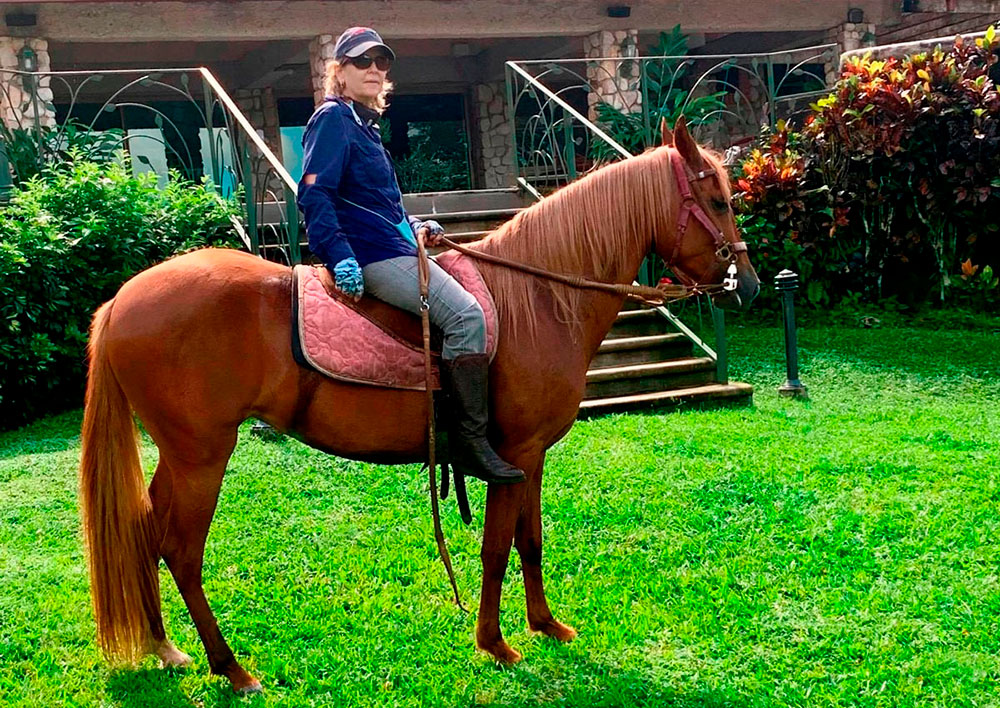
Yes, I have ridden in many countries, such as Mongolia, Israel, Croatia and Indonesia. And many summers, I have taken longer routes here in beautiful Holland. As I said before, it is a fantastic way to discover nature. You can travel through places and see wildlife that you would not otherwise be able to.
My problem is that I am very critical of the stables I ride with and the way they care for and train the horses. I often come across horses with physical problems, poorly fitted tack or other issues, and for me, these are not the right conditions for horse riding excursions. As a tourist, it is sometimes difficult to talk about this with the organizing company. Normally, in the 'poorer' countries, after a horse ride, I can't recommend it. Really, I don't want to ride a horse that, in my professional opinion, is suffering because of the excursion. I think horse riding tour providers often underestimate the level of care and training that good riding horses need.
Are you familiar with Peruvian Paso horses? Have you ever ridden one?
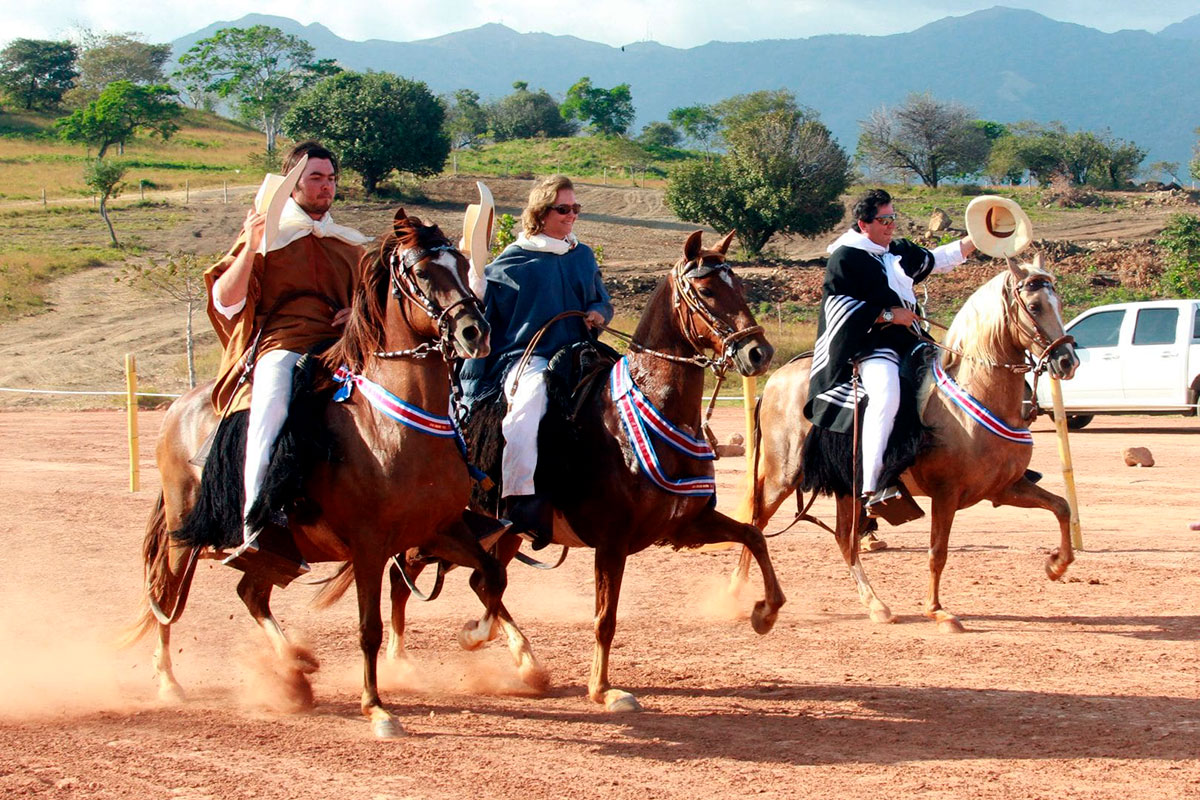
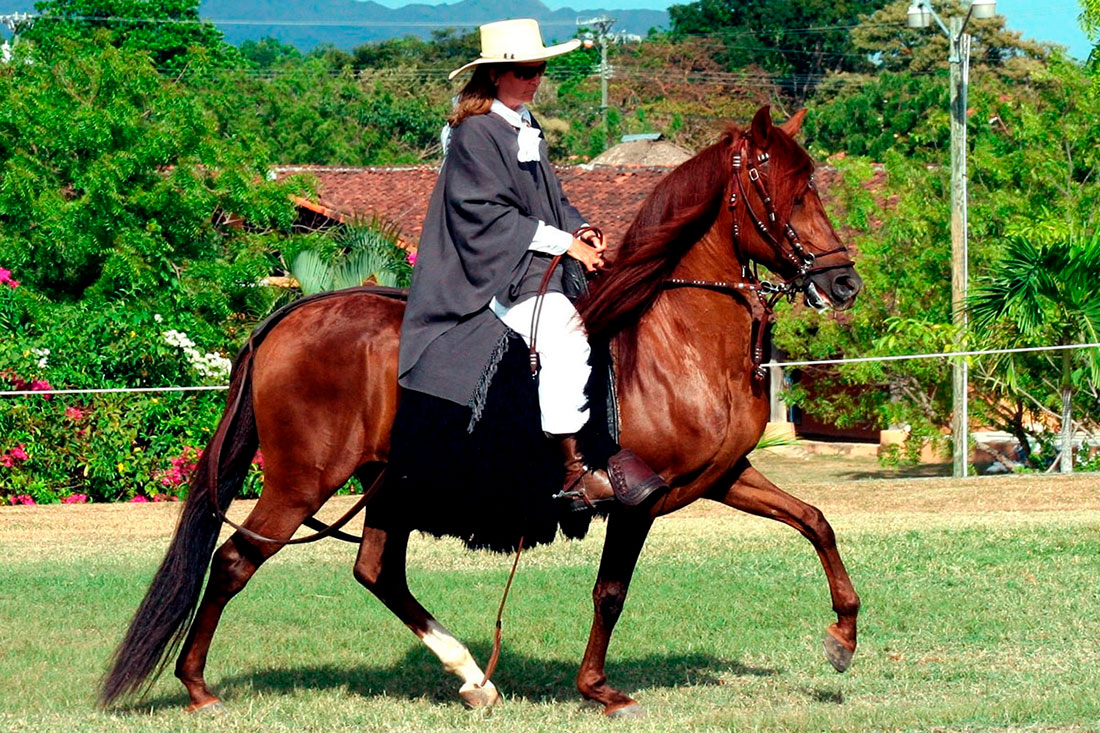
Yes! I find Peruvian Paso horses very interesting, but because of their gait, I think it's more difficult to ride a Paso horse correctly than a 'normal' three-gaited horse.
Have you ever visited Argentina? Would you like to discover it riding Peruvian Paso horses?
I have never been to Argentina, but it is definitely a country that is on my wish list. Unfortunately, due to the current global pandemic situation, my busy work schedule and my two young children, it is difficult for me to take longer trips outside of Europe at the moment, but in the future, who knows?
Thank you for the interview, Ylvie, and for talking about the profession. At Ampascachi, we also apply scientific principles to the dressage and training of our horses.
We hope that one day you will come with your family to Argentina to discover its diverse landscapes and enjoy new experiences with Peruvian Paso horses.
Continúa leyendo
Este artículo es exclusivo para miembros.
To view this blog, please complete the form
Access full content
Comments (0)
No comments yet.
You might also like
Dr. Camie Heleski: Equine behaviour and welfare
Dr. Uta König von Borstel: Equitation science applied to horse welfare and breeding
Dr. Paul McGreevy: specialist in horse behaviour and welfare
How do horses learn? - Part I.
How do horses learn? - Part II


Comments
Leave your comment