
Horse Training: Interview with Andrew McLean
We asked Andrew McLean
In our opinion, he is one of the people who has had the greatest influence on the world of horse riding with his books and research into how horses learn.
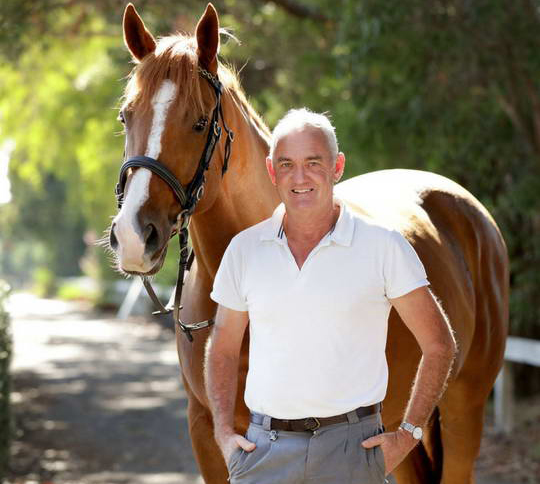
The interview is divided into three sections: the first is very much linked to his person, another refers to the situation of the professional training of the horse and finally we talk about the question: Why does the science of horsemanship exist?
Below you can read our questions to Mr. McLean and his answers
Dr. McLean, please tell us, how did your connection with horses come about?
My parents were horse enthusiasts and very capable, so I was sitting on a horse long before I can remember. I love horses, but I have to say that I love all animals equally. I am just as intrigued by hawks or jellyfish. Living beings are truly incredible, and in my opinion, behavior and its origins are the most fascinating of all. Because I became so involved in equine sports and eventually studied horses from an academic point of view, I focused on them and find them remarkable animals.
When and how did you decide to dedicate yourself to the study and practice of horse dressage?
I decided to study horse training and dressage from a practical point of view when I was at university. I trained horses in my own way to start me off. However, the academic pursuit only began when I was in my 30s.
Did you do competitive riding?
I have competed in bareback riding, I have represented Australia in three-day events, I have jumped up to Grand Prix level, I have competed in dressage up to Prix St. George and I have trained at Grand Prix level. When I was young, you did a bit of everything, but nowadays people focus on just one discipline.
Do you like riding in the countryside or on horse treks?
I really love riding in the countryside, it's a great way to experience nature. Last year I rode in Kenya and we covered 210 km in the Masai Mara. Here at home I ride whenever I can on the beach and often the dolphins come close and swim around the horses.
Does your family share your love of horses?
My whole family shares my passion. My wife is a professional dressage teacher, my daughter is my business manager and practices show jumping, my two sons are both professional dressage riders and their wives also ride, one does dressage and the other show jumping. It's hard to avoid riding horses in our family, my father and grandfather also did show jumping.
Did any horse manage to unseat you when you were breaking it in and if so, were you then able to retrain it? Can you tell us about any cases?
I have spent my professional life re-educating problem horses. I have been unseated many times! I have broken several bones but I have to say that since I started applying more appropriate principles of the science of horsemanship, my injury rate with difficult horses has dropped dramatically. At the Australian Equine Behavior Center that I developed in 1995, we had a large number of horses to re-educate, usually about 120 per year, and there were only two that we were unable to re-educate. Some horses were too complex for their riders and there is always the big question: is the horse the right one for the rider?
Dr. McLean, could you tell us if, in your opinion, there is currently an adequate level of professionals dedicated to taming or training horses and, more precisely, if they use adequate knowledge to achieve correct training of the horses?
Professional horse trainers learn their trade from the knowledge passed on to them, and although this is often very accurate, the problem is that experts are often unconsciously competent. This can make it difficult for others to learn from them. On top of this, the science of learning is much younger than the art of breaking and training. Every trainer on earth would do well to learn a solid understanding of equine ethology and learning. This is what equine science is all about: the principles and processes of breaking and training that apply to each method.
Why are there so many different approaches to breaking horses in the world of horse riding?
This is because people learn the trade through passed-down knowledge. It is also influenced by the way the horse has been used in various cultures.
Do you think there should be official university-level programs to train professionals in horse dressage and training?
Personally, I believe that every person who deals with horses should learn the theory of animal training, not only for their own safety, but also for ethical reasons of animal welfare.
What advice would you give to a young horse lover who wants to become a professional in the field of equine dressage? What should they do and where should they start?
I would tell them to seek training. I run a government-accredited diploma course on dressage and training, and I believe that taking a course like this gives people, regardless of the method they choose to use and regardless of the equine discipline they practice, a much better chance of success.
We know that you are one of the founders of ISES (International Society for Equitation Science). Could you tell us about it, the theoretical principles it expresses, its dissemination programs and its objectives?
We are a group of scientists, veterinarians and ethologists whose research focuses on horses and their training. We decided to form a scientific society in 2004, and every year since then we have held a conference in different countries around the world. So far we have had more than 1200 articles submitted to the society for oral or poster contributions at conferences, so science here is really booming. Our objectives include both education and welfare. Our website is www.equitationscience.com and contains information, including the principles of dressage and training.
What is equine learning theory and how is it linked to ethology?
Ethology includes all the inherited behaviours of the horse, including its predisposition to learning. The theory of learning is the body of knowledge that contains operant conditioning, classical conditioning and habituation. Within these topics is detailed information on how pressure release works, such as aids, voice commands, all interactions between horse and human, explains why things go well and why things go wrong, and includes all the techniques for desensitizing horses to lose fear to stimuli.
How do the equine training techniques, derived from learning theory and ethology, differ from the ideas and techniques used by the trainers that you call, in your book “The Truth About Horses”, the “New Age” trainers?
The techniques are not greatly different, the difference is in the detail of how aids based on pressure and timing are used. There are some techniques that are used by “New Age” trainers that are problematic and not good for the welfare of the horse or human safety and these include techniques that encourage flight. For me, the science of horsemanship lifts the cloudy veil and the glass ceiling that prevent ordinary people from learning to train their horse effectively. It gives them good step-by-step information, and basically brings dressage and horse training into the 21st century of objective knowledge about horses. If you think about it, all other areas of human endeavor are modernized and understood in a logical way. Horse training is the last realm to be illuminated by scientific thought.
In the world of equestrian sports and horse riding in general, are the ideas that you and ISES express about the correct training of horses widely accepted?
Within the equine world, there are so many different methods and they follow the principles of the science of horsemanship in different ways. Some more than others, but very few follow the precise principles of learning, which is surprising to me, because taking advantage of learning processes is the best way to achieve the highest level of success in any discipline. It's as if you want to build the fastest car, you should apply the most modern engineering knowledge. All animal processes are explainable in scientific terms: brains and nerves are simply very sophisticated wiring systems. The more you know, the better, however, people often fear knowledge in case it turns the world upside down. In my case, I enjoy knowledge.
What is your opinion about the idea of humans being leaders of horses, and what this implies for horse training?
I think it's important for trainers to be very clear and consistent in their training and maybe that means being assertive. However, horses don't see humans as leaders, because in nature they don't see other horses as leaders either, there are no studies to support this point of view. All studies of wild horses show that there are no leaders. Any horse that moves towards the water hole makes the others follow and it is usually a lactating mare, who else would be thirsty? The idea of leadership came after the idea of being dominant over horses.
Finally Dr. McLean, according to your vast experience, what would be the 5 or 10 most important points to keep in mind for the correct training of a horse, and thus be able to have an interaction with them that is pleasant and safe, for both human and horse?
- Remember that it is the release of pressure that trains the horse.
- Reduce pressure to gentle aids.
- Ensure good behavior on the ground and that the horse stands still when necessary.
- Learn to ride in such a way that your body moves with the horse and does not hinder its movements.
- Do not use reins and legs at the same time.
- Make sure that the aids are as easy as possible for the horse to decipher.
- There should be a response to each aid.
- Avoid punishment and in particular never punish a horse for non-compliance.
- Praise and stroke the withers frequently.
- Avoid having a horse alone, they are social animals and need to be in contact with other individuals.
Finally, we would like to give special thanks to Dr. Andrew McLean for his kind willingness to answer the questions of our work team, and to comment that we hope that his answers will be useful to our readers, as much as they have been to the Ampascachi work team. Thank you very much!
Comments (0)
No comments yet.



Comments
Leave your comment